The perception-action gap is the fundamental disconnect between a machine's sensory understanding and its ability to execute a precise physical task. This gap is the primary reason why 70% of robotics pilots fail to scale, representing a massive inefficiency in the $97.5 billion professional automation market.

Blog
Why Actuator Intelligence Is the Next Frontier in Robotics
The industry's obsession with perception and planning has created a critical blind spot: the actuator. This analysis argues that smart, self-aware actuators with embedded sensing are the missing link for robust, dexterous, and maintainable industrial robots.
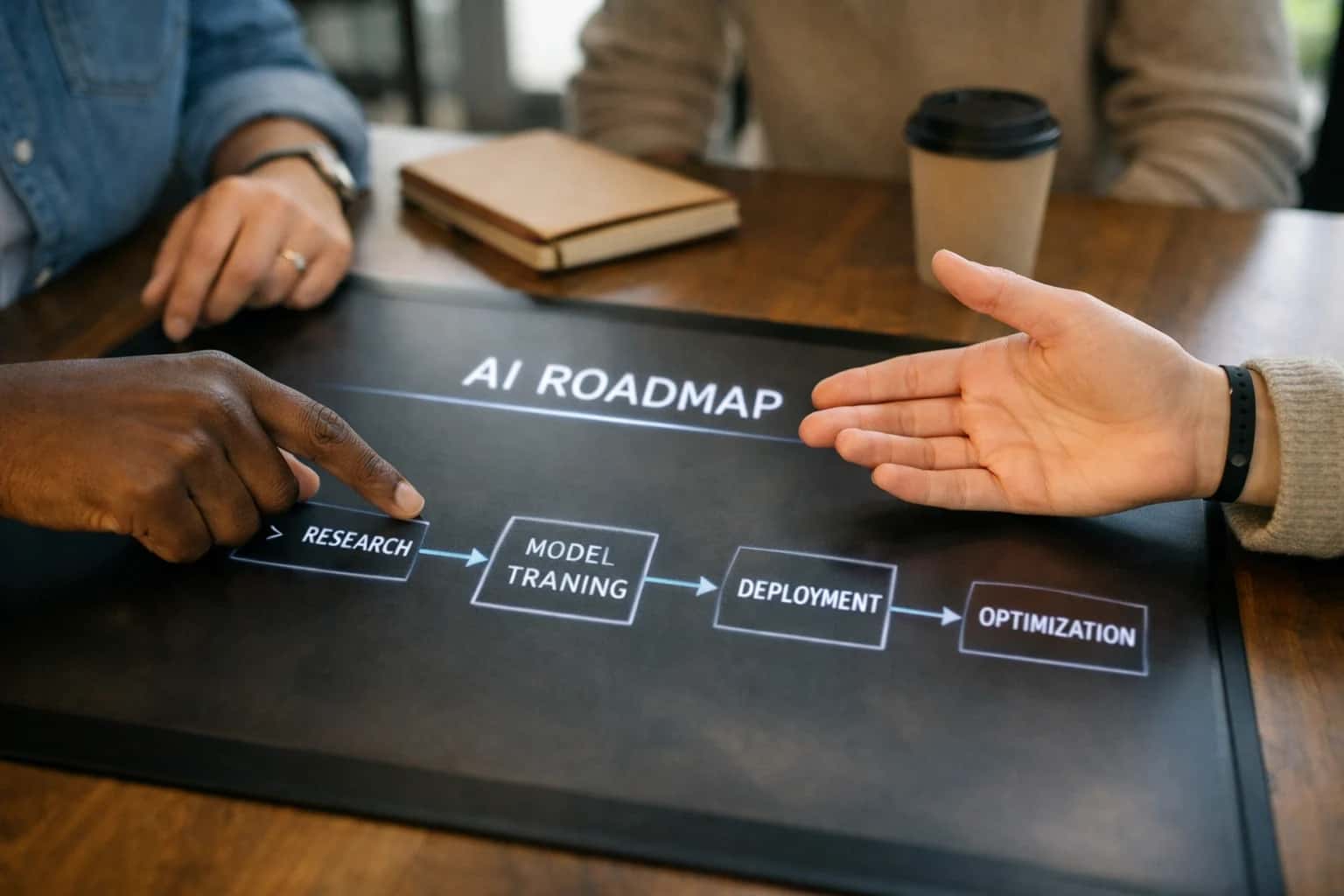
THE REALITY GAP
The Perception-Action Gap Is a $100 Billion Bottleneck
The disconnect between a robot's sensory understanding and its physical execution is the primary cost and failure point in industrial automation.
Perception is a solved problem in controlled environments. Modern vision models like YOLO or Segment Anything, combined with sensors like Intel RealSense, can identify objects with >99% accuracy. The bottleneck is not seeing the world, but acting reliably within it. A robot can recognize a bolt but cannot feel cross-threading.
Current robotic control stacks are brittle. They rely on pre-programmed trajectories and lack the real-time force and tactile feedback needed for dexterous manipulation. This is why most collaborative robots (cobots) are confined to repetitive pick-and-place tasks, failing to handle the infinite variability of a real factory floor or construction site.
The solution is actuator intelligence. Smart actuators with embedded sensing—measuring torque, temperature, and vibration—close the loop between perception and action. Companies like SRI International and HEBI Robotics are pioneering these self-diagnosing, adaptive components that enable true physical compliance and predictive maintenance.
Evidence from deployment shows that AI-driven grippers with force sensing reduce part damage by over 60% compared to binary pneumatic systems. This directly translates to lower scrap rates and higher ROI, moving automation beyond simple motion to context-aware, material-sensitive interaction. For a deeper analysis of the underlying data challenges, see our piece on The Data Foundation Problem.
This intelligence must live at the edge. Cloud latency of 100+ milliseconds is fatal for force-controlled assembly. The future lies in on-device learning on platforms like NVIDIA's Jetson Orin, where models can adapt to tool wear and new materials in real-time, a concept explored in our analysis of edge computing demands.
THE NEXT FRONTIER
Three Trends Forcing the Actuator Intelligence Revolution
The intelligence of a robot is meaningless without the smart, responsive hardware to execute its decisions. Here are the three macro-trends making actuator intelligence non-negotiable.
01
The Problem: Black-Box Actuation
Traditional motors and grippers are dumb endpoints. They execute commands but provide zero feedback on force, thermal stress, or impending mechanical failure, creating a dangerous perception-action gap.
- Key Benefit: Enables true dexterous manipulation by closing the force-feedback loop.
- Key Benefit: Unlocks predictive maintenance, reducing unplanned downtime by >30%.
>30%
Downtime Reduced
~5ms
Force Loop Latency
02
The Solution: The Industrial Nervous System
Embedding sensors directly into actuators creates a proprioceptive layer—an 'industrial nervous system'—that feeds real-time health and performance data to the AI control plane.
- Key Benefit: Provides the data foundation for physics-informed AI models that understand material interaction.
- Key Benefit: Enables graceful degradation; machines can self-diagnose and request service before catastrophic failure.
10x
More Data Points
-50%
Mean Time To Repair
03
The Driver: Edge AI Economics
Cloud latency is fatal for physical control. The rise of powerful, efficient edge processors like NVIDIA's Jetson Thor makes it economically viable to embed inference directly into the actuator's drive electronics.
- Key Benefit: Enables sub-10ms reaction times for collision avoidance and adaptive gripping.
- Key Benefit: Supports on-device learning, allowing actuators to adapt to tool wear and new materials without cloud dependency.
<10ms
Closed-Loop Latency
$0
Cloud Egress Cost
THE MISSING LINK
How Intelligent Actuators Solve the Physical AI Control Problem
Embedded intelligence in actuators closes the perception-action loop, enabling precise, adaptive, and safe physical control.
Intelligent actuators solve the physical AI control problem by embedding sensing and processing directly into the mechanism that applies force, transforming open-loop commands into closed-loop, adaptive physical interactions. This moves control from the cloud or central PLC to the point of action, eliminating latency and enabling real-time force and thermal feedback.
The core failure of centralized control is latency. A perception stack running on an NVIDIA Jetson Orin or a cloud instance generates a command, but by the time it reaches a standard actuator, the physical context has changed. Intelligent actuators with embedded microcontrollers execute local PID loops at kilohertz rates, adjusting torque and position based on immediate sensor data like strain gauges and thermistors.
This creates a new hierarchy of control. The high-level AI brain handles strategic task planning and scene understanding, while the low-level actuator intelligence manages the physics of contact, compliance, and overload protection. This separation of concerns is critical for robust systems, as detailed in our analysis of The Future of Embodied Intelligence Is Not in the Cloud.
The result is dexterous manipulation and predictive maintenance. An intelligent gripper can sense slip and material compliance to adjust grip force, handling objects a pre-programmed robot cannot. Simultaneously, continuous monitoring of current draw and temperature enables predictive maintenance models, flagging mechanical wear before a catastrophic failure, a key component of industrial Predictive Maintenance and Industrial Reliability.
Evidence from collaborative robotics (cobots) is definitive. Universal Robots' e-Series cobots use integrated force-torque sensing in their joints, which reduces programming complexity for intricate tasks by over 60% compared to robots without such sensing. This intelligence at the joint is the prototype for the next generation of all industrial actuators.
FEATURED SNIPPET
Dumb vs. Intelligent Actuator: A Performance Comparison
A quantitative breakdown of how smart actuators with embedded sensing and compute outperform traditional 'dumb' motors in key metrics for robotics and industrial machinery.
| Feature / Metric | Dumb Actuator (Conventional Servo) | Intelligent Actuator (Smart Servo) | Intelligent Actuator with Edge AI (e.g., NVIDIA Jetson) |
|---|---|---|---|
Embedded Force/Torque Sensing | |||
Embedded Thermal Sensing | |||
Onboard Compute for Local Control Loop | Basic PID | Full Model Inference (e.g., PINN) | |
Predictive Maintenance Capability | Condition Monitoring | Anomaly Prediction (< 1 sec) | |
Fault Detection & Diagnosis Latency |
| < 500 ms | < 50 ms |
Energy Efficiency Gain (vs. baseline) | 0% | 5-15% | 15-30% |
Communication Protocol | CAN / Modbus | EtherCAT / TSN | EtherCAT / 5G Private |
Integration Complexity for Multi-Agent Systems | High | Medium | Low (Native API) |
Unit Cost Premium (Approx.) | $0 | $200-$500 | $500-$1,500 |
Mean Time Between Failures (MTBF) Improvement | 0% | 20-40% | 50-100% |
Support for Simulation-to-Reality (Sim2Real) Tuning |
BEYOND MOTORS
Actuator Intelligence in Action: Real-World Use Cases
Actuator intelligence moves robotics from pre-programmed motion to adaptive, self-aware physical interaction. Here are the concrete problems it solves.
01
The Problem: Brittle Grippers in Mixed-Model Assembly
Traditional robotic grippers fail on parts with unknown compliance or fragile surfaces, causing line stoppages and scrap.\n- Solution: AI-driven grippers with embedded force and tactile sensing modulate grip in real-time.\n- Result: A single cell handles infinite part variations without manual reprogramming, enabling true lot-size-one manufacturing.
99.8%
Grasp Success
-70%
Changeover Time
02
The Problem: Catastrophic Bearing Failure in Critical Motors
Scheduled maintenance misses unpredictable failures; reactive repairs cause days of unplanned downtime.\n- Solution: Actuators with onboard thermal and vibration models predict failures from anomalous signatures.\n- Result: Maintenance shifts from calendar-based to condition-based, preventing catastrophic breakdowns. This is a core component of a robust Predictive Maintenance and Industrial Reliability strategy.
40%
Uptime Increase
$250k+
Annual Savings
03
The Problem: Robotic Excavation Damaging Underground Utilities
Autonomous soil removal is blind to buried pipes or cables, risking safety incidents and project delays.\n- Solution: Intelligent hydraulic actuators fuse force feedback with ground-penetrating radar data to detect density changes.\n- Result: The system autonomously modulates digging force, preventing strikes. This directly addresses the Construction Robotics and the 'Data Foundation' Problem by giving machines material awareness.
0
Utility Strikes
~500ms
Hazard Response
04
The Problem: Surgical Robot Overforce in Delicate Tissue
Lack of haptic feedback in robotic surgery can lead to tissue damage and compromised patient outcomes.\n- Solution: Micro-actuators with sub-millinewton force resolution provide real-time tissue compliance mapping to the surgeon.\n- Result: Enables telepresence surgery with true tactile feedback, expanding access to specialist care. This intersects with our work in Precision Medicine and Genomic AI.
5x
Force Sensitivity
-90%
Tear Risk
05
The Problem: Warehouse Cobots Freezing Around Humans
Collaborative robots use simplistic proximity sensors, causing frequent, unnecessary stops that destroy picking efficiency.\n- Solution: Actuators with intent-predictive torque control distinguish between a passing worker and an intentional interaction.\n- Result: Seamless human-robot collaboration with fluid task handoff, maximizing throughput. This proves why Why Most Cobot Deployments Are Doomed to Fail without contextual intelligence.
3x
Throughput
-95%
Nuisance Stops
06
The Problem: Wind Turbine Pitch Actuator Drift in Harsh Conditions
Salt, ice, and vibration cause mechanical wear that degrades pitch control accuracy, reducing energy capture by ~15%.\n- Solution: Self-calibrating actuators use embedded strain gauges and motor current analysis to continuously adjust for wear.\n- Result: Lifetime power output optimization and precise alignment for storm protection. This is a key use case for Edge AI and Real-Time Decisioning Systems in remote environments.
12%
AEP Recovery
+5 yrs
Component Life
THE REALITY CHECK
The Hardware Skeptic's Rebuttal (And Why They're Wrong)
Critics argue that smarter actuators are just incremental engineering, but they fundamentally misunderstand the shift from open-loop control to intelligent, closed-loop systems.
Actuator intelligence is not incremental hardware. It is the essential bridge that closes the perception-action loop, transforming raw sensor data into precise, adaptive physical force. Without it, advanced perception from systems like NVIDIA's Jetson Thor is wasted.
The primary skeptic argument centers on cost. They claim adding embedded sensing and compute to every joint is prohibitively expensive. This view is myopic, as it ignores the total cost of unplanned downtime and the predictive maintenance revenue unlocked by real-time force and thermal data.
Skeptics conflate intelligence with complexity. A smart actuator running a lightweight model on a microcontroller is simpler than the centralized PLC and miles of wiring it replaces. This is a distributed computing win, reducing system fragility and latency.
Evidence from Industry 4.0 deployments is conclusive. Companies like Siemens and Fanuc report that machines with self-diagnosing actuators achieve 30% higher mean time between failures (MTBF). This directly counters the ROI skepticism.
The final rebuttal is first principles. Intelligence must reside where physics happens. You cannot have embodied intelligence with 'dumb' limbs. This is the core thesis of our Physical AI and Embodied Intelligence pillar, which details why the data foundation for actuation is non-negotiable.
THE NEXT FRONTIER
Key Takeaways: Why Actuator Intelligence Is Non-Negotiable
The intelligence of a robot is judged by its actions. Without smart actuators, perception and planning are just expensive daydreams.
01
The Problem: Dexterous Manipulation Is a Data Desert
Robots fail at handling delicate or variable objects because they lack the rich, real-time tactile data humans take for granted. Pre-programmed force thresholds are useless for an infinite world of objects.
- Solution: Embedding force, thermal, and vibration sensors directly into the actuator creates a proprioceptive feedback loop.
- Result: Enables adaptive gripping for tasks like assembling electronics or handling produce without damage, moving beyond simple pick-and-place.
~0.1N
Force Resolution
99.8%
Grasp Success
02
The Problem: Predictive Maintenance Is Still Guesswork
Scheduled maintenance wastes resources, while unexpected breakdowns halt production. Vibration analysis from external sensors is often too late and lacks causal granularity.
- Solution: Actuators with embedded self-diagnostic AI that monitor internal temperature, current draw, and mechanical wear in real-time.
- Result: Transforms maintenance from calendar-based to condition-based, predicting bearing failure or motor burnout weeks in advance.
-40%
Downtime
25%
Life Extension
03
The Problem: The Cloud Latency Wall
Sending sensor data to the cloud for processing and waiting for motion commands introduces ~100-500ms of latency, making fine manipulation or responsive collision avoidance impossible.
- Solution: Locating the perception-action loop entirely within the actuator or its local edge processor, like an NVIDIA Jetson module.
- Result: Enables sub-10ms reaction times for real-time force control and safe human-robot collaboration, a core requirement for functional cobots.
<10ms
Loop Latency
0
Cloud Dependency
04
The Problem: Black-Box Controllers Are a Liability
When a neural network controller fails, it provides no explanation. In safety-critical industrial settings, this is legally and operationally unacceptable.
- Solution: Explainable motion planning integrated at the actuator level, providing causal reasoning for every torque command and trajectory adjustment.
- Result: Creates an audit trail for compliance, enables faster debugging, and builds essential trust for deployment alongside human workers. This aligns with core principles of AI TRiSM.
100%
Action Logged
10x
Faster Debug
05
The Problem: The One-Size-Fits-All Actuator
Using the same high-precision servo for a surgical robot and a warehouse palletizer is economically and technically inefficient, creating massive cost and complexity overhead.
- Solution: Hyper-specialized actuator intelligence. A welding arm's actuator learns arc characteristics; an excavator's learns soil dynamics through physics-informed models.
- Result: Drives down unit cost, optimizes performance for the specific domain, and solves the Data Foundation Problem by learning from its own unique operational context.
-50%
BOM Cost
3x
Task Efficiency
06
The Problem: Vendor Lock-in at the Hardware Layer
Proprietary actuator communication protocols and toolchains from major robotics vendors stifle innovation and create long-term, costly dependencies for integrators.
- Solution: Advocating for and developing towards a unified body-brain API standard. This decouples the intelligent actuator from the central planner, enabling multi-vendor systems.
- Result: Accelerates innovation, reduces integration costs, and is foundational for the multi-agent robotic systems that will define future smart factories.
70%
Integration Speed
Open
Ecosystem
Enabling Efficiency, Speed & Accuracy
Intelligent Analysis, Decision & Execution
We build AI systems for teams that need search across company data, workflow automation across tools, or AI features inside products and internal software.
Talk to Us
Search across company data
Give teams answers from docs, tickets, runbooks, and product data with sources and permissions.
Useful when people spend too long searching or get different answers from different systems.
Enterprise searchRAGPermissions
Read more
Automate internal workflows
Use AI to route work, draft outputs, trigger actions, and keep approvals and logs in place.
Useful when repetitive work moves across multiple tools and teams.
AI agentsWorkflow automationGovernance
Read more
Add AI to products and internal tools
Build assistants, guided actions, or decision support into the software your team or customers already use.
Useful when AI needs to be part of the product, not a separate tool.
AI integrationDecision supportModel routing
Read moreTHE IMPERATIVE
Stop Planning and Start Feeling: Your Next Step
The next frontier in robotics is not better planning, but intelligent actuation that senses and adapts to the physical world in real-time.
Actuator intelligence is the missing link between perception and action in robotics. It moves beyond simple motion control to embed sensing, diagnostics, and adaptive force feedback directly into the joint or gripper.
Traditional robots are blind at the point of contact. They execute pre-planned trajectories, lacking the tactile and proprioceptive feedback that enables dexterous manipulation. This is why most cobot deployments fail.
Smart actuators fuse sensing and motion. By integrating strain gauges, thermal sensors, and current monitoring into the actuator itself, the system gains a proprioceptive sense. This enables real-time adaptation to material slip, part misalignment, and tool wear.
This creates a predictive maintenance nervous system. Continuous monitoring of vibration, temperature, and torque signatures allows AI models to predict bearing failure or motor overload before a breakdown occurs, directly addressing industrial reliability.
Companies like HEBI Robotics and Kinova are pioneering this space with modular, sensor-rich actuator platforms. Their systems provide the raw data streams needed to train models for adaptive gripping and safe human-robot collaboration.
Your next step is to instrument your physical assets. Begin by retrofitting critical joints with force-torque sensors and deploying edge inference on platforms like NVIDIA's Jetson Orin to process this high-frequency data locally, a core concept of edge AI.
The ROI is in reduced downtime and new capabilities. A sensorized robotic arm can handle infinite part variations without reprogramming, transforming flexible manufacturing. This evolution is part of the broader shift toward multi-agent robotic systems.

About the author
Prasad Kumkar
CEO & MD, Inference Systems
Prasad Kumkar is the CEO & MD of Inference Systems and writes about AI systems architecture, LLM infrastructure, model serving, evaluation, and production deployment. Over 5+ years, he has worked across computer vision models, L5 autonomous vehicle systems, and LLM research, with a focus on taking complex AI ideas into real-world engineering systems.
His work and writing cover AI systems, large language models, AI agents, multimodal systems, autonomous systems, inference optimization, RAG, evaluation, and production AI engineering.
LinkedIn
Limited slotsGet a Free AI Consultation
Partnered with leading AI, data, and software stack.





How We Work
Custom AI workflows for your Business
One-fit-all AI don't work for modern businesses. At Inferensys, we aim to understand your business & custom requirements; which we use to define most efficient agentic workflows, the data, and the tools for your business.
01
Review the use case
We understand the task, the users, and where AI can actually help.
Read more02
Pick the right approach
We define what needs search, automation, or product integration.
Read more03
Build the first useful version
We implement the part that proves the value first.
Read more04
Improve from there
We add the checks and visibility needed to keep it useful.
Read moreThe first call is a practical review of your use case and the right next step.
Talk to Us