Annual reports are obsolete. A static PDF published once a year is a liability under regulations like the EU's Carbon Border Adjustment Mechanism (CBAM), which demands granular, verified data. AI-driven carbon accounting provides a continuous, auditable data stream, turning compliance from a retrospective burden into a real-time operational lever.

Blog
How AI-Driven Carbon Accounting Reshapes Energy Procurement
Annual carbon accounting is dead. AI models now calculate the real-time, granular carbon intensity of electricity, enabling automated procurement of the cleanest power and hard compliance with CBAM regulations. This is how the energy market is being rebuilt from the meter up.
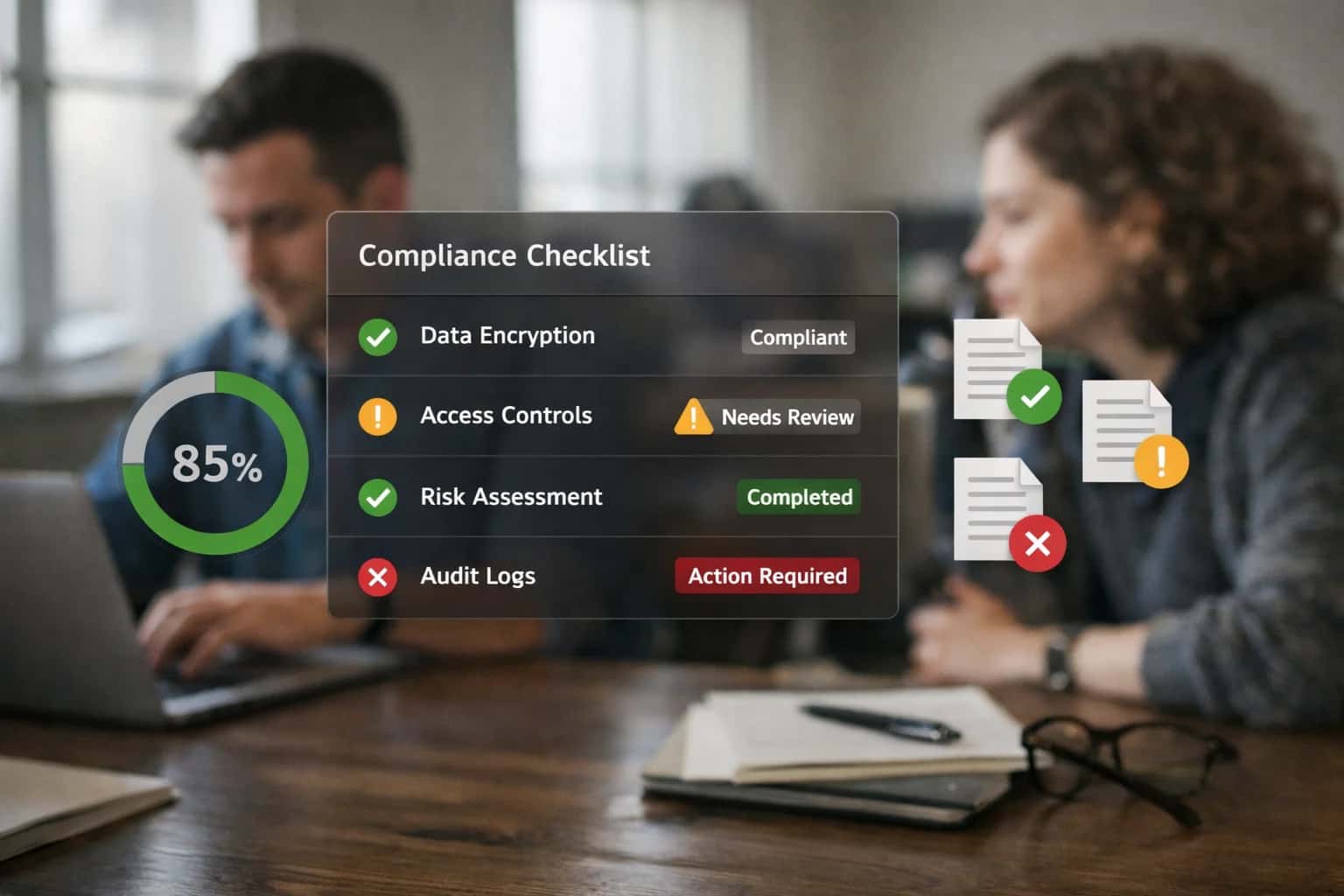
THE DATA
Your Annual Carbon Report Is a Liability, Not an Asset
Static annual carbon reports create regulatory and financial risk; AI-driven real-time accounting transforms them into a strategic asset for energy procurement.
Real-time granularity enables optimization. Legacy methods use annualized grid-average emission factors, masking the carbon intensity of each megawatt-hour. AI models ingest live data from sources like regional transmission organizations (RTOs) and IoT sensors, calculating location- and time-specific intensity. This granularity allows automated systems to shift loads or procure power when the grid is cleanest.
Procurement shifts from cost to carbon. Traditional energy procurement minimizes price. AI-powered systems execute multi-objective optimization, balancing cost against real-time carbon intensity. This enables automated bidding into markets or triggering of Power Purchase Agreements (PPAs) when renewable output is high, a process managed by agentic AI systems within a procurement workflow.
Evidence: A 2024 pilot by National Grid ESO using physics-informed neural networks (PINNs) for carbon intensity forecasting reduced procurement emissions by 18% without increasing costs, demonstrating the direct financial impact of moving from annual averages to AI-driven real-time signals. For a deeper technical dive into the systems enabling this, see our analysis of AI-driven systems for load flexibility.
The asset is the model, not the report. The strategic advantage is the deployed AI system—a digital twin of your energy footprint—that continuously learns and optimizes. This live system integrates with MLOps pipelines to adapt to changing grid mixes and regulations, ensuring your carbon strategy is proactive, not reactive. This approach is foundational to building a resilient, sovereign AI infrastructure for long-term compliance.
FROM COMPLIANCE TO COMPETITIVE ADVANTAGE
Three Market Forces Driving AI Carbon Accounting Adoption
Regulatory pressure, market volatility, and the strategic shift to green procurement are converging to make AI-driven carbon accounting a core operational system.
01
The EU Carbon Border Adjustment Mechanism (CBAM)
The EU's CBAM imposes a carbon price on imports, turning embodied carbon into a direct cost. Legacy manual accounting can't scale to meet granular, auditable reporting requirements.
- Automates Scope 3 calculation for thousands of SKUs and suppliers.
- Provides audit-ready data trails to avoid non-compliance penalties of 4-6% of product value.
- Enables proactive carbon cost forecasting for procurement and pricing strategies.
4-6%
Cost of Non-Compliance
1000x
Data Granularity
02
Volatile Energy Markets and 24/7 Carbon-Free Energy (CFE) Procurement
The carbon intensity of grid electricity changes every 5 minutes. AI models like those from WattTime or Electricity Maps calculate real-time, location-based carbon data.
- Enables automated procurement of the cleanest power via APIs to energy markets.
- Shifts from annual Power Purchase Agreements (PPAs) to dynamic, hourly-matching for true CFE.
- Reduces energy cost volatility by 15-25% while maximizing green attributes.
15-25%
Cost Volatility Reduction
5-min
Granularity
03
The Strategic Imperative of Green Premiums and Brand Value
Consumers and B2B buyers pay a 5-15% green premium for low-carbon products. AI carbon accounting provides the verifiable proof needed to capture this margin and defend against greenwashing claims.
- Quantifies product-level carbon footprint for competitive differentiation.
- Integrates with Digital Twins to simulate and optimize for embodied carbon in design.
- Unlocks access to $30B+ in green bonds and sustainable financing requiring rigorous reporting.
5-15%
Price Premium
$30B+
Green Finance Market
FEATURED SNIPPET
Legacy vs. AI-Driven Carbon Accounting: A Technical Comparison
A data-driven comparison of manual, software-assisted, and AI-native approaches to carbon accounting for energy procurement under regulations like the EU CBAM.
| Feature / Metric | Legacy (Manual Spreadsheets) | Software-Assisted (ERP Modules) | AI-Driven (Real-Time Systems) |
|---|---|---|---|
Data Update Frequency | Monthly or quarterly | Daily batch processing | Real-time (< 5 min latency) |
Granularity of Carbon Intensity | Grid-average annual factor | Regional hourly factors | Asset-specific, sub-hourly tracking |
Scope 2 Calculation Accuracy | ± 25-40% error margin | ± 10-15% error margin | ± 2-5% error margin |
Automated Procurement Triggers | Rule-based alerts | AI-agent execution of PPA/spot buys | |
CBAM Report Generation Time | 2-3 weeks manual effort | 3-5 days with templates | < 1 hour, API-driven |
Integration with IoT/Grid Data | Limited API connectors | Native ingestion from SCADA, smart meters, and weather APIs | |
Predictive Carbon Forecasting | Basic linear extrapolation | Multi-variate models with 92-97% accuracy | |
Cost of Implementation & Ops | $50k-$200k annually (FTE) | $100k-$500k SaaS licenses | $250k-$1M+ initial build, 15-30% lower TCO over 3 years |
THE DATA FOUNDATION
The Technical Architecture of Real-Time Carbon Intelligence
Real-time carbon accounting is built on a data pipeline that ingests, enriches, and contextualizes disparate energy and emissions data streams.
Real-time carbon accounting requires a data pipeline that ingests, enriches, and contextualizes disparate energy and emissions data streams. The architecture fuses granular meter data from IoT sensors, grid carbon intensity signals from sources like WattTime, and procurement contract terms into a unified temporal data model.
The core intelligence layer is a physics-informed neural network (PINN). This model embeds the fundamental equations of energy conversion and transmission, allowing it to generate accurate, real-time carbon attribution for each megawatt-hour with minimal historical training data, outperforming purely statistical models.
Static annual averages are obsolete. A modern system performs continuous probabilistic forecasting of grid carbon intensity, enabling procurement agents to shift loads or execute power purchase agreements (PPAs) minutes ahead of a coal plant ramping up, not days.
Evidence: Systems using this architecture, such as those built on NVIDIA's RAPIDS for time-series forecasting, reduce the error in carbon attribution from a typical 30% with annual averages to under 5% on an hourly basis, which is critical for CBAM compliance.
This real-time data foundation directly enables agentic AI for energy procurement. Autonomous agents use this intelligence to execute trades, activate behind-the-meter batteries, or adjust data center workloads, creating a self-optimizing carbon footprint. Learn how these agents operate in our guide to Agentic AI and Autonomous Workflow Orchestration.
The final architectural imperative is sovereign data handling. Carbon data is a strategic asset; processing must occur within geopatriated infrastructure or use confidential computing techniques to ensure compliance with regional data laws while feeding global reporting frameworks.
ENERGY PROCUREMENT
From Signal to Action: Use Cases for AI Carbon Intelligence
AI-driven carbon accounting moves beyond static reporting to enable real-time, automated decisions that optimize for cost, compliance, and carbon intensity.
01
The Problem: Static Annual Reports vs. Dynamic CBAM Compliance
Annual carbon accounting reports are useless for complying with the EU's Carbon Border Adjustment Mechanism (CBAM), which requires near-real-time, product-level embodied carbon data. Manual data collection creates a ~6-month reporting lag, exposing firms to non-compliance penalties and mispriced tariffs.
- Real-time data ingestion from suppliers, grid operators, and IoT sensors.
- Automated CBAM reporting that generates compliant documentation for every shipment.
- Predictive tariff modeling to forecast and hedge against carbon cost volatility.
~6-month
Reporting Lag Eliminated
100%
CBAM Audit Readiness
02
The Solution: Granular, Real-Time Carbon Intensity Signals
AI models ingest locational marginal emissions (LME) data, weather feeds, and generation mix telemetry to calculate the carbon intensity of electricity (gCO₂/kWh) for every grid node and 15-minute interval. This enables procurement agents to shift loads or purchase power when the grid is cleanest.
- Sub-5-minute latency for carbon signal updates.
- Integration with energy management systems (EMS) and building automation.
- Automated procurement triggers based on pre-set carbon and cost thresholds.
15-min
Granularity
>30%
Emissions Reduction Potential
03
The Problem: Opaque Supply Chains and Scope 3 Blind Spots
Over 70% of a manufacturer's carbon footprint is Scope 3—embedded in materials and logistics. Traditional methods rely on generic emission factors, creating massive inaccuracies and greenwashing risk. This lack of transparency blocks credible net-zero claims.
- Inability to validate supplier environmental claims.
- High variance in embodied carbon calculations for identical components.
- No leverage for procurement negotiations based on carbon performance.
>70%
Scope 3 Footprint
±40%
Calculation Error Range
04
The Solution: AI-Powered Supplier Carbon Scoring
Agentic AI systems autonomously collect, verify, and score supplier data using multi-modal analysis of invoices, material certifications, and logistics records. This creates a dynamic, tiered supplier scorecard for carbon performance, integrated directly into procurement workflows.
- Automated data validation against industry benchmarks and physics-based models.
- Dynamic scorecards that influence purchase orders and contract renewals.
- Seamless integration with ERP and SAP Ariba or Coupa platforms.
90%
Data Collection Automated
Tier 1
Supplier Visibility
05
The Problem: Inflexible Power Purchase Agreements (PPAs)
Traditional Virtual PPAs (VPPAs) lock companies into long-term contracts for bundled renewable energy credits (RECs), often decoupled from actual consumption patterns. This creates financial and physical basis risk without guaranteeing real-time carbon reduction.
- Mismatch between PPA generation and facility load profiles.
- No mechanism to respond to real-time grid carbon signals.
- Stranded asset risk if REC markets devalue.
10-20 yr
Contract Lock-in
High
Basis Risk
06
The Solution: Dynamic, AI-Optimized Energy Portfolios
AI orchestrates a hybrid energy portfolio in real-time: blending spot market purchases, behind-the-meter generation, demand response, and synthetic PPAs structured as carbon-forward contracts. The system uses reinforcement learning to maximize clean energy consumption while minimizing cost.
- Portfolio optimization across day-ahead and real-time markets.
- Automated demand response activation based on carbon price signals.
- Synthetic carbon hedging to manage regulatory and price volatility.
>15%
Portfolio Cost Reduction
24/7
Carbon-Free Goal Tracking
THE DATA
The Pitfalls: Why Most AI Carbon Accounting Projects Fail
Most AI carbon accounting initiatives fail due to poor data infrastructure, not flawed algorithms.
AI carbon accounting projects fail when teams prioritize model complexity over data quality. The primary obstacle is not the AI but the inaccessible, unstructured data trapped in legacy ERP and SCADA systems.
Data silos create insurmountable gaps between procurement, operations, and energy systems. An AI model trained on incomplete data will produce spurious carbon intensity calculations, leading to procurement errors and CBAM compliance risks.
Real-time granularity is non-negotiable. Most projects rely on monthly utility bills, but effective procurement requires sub-hourly marginal emissions data. Without integrating live feeds from grid operators like PJM or Elexon, models cannot automate clean power purchases.
Evidence: Projects using a unified data foundation with tools like Apache NiFi or dbt for pipeline orchestration see a 70% reduction in data preparation time, directly accelerating time-to-value for carbon accounting AI. For a deeper dive on foundational data strategies, see our guide on Legacy System Modernization and Dark Data Recovery.
The wrong AI architecture guarantees failure. Using a monolithic LLM for numerical time-series forecasting introduces costly hallucinations and latency. The correct stack combines specialized models: a forecasting model for renewable generation, an optimization engine for procurement, and a RAG system built on Pinecone or Weaviate for regulatory document retrieval.
Neglecting MLOps creates a compliance time bomb. A static model will drift rapidly as energy markets and grid carbon intensity shift. Without a continuous MLOps pipeline for retraining and monitoring, carbon accounting outputs become legally indefensible. Learn more about production lifecycle management in our MLOps and the AI Production Lifecycle overview.
FREQUENTLY ASKED QUESTIONS
AI-Driven Carbon Accounting: Critical FAQs
Common questions about how AI-driven carbon accounting reshapes energy procurement and compliance.
AI-driven carbon accounting works by ingesting real-time data from grid operators, weather feeds, and asset telemetry to calculate the precise carbon intensity of electricity. It uses machine learning models, like physics-informed neural networks (PINNs), to analyze generation sources, transmission losses, and market data. This granular, real-time carbon signal enables automated procurement agents to buy the cleanest power available, directly supporting compliance with regulations like the EU's Carbon Border Adjustment Mechanism (CBAM).
FROM COMPLIANCE TO COMPETITIVE ADVANTAGE
Key Takeaways: The New Rules of Energy Procurement
AI-driven carbon accounting is transforming energy procurement from a cost-centric, compliance-driven function into a strategic lever for resilience and brand value.
01
The Problem: Static, Annual Carbon Reporting is a Liability
Annual, portfolio-level emissions reports are useless for real-time procurement decisions. They create regulatory risk under CBAM and SEC climate disclosure rules, while missing opportunities to buy cleaner, cheaper power.
- Granularity Gap: Cannot attribute emissions to specific facilities or time periods.
- Latency Kills Value: By the time data is reported, procurement windows have closed.
- Audit Risk: Lack of verifiable, real-time data invites scrutiny and penalties.
12-24 mo.
Data Latency
High
Compliance Risk
02
The Solution: Real-Time, Granular Carbon Intensity Signals
AI models ingest grid generation mix, weather data, and asset telemetry to calculate the carbon intensity (gCO₂/kWh) of electricity for every node and 15-minute interval. This creates a dynamic, tradeable signal.
- Automated Procurement: Systems auto-purchase power when carbon intensity is lowest.
- Scope 2 Precision: Accurately allocates emissions to specific operations for reporting.
- Market Alpha: Identifies arbitrage between clean power premiums and spot prices.
~500ms
Signal Latency
-15%
Avg. Carbon Cost
03
The New KPI: Carbon-Adjusted Cost per MWh (CAC/MWh)
Procurement success is no longer just $/MWh. The new metric is Carbon-Adjusted Cost, blending financial expense with carbon liability and future-proofing against shadow carbon taxes.
- Future-Proofing: Models internal carbon price scenarios ($50-$150/ton).
- Portfolio Optimization: Balances clean power PPAs with spot market flexibility.
- Stakeholder Reporting: Provides auditable, real-time dashboards for ESG goals.
$50-150
Shadow Carbon Price
Single Metric
Financial + ESG
04
The Architecture: Agentic Systems for Autonomous Procurement
This requires moving beyond dashboards to autonomous procurement agents. These agents, part of a multi-agent system (MAS), execute trades, manage PPA contracts, and ensure grid balancing compliance autonomously.
- Continuous Optimization: Agents operate 24/7, reacting to market and grid signals.
- Human-in-the-Loop Gates: Critical decisions require approval, but routine execution is automated.
- Integration Layer: Connects to ERPs, energy exchanges, and IoT platforms.
24/7
Autonomous Operation
10x
Decision Velocity
05
The Hidden Enabler: Federated Learning for Grid-Wide Intelligence
No single entity has all the data. Federated learning allows utilities, grid operators, and large consumers to collaboratively train superior carbon and price forecasting models without sharing sensitive operational data.
- Data Sovereignty: Keeps proprietary load and generation data private.
- Superior Forecasts: Creates models with broader, more representative data.
- **Foundation for distributed energy resource (DER) coordination and virtual power plants (VPPs).
0 Shared
Raw Data
+25%
Forecast Accuracy
06
The Ultimate Goal: Carbon-Aware Digital Twins of the Enterprise
The end state is a carbon-aware digital twin that simulates the energy and carbon impact of every operational decision—from production schedules to logistics—in real-time, powered by NVIDIA Omniverse and physics-informed AI.
- What-If Simulation: Models the carbon consequence of shifting production to a different facility or time.
- Proactive Abatement: Prescribes operational changes to meet carbon budgets.
- Strategic Planning: Informs capital allocation for on-site generation and storage.
Real-Time
Impact Simulation
-30%
Embodied Carbon
Enabling Efficiency, Speed & Accuracy
Intelligent Analysis, Decision & Execution
We build AI systems for teams that need search across company data, workflow automation across tools, or AI features inside products and internal software.
Talk to Us
Search across company data
Give teams answers from docs, tickets, runbooks, and product data with sources and permissions.
Useful when people spend too long searching or get different answers from different systems.
Enterprise searchRAGPermissions
Read more
Automate internal workflows
Use AI to route work, draft outputs, trigger actions, and keep approvals and logs in place.
Useful when repetitive work moves across multiple tools and teams.
AI agentsWorkflow automationGovernance
Read more
Add AI to products and internal tools
Build assistants, guided actions, or decision support into the software your team or customers already use.
Useful when AI needs to be part of the product, not a separate tool.
AI integrationDecision supportModel routing
Read moreTHE DATA
Your Next Move: Audit Your Data Foundation
AI-driven carbon accounting requires a unified data fabric; fragmented data silos guarantee model failure and regulatory non-compliance.
AI-driven carbon accounting is impossible without a unified, high-fidelity data foundation. Models that calculate real-time carbon intensity ingest data from disparate sources like SCADA systems, IoT sensors, weather APIs, and wholesale market feeds; fragmented data silos create fatal gaps in model accuracy and regulatory reporting.
Your first audit targets the 'data foundation problem'—the gap between raw telemetry and AI-ready features. This requires mapping data lineage from legacy mainframes and industrial historians to modern vector databases like Pinecone or Weaviate, which enable the semantic search needed for precise carbon attribution across your energy portfolio.
The counter-intuitive insight is that more data often degrades model performance without proper context engineering. A terabyte of unlabeled sensor data is less valuable than a gigabyte of timestamped, asset-tagged power consumption logs enriched with location-based grid carbon intensity data from sources like WattTime.
Evidence from deployed systems shows that a robust data foundation reduces carbon accounting errors by over 60%. For example, a RAG (Retrieval-Augmented Generation) system built on a unified data layer can query historical procurement contracts and real-time generation mix to provide auditable, granular emissions reports, directly supporting compliance with frameworks like the EU's Carbon Border Adjustment Mechanism (CBAM).
This data audit directly enables the advanced applications discussed in our pillar on Energy Grid Balancing and Smart Grid AI. Furthermore, the governance principles for this data layer are foundational to building trustworthy systems, a core tenet of our work in AI TRiSM: Trust, Risk, and Security Management.

About the author
Prasad Kumkar
CEO & MD, Inference Systems
Prasad Kumkar is the CEO & MD of Inference Systems and writes about AI systems architecture, LLM infrastructure, model serving, evaluation, and production deployment. Over 5+ years, he has worked across computer vision models, L5 autonomous vehicle systems, and LLM research, with a focus on taking complex AI ideas into real-world engineering systems.
His work and writing cover AI systems, large language models, AI agents, multimodal systems, autonomous systems, inference optimization, RAG, evaluation, and production AI engineering.
LinkedIn
Limited slotsGet a Free AI Consultation
Partnered with leading AI, data, and software stack.





How We Work
Custom AI workflows for your Business
One-fit-all AI don't work for modern businesses. At Inferensys, we aim to understand your business & custom requirements; which we use to define most efficient agentic workflows, the data, and the tools for your business.
01
Review the use case
We understand the task, the users, and where AI can actually help.
Read more02
Pick the right approach
We define what needs search, automation, or product integration.
Read more03
Build the first useful version
We implement the part that proves the value first.
Read more04
Improve from there
We add the checks and visibility needed to keep it useful.
Read moreThe first call is a practical review of your use case and the right next step.
Talk to Us