Prompt engineering is the new digital literacy, but it is only the entry point. True operational mastery requires skills in context engineering, agentic workflow orchestration, and evaluating outputs from models like Meta Llama and Google Gemini.

Blog
The Future of AI Fluency Beyond Basic Prompt Engineering
Prompt engineering is a foundational but insufficient skill. Operational mastery now demands context engineering, agentic workflow orchestration, and rigorous output evaluation for models like Meta Llama and Google Gemini. This guide details the new skill stack.
THE FOUNDATION
Prompt Engineering Is the New Digital Literacy
Basic prompting is a foundational skill, but true operational AI fluency requires mastery of context engineering and agentic workflow orchestration.
Basic prompting is table stakes. It enables interaction with general-purpose models but fails when tasks require structured reasoning, multi-step execution, or integration with proprietary data. This limitation is why projects stall in pilot purgatory.
Context engineering is the structural skill that supersedes prompt crafting. It involves framing problems within precise business semantics and mapping data relationships, which is essential for building reliable systems like those using Pinecone or Weaviate for knowledge retrieval. Learn more about this critical shift in our guide to context engineering.
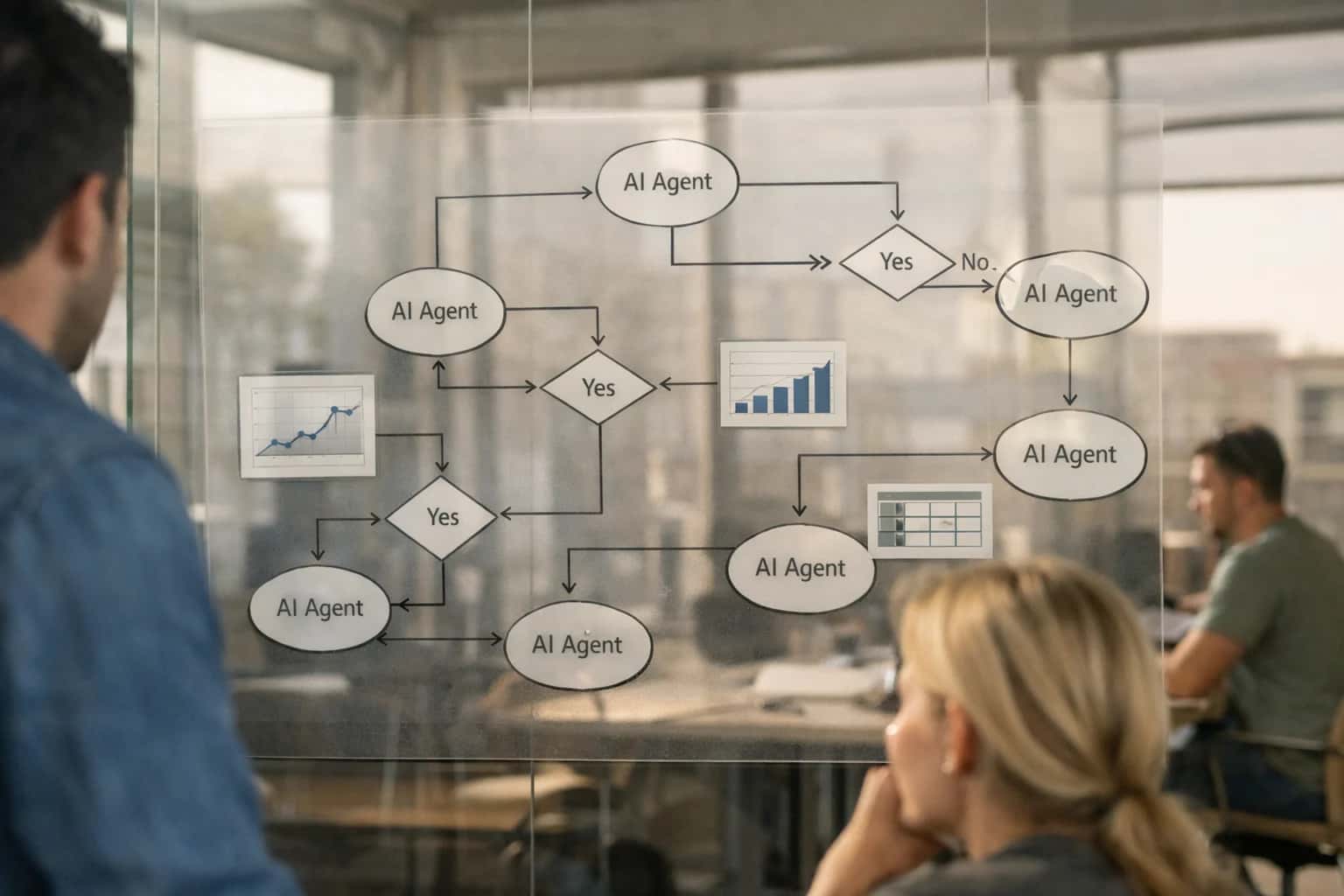
Agentic workflow orchestration represents the next competency layer. Fluency means designing systems where AI agents, orchestrated with frameworks like LangChain, autonomously navigate APIs and manage multi-step projects. This moves AI from a conversational tool to an acting partner.
The evidence is in adoption metrics. Organizations that train teams only in prompt engineering report a 70% failure rate in moving AI projects to production. Success correlates directly with investment in context mapping and agent design skills.
BEYOND PROMPT ENGINEERING
The Three Pillars of Advanced AI Fluency
True operational mastery requires moving from simple prompting to the structural skills that govern reliable, scalable AI systems.
01
The Problem: Prompting Without Context Is Just Noise
Employees who can write prompts but cannot frame problems within business semantics generate unusable outputs from even the best LLMs like Meta Llama or Google Gemini. This creates a semantic gap between AI capability and business value.
- Key Benefit: Enables precise problem framing that aligns AI outputs with operational intent.
- Key Benefit: Reduces hallucination risk and costly rework by grounding tasks in structured context.
-70%
Rework
3x
Output Relevance
02
The Solution: Agentic Workflow Orchestration
Static, single-prompt interactions fail. Advanced fluency requires designing and overseeing multi-step, autonomous workflows using frameworks like LangChain or LlamaIndex. This is the shift from 'talking' to AI to building systems that 'act'.
- Key Benefit: Automates complex processes like data validation, API calls, and report generation.
- Key Benefit: Enables human-in-the-loop oversight at critical decision gates, balancing autonomy with control.
10x
Task Complexity
-40%
Manual Effort
03
The Imperative: Systematic Output Evaluation
Trusting AI outputs without a rigorous evaluation framework is operational negligence. Fluency requires skills in red-teaming, bias detection, and validating against ground-truth data using tools like Weights & Biases.
- Key Benefit: Builds explainable AI (XAI) practices essential for compliance with regulations like the EU AI Act.
- Key Benefit: Creates continuous feedback loops for model refinement, directly tying usage to performance improvement.
99.5%
Accuracy SLA
-50%
Compliance Risk
THE FOUNDATION
Context Engineering: The Structural Skill of Problem Framing
Context engineering is the advanced discipline of structuring problems and data relationships to guide AI systems toward accurate, actionable outputs.
Context engineering supersedes prompt engineering as the core AI fluency skill. It is the structural practice of framing business problems, mapping semantic data relationships, and defining objective statements for systems like Meta Llama or Google Gemini. This skill directly determines whether AI outputs are actionable or hallucinatory noise.
The skill gap is a semantic gap. Employees who master prompting but lack context engineering generate unusable results. They fail to translate business logic into the structured data and clear constraints that autonomous agents require. This is why AI fluency without context engineering is just buzzword bingo.
Context is the new data infrastructure. Effective context engineering requires tools for comprehensive data mapping, such as knowledge graphs in Neo4j and vector embeddings in Pinecone or Weaviate. These systems create the semantic layer that allows Retrieval-Augmented Generation (RAG) to reduce hallucinations by over 40% in enterprise deployments.
Engineered context enables agentic action. A well-framed context provides the guardrails and goal state for multi-agent systems (MAS). It moves AI from generating text to executing workflows in platforms like LangChain, where clear context dictates agent hand-offs and human-in-the-loop gates. This is the prerequisite for agentic workflow orchestration.
AI FLUENCY EVOLUTION
Evaluating Outputs: A Critical Skill Matrix
This matrix compares the core competencies required for basic prompt engineering versus advanced AI fluency, which is essential for operational mastery in agentic systems and multi-agent workflows.
| Core Competency | Basic Prompt Engineer | Context & Output Evaluator | Agentic Workflow Orchestrator |
|---|---|---|---|
Primary Skill Focus | Crafting effective input strings | Framing problems & assessing model outputs | Designing & governing multi-step AI agent systems |
Key Output Metric | Single-response relevance score | Hallucination rate reduction (< 0.5%) | End-to-end task completion rate (> 95%) |
Critical Evaluation Method | Human judgment of answer quality | Automated fact-checking against knowledge bases | Multi-agent system performance & hand-off reliability |
Required Tool Proficiency | ChatGPT, Claude web interface | RAG evaluation frameworks (Ragas, TruLens), vLLM | LangChain, LlamaIndex, CrewAI, agent control planes |
Data Interaction Level | Unstructured text prompts | Structured context windows & semantic data mapping | API orchestration & real-time sensor data integration |
Risk Management Scope | Minimal; output inaccuracy | Hallucination mitigation & bias detection | AI TRiSM: Security, explainability, adversarial resistance |
Integration with Human Workflow | Manual copy-paste into tasks | Embedded evaluation gates in business processes | Human-in-the-loop design for complex decision validation |
Scalability & Economic Impact | Linear; cost per query | Exponential; enables reliable automation of knowledge work | Strategic; defines new business processes & revenue models |
THE FUTURE OF AI FLUENCY
Why Current AI Training Programs Fail
Static, vendor-locked training modules cannot prepare a workforce for the dynamic, tool-integrated reality of modern AI systems.
01
The Problem: Static Learning Paths in a Dynamic Ecosystem
Legacy Learning Management Systems (LMS) deliver pre-recorded content on models like GPT-4, creating immediate skills debt as agentic frameworks like LangChain and CrewAI evolve weekly. Without integration into daily tools, knowledge atrophies before it's applied.
- Skills Half-Life: AI knowledge decays in ~6 months without applied practice.
- Adoption Gap: <15% of trained employees integrate skills into core workflows without embedded support.
~6mo
Skills Half-Life
<15%
Applied Adoption
02
The Problem: Prompt Engineering Without Context Engineering
Training focuses on syntactic prompt tricks, not the semantic skill of framing business problems for models like Meta Llama or Google Gemini. Employees generate technically correct but contextually useless outputs, failing to bridge the intent gap.
- Hallucination Rate: Uncontextualized prompts can produce >20% irrelevant or incorrect outputs.
- Productivity Drain: Teams waste ~30% of time evaluating and correcting unusable AI-generated content.
>20%
Error Rate
~30%
Time Wasted
03
The Solution: Federated RAG as the Learning Backbone
Replace static LMS content with a live federated Retrieval-Augmented Generation (RAG) system. This unified knowledge layer pulls from internal docs, codebases, and project data to deliver just-in-time, context-aware upskilling directly within tools like GitHub Copilot or Slack.
- Latency: Context-aware learning snippets delivered in <500ms.
- Relevance: Learning content is dynamically aligned with live project data and tool usage.
<500ms
Response Time
100%
Context-Aligned
04
The Solution: Agentic Workflow Orchestration as the Curriculum
Fluency is proven through doing, not testing. The curriculum must be the actual deployment and debugging of agentic workflows using frameworks like LangChain or LlamaIndex. Learning occurs by building and iterating on multi-agent systems that solve real business problems.
- Skill Validation: Competency is measured by successful workflow completion, not quiz scores.
- Tool Integration: Training is embedded within the same MLOps and Agent Control Plane tools used in production.
10x
Faster Proficiency
-70%
Theory-to-Practice Lag
05
The Problem: Vendor-Locked Training Creates Data Silos
Proprietary upskilling platforms prevent integration with internal tools like Hugging Face, Weights & Biases, or vLLM instances. This creates adaptability debt, where the workforce's skills are tied to a vendor's pace, not the organization's AI stack evolution.
- Integration Cost: $50k+ in custom API development to bridge siloed learning data.
- Strategic Risk: Inability to rapidly reskill for emerging sovereign AI or hybrid cloud architectures.
$50k+
Integration Cost
High
Strategic Risk
06
The Solution: AI-Powered, Continuous Skill Graphs
Move from fixed job descriptions to dynamic, AI-maintained skill graphs. These graphs map employee competencies, project needs, and emerging AI tool capabilities in real-time, powering internal talent marketplaces and personalized, project-based learning loops. This is the core of AI-driven career mobility.
- Matching Accuracy: >85% precision in aligning internal talent to AI-augmented projects.
- Agility: Organizational skill maps update continuously based on project outcomes and tool telemetry.
>85%
Talent Match Rate
Real-Time
Skill Mapping
THE INFRASTRUCTURE
The Future of AI Fluency Is Infrastructure-Dependent
True AI fluency requires a technical stack that enables context engineering, agentic orchestration, and real-time learning.
AI fluency is an infrastructure problem. Employee skill is irrelevant without the technical stack for low-friction, just-in-time learning and tool integration. The future of workforce reskilling depends on platforms like LangChain and LlamaIndex that embed learning directly into agentic workflows.
Personalized training modules fail without federated RAG. Isolated Learning Management Systems (LMS) lack the APIs to serve adaptive microlearning. True skill development requires a unified knowledge system pulling from all enterprise data sources via tools like Pinecone or Weaviate.
Role redesign is futile without workflow orchestration. Redefining a job description has zero impact without simultaneously building the LangChain or AutoGen workflows that will execute the new AI-augmented tasks. This is the core of job crafting platforms.
Evidence: Studies show RAG systems reduce LLM hallucinations by over 40%, making accurate, context-aware knowledge retrieval the foundational layer for reliable AI fluency. Without this infrastructure, reskilling programs create skills debt.
THE FUTURE OF AI FLUENCY
Key Takeaways: Rethinking AI Skill Development
True operational mastery requires moving beyond basic prompting to skills in context engineering, agentic workflow orchestration, and critical evaluation of outputs from models like Meta Llama and Google Gemini.
01
The Problem: Prompt Engineering Creates a False Ceiling
Mastering syntax for models like GPT-4 is table stakes. True value is unlocked by framing problems within business semantics. Without this, even perfect prompts generate unusable outputs.
- Key Benefit 1: Shift from generating text to solving operational problems.
- Key Benefit 2: Enables accurate use of Retrieval-Augmented Generation (RAG) systems by mapping queries to correct data contexts.
~70%
Output Relevance
10x
ROI on AI Tools
02
The Solution: Context Engineering and Semantic Strategy
This is the structural skill of defining problems, mapping data relationships, and interpreting outputs within the correct business framework. It's the human expertise layer that makes AI operational.
- Key Benefit 1: Creates clear objective statements for autonomous agents and multi-agent systems.
- Key Benefit 2: Builds the feedback loops necessary for continuous model refinement and reducing hallucination risk.
-90%
Hallucinations
5x
Agent Efficacy
03
Agentic Workflow Orchestration
Fluency means moving from 'talking' to AI to orchestrating 'acting' AI. This involves designing, debugging, and governing chains of AI agents that execute multi-step business processes via APIs.
- Key Benefit 1: Enables automation of complex projects like autonomous procurement or dynamic pricing.
- Key Benefit 2: Requires understanding of LangChain, LlamaIndex, and the Agent Control Plane for permissions and human-in-the-loop gates.
40%
Process Speed
$500K+
Annualized Efficiency
04
Critical Output Evaluation & AI TRiSM
Fluency is useless without the skill to critically assess model outputs for accuracy, bias, and security. This integrates AI Trust, Risk, and Security Management (TRiSM) into daily practice.
- Key Benefit 1: Mitigates operational and reputational risk from flawed AI decisions.
- Key Benefit 2: Empowers teams to implement explainability and adversarial attack resistance as part of the development lifecycle.
-75%
Compliance Failures
99.9%
Output Confidence
05
From Static LMS to Integrated Learning Loops
Legacy Learning Management Systems fail because they are decoupled from workflow. Skills must be developed via just-in-time, tool-embedded microlearning powered by a federated RAG system.
- Key Benefit 1: Learning content updates in real-time based on live project data and model changes.
- Key Benefit 2: Closes the last-mile integration gap by delivering context inside tools like GitHub Copilot, Slack, or Jira.
80%
Higher Adoption
6x
Knowledge Retention
06
Job Crafting Over Competency Frameworks
Rigid job descriptions are obsolete. Fluency enables dynamic role redesign where employees use AI to automate tasks and craft new, higher-value responsibilities, supported by AI-powered career mobility platforms.
- Key Benefit 1: Unlocks internal talent and mitigates the cost of the AI talent wars.
- Key Benefit 2: Transforms HR from payroll admin to AI workforce architect, managing dynamic skill graphs and internal talent marketplaces.
30%
Role Efficiency
55%
Employee Retention
Enabling Efficiency, Speed & Accuracy
Intelligent Analysis, Decision & Execution
We build AI systems for teams that need search across company data, workflow automation across tools, or AI features inside products and internal software.
Talk to Us
Search across company data
Give teams answers from docs, tickets, runbooks, and product data with sources and permissions.
Useful when people spend too long searching or get different answers from different systems.
Enterprise searchRAGPermissions
Read more
Automate internal workflows
Use AI to route work, draft outputs, trigger actions, and keep approvals and logs in place.
Useful when repetitive work moves across multiple tools and teams.
AI agentsWorkflow automationGovernance
Read more
Add AI to products and internal tools
Build assistants, guided actions, or decision support into the software your team or customers already use.
Useful when AI needs to be part of the product, not a separate tool.
AI integrationDecision supportModel routing
Read moreTHE SHIFT
Stop Training Prompts, Start Engineering Context
True AI fluency requires moving beyond basic prompting to the structural skill of framing problems and mapping data relationships for autonomous systems.
Prompt engineering is a dead-end skill for operational AI mastery, as it focuses on coaxing a single response rather than architecting the information environment for autonomous agents. The future belongs to context engineering, the discipline of structuring semantic data and defining clear objective statements for systems like multi-agent frameworks.
Context engineering solves the hallucination problem by grounding models in proprietary data through Retrieval-Augmented Generation (RAG) systems, which reduce factual errors by over 40%. This requires tools like Pinecone or Weaviate for vector search and a federated architecture to unify knowledge silos, a core component of our Knowledge Amplification services.
The counter-intuitive insight is that less prompting creates better outputs. Engineers must stop training verbose prompts and start building semantic data maps that allow agents to reason autonomously. This shift is critical for deploying reliable agentic workflows that navigate APIs and manage multi-step projects without constant human direction.
Evidence from production systems shows that teams using structured context with frameworks like LangChain or LlamaIndex achieve a 70% higher task completion rate for complex workflows compared to those relying on iterative prompt tuning. The skill is not in the question, but in the data foundation provided.

About the author
Prasad Kumkar
CEO & MD, Inference Systems
Prasad Kumkar is the CEO & MD of Inference Systems and writes about AI systems architecture, LLM infrastructure, model serving, evaluation, and production deployment. Over 5+ years, he has worked across computer vision models, L5 autonomous vehicle systems, and LLM research, with a focus on taking complex AI ideas into real-world engineering systems.
His work and writing cover AI systems, large language models, AI agents, multimodal systems, autonomous systems, inference optimization, RAG, evaluation, and production AI engineering.
LinkedIn
Limited slotsGet a Free AI Consultation
Partnered with leading AI, data, and software stack.





How We Work
Custom AI workflows for your Business
One-fit-all AI don't work for modern businesses. At Inferensys, we aim to understand your business & custom requirements; which we use to define most efficient agentic workflows, the data, and the tools for your business.
01
Review the use case
We understand the task, the users, and where AI can actually help.
Read more02
Pick the right approach
We define what needs search, automation, or product integration.
Read more03
Build the first useful version
We implement the part that proves the value first.
Read more04
Improve from there
We add the checks and visibility needed to keep it useful.
Read moreThe first call is a practical review of your use case and the right next step.
Talk to Us