
Blog
Digital Twins and the Industrial Metaverse
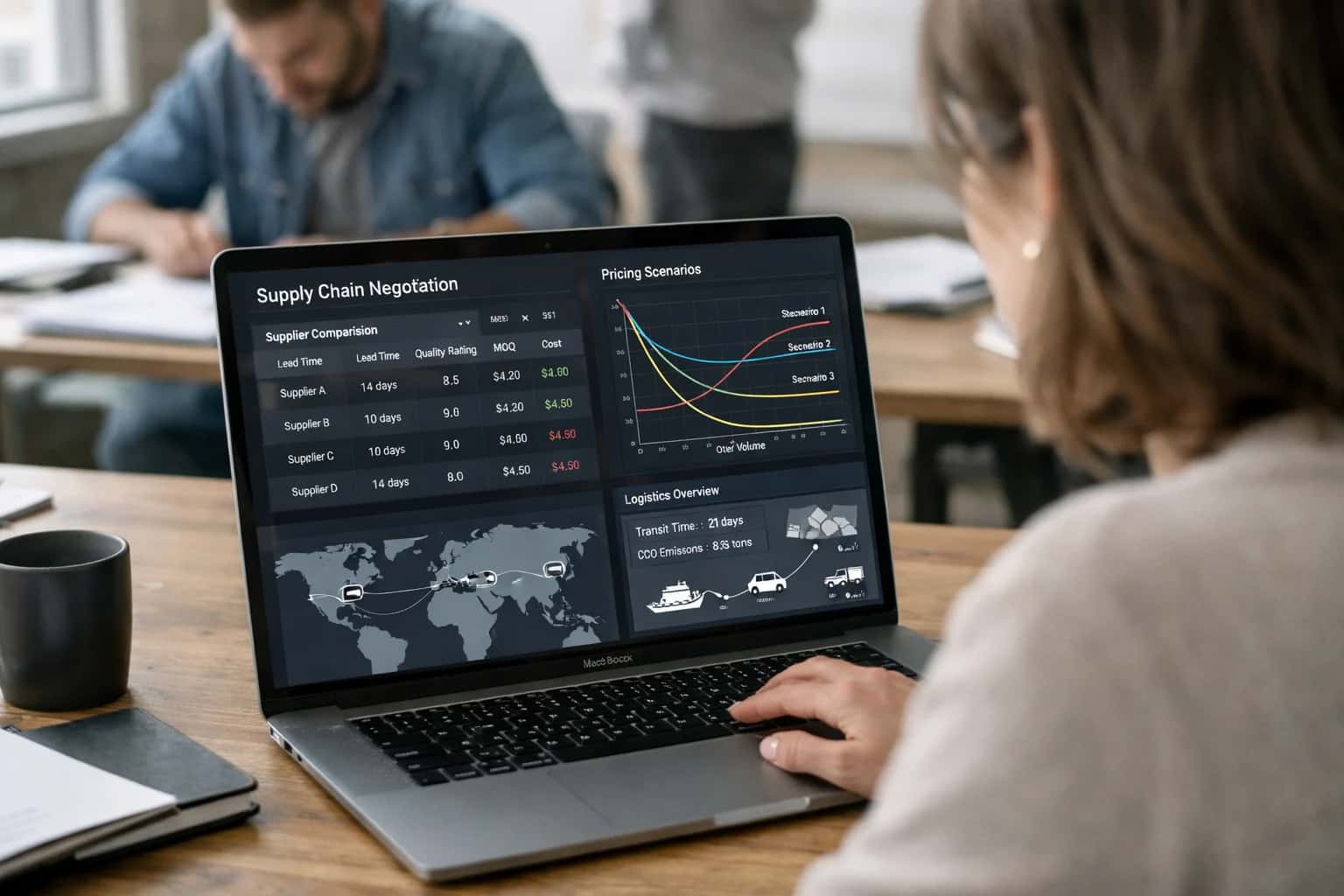
Digital Twins and the Industrial Metaverse
Digital twins are no longer static models; they are real-time virtual replicas used for simulation and operational throughput optimization. This pillar covers the integration of NVIDIA Omniverse and OpenUSD frameworks to create physically accurate twins of factories and supply chains. Sub-topics include simulating 'what-if' scenarios for factory floor layout, real-time energy efficiency monitoring, and digital twins for smart city urban planning.
Why Digital Twins Are the Ultimate AI Stress Test for Your Data Infrastructure
A real-time digital twin exposes every weakness in your data pipelines, demanding robust MLOps and high-fidelity synchronization to avoid catastrophic simulation failures.
The Future of the Industrial Metaverse Is Not Virtual Reality, It's Simulation Intelligence
The core value of the industrial metaverse lies in AI-driven simulation and optimization, not immersive visualization, enabling predictive scenario modeling and autonomous decision-making.
The Hidden Cost of Ignoring Real-Time Data Synchronization in Your Digital Twin
Latency and data drift between the physical asset and its twin create a 'simulation gap' that renders AI predictions useless and operational decisions risky.
Why Your Digital Twin Will Fail Without a Unified Physics Engine
Accurate simulation of material stress, fluid dynamics, and thermal properties requires a deterministic physics backbone, which disparate visualization tools cannot provide.
The Future of Factory Optimization Lies in AI-Driven 'What-If' Simulation Loops
Continuous AI agents running millions of simulated production scenarios in a digital twin enable real-time layout changes and throughput optimization impossible with static models.
Why NVIDIA Omniverse Is Becoming the De Facto AI Operating System for Industry
Omniverse provides the essential simulation, rendering, and USD-based interoperability layer that turns disparate AI models and data sources into a cohesive digital twin platform.
The Future of Supply Chain Resilience Is a Federated Network of AI Twins
Autonomous supply chains will be managed by interconnected digital twins that negotiate, predict disruptions, and self-optimize across organizational boundaries using multi-agent systems.
Why OpenUSD Is the Unsung Hero of Industrial Metaverse Interoperability
The Universal Scene Description (USD) framework is the non-negotiable data layer for composing complex digital twins from diverse sources, enabling true AI model and tool integration.
The Future of Predictive Maintenance Is a Continuously Learning Digital Shadow
Moving beyond threshold-based alerts, AI-powered digital shadows ingest real-time sensor data to model asset degradation and predict failures with increasing accuracy over time.
The Cost of Silos: Why Your Digital Twin and IoT Platforms Must Converge
Treating IoT data streams and the digital twin as separate systems creates an insurmountable context gap, preventing the AI from understanding cause and effect in operations.
Why 'Physically Accurate' Simulation Is an AI Benchmark, Not a Feature
The fidelity of a digital twin's physics simulation directly determines the validity of AI training and reinforcement learning outcomes for real-world robotics and control systems.
The Future of Manufacturing Throughput Will Be Dictated by Multi-Agent Twin Systems
Swarms of AI agents, each controlling a sub-process within a factory-scale digital twin, will collaboratively optimize for conflicting goals like speed, cost, and sustainability.
The Operational Cost of Digital Twin Hallucinations and How AI Mitigates Them
When a twin's simulation diverges from reality, AI-driven anomaly detection and causal inference models are required to identify and correct these costly 'hallucinations'.
Why Your Digital Twin Needs an AI 'Nervous System,' Not Just Sensors
A reactive sensor network is insufficient; an AI nervous system with predictive and prescriptive capabilities is required for autonomous response and system-wide coordination.
The Future of Energy Efficiency Is an AI-Optimized Digital Twin of Your Entire Grid
Grid-scale digital twins powered by reinforcement learning can dynamically balance load, integrate renewables, and prevent cascading failures in real-time.
Why Reinforcement Learning Is the Missing Engine for Autonomous Digital Twins
RL allows digital twins to not just simulate outcomes, but to discover and learn optimal control policies through trial and error in a risk-free virtual environment.
The Future of Quality Control Is a Deep Learning Model Embedded in Your Production Twin
Computer vision and spectral analysis models running directly within the production line's digital twin enable real-time, zero-latency defect detection and root cause analysis.
The Hidden Cost of Data Fidelity Gaps in AI-Driven Supply Chain Twins
Minor inaccuracies in inventory, location, or condition data within a supply chain twin compound into massive forecasting errors and failed autonomous decisions.
Why Multi-Modal AI Is Non-Negotiable for Context-Aware Industrial Metaverse Agents
Agents operating in a digital twin must fuse video, LiDAR, thermal, and acoustic data to understand complex industrial environments and make safe, effective decisions.
The Future of Factory Layout Will Be Continuously Redesigned by AI Simulators
Generative AI and simulation loops will autonomously propose and validate new factory floor plans optimized for changing product lines and throughput demands.
The Cost of Ignoring Adversarial Attacks on Your Mission-Critical Digital Twin
A compromised digital twin is a single point of failure; AI TRiSM principles must be applied to secure simulation inputs and protect against data poisoning.
Why Time-Series Forecasting AI Is the Beating Heart of an Operational Digital Twin
The predictive power of a live digital twin hinges on advanced time-series models that forecast equipment states, material flows, and energy consumption.
The Compliance Cost of Black-Box AI in Regulated Industry Digital Twins
In sectors like pharmaceuticals or aerospace, unexplained AI decisions within a digital twin create unacceptable regulatory risk, mandating explainable AI (XAI) frameworks.
Why Graph Neural Networks Are Essential for Modeling Complex Supply Chain Twins
GNNs uniquely model the relational dependencies between suppliers, logistics hubs, and factories, enabling accurate disruption propagation and resilience planning.
The Hidden Cost of Vendor Lock-In for Your Industrial Metaverse AI Stack
Proprietary simulation engines and data formats create strategic fragility; an open architecture centered on OpenUSD is critical for long-term AI model agility.
Why Explainable AI (XAI) Is a Safety Requirement, Not an Option, for Digital Twins
When an AI prescribes a shutdown or a major capital change via the twin, engineers must be able to audit the causal chain of reasoning to ensure safety.
The Future of Logistics Is a Self-Optimizing Digital Twin of the Global Network
An AI-powered twin that ingests weather, port congestion, and demand data will autonomously reroute fleets and rebalance inventory in real-time.
Why Simulation-Based AI Training Is Outpacing Real-World Data for Robotics
Physically accurate digital twins enable the generation of limitless, perfectly labeled training data for robotics AI, accelerating development and de-risking deployment.
The Future of Industrial Safety Will Be Enforced by AI Guardians in the Digital Twin
AI agents monitoring the digital twin will predict and prevent safety violations by simulating human and machine interactions before they occur in the physical world.
Why Edge AI Is Critical for Low-Latency Decision Loops in Operational Digital Twins
For real-time control, inference must happen at the sensor or gateway to close the loop between the physical asset and its twin before latency causes drift.
Partnered with leading AI, data, and software stack.





How We Work
Custom AI workflows for your Business
One-fit-all AI don't work for modern businesses. At Inferensys, we aim to understand your business & custom requirements; which we use to define most efficient agentic workflows, the data, and the tools for your business.
01
Review the use case
We understand the task, the users, and where AI can actually help.
Read more02
Pick the right approach
We define what needs search, automation, or product integration.
Read more03
Build the first useful version
We implement the part that proves the value first.
Read more04
Improve from there
We add the checks and visibility needed to keep it useful.
Read moreThe first call is a practical review of your use case and the right next step.
Talk to Us