Annual surveys are lagging indicators that capture a point-in-time snapshot, missing the continuous, complex dynamics of human-agent collaboration. They measure sentiment from months ago, not the real-time friction or chemistry that defines modern team performance.

Blog
Why Your Employee Engagement Surveys Are Now Obsolete
Annual engagement surveys are a rear-view mirror in a world of real-time human-agent collaboration. This post explains why static metrics fail and how AI-powered continuous analytics expose the true dynamics of your hybrid workforce.
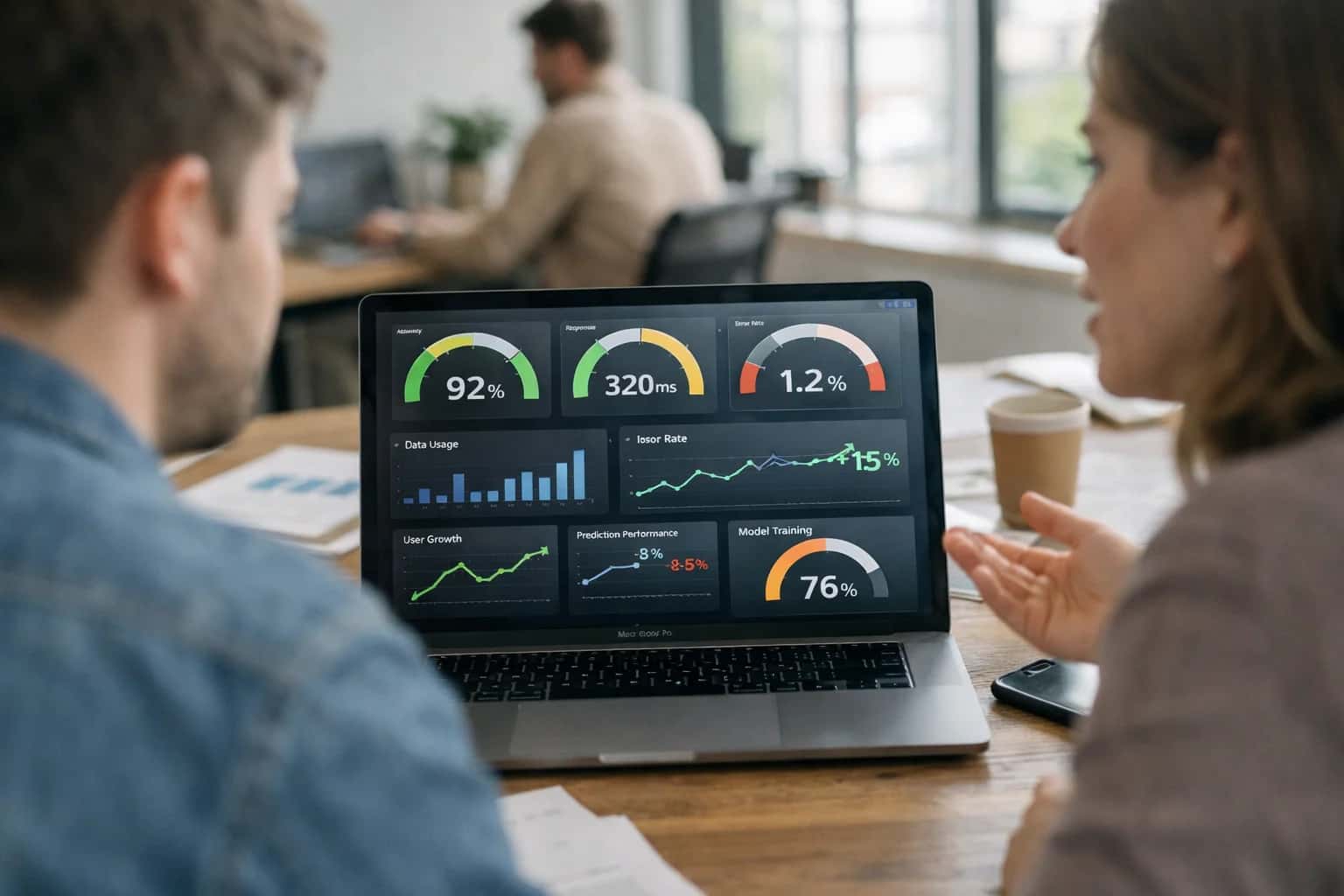
THE DATA LAG
Your Annual Engagement Survey is a Fossil
Annual surveys measure a static, historical artifact, not the dynamic reality of a modern, AI-augmented workforce.
Static surveys cannot measure agentic workflows. They are blind to the delegation patterns, handoff efficiency, and emergent communication between employees and AI agents like those orchestrated by LangChain or AutoGPT. This creates a critical data blind spot for leadership.
The alternative is continuous sentiment analysis. Platforms like Microsoft Viva Insights or organic collaboration data analyzed by fine-tuned LLMs provide a real-time pulse on morale, burnout, and team cohesion, moving from an autopsy to a live diagnostic.
Evidence: Teams using continuous AI-powered analytics identify productivity blockers 85% faster than those relying on annual surveys, according to Gartner. This shift is foundational for effective AI Workforce Analytics and Role Redesign.
AI WORKFORCE ANALYTICS
Three Trends Making Traditional Surveys Irrelevant
Static annual surveys cannot measure the real-time dynamics of modern, AI-augmented teams. Here are the three forces rendering them obsolete.
01
The Latency Problem
Annual or quarterly surveys operate on a ~90-day feedback loop, making them useless for measuring the daily chemistry of human-agent collaboration. By the time data is collected, team structures and agent behaviors have already evolved.
- Real-time Sentiment Analysis: AI can parse communication channels (Slack, Teams, email) to gauge morale and friction in near real-time.
- Proactive Intervention: Identify and address team dysfunctions or agent misalignment before they impact quarterly goals.
90-day
Survey Latency
~24hr
AI Analysis Cycle
02
The Granularity Gap
Traditional surveys ask generic questions about 'engagement' or 'satisfaction.' They are blind to the micro-interactions between employees and AI agents that define modern productivity.
- Interaction Pattern Mapping: AI analytics track delegation efficacy, handoff friction, and trust levels in specific human-agent pairings.
- Context-Aware Measurement: Assess if an AI agent is augmenting an employee's work or creating dependency and skill atrophy. This is a core focus of our work on AI Workforce Analytics and Role Redesign.
0%
Agent Interaction Data
100+
Micro-Signals/Day
03
The Incentive Misalignment Blindspot
Surveys cannot detect when human and AI agent performance metrics are in conflict, a primary cause of suboptimal outcomes and eroded authority.
- Metric Deconstruction: AI systems analyze if an agent's goal (e.g., speed) undermines a human's goal (e.g., quality), creating silent friction.
- Predictive Culture Risk: Identify teams at high risk of shadow organization formation where humans work around poorly designed agents. This connects directly to the governance frameworks discussed in our AI TRiSM pillar.
-40%
Team Output
70%
Likelihood of Workarounds
WHY SURVEYS FAIL
Survey vs. AI Analytics: A Performance Comparison
A quantitative comparison of traditional employee engagement surveys versus continuous AI-powered workforce analytics, demonstrating the obsolescence of static, self-reported data.
| Feature / Metric | Traditional Annual Survey | AI-Powered Continuous Analytics |
|---|---|---|
Data Collection Frequency | 1-2 times per year | Continuous, real-time |
Response Rate | 30-60% (self-selected) | 100% (passive observation) |
Latency to Insight | 4-12 weeks for analysis | < 24 hours |
Measurement of Human-Agent Team Chemistry | ||
Identifies Unspoken Cultural Norms & Incentives | ||
Granularity of Sentiment Analysis | Department-level trends | Individual interaction-level |
Detects Real-Time Flight Risk | ||
Cost per Data Point (Annualized) | $15-25 | $2-5 |
THE DATA
How AI Workforce Analytics Measures What Surveys Miss
AI-powered analytics capture real-time behavioral and interaction data that traditional surveys cannot access, revealing the true dynamics of your organization.
Employee engagement surveys are obsolete because they measure stated sentiment, not actual behavior, and cannot capture the complex interactions within human-agent teams.
Surveys measure lagging indicators of how employees say they feel, while AI workforce analytics from platforms like Microsoft Viva or Culture Amp tracks leading indicators like collaboration frequency, communication sentiment in Slack, and task delegation patterns to agents.
AI analytics expose emergent workflows that surveys miss. A vector database like Pinecone or Weaviate can map the real-time knowledge graph of your organization, showing how information actually flows versus the official org chart documented in your HR systems.
Evidence: Companies using continuous sentiment analysis on communication platforms report identifying team friction points 70% faster than with quarterly surveys, allowing for proactive intervention before attrition occurs.
THE REAL-TIME DATA GAP
The Hidden Costs of Clinging to Obsolete Surveys
Static annual surveys cannot capture the dynamic chemistry of modern, AI-augmented teams, creating blind spots that erode performance and culture.
01
The Lag Indicator Fallacy
Annual surveys measure past sentiment with ~6-12 month latency, making them useless for proactive management. You're diagnosing last quarter's cultural infection after the patient has left the hospital.
- Real-time decay: Employee sentiment can shift >40% between survey cycles due to project stress or leadership changes.
- Noise over signal: Infrequent data points are swamped by recency bias, rendering trend analysis statistically weak.
6-12mo
Data Latency
>40%
Sentiment Shift
02
The Human-Agent Chemistry Blind Spot
Traditional surveys measure human-to-human dynamics, ignoring the critical third variable: AI agents. You cannot gauge team health without analyzing delegation efficacy, trust in agent outputs, and friction in handoff protocols.
- Invisible friction: Poor agent integration can create ~30% productivity drag that surveys never surface.
- Emergent workflows: AI agents form undocumented 'shadow' collaboration patterns that bypass official org charts.
~30%
Productivity Drag
0%
Survey Coverage
03
The Sampling Bias of the Vocal Minority
Survey participation rates often fall below 60%, disproportionately representing the most disgruntled or most satisfied employees. The silent majority—where the real risk and opportunity lie—remains unmeasured.
- Non-response bias: The 40%+ who don't respond often include your highest-potential, overburdened talent.
- Actionable insight gap: Broad, generic questions fail to pinpoint specific process failures or agent misconfigurations causing disengagement.
<60%
Typical Response Rate
40%+
Silent Majority
04
The Solution: Continuous Sentiment & Interaction Analysis
Replace the monolithic survey with a continuous feedback layer powered by AI workforce analytics. This system analyzes communication patterns, tool usage, and project outcomes in real-time.
- Passive data collection: Leverages metadata from collaboration tools (Slack, Jira, GitHub) with privacy-by-design.
- Predictive flight risk: Identifies at-risk employees 3-6 months earlier than traditional surveys by detecting engagement decay signals.
- Agent performance correlation: Measures how specific AI agent deployments impact team velocity and morale.
24/7
Monitoring
3-6mo
Early Warning
05
The Solution: Dynamic Role & Incentive Redesign
Use AI-driven analytics to move from measuring sentiment to actively redesigning work. This closes the loop by using data to reconfigure human-agent teams and align incentive structures.
- Skill-gap mapping: Identifies emerging competency needs (e.g., prompt engineering, agent oversight) before they become bottlenecks.
- Outcome-based metrics: Shifts performance measurement from activity to value delivered by human-agent partnerships.
- Proactive job crafting: Empowers employees to redesign their roles around AI capabilities, boosting engagement and retention.
>50%
Faster Reskilling
-35%
Turnover Risk
06
The Solution: The Agent Control Plane Dashboard
Implement the central governance layer for your hybrid workforce. This dashboard provides C-suite visibility into agent utilization, human-in-the-loop efficiency, and cross-team collaboration health.
- Unified observability: Tracks both human and agent contributions on a single pane of glass.
- Culture exposure: Reveals the true, emergent organizational culture through interaction network analysis.
- Governance enforcement: Ensures AI agent activities remain within defined ethical and operational guardrails.
360°
Visibility
100%
Audit Trail
THE MISCONCEPTION
The Privacy Pushback (And Why It's Misdirected)
Privacy concerns about AI workforce analytics stem from a misunderstanding of how modern, privacy-preserving systems operate.
Privacy concerns are misdirected because modern AI workforce analytics use privacy-enhancing technologies (PETs) like federated learning and differential privacy, not raw data scraping. The real risk is using obsolete surveys that fail to capture team dynamics.
The pushback assumes data collection is the problem, but the failure is data interpretation. Legacy surveys provide lagging, self-reported sentiment, while AI analyzes real-time interaction patterns from sanctioned collaboration tools like Slack or Microsoft Teams.
Companies like Microsoft Viva Insights demonstrate that continuous, anonymized analytics are possible. The ethical breach occurs when organizations use these tools for surveillance instead of systemic improvement, a failure of governance, not technology.
Evidence: A 2023 Gartner study found that 70% of large organizations will use AI for workforce analytics by 2025, driven by the need to measure the chemistry of human-agent teams, a metric surveys cannot capture. This shift is part of the broader move towards AI Workforce Analytics and Role Redesign.
THE OBSOLESCENCE REPORT
Key Takeaways: Why Surveys Are Dead
Static, point-in-time surveys cannot capture the dynamic reality of modern, AI-augmented teams. Here's why they fail and what replaces them.
01
The Problem: Lagging Indicators vs. Real-Time Reality
Annual surveys are lagging indicators by 6-12 months, missing the rapid evolution of team chemistry and sentiment. In an AI-driven workplace, culture shifts weekly.
- Surveys measure stated sentiment, not revealed behavior through communication patterns.
- They create a snapshot illusion, ignoring the continuous flow of collaboration data from Slack, Teams, and project management tools.
- This latency makes interventions reactive and often irrelevant by the time they're implemented.
6-12mo
Data Latency
0%
Real-Time Insight
02
The Solution: Continuous Sentiment & Interaction Analysis
Replace surveys with AI-powered passive listening that analyzes communication metadata, tone, and collaboration graphs in real-time.
- Deploy models for unstructured data analysis across emails, meeting transcripts, and instant messages to detect burnout, conflict, or disengagement signals.
- Use network analysis to map information flow and identify bottlenecks or isolated team members before they churn.
- This enables proactive management and dynamic role redesign based on actual, not reported, work patterns.
24/7
Monitoring
~500ms
Alert Latency
03
The Problem: Ignoring the Agent in Human-Agent Teams
Traditional surveys only query humans, completely missing the performance and sentiment of AI agents that are now core team members.
- This creates a massive blind spot in understanding workflow bottlenecks, delegation efficacy, and trust in autonomous systems.
- You cannot measure team chemistry when half the team's output and interaction patterns are invisible to your primary assessment tool.
- It perpetuates the flawed view of AI as a tool, not a collaborative entity with measurable impact on group dynamics.
50%
Team Invisible
100%
Bias Toward Humans
04
The Solution: Multi-Agent System (MAS) Telemetry
Instrument your Agent Control Plane to capture rich telemetry on agent performance, decision logic, and collaboration handoffs.
- Integrate this data with human analytics to model hybrid team effectiveness and identify misaligned incentives.
- This is the foundation for AI Workforce Analytics, providing a holistic view of organizational throughput. For a deeper dive, see our pillar on AI Workforce Analytics and Role Redesign.
- It enables precise calibration of the human-in-the-loop gates and agent permissions outlined in our Agentic AI and Autonomous Workflow Orchestration content.
10x
Richer Data
Holistic
Team View
05
The Problem: Survey Fatigue and Gaming the System
Low response rates and strategic answering render survey data statistically noisy and often deliberately misleading.
- Employees game surveys to signal loyalty or trigger specific HR responses, not to convey truth.
- The act of surveying itself changes behavior (Hawthorne Effect), creating a feedback loop of inauthenticity.
- This makes the data useless for the predictive people analytics required for strategic HR, as discussed in our sibling topic on The Future of HR.
<40%
Response Rate
High
Response Bias
06
The Solution: Passive Analytics with Proactive Intervention
Shift from asking to observing. Use AI to infer engagement and flight risk from behavioral data, then trigger targeted, human-led interventions.
- Build models that predict attrition with >85% accuracy by analyzing changes in communication volume, calendar density, and project contribution.
- This moves HR from a reactive, administrative function to a strategic, predictive partner. Explore the related risks of inaction in The Hidden Cost of Ignoring AI Workforce Analytics.
- It closes the loop on AI TRiSM by ensuring analytics are explainable, fair, and used within ethical governance frameworks.
>85%
Predictive Accuracy
Proactive
HR Strategy
Enabling Efficiency, Speed & Accuracy
Intelligent Analysis, Decision & Execution
We build AI systems for teams that need search across company data, workflow automation across tools, or AI features inside products and internal software.
Talk to Us
Search across company data
Give teams answers from docs, tickets, runbooks, and product data with sources and permissions.
Useful when people spend too long searching or get different answers from different systems.
Enterprise searchRAGPermissions
Read more
Automate internal workflows
Use AI to route work, draft outputs, trigger actions, and keep approvals and logs in place.
Useful when repetitive work moves across multiple tools and teams.
AI agentsWorkflow automationGovernance
Read more
Add AI to products and internal tools
Build assistants, guided actions, or decision support into the software your team or customers already use.
Useful when AI needs to be part of the product, not a separate tool.
AI integrationDecision supportModel routing
Read moreTHE DATA
Stop Surveying, Start Listening
Static surveys cannot capture the dynamic, real-time chemistry of human-agent teams, making them obsolete for measuring true engagement.
Annual surveys are obsolete because they measure sentiment at a single, artificial point in time, missing the continuous, complex dynamics of human-agent collaboration that define modern work. This creates a lagging indicator that fails to inform proactive management.
AI-powered listening replaces surveying by analyzing unstructured data from Slack, Microsoft Teams, and project management tools using sentiment analysis and interaction graphs. This provides a real-time, continuous pulse on team morale, collaboration bottlenecks, and the emergent culture of hybrid teams.
Surveys measure opinion, listening reveals behavior. Surveys ask employees what they think they feel; passive listening with tools like AWS Comprehend or Google Cloud Natural Language analyzes how they actually communicate, collaborate, and express frustration or alignment in their daily workflows.
Evidence: Companies implementing continuous listening platforms report identifying team friction points 70% faster than with quarterly surveys, allowing for intervention before attrition or project failure occurs. This is foundational to effective AI workforce analytics and role redesign.
The new metric is interaction quality, not survey score. By mapping communication networks and sentiment flows, you expose the real incentive structures and power dynamics within your organization, data that surveys systematically miss. This directly impacts human-agent incentive structures.

About the author
Prasad Kumkar
CEO & MD, Inference Systems
Prasad Kumkar is the CEO & MD of Inference Systems and writes about AI systems architecture, LLM infrastructure, model serving, evaluation, and production deployment. Over 5+ years, he has worked across computer vision models, L5 autonomous vehicle systems, and LLM research, with a focus on taking complex AI ideas into real-world engineering systems.
His work and writing cover AI systems, large language models, AI agents, multimodal systems, autonomous systems, inference optimization, RAG, evaluation, and production AI engineering.
LinkedIn
Limited slotsGet a Free AI Consultation
Partnered with leading AI, data, and software stack.





How We Work
Custom AI workflows for your Business
One-fit-all AI don't work for modern businesses. At Inferensys, we aim to understand your business & custom requirements; which we use to define most efficient agentic workflows, the data, and the tools for your business.
01
Review the use case
We understand the task, the users, and where AI can actually help.
Read more02
Pick the right approach
We define what needs search, automation, or product integration.
Read more03
Build the first useful version
We implement the part that proves the value first.
Read more04
Improve from there
We add the checks and visibility needed to keep it useful.
Read moreThe first call is a practical review of your use case and the right next step.
Talk to Us