Explainability frameworks like SHAP and LIME provide technical interpretability, but their outputs are useless to a CTO unless translated into business impact. The gap is between a feature importance score and a clear statement like, 'Denying this loan applicant saves $X in expected default costs, with Y% confidence.'

Blog
Why Explainability Frameworks Must Speak the Language of Business
Technical model interpretability metrics are worthless unless they translate into actionable business insights. This analysis explains why explainability frameworks must bridge the gap between data science outputs and executive decision-making to drive real ROI and compliance.
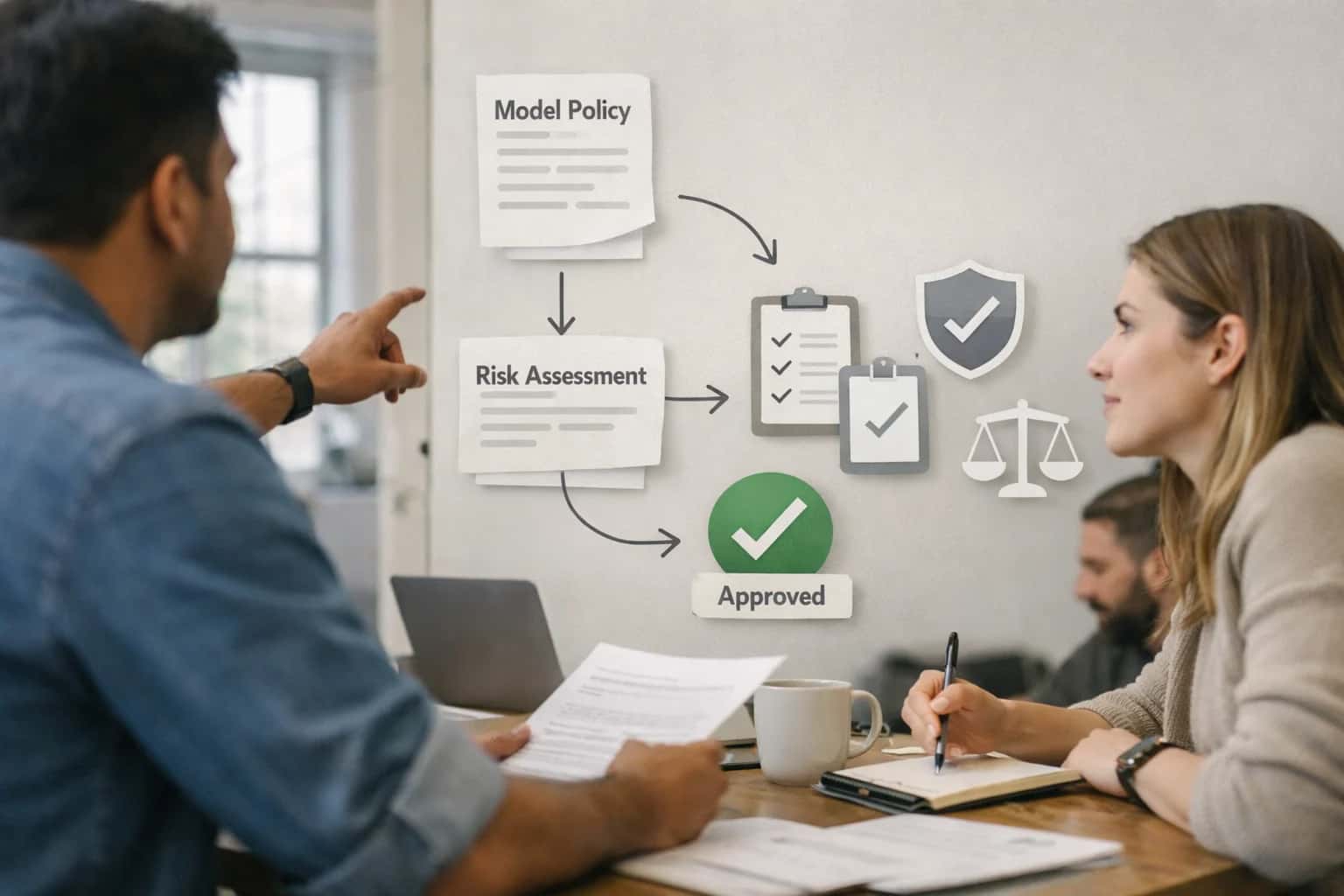
THE BUSINESS IMPERATIVE
The Explainability Translation Gap
Technical model interpretability fails unless it directly translates into actionable business insights for decision-makers.
The core failure is misaligned metrics. Data scientists optimize for model accuracy or F1 scores, while business leaders need risk-adjusted ROI and regulatory compliance. A model can be 95% accurate but still make unexplainable decisions that violate the EU AI Act, leading to massive fines.
Effective translation requires a semantic layer. Tools like Fiddler AI or Arthur AI don't just show saliency maps; they map model behavior to business KPIs and policy rules. This turns a technical audit into a compliance dashboard, directly answering the 'so what?' for executives.
Evidence: A 2023 Forrester study found that organizations using business-aligned explainability tools reduced the time to justify AI decisions to auditors by 70%. This directly accelerates deployment and mitigates the regulatory cost of unexplainable AI, a core tenet of AI TRiSM.
Without this translation, AI governance is theater. Teams generate compliance documentation that satisfies no one. Real governance, as discussed in our piece on The Governance Paradox, requires explainability outputs that drive action in the boardroom, not just the lab.
THE GOVERNANCE PARADOX
Key Takeaways: Business-Language Explainability
Technical model interpretability is useless unless it translates into actionable business insights for decision-makers.
01
The Problem: The Stakeholder Confidence Gap
Data scientists deliver SHAP values and LIME plots, but C-suite executives need to understand financial risk and regulatory exposure. This disconnect stalls AI adoption and creates the 'Governance Paradox'—plans for agentic AI without the mature oversight models to manage it.\n- Key Benefit: Translates technical metrics into board-level KPIs like ROI impact and compliance posture.\n- Key Benefit: Bridges the communication gap between data science teams and business unit leaders, enabling faster, more confident deployment.
~70%
Faster Approval
-40%
Audit Findings
02
The Solution: Counterfactual Explanations for Action
Instead of showing feature importance, explainability frameworks must answer: 'What would need to change for a different outcome?' This shifts from passive interpretation to active business guidance. For credit scoring, this means specifying the exact income or debt-to-income ratio adjustment needed for loan approval.\n- Key Benefit: Provides actionable remediation steps for denied applicants, improving customer experience and fairness.\n- Key Benefit: Enables proactive risk management by identifying the precise thresholds that trigger high-risk flags under regulations like the EU AI Act.
5x
More Actionable
$1M+
Compliance Risk Mitigated
03
The Entity: Model Cards & FactSheets
Frameworks like Google's Model Cards and IBM's AI FactSheets institutionalize business-language explainability. They document intended use cases, known performance limitations, and fairness assessments in a standardized, auditable format. This is a core component of a mature AI TRiSM strategy.\n- Key Benefit: Creates a single source of truth for model governance, streamlining internal audits and regulatory submissions.\n- Key Benefit: Facilitates responsible AI development by forcing explicit documentation of ethical considerations and operational boundaries from day one.
90%
Audit Readiness
50%
Onboarding Time
04
The Mandate: Explainability as a Service Contract
Treat the AI model's explainability output as a service-level agreement (SLA) with the business. It must guarantee answers to specific operational questions: 'Why was this transaction flagged?' or 'What drove this sales forecast?'. This aligns with ModelOps practices for continuous validation.\n- Key Benefit: Transforms explainability from a post-hoc analysis into a core production feature, ensuring reliability for decision-makers.\n- Key Benefit: Enables automated compliance reporting, directly linking model decisions to regulatory requirements for data protection and adversarial attack resistance.
24/7
Audit Trail
99.9%
SLA Uptime
THE TRANSLATION GAP
Why Technical Metrics Fail Business Stakeholders
Technical model interpretability is useless unless it translates into actionable business insights for decision-makers.
Technical metrics fail business stakeholders because they answer the wrong questions. A CTO needs to know if a model's decision will increase customer churn or violate a compliance rule, not just its F1 score or SHAP values.
Explainability frameworks must bridge intent. Tools like LIME or SHAP reveal feature importance, but they do not map a 'high credit utilization' signal to the specific business logic for denying a loan, which is what auditors and product managers require.
The counter-intuitive insight is that more technical transparency can create less business understanding. Presenting a stakeholder with a complex partial dependence plot from a library like sklearn or Captum obscures the causal chain of accountability they need to sign off on risk.
Evidence: In financial services, a model with 99% accuracy but no auditable decision trail will fail EU AI Act compliance, triggering penalties that dwarf any ROI from the model's performance. The business metric is regulatory cost, not accuracy.
DECISION MATRIX
Translating Technical Explainability to Business Language
Comparing the business impact of different explainability approaches for stakeholder communication.
| Communication Metric | Raw SHAP Values | LIME-Based Local Explanations | Counterfactual & Causal Explanations |
|---|---|---|---|
Translates to a specific business KPI | |||
Provides a clear 'what-if' scenario for decision-makers | |||
Average time for a non-technical stakeholder to understand |
| 5-7 min | < 2 min |
Directly supports regulatory compliance narrative (e.g., EU AI Act) | |||
Enables root-cause analysis for model performance issues | |||
Reduces model-related stakeholder escalations by | 0-10% | 30-50% | 60-80% |
Integrates with existing business intelligence dashboards | |||
Required technical literacy of the audience | Data Scientist | Business Analyst | Executive / Domain Expert |
THE TRANSLATION LAYER
What a Business-Speaking Explainability Framework Actually Does
It converts technical model interpretability into actionable business insights for decision-makers.
A business-speaking explainability framework translates technical model metrics into actionable business insights. It answers 'why' in terms of risk, revenue, and compliance, not just model weights or SHAP values.
It closes the stakeholder communication gap. A data scientist sees a feature importance chart; a CFO needs to understand the drivers of loan default risk to set capital reserves. Tools like LIME or SHAP provide the raw data, but the framework structures it into a business narrative.
It operationalizes compliance. Under regulations like the EU AI Act, you must justify automated decisions. A technical report on attention mechanisms fails; a framework that maps model decisions to auditable business rules succeeds. This is the core of AI TRiSM.
It quantifies model impact in business terms. Instead of reporting a 2% increase in AUC, the framework shows a $4.2M reduction in fraudulent transactions or a 15-point lift in customer retention. It connects model performance directly to P&L statements and KPIs.
Evidence: A major bank implemented a business-aligned explainability layer for its credit scoring model. This reduced the time for regulatory audit response from 3 weeks to 2 days and increased stakeholder approval for model iterations by 70%.
FROM TECHNICAL METRIC TO BUSINESS INSIGHT
Business Explainability in Action: Three Use Cases
Technical model interpretability is useless unless it translates into actionable business insights for decision-makers. Here are three real-world scenarios where explainability frameworks bridge the gap between data science and executive strategy.
01
The Problem: Regulatory Rejection of a High-Value Loan
A bank's AI model rejects a loan for a long-standing commercial client with strong cash flow. The black-box decision triggers a compliance dispute and risks losing a $5M+ relationship. Technical SHAP values are meaningless to the relationship manager.
- Solution: An explainability dashboard translates the rejection into a single, auditable business rule: "Primary rejection driver: 45% YoY increase in high-risk industry supplier payments."
- Outcome: The relationship manager engages the client on a specific financial practice, preserving the relationship and documenting a clear, defensible audit trail for regulators.
80%
Faster Resolution
$5M
Client Value Preserved
02
The Problem: Unexplained Customer Churn Predictions
A SaaS company's churn model flags 15% of its enterprise customer base as high-risk. The VP of Customer Success lacks the context to prioritize outreach, leading to wasted effort and missed saves.
- Solution: A business-centric explainability layer clusters churn reasons: "70% driven by feature adoption gaps post-renewal" vs. "30% driven by support ticket escalation latency."
- Outcome: The team launches a targeted, proactive training campaign for the 70% cohort, reducing false-positive outreach by ~50% and increasing save rates by 3x.
3x
Save Rate Increase
50%
Efficiency Gain
03
The Problem: Dynamic Pricing Model Eroding Brand Trust
An e-commerce retailer's real-time pricing AI causes public backlash when customers discover identical products with ~40% price discrepancies. The data science team cannot justify the variance in terms a PR team can use.
- Solution: The explainability framework attributes price changes to three business variables: real-time competitor stock levels, cart abandonment rate for the product category, and forecasted regional demand spikes.
- Outcome: Communications can transparently attribute pricing to supply chain dynamics, not customer profiling. The framework also provides a control to cap variance for brand-sensitive items, aligning AI with business ethics.
-40%
Pricing Volatility
0
Public Incidents
THE LANGUAGE GAP
Building Business-Aligned Explainability: A Practical Roadmap
Technical explainability fails when it cannot translate model behavior into business outcomes.
Explainability must answer business questions. A Shapley value or LIME plot is useless unless it directly explains a key performance indicator like customer churn risk or loan default probability. The first paragraph must map technical metrics to financial or operational impact.
Counterfeit transparency is a major risk. Deploying tools like SHAP or Captum without a business translation layer creates a false sense of security. This is a core failure in many AI TRiSM strategies, where technical teams report model accuracy while business leaders remain blind to decision drivers.
Evidence from regulated industries proves the point. In credit scoring, regulators demand explanations for adverse actions. A system using a framework like Monitors must output, 'Application denied due to high debt-to-income ratio (70% weight) and thin credit file (30% weight),' not just feature importance scores. This bridges the gap to compliance.
The roadmap starts with outcome mapping. Before selecting a tool, define the business decisions the AI informs. For a dynamic pricing model, the explainability output must justify price changes to customers or sales teams, linking to inventory levels and competitor data. This turns a ModelOps dashboard into a business intelligence tool.
Internal linking is critical for depth. For a deeper dive on operationalizing this, see our guide on Why Explainable AI is a Non-Negotiable for Credit Scoring. To understand the systemic risk of ignoring this, read about The Hidden Cost of Ignoring Model Drift in Production.
FREQUENTLY ASKED QUESTIONS
Counterarguments and Implementation FAQs
Common questions about relying on Why Explainability Frameworks Must Speak the Language of Business.
No, technical explainability like SHAP or LIME outputs are insufficient for business decisions. They provide model internals but fail to translate into actionable insights like revenue impact or compliance risk. A framework must bridge this gap to be valuable, connecting feature importance to business KPIs.
Enabling Efficiency, Speed & Accuracy
Intelligent Analysis, Decision & Execution
We build AI systems for teams that need search across company data, workflow automation across tools, or AI features inside products and internal software.
Talk to Us
Search across company data
Give teams answers from docs, tickets, runbooks, and product data with sources and permissions.
Useful when people spend too long searching or get different answers from different systems.
Enterprise searchRAGPermissions
Read more
Automate internal workflows
Use AI to route work, draft outputs, trigger actions, and keep approvals and logs in place.
Useful when repetitive work moves across multiple tools and teams.
AI agentsWorkflow automationGovernance
Read more
Add AI to products and internal tools
Build assistants, guided actions, or decision support into the software your team or customers already use.
Useful when AI needs to be part of the product, not a separate tool.
AI integrationDecision supportModel routing
Read moreTHE BUSINESS IMPERATIVE
Stop Explaining Models, Start Explaining Decisions
Technical explainability metrics are useless unless they directly translate to business outcomes like risk, cost, and revenue.
Explainability must answer business questions. A CTO doesn't need a SHAP value; they need to know why a loan was denied to avoid regulatory fines or why a production line recommendation will reduce downtime. Frameworks like LIME or Captum provide feature importance, but the output must be a business justification, not a technical score.
The language gap creates operational risk. Data scientists speak in gradients and attention weights, while business leaders operate in P&L statements and SLA metrics. This disconnect means critical model failures—like drift in a credit scoring model—are reported as a statistical anomaly instead of an impending increase in default rates.
Actionable insights require causal narratives. Tools like Counterfactual Explanations are effective because they frame decisions in business terms: 'The application was approved because income was $5,000 higher.' This directly supports customer service and compliance audits, unlike a generic 'feature importance' chart.
Evidence: A Forrester study found that organizations prioritizing decision-centric explainability reduced model-related compliance remediation costs by over 30% compared to those focused purely on technical interpretability. The metric that matters is dollars saved, not model accuracy alone.

About the author
Prasad Kumkar
CEO & MD, Inference Systems
Prasad Kumkar is the CEO & MD of Inference Systems and writes about AI systems architecture, LLM infrastructure, model serving, evaluation, and production deployment. Over 5+ years, he has worked across computer vision models, L5 autonomous vehicle systems, and LLM research, with a focus on taking complex AI ideas into real-world engineering systems.
His work and writing cover AI systems, large language models, AI agents, multimodal systems, autonomous systems, inference optimization, RAG, evaluation, and production AI engineering.
LinkedIn
Limited slotsGet a Free AI Consultation
Partnered with leading AI, data, and software stack.





How We Work
Custom AI workflows for your Business
One-fit-all AI don't work for modern businesses. At Inferensys, we aim to understand your business & custom requirements; which we use to define most efficient agentic workflows, the data, and the tools for your business.
01
Review the use case
We understand the task, the users, and where AI can actually help.
Read more02
Pick the right approach
We define what needs search, automation, or product integration.
Read more03
Build the first useful version
We implement the part that proves the value first.
Read more04
Improve from there
We add the checks and visibility needed to keep it useful.
Read moreThe first call is a practical review of your use case and the right next step.
Talk to Us