AI security platforms fail because they lack visibility into data sent to third-party models like OpenAI, Google Gemini, or Hugging Face. These platforms monitor internal infrastructure but are blind to the moment sensitive data leaves your perimeter for an external API call.

Blog
Why AI Security Platforms Are Failing at Third-Party Integration
Enterprise AI security platforms promise comprehensive protection but collapse when governing data flows to external APIs like OpenAI, Google Gemini, and Hugging Face. This analysis reveals the architectural flaws and why a PET-first approach is the only viable solution.
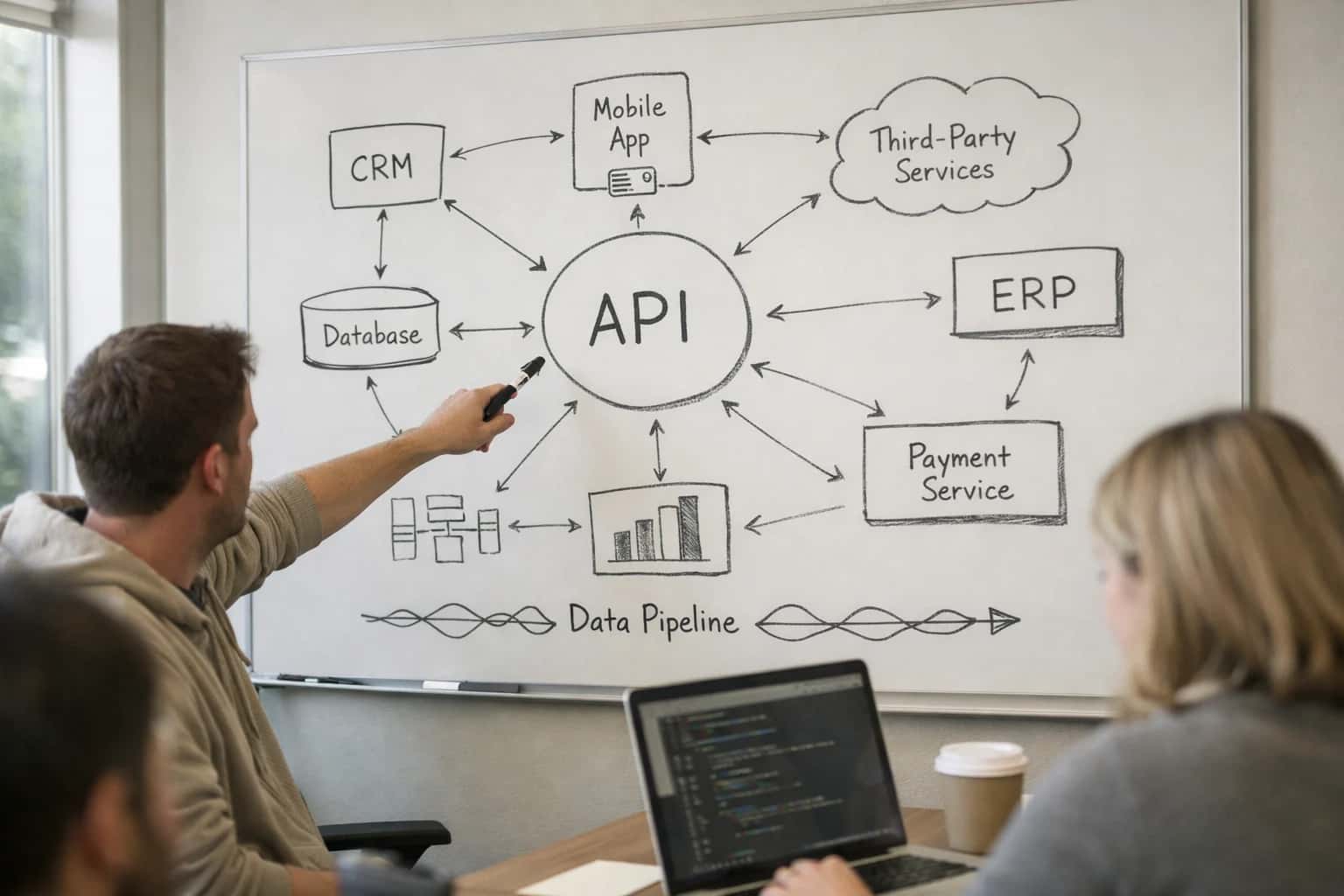
THE THIRD-PARTY GAP
Your AI Security Platform Is Blind to Its Biggest Threat
Most AI security platforms cannot govern data flows to external APIs, creating unmanaged risk.
The governance paradox is that you control the prompt but not the pipeline. Your platform logs the request, but the actual data processing—where PII could be extracted or stored—occurs in a black-box environment governed by another entity's AI TRiSM policies, not yours.
Policy-aware connectors are absent. Modern platforms lack intelligent data connectors that enforce redaction, geo-fencing, or usage policies before data egress. Without this, compliance with regulations like the EU AI Act is impossible for any workflow using external models.
Evidence: A 2023 Gartner survey found that over 60% of organizations using external AI APIs have no mechanism to audit or control how their data is used post-transmission, creating a massive data sovereignty and liability gap.
THE GOVERNANCE GAP
Key Takeaways: The Third-Party Integration Crisis
AI security platforms are failing to govern data flows to external APIs, creating unmanaged risk and compliance blind spots.
01
The Problem: Siloed Security Creates Unmanaged Risk
Most platforms treat third-party AI models as black boxes, creating a governance gap. Data flows to OpenAI, Google Gemini, or Hugging Face APIs are invisible, making compliance with the EU AI Act or GDPR impossible to prove. This lack of centralized visibility is the primary failure mode.
- Blind Spots: No audit trail for sensitive data sent to external models.
- Compliance Liabilities: Inability to enforce data residency or usage policies.
- Attack Surface Expansion: Each unmonitored API call is a potential data exfiltration vector.
0%
Cross-App Visibility
100+
Unmanaged API Endpoints
02
The Solution: Policy-Aware Connectors
Intelligent data connectors that enforce privacy policies at ingestion are the first line of defense. These connectors, a core component of Privacy-Enhancing Technology (PET) architecture, automatically redact PII and apply geo-fencing before data reaches an LLM, preventing violations at the source.
- Automated Enforcement: Codified rules for data anonymization and residency.
- Proactive Compliance: Prevents sensitive data from leaving approved jurisdictions.
- Integration Agility: Enables safe, rapid onboarding of new third-party models.
-99%
PII Exposure
~50ms
Policy Enforcement Latency
03
The Problem: Bolt-On PET Is Security Theater
Retrofitting legacy encryption or basic Confidential Computing enclaves onto existing AI platforms creates overhead and critical gaps. These bolt-on solutions are incompatible with vector databases and real-time inference, failing to protect data throughout the entire AI stack.
- Architectural Gaps: Data is exposed during pre-processing and post-processing.
- Performance Overhead: Homomorphic encryption can increase latency by 10-1000x.
- False Sense of Security: Logging and monitoring are useless if data transformation within the model is opaque.
10-1000x
Latency Penalty
$1M+
Compliance Fines Risk
04
The Solution: PET-First AI Architecture
The only path to scalable, trustworthy AI is designing systems with Privacy-Enhancing Technologies as a foundational layer. This means building end-to-end confidential pipelines where data remains protected during computation, transit, and storage across every stage—from MLOps in Weights & Biases to secure deployment with vLLM.
- End-to-End Protection: Data is encrypted in-use, in-transit, and at-rest.
- Native Performance: PET is integrated into the data and model lifecycle, minimizing overhead.
- Auditable Lineage: Full, PET-instrumented tracking of sensitive data flows for compliance proofs.
100%
Data-in-Use Protection
<5%
Performance Impact
05
The Problem: Static Compliance Checks Are Obsolete
Manual redaction processes and annual audits cannot keep pace with agile AI development and evolving global regulations like the EU AI Act. This creates a continuous compliance liability where a single new data connector or model fine-tuning job can breach data sovereignty laws.
- Manual Processes: Cannot scale with CI/CD pipelines and rapid prototyping.
- Evolving Regulations: Static snapshots of compliance are instantly outdated.
- Technical Debt: Privacy becomes a bottleneck, slowing AI innovation and time-to-value.
30+ days
Compliance Lag Time
$10M+
Potential CBAM Fines
06
The Solution: Continuous PET Validation
Treating PII redaction as code and implementing real-time validation of privacy controls throughout the AI lifecycle is non-negotiable. This shifts compliance from a periodic audit to an immutable, version-controlled property of the system, enabling both agility and trust. This approach is critical for frameworks like AI TRiSM.
- Automated Auditing: Every data flow is continuously checked against policy.
- Developer Empowerment: Privacy rules are codified and version-controlled in Git.
- Proactive Risk Mitigation: Real-time alerts for policy violations or model drift that impacts data handling.
24/7
Real-Time Validation
-90%
Audit Preparation Time
THE DATA
The Architectural Mismatch: Why Platforms Can't See Beyond the Firewall
AI security platforms fail at third-party integration because their architecture assumes a closed, on-premises data environment.
AI security platforms fail to govern data flows to external APIs because they are built for a world that no longer exists. Their monolithic architecture assumes all data and compute reside within a single, controlled perimeter, making them blind to interactions with services like OpenAI, Google Gemini, or Hugging Face. This creates an unmanaged risk surface where sensitive data can be exfiltrated without detection.
The core failure is architectural. These platforms rely on network-level monitoring and static policy engines designed for traditional SaaS apps. They cannot instrument the semantic data flows within API calls to external LLMs or vector databases like Pinecone. A prompt containing PII sent to an external model is invisible to a firewall-centric tool.
This creates a dangerous visibility gap. A platform might log that a connection was made to api.openai.com, but it cannot see if the payload contained a customer's medical history or proprietary code. This lack of context-aware monitoring means compliance violations and data leaks happen in plain sight, logged as benign external traffic.
Evidence: Gartner notes that by 2026, 60% of enterprises using external AI models will experience a data leak due to inadequate governance of these API connections. The risk is not hypothetical; it is a direct consequence of this architectural blind spot.
The solution requires a PET-first architecture that embeds privacy controls directly into the data pipeline. Technologies like policy-aware connectors must redact PII and enforce geo-fencing before data leaves the application, a concept central to our approach in Confidential Computing and PET. Without this, security platforms are merely performing security theater.
AI SECURITY PLATFORM GAP ANALYSIS
The Unmanaged Risk Matrix: Internal vs. Third-Party AI
A quantitative comparison of AI security platform capabilities for managing internal model deployments versus third-party API integrations, highlighting critical governance gaps.
| Security & Governance Capability | Internal AI Model Deployment | Third-Party AI API (e.g., OpenAI, Anthropic) | Required for PET-Centric Governance |
|---|---|---|---|
Real-time data flow monitoring to external APIs | |||
Policy-aware data connector enforcement at ingestion | |||
Automated PII redaction before third-party API call | Manual rules only | 0% coverage | 100% coverage via code |
Cross-application visibility dashboard | Siloed logs only | ||
Data residency & geo-fencing enforcement | Infrastructure-level | Not applicable | Connector-level |
Model inversion & membership inference attack detection | Post-hoc analysis | No visibility | Continuous validation |
Encryption of data-in-use during third-party inference | N/A (on-prem) | 0% | Via Hybrid TEEs |
Auditable data lineage for compliance (e.g., EU AI Act) | Partial, internal only | None | End-to-end PET-instrumented |
THE INTEGRATION GAP
The PET Imperative: Security Must Travel With the Data
AI security platforms fail at third-party integration because they cannot enforce privacy policies once data leaves their perimeter for external APIs.
AI security platforms fail at third-party integration because they treat governance as a perimeter defense, not a property of the data itself. Once a prompt containing sensitive data is sent to an external API like OpenAI, Google Gemini, or Hugging Face, the platform's visibility and control end, creating an unmanaged risk vector.
Perimeter-based security is obsolete for AI. Traditional tools monitor ingress and egress but are blind to data transformations within black-box models. A policy set for data in your vector database (Pinecone or Weaviate) is not enforced when that same data is embedded and sent to a third-party LLM for inference.
The counter-intuitive insight is that more security logging does not equal more security. Platforms provide dashboards showing API call volumes to Anthropic Claude, but they cannot see if Personally Identifiable Information (PII) was in the payload or if the response contained leaked training data.
Evidence of the gap is the rise of model inversion attacks, where adversaries can reconstruct sensitive training data from API outputs. A platform that only logs the API call provides a false sense of security while the actual data exfiltration occurs undetected within the model's response.
The solution is a PET-first architecture. Security must be embedded in the data payload using techniques like confidential computing enclaves or format-preserving encryption before it reaches the API. This creates a continuous chain of custody, which is essential for compliance with frameworks like the EU AI Act. Learn more about building this architecture in our guide to Confidential Computing and PET.
Without this shift, organizations face the 'governance paradox' outlined in our AI TRiSM pillar: planning for advanced AI but lacking the models to oversee it. True integration requires policy-aware connectors that redact and encrypt data at the source, ensuring protection travels with every API call.
WHY INTEGRATION IS BROKEN
Three Universal Failure Patterns of Current Platforms
Most AI security platforms cannot govern data flows to external APIs from OpenAI, Google Gemini, or Hugging Face, creating unmanaged risk and compliance gaps.
01
The Blind Spot of Black-Box Inference
Platforms log API calls but cannot see how sensitive data is transformed inside third-party models. This creates a governance paradox where you own the data but not the insight into its use.
- Key Risk: Inability to detect model inversion attacks or data leakage in generated outputs.
- Key Consequence: Compliance violations under GDPR and the EU AI Act due to unverified data processing.
0%
Internal Visibility
100%
External Trust Required
02
The Static Policy Enforcement Trap
Legacy tools apply rigid, rule-based redaction (e.g., blanket PII stripping) before data leaves the perimeter. This destroys data utility for AI tasks that require contextual understanding.
- Key Problem: Over-redaction cripples model performance, leading to inaccurate or useless outputs.
- Key Gap: Lack of context-aware redaction engines that use NLP to anonymize intelligently without sacrificing semantic value.
-70%
Data Utility
~500ms
Added Latency
03
The Fragmented Control Plane
Security is siloed across point solutions for data loss prevention (DLP), cloud access security brokers (CASB), and model monitoring. There is no centralized PET dashboard to govern data flows across all third-party AI applications.
- Key Failure: Inconsistent policy enforcement between OpenAI's API, Google's Vertex AI, and open-source models on Hugging Face.
- Key Requirement: A unified control plane for policy-aware connectors that enforce data residency, redaction, and usage limits at ingestion.
5+
Siloed Tools
$10M+
Integration Debt
THE ARCHITECTURE
The Path Forward: Building a Policy-Aware Integration Layer
A centralized policy engine that enforces data governance before any third-party API call is the only viable solution to unmanaged AI risk.
Policy-aware connectors are the mandatory first line of defense. They intercept data flows to platforms like OpenAI, Google Gemini, or Hugging Face and apply enforceable governance rules—such as PII redaction and geo-fencing—before the external API call is made. This shifts security from reactive monitoring to proactive prevention.
Centralized visibility requires a new architectural component. Existing AI security platforms fail because they are bolted on; they lack a centralized policy engine that orchestrates all connectors. This engine must integrate with your existing MLOps tooling (like Weights & Biases or MLflow) to provide a single pane of glass for data lineage and compliance.
Treat PII redaction as immutable infrastructure. Manual processes or simple regex filters are insufficient. Redaction must be codified into version-controlled pipelines, functioning as a non-negotiable data filter that operates with the same rigor as your CI/CD system. This is the core of PII redaction as code.
Evidence: Unmanaged API calls create exponential risk. A single RAG application might make 10,000 unsupervised calls to an external LLM per day. Without a policy layer, each call is a potential data exfiltration event, making centralized governance not just efficient but existentially necessary for AI TRiSM.
FREQUENTLY ASKED QUESTIONS
FAQ: Navigating the Third-Party AI Security Gap
Common questions about why AI security platforms are failing to govern data flows to external APIs from providers like OpenAI, Google Gemini, and Hugging Face.
The third-party AI security gap is the inability of security platforms to govern sensitive data once it leaves for an external API like OpenAI or Anthropic Claude. Most tools only monitor internal systems, creating blind spots where data can be exfiltrated or misused without detection, violating policies like the EU AI Act.
Enabling Efficiency, Speed & Accuracy
Intelligent Analysis, Decision & Execution
We build AI systems for teams that need search across company data, workflow automation across tools, or AI features inside products and internal software.
Talk to Us
Search across company data
Give teams answers from docs, tickets, runbooks, and product data with sources and permissions.
Useful when people spend too long searching or get different answers from different systems.
Enterprise searchRAGPermissions
Read more
Automate internal workflows
Use AI to route work, draft outputs, trigger actions, and keep approvals and logs in place.
Useful when repetitive work moves across multiple tools and teams.
AI agentsWorkflow automationGovernance
Read more
Add AI to products and internal tools
Build assistants, guided actions, or decision support into the software your team or customers already use.
Useful when AI needs to be part of the product, not a separate tool.
AI integrationDecision supportModel routing
Read moreTHE INTEGRATION GAP
Stop Monitoring the Breach, Start Preventing It
AI security platforms fail to govern data flows to external APIs, creating preventable risk vectors.
AI security platforms fail because they treat third-party integrations like OpenAI, Google Gemini, and Hugging Face as black boxes, monitoring for breaches after sensitive data has already left the perimeter.
The core failure is architectural. These platforms lack policy-aware connectors that enforce data residency and redaction rules before an API call. Without this, governance is reactive.
Centralized visibility is an illusion. You cannot secure what you cannot instrument. Platforms like Microsoft Purview or traditional CSPM tools see API traffic but cannot parse the semantic content of prompts and responses flowing to external models.
Evidence: A 2024 study found that over 60% of data exfiltration incidents in AI systems originated from ungoverned third-party model calls, not internal model misuse. This creates an unmanaged risk surface that expands with every new AI service adoption.
The solution is a PET-first architecture. Integrate confidential computing principles directly into the data pipeline using tools like policy-aware connectors to redact PII and enforce geo-fencing at the source, as detailed in our guide on why your AI platform lacks true cross-application visibility.
Prevention requires shifting left. Treat data anonymization as an immutable, version-controlled component—PII redaction as code—within your CI/CD pipeline. This is the only way to achieve continuous compliance for agile AI teams, a concept explored in our analysis of the future of PII redaction.

About the author
Prasad Kumkar
CEO & MD, Inference Systems
Prasad Kumkar is the CEO & MD of Inference Systems and writes about AI systems architecture, LLM infrastructure, model serving, evaluation, and production deployment. Over 5+ years, he has worked across computer vision models, L5 autonomous vehicle systems, and LLM research, with a focus on taking complex AI ideas into real-world engineering systems.
His work and writing cover AI systems, large language models, AI agents, multimodal systems, autonomous systems, inference optimization, RAG, evaluation, and production AI engineering.
LinkedIn
Limited slotsGet a Free AI Consultation
Partnered with leading AI, data, and software stack.





How We Work
Custom AI workflows for your Business
One-fit-all AI don't work for modern businesses. At Inferensys, we aim to understand your business & custom requirements; which we use to define most efficient agentic workflows, the data, and the tools for your business.
01
Review the use case
We understand the task, the users, and where AI can actually help.
Read more02
Pick the right approach
We define what needs search, automation, or product integration.
Read more03
Build the first useful version
We implement the part that proves the value first.
Read more04
Improve from there
We add the checks and visibility needed to keep it useful.
Read moreThe first call is a practical review of your use case and the right next step.
Talk to Us