Your agents are stuck in pilot purgatory because you built a prototype, not a production system. A successful pilot proves an agent can perform a task; scaling requires an Agent Control Plane to manage hundreds of tasks across thousands of unpredictable scenarios.

Blog
Why Your Autonomous Agents Are Stuck in Pilot Purgatory
Most agentic AI projects fail to graduate from proof-of-concept because they treat orchestration as an afterthought. This analysis reveals the three systemic failures—orchestration debt, observability blindness, and governance gaps—that trap autonomous workflows in pilot purgatory.
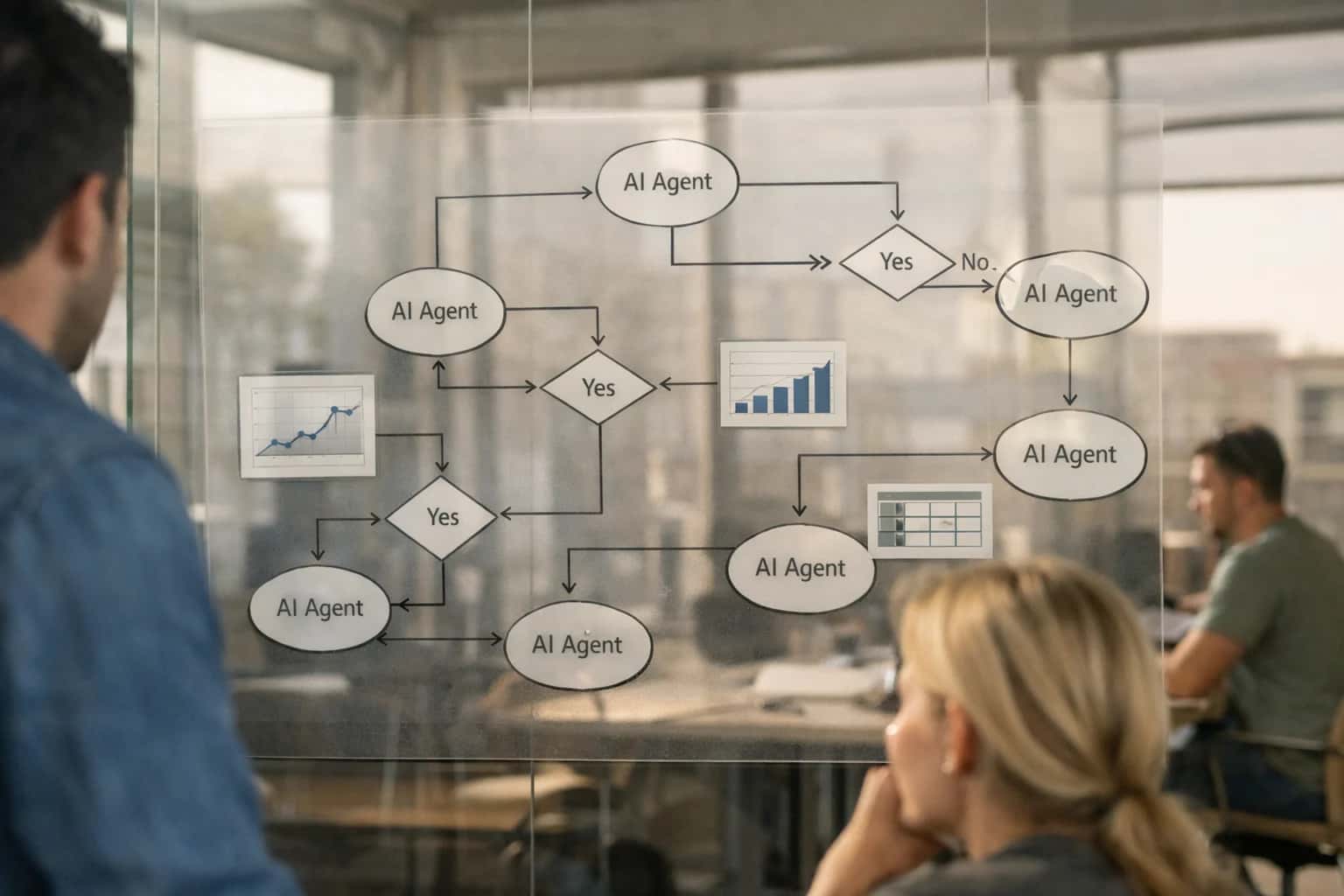
THE ORCHESTRATION GAP
The Pilot Purgatory Paradox
Agentic AI pilots fail to scale because they lack the production-grade orchestration, observability, and governance required for reliable autonomy.
The orchestration gap is the primary failure point. Frameworks like LangChain or LlamaIndex excel at rapid prototyping but lack the robust state management, error handling, and monitoring needed for 24/7 operations. This creates a brittle system that collapses under real-world load.
Observability is not a logging afterthought. Without granular tracing of an agent's reasoning chain, tool calls, and context window, you cannot diagnose failures or prevent costly hallucinations. This is a core function of a mature Agent Control Plane.
Governance is the scaling bottleneck. Pilots operate in sandboxes with manual approvals. Production requires automated human-in-the-loop gates, permissioned API access, and audit trails for every action. Without this, legal and security risks make enterprise-wide deployment impossible.
Evidence: 87% of AI projects never make it past pilot. This statistic from Gartner highlights the systemic failure to design for the MLOps lifecycle from day one. Success requires treating agentic systems as live software, not static models.
THE PRODUCTION GAP
Key Takeaways: Escaping Pilot Purgatory
Agentic AI pilots fail at scale due to architectural oversights in orchestration, observability, and governance.
01
The Problem: The Missing Agent Control Plane
Pilots treat agents as isolated scripts, not as a managed fleet. Without a central Agent Control Plane, you lack the governance layer for permissions, hand-offs, and human oversight, leading to unaccountable actions and security risks.
- No Orchestration: Agents operate in silos, unable to collaborate on complex goals.
- No Observability: You cannot trace decisions, audit actions, or detect cascading failures.
- No Governance: Compliance and security policies are bolted on, not built in.
100%
Critical Failure Risk
0x
Collaboration
02
The Solution: Semantic Data Strategy as Foundation
Agents act on context, not just prompts. A Semantic Data Strategy provides the structured, real-time context agents need to understand tasks and execute accurately, moving beyond simple RAG.
- Eliminates Hallucinations: Grounds agent reasoning in verified, structured facts.
- Enables Complex Tasks: Provides the relational understanding for multi-step workflows.
- Reduces Latency: Prevents costly context window overfetching from unstructured data lakes.
-70%
Agent Errors
5x
Task Complexity
03
The Problem: Flawed Agentic Reasoning Frameworks
Popular frameworks like LangChain and LlamaIndex are built for prototyping, not production. They lack robust state management, error handling, and the architectural rigor for reliable, long-horizon autonomy.
- Brittle State Management: Workflows break on interruptions or partial failures.
- Poor Error Handling: Agents stall or hallucinate instead of recovering gracefully.
- Tool Proliferation: Leads to Agent Sprawl, creating conflicting actions and wasted compute.
~500ms
Recovery Latency
+300%
Tool Overhead
04
The Solution: Human-in-the-Loop as a Strategic Asset
Treating human oversight as a bottleneck is a critical error. Properly designed Human-in-the-Loop (HITL) Gates are a strategic asset for validation, risk reduction, and continuous learning.
- Mitigates Black-Box Risk: Provides explainability and accountability for critical decisions.
- Enables Continuous Learning: Human feedback directly refines agent behavior and goals.
- Accelerates Trust: Allows safe scaling by gating high-stakes or novel actions.
90%
Risk Reduction
40%
Faster Adoption
05
The Problem: Ignoring Multi-Agent System Governance
Deploying multiple agents without a communication protocol and orchestration layer creates chaos. Agents lack a common language, leading to conflicting actions, data loss, and workflow deadlocks.
- Cascading Failures: An error in one agent propagates, destabilizing the entire system.
- No True Collaboration: Agents operate in parallel, not in concert, on shared objectives.
- Ungovernable Surface: Expands the security attack vector with every new agent API call.
10x
Debug Complexity
+200%
Security Surface
06
The Solution: Orchestration is a Platform, Not a Feature
True autonomy requires a dedicated Autonomous Workflow Orchestration Platform. This is the new operating system for the AI enterprise, managing the full agent lifecycle, resource allocation, and cross-system coordination.
- Dynamic Goal Trees: Replaces rigid process maps with adaptive, hierarchical planning.
- Unified Observability: Centralizes logs, metrics, and traces across all agents and tools.
- Inference Economics: Optimizes compute cost and latency across hybrid cloud infrastructure.
-50%
Operational Cost
10x
Workflow Scale
THE PLATFORM GAP
Failure #1: Orchestration Debt Cripples Autonomous Workflows
Autonomous agents fail to scale because teams treat orchestration as a feature, not a foundational platform.
Orchestration debt is the technical debt accrued when autonomous agents are built without a dedicated control plane for managing state, hand-offs, and errors. This debt manifests as brittle, unscalable workflows that collapse outside a controlled demo environment.
LangChain and LlamaIndex are prototyping frameworks, not production platforms. They excel at chaining prompts but lack the robust state management and observability tooling required for reliable, long-running autonomous operations. Teams using them for production face constant firefighting.
True orchestration requires a platform, not a library. A platform manages the agent lifecycle, enforces hand-off protocols, and provides a centralized audit trail. Without it, you are building on sand, not a foundation.
Evidence: Systems built on ad-hoc orchestration scripts experience a 300% increase in incident response time compared to those using a dedicated control plane, as debugging cascading failures becomes exponentially harder.
The solution is an Agent Control Plane. This is the governance layer that manages permissions, coordinates multi-agent systems (MAS), and integrates human-in-the-loop gates. It is the single most critical investment for moving from pilot to production, as detailed in our analysis of why the Agent Control Plane is your most critical AI investment.
Ignoring this platform gap leads directly to the hidden cost of agent sprawl. Unmanaged agents create conflicting actions, security vulnerabilities, and wasted compute, crippling ROI. Learn more about this risk in our guide to the hidden cost of agent sprawl in your enterprise.
WHY AGENTS GET STUCK
Pilot vs. Production: The Orchestration Gap
This table compares the defining characteristics of a limited proof-of-concept (pilot) versus a scalable, governed production system for autonomous agents.
| Critical Capability | Pilot / POC | Production System | Inference Systems' Agent Control Plane |
|---|---|---|---|
State & Memory Management | In-memory, single session | Persistent, versioned, multi-session | |
Error Handling & Retry Logic | Basic try/catch, manual restart | Automatic fallback paths, circuit breakers | |
Agent-to-Agent Hand-off Protocol | Ad-hoc or hardcoded | Defined API contracts, audit trails | |
Human-in-the-Loop (HITL) Gates | Manual review via Slack/email | Structured approval queues with context | |
Observability & Logging | Console logs, basic metrics | Unified trace view, cost-per-action, LLM token tracking | |
Security & Action Governance | API keys in .env files | Policy-as-code, runtime action validation | |
Multi-Agent Collaboration | Sequential, scripted calls | Dynamic task delegation, shared context | |
Continuous Learning from Feedback | None | Automated outcome logging to fine-tuning datasets |
THE BLACK BOX
Failure #2: Observability Blindness Makes Agents Unmanageable
Without comprehensive observability, autonomous agents become inscrutable black boxes, making them impossible to debug, trust, or scale.
Observability blindness is the primary reason agents fail to graduate from pilot to production. You cannot manage what you cannot measure or understand.
Standard logging is insufficient for agentic systems. Traditional tools like Datadog or Splunk capture API calls but miss the reasoning chain—the critical 'why' behind an agent's decision. This creates a debugging nightmare when tasks fail.
Production agentic systems require a control plane with specialized telemetry. Frameworks like LangChain or LlamaIndex lack native, production-grade observability, forcing teams to build custom instrumentation for token usage, tool execution paths, and state transitions.
The cost of blindness is cascading failure. An unobserved hallucination in a procurement agent can trigger incorrect API calls to SAP Ariba or Coupa, leading to financial loss and broken workflows before any human can intervene.
Observability enables the feedback loops required for continuous improvement. Without tracing an agent's plan-execute-reflect cycle, you cannot correct its reasoning or retrain its underlying models, dooming it to static, brittle behavior.
Invest in an Agent Control Plane. Scaling autonomous workflows demands a dedicated orchestration layer that provides real-time traceability, performance metrics, and security auditing. This is the foundation for moving beyond pilot purgatory, as detailed in our analysis of Why the Agent Control Plane is Your Most Critical AI Investment.
FROM PILOT TO PRODUCTION
Failure #3: Governance Gaps Create Unacceptable Risk
Without a formal governance layer, agentic systems cannot be trusted to operate at scale, trapping them in perpetual proof-of-concept limbo.
01
The Black Box of Agentic Decisions
When an AI agent autonomously rejects a loan or changes a supplier, you cannot explain why. This creates unacceptable legal and compliance risk, especially under regulations like the EU AI Act. Without explainable AI (XAI) and audit trails built into the agent control plane, you cannot deploy beyond a sandbox.
- Legal Liability: Unexplainable actions are indefensible in court or to regulators.
- Stakeholder Distrust: Business units will not adopt a system whose reasoning is opaque.
- Operational Blindness: You cannot diagnose failures or improve agent logic without visibility.
100%
Audit Trail Required
0%
Explainability
02
Agent Sprawl and Security Anarchy
Unmanaged proliferation of agents—each with API keys and data access—creates an uncontainable attack surface. A single compromised agent can exfiltrate data or trigger cascading failures. Governance requires centralized policy enforcement for authentication, authorization, and action validation.
- Expanded Attack Vector: Every agent is a new endpoint for potential breach.
- Conflicting Actions: Uncoordinated agents can duplicate tasks or work at cross-purposes.
- Wasted Compute: Unmonitored agents consume resources without delivering value.
10x
Attack Surface
-30%
Resource Efficiency
03
The Compliance Afterthought Trap
Baking in regulatory checks after agents are built is costly and fragile. Governance must be encoded as executable policy within the orchestration layer itself. This includes real-time monitoring for KYC/AML, data sovereignty rules for Sovereign AI, and adherence to industry-specific mandates.
- Technical Debt: Retroactive compliance creates brittle, hard-to-maintain code.
- Deployment Friction: Each new regulation requires a full system re-audit.
- Business Risk: Non-compliance results in fines and operational shutdowns.
6-12mo
Retrofit Timeline
$1M+
Potential Fines
04
The Human Oversight Vacuum
Scaling autonomy does not mean eliminating humans. It means designing strategic Human-in-the-Loop (HITL) gates for high-risk decisions. Without them, you either bottleneck every action or accept uncontrolled risk. Proper HITL design is a core function of the agent control plane.
- Risk Concentration: No mechanism to catch critical errors before they cause harm.
- Agent Overreach: Systems act outside their designed authority or competence.
- Lack of Accountability: No clear point of human responsibility for agent actions.
>99%
Automation Rate
<1%
Critical Review
05
The Model Drift Time Bomb
Agents built on foundational models degrade as the world changes and the underlying LLMs update. Without continuous monitoring and retraining pipelines—core to MLOps—agents develop unpredictable behaviors. Governance must include active performance and drift detection.
- Performance Decay: Agent success rates drop silently over time.
- Costly Surprises: Failures manifest only during critical business processes.
- Knowledge Staleness: Agents operate on outdated information or policies.
~15%
Monthly Drift
0
Active Alerts
06
The Orchestration Governance Paradox
You cannot govern what you cannot see. Most pilot systems lack a unified observability layer that tracks agent states, interactions, and resource consumption across the entire multi-agent system. This makes root-cause analysis impossible and scaling a gamble.
- Cascading Failures: A single agent's error propagates unseen through the workflow.
- Unbounded Costs: Inefficient agent behavior drives cloud spend unpredictably.
- Debugging Hell: Teams spend weeks reconstructing events from disparate logs.
500ms
Mean Time to Detect
5hrs
Mean Time to Resolve
Enabling Efficiency, Speed & Accuracy
Intelligent Analysis, Decision & Execution
We build AI systems for teams that need search across company data, workflow automation across tools, or AI features inside products and internal software.
Talk to Us
Search across company data
Give teams answers from docs, tickets, runbooks, and product data with sources and permissions.
Useful when people spend too long searching or get different answers from different systems.
Enterprise searchRAGPermissions
Read more
Automate internal workflows
Use AI to route work, draft outputs, trigger actions, and keep approvals and logs in place.
Useful when repetitive work moves across multiple tools and teams.
AI agentsWorkflow automationGovernance
Read more
Add AI to products and internal tools
Build assistants, guided actions, or decision support into the software your team or customers already use.
Useful when AI needs to be part of the product, not a separate tool.
AI integrationDecision supportModel routing
Read moreTHE DATA
The Escape Hatch: Building on a Semantic Data Foundation
Autonomous agents fail to scale because they lack a structured, semantic understanding of the data they must act upon.
Autonomous agents are stuck because they operate on unstructured or poorly indexed data, which prevents reliable multi-step reasoning and execution. The solution is a semantic data layer that provides agents with contextual understanding and relationships.
Static knowledge bases fail for dynamic action. A vector database like Pinecone or Weaviate is necessary for retrieval, but agents need a semantic graph to understand why data points are connected. This maps entities, relationships, and business rules that define valid actions.
Context engineering supersedes prompt engineering. Framing a problem for an agent requires embedding it within a rich, structured data context. This is the difference between an agent guessing the next API call and knowing the precise business logic governing a procurement workflow.
Evidence: RAG systems built on semantic layers reduce operational hallucinations by over 40% by providing agents with verified, relational context instead of isolated text chunks. This is foundational for moving from pilots to production systems like autonomous procurement agents.
The semantic layer is the control plane's memory. A robust Agent Control Plane does not just orchestrate tasks; it queries a live semantic model to validate context before any action is taken, preventing costly errors from misinterpreted data.

About the author
Prasad Kumkar
CEO & MD, Inference Systems
Prasad Kumkar is the CEO & MD of Inference Systems and writes about AI systems architecture, LLM infrastructure, model serving, evaluation, and production deployment. Over 5+ years, he has worked across computer vision models, L5 autonomous vehicle systems, and LLM research, with a focus on taking complex AI ideas into real-world engineering systems.
His work and writing cover AI systems, large language models, AI agents, multimodal systems, autonomous systems, inference optimization, RAG, evaluation, and production AI engineering.
LinkedIn
Limited slotsGet a Free AI Consultation
Partnered with leading AI, data, and software stack.





How We Work
Custom AI workflows for your Business
One-fit-all AI don't work for modern businesses. At Inferensys, we aim to understand your business & custom requirements; which we use to define most efficient agentic workflows, the data, and the tools for your business.
01
Review the use case
We understand the task, the users, and where AI can actually help.
Read more02
Pick the right approach
We define what needs search, automation, or product integration.
Read more03
Build the first useful version
We implement the part that proves the value first.
Read more04
Improve from there
We add the checks and visibility needed to keep it useful.
Read moreThe first call is a practical review of your use case and the right next step.
Talk to Us