
Guides
Edge Inference and Distributed Computing Grids
Edge Inference and Distributed Computing Grids
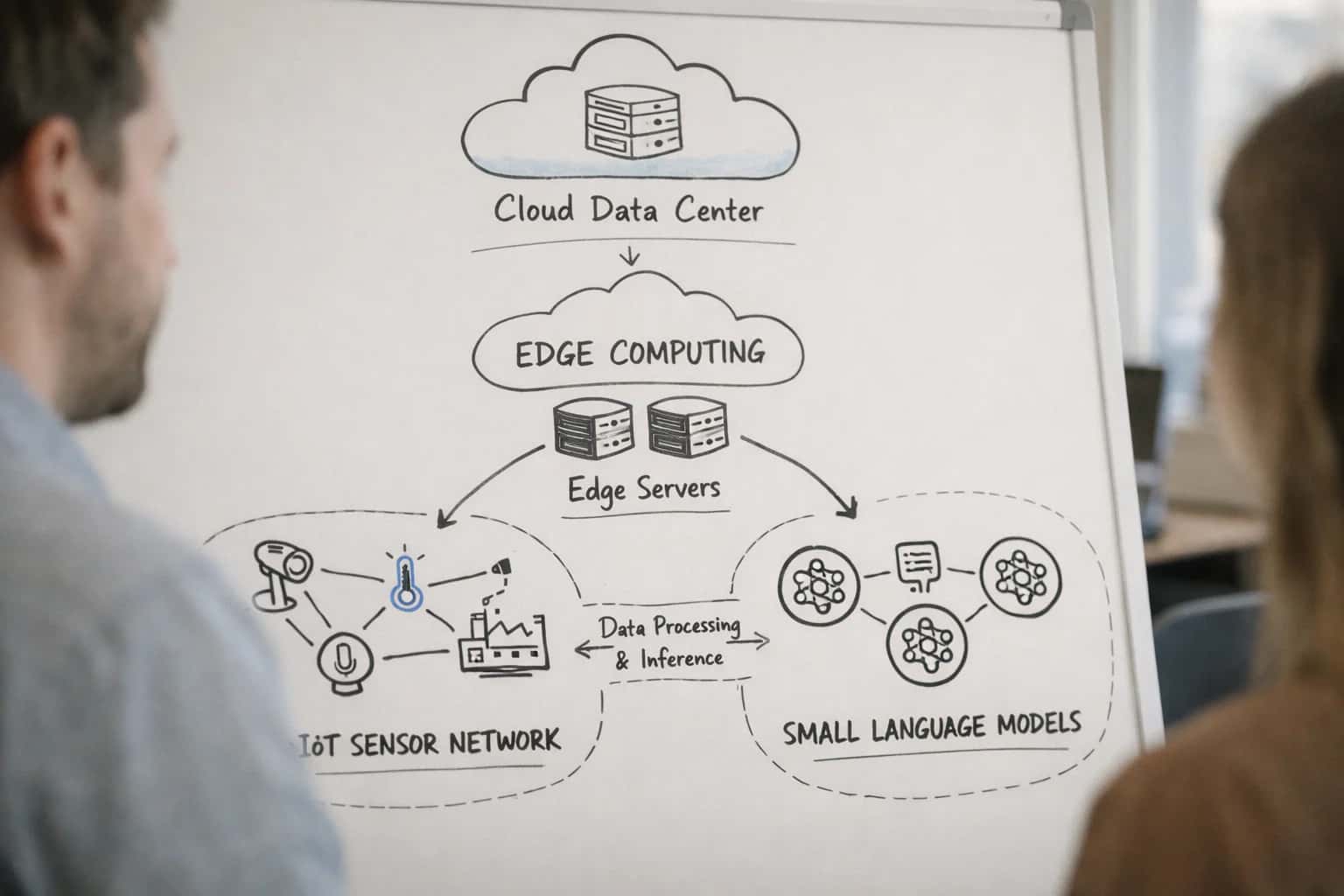
As AI-native applications scale, the network edge is becoming the primary deployment platform. This pillar covers the development of 'AI Grids'—distributed infrastructure that runs inference closer to the data source. Sub-guides focus on 'How to build AI grids using network edge sites,' 'Implementing AI-RAN for low-latency inference,' and 'Managing distributed AI infrastructure at scale' for telecom operators and large-scale IoT deployments.
How to Architect a Geo-Distributed AI Inference Network
This guide provides a blueprint for designing an AI inference network that spans multiple geographic locations, from central cloud to far-edge devices. It covers core architectural patterns, latency-aware routing, and strategies for data locality using tools like Kubernetes Karmada and Istio. You will learn how to select optimal edge sites and implement a unified control plane for managing distributed inference workloads.
Setting Up AI-RAN Integration for 5G Mobile Networks
This guide details the technical steps to integrate AI inference directly into the Radio Access Network (RAN) for ultra-low-latency applications. It explains the AI-RAN architecture, how to leverage 5G network slicing for dedicated AI workloads, and practical deployment using platforms like NVIDIA Aerial and Open RAN components. You will learn to deploy models at the network edge to enable real-time services like autonomous vehicle coordination and augmented reality.
How to Implement Dynamic Model Routing for Edge Inference
This guide explains how to build an intelligent routing layer that directs inference requests to the optimal location (cloud, edge, device) based on real-time constraints like latency, cost, and model availability. It covers implementing routing policies with Envoy Proxy, integrating with model registries like MLflow, and setting up health checks for heterogeneous edge nodes. You will learn to create a system that automatically adapts to network conditions and workload demands.
Launching a Multi-Tenant AI Grid Infrastructure
This guide walks through building a secure, shared edge AI platform that serves multiple isolated tenants, such as different business units or external customers. It covers implementing hard multi-tenancy with Kubernetes namespaces and network policies, quota management, and tenant-specific model deployment pipelines. You will learn to design resource isolation, billing metering, and access controls for a scalable edge AI-as-a-Service offering.
How to Build an AI Grid with Heterogeneous Edge Hardware
This guide addresses the challenge of managing a distributed inference fleet composed of diverse hardware (GPUs, NPUs, CPUs from NVIDIA, Intel, AMD). It covers creating hardware-aware scheduling with Kubernetes device plugins, optimizing models for different targets with ONNX Runtime, and building a unified abstraction layer. You will learn to maximize utilization and performance across a mixed hardware environment.
Setting Up Edge AI Model Synchronization and Versioning
This guide provides a robust strategy for deploying, updating, and rolling back AI models across hundreds of edge sites with potentially intermittent connectivity. It covers implementing a GitOps-style workflow for models using tools like FluxCD, designing a pull-based update mechanism for resilience, and maintaining consistency. You will learn to manage the full model lifecycle on the edge, ensuring reliability and traceability.
How to Design a Low-Latency AI Inference Pipeline for Video Analytics
This guide focuses on architecting a complete pipeline for real-time video processing at the edge, from frame capture to actionable insights. It covers efficient video streaming with WebRTC or GStreamer, frame sampling strategies, model serving with Triton Inference Server, and results aggregation. You will learn to optimize each stage to achieve sub-100ms latency for applications like traffic monitoring and security surveillance.
Implementing AI Inference on Multi-Access Edge Computing (MEC) Platforms
This guide explains how to deploy and manage AI workloads on standardized MEC platforms, such as those defined by ETSI. It covers packaging applications as MEC-compatible containers, integrating with MEC service APIs for location and network information, and leveraging platform-managed orchestration. You will learn to build portable edge applications that can run on telecom operator MEC infrastructure.
Setting Up Edge AI Security and Zero-Trust Access Control
This guide details a comprehensive security architecture for distributed AI grids, where each edge node is a potential attack surface. It covers implementing mutual TLS for all communications, device identity with SPIFFE/SPIRE, fine-grained role-based access control (RBAC) for models and data, and secure model encryption. You will learn to build a zero-trust network that protects inference workloads and sensitive data at the edge.
How to Architect a Resilient AI Grid for Critical Infrastructure
This guide provides patterns for building fault-tolerant edge AI systems where uptime is non-negotiable, such as for energy grids or industrial control. It covers designing redundant pathways, implementing stateful failover for inference services, and using consensus protocols for configuration management. You will learn to conduct failure mode analysis and implement automated recovery mechanisms to ensure continuous operation.
Launching a Cost-Optimized Edge AI Infrastructure
This guide offers a framework for designing and operating a distributed inference network that minimizes total cost of ownership (TCO). It covers strategic workload placement decisions, selecting cost-effective hardware tiers, implementing auto-scaling based on demand, and leveraging spot instances for burst capacity. You will learn to balance performance requirements with infrastructure spend using monitoring and analytics tools.
How to Implement AI Workload Placement for Edge Sites
This guide dives into the algorithms and systems for automatically deciding where to run an inference job—on a device, edge server, or cloud. It covers building a placement engine that evaluates constraints (latency, data gravity, cost), integrating with Kubernetes schedulers (Kueue, Volcano), and collecting real-time telemetry from edge nodes. You will learn to automate one of the most critical decisions in edge AI orchestration.
Setting Up Edge AI Model Optimization for Bandwidth Constraints
This guide focuses on techniques to reduce the size and bandwidth requirements of models deployed to constrained edge environments. It covers practical application of quantization (using TensorRT or OpenVINO), pruning, and knowledge distillation to create smaller models. You will also learn strategies for efficient delta updates and compression for model synchronization over low-bandwidth links.
Building a Distributed AI System for Real-Time Anomaly Detection
This guide outlines the architecture for a scalable system that performs anomaly detection on streaming data (IoT sensor, log, transaction) across distributed edge locations. It covers deploying lightweight inference models at the data source, aggregating results in a hierarchical manner, and triggering automated responses. You will learn to combine edge inference with centralized analytics for comprehensive monitoring of large-scale deployments.
How to Design an AI Grid for Intermittent Connectivity
This guide provides solutions for operating AI inference in environments with unreliable or periodic network connections, such as remote industrial sites or maritime applications. It covers implementing local caching of models and data, designing queue-based asynchronous communication, and using conflict-free replicated data types (CRDTs) for state synchronization. You will learn to build systems that are resilient to network partitions and can function autonomously.
Partnered with leading AI, data, and software stack.





How We Work
Custom AI workflows for your Business
One-fit-all AI don't work for modern businesses. At Inferensys, we aim to understand your business & custom requirements; which we use to define most efficient agentic workflows, the data, and the tools for your business.
01
Review the use case
We understand the task, the users, and where AI can actually help.
Read more02
Pick the right approach
We define what needs search, automation, or product integration.
Read more03
Build the first useful version
We implement the part that proves the value first.
Read more04
Improve from there
We add the checks and visibility needed to keep it useful.
Read moreThe first call is a practical review of your use case and the right next step.
Talk to Us