The What-If Tool excels at exploratory model understanding through visual counterfactual analysis. By allowing data scientists to manually edit datapoints and observe prediction changes in real-time, it surfaces why a model might deny a benefit to a specific citizen. For example, a team can probe a social services eligibility model to see if changing an applicant's age or zip code flips the decision, providing an intuitive, human-readable audit trail without writing a single line of code.

Difference
What-If Tool vs Fairlearn
A technical comparison of Google's What-If Tool for visual counterfactual analysis and Microsoft's Fairlearn for programmatic bias mitigation. We evaluate their approaches to auditing models in citizen-facing government services, focusing on exploratory analysis versus automated remediation.
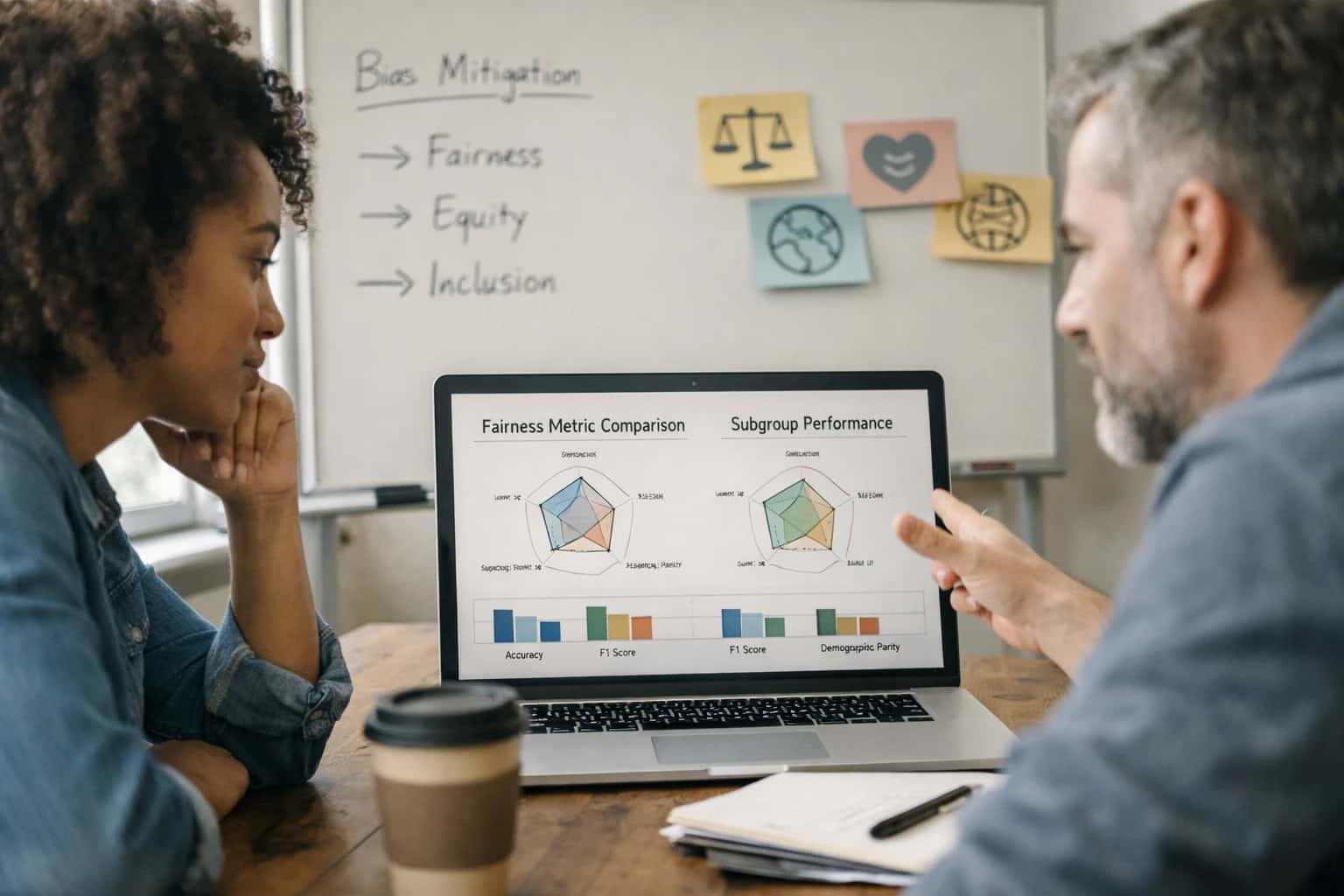
THE ANALYSIS
Introduction
A CTO's guide to choosing between interactive counterfactual analysis and programmatic bias mitigation for auditing citizen-facing AI.
Fairlearn takes a different approach by focusing on programmatic bias mitigation and metric-driven assessment. Rather than just visualizing unfairness, it provides algorithms like ExponentiatedGradient and GridSearch to actively constrain models during training to meet specific fairness criteria, such as equalized odds. This results in a trade-off: you gain automated remediation but lose the immediate, interactive intuition about individual edge cases that a visual tool provides.
The key trade-off: If your priority is building stakeholder trust through transparent, interactive exploration of model behavior on individual cases, choose the What-If Tool. If you prioritize enforcing group-level fairness constraints automatically during model training with auditable, quantitative metrics, choose Fairlearn. For a complete governance pipeline, many public sector teams deploy both: Fairlearn to enforce fairness during development and the What-If Tool to communicate model decisions to non-technical oversight boards.
HEAD-TO-HEAD COMPARISON
Feature Comparison Matrix
Direct comparison of key metrics and features for auditing models in citizen-facing services.
| Metric | What-If Tool | Fairlearn |
|---|---|---|
Primary Function | Visual Counterfactual Analysis | Programmatic Bias Mitigation |
Mitigation Algorithms | ||
Real-time Slicing UI | ||
Integration Protocol | TensorBoard / Notebooks | Scikit-learn / Azure ML |
Counterfactual Generation | ||
Group Fairness Metrics | Basic (Demographic Parity) | Extensive (Equal Opportunity, etc.) |
Deployment Target | Exploratory Analysis | Production Pipelines |
What-If Tool vs Fairlearn
TL;DR Summary
A high-level comparison of Google's interactive counterfactual analysis tool against Microsoft's programmatic bias mitigation library for public sector AI auditing.
01
Choose What-If Tool for Exploratory Auditing
Best for data scientists and policy analysts who need to visually probe a model's decision boundaries without writing code. The What-If Tool excels at counterfactual analysis, allowing users to manually edit a citizen's data point (e.g., changing age or zip code) and instantly see if the model's decision flips. This is critical for intuitive fairness testing and generating human-readable examples for algorithmic impact assessments, but it lacks automated mitigation algorithms.
02
Choose Fairlearn for Automated Mitigation
Best for ML engineers and model builders who need to programmatically enforce fairness constraints during training. Fairlearn provides state-of-the-art mitigation algorithms (Exponentiated Gradient, Grid Search) that optimize for parity metrics like demographic parity or equalized odds. This matters for high-stakes citizen services where you must actively fix bias rather than just detect it, aligning with NIST AI RMF's 'Manage' function.
03
What-If Tool: Visual Transparency
Specific advantage: Zero-code, browser-based interface for slicing model performance by any feature (e.g., gender, disability status). This matters for public trust and transparency—agencies can demonstrate to oversight bodies exactly how a model behaves across subgroups without requiring Python expertise. However, it is limited to ad-hoc analysis and does not integrate into automated CI/CD pipelines for continuous fairness monitoring.
04
Fairlearn: Metric Rigor and Remediation
Specific advantage: Implements over 10 group fairness metrics and provides disparity constraints that integrate directly into scikit-learn pipelines. This matters for formal compliance audits where statistical significance and legal defensibility are paramount. The trade-off is a steeper learning curve; Fairlearn requires Python proficiency and a deeper understanding of fairness definitions to avoid selecting a metric that conflicts with another.
Enabling Efficiency, Speed & Accuracy
Intelligent Analysis, Decision & Execution
We build AI systems for teams that need search across company data, workflow automation across tools, or AI features inside products and internal software.
Talk to Us
Search across company data
Give teams answers from docs, tickets, runbooks, and product data with sources and permissions.
Useful when people spend too long searching or get different answers from different systems.
Enterprise searchRAGPermissions
Read more
Automate internal workflows
Use AI to route work, draft outputs, trigger actions, and keep approvals and logs in place.
Useful when repetitive work moves across multiple tools and teams.
AI agentsWorkflow automationGovernance
Read more
Add AI to products and internal tools
Build assistants, guided actions, or decision support into the software your team or customers already use.
Useful when AI needs to be part of the product, not a separate tool.
AI integrationDecision supportModel routing
Read moreCHOOSE YOUR PRIORITY
When to Choose What-If Tool vs Fairlearn
What-If Tool for Exploratory Analysis
Verdict: The superior choice for intuitive, visual model interrogation.
The What-If Tool (WIT) is purpose-built for data scientists and policy analysts who need to understand model behavior before formal auditing. Its strength lies in interactive counterfactual analysis—manually editing a citizen's data point to see if the model's decision flips. This is critical for developing an intuition about a model's decision boundary in high-stakes public services like benefits allocation. WIT excels at slice-level performance analysis, allowing you to visually identify underperforming demographic groups without writing code.
Fairlearn for Exploratory Analysis
Verdict: Less suited for ad-hoc visual probing; designed for programmatic rigor.
Fairlearn's dashboard provides a solid overview of disparity metrics, but its core philosophy is programmatic mitigation, not interactive exploration. While you can view metrics, the tool lacks the drag-and-drop counterfactual interface that makes WIT indispensable for early-stage debugging. For a policy analyst asking "What feature change would grant this applicant a permit?", Fairlearn requires a developer to script the scenario, whereas WIT provides an immediate visual answer.
THE ANALYSIS
Verdict
A data-driven comparison of exploratory visual analysis versus programmatic bias mitigation for public sector AI auditing.
Google's What-If Tool excels at interactive, visual counterfactual analysis because it allows data scientists and policy analysts to probe model behavior without writing code. For example, a public benefits eligibility model can be tested by manually editing a single data point—changing a citizen's reported income or zip code—and instantly visualizing how the model's prediction changes. This direct manipulation interface reduces the time to identify potential proxy discrimination from hours to minutes, making it ideal for exploratory fairness audits and stakeholder demonstrations where intuitive understanding of model boundaries is critical.
Microsoft's Fairlearn takes a different approach by providing a programmatic, mitigation-first framework. Rather than just visualizing bias, Fairlearn offers algorithms like ExponentiatedGradient and GridSearch that actively constrain models during training to meet specific fairness criteria, such as equalized odds or demographic parity. This results in a trade-off: you gain automated remediation capabilities and reproducible audit trails, but you lose the immediate, intuitive feedback loop that visual tools provide. Fairlearn's strength lies in enforcing a mathematical fairness definition across an entire pipeline, which is essential for generating the rigorous statistical evidence required by NIST AI RMF and formal Algorithmic Impact Assessments.
The key trade-off: If your priority is rapid, intuitive exploration of model behavior for stakeholder communication and initial bias discovery, choose the What-If Tool. Its visual interface is unmatched for building a shared understanding of fairness risks across non-technical oversight bodies. If you prioritize automated bias mitigation, reproducible fairness constraints, and generating audit-ready statistical reports for regulatory compliance, choose Fairlearn. For a comprehensive public sector AI governance workflow, the most robust approach is often to use the What-If Tool for initial discovery and Fairlearn for formal remediation and documentation.

About the author
Prasad Kumkar
CEO & MD, Inference Systems
Prasad Kumkar is the CEO & MD of Inference Systems and writes about AI systems architecture, LLM infrastructure, model serving, evaluation, and production deployment. Over 5+ years, he has worked across computer vision models, L5 autonomous vehicle systems, and LLM research, with a focus on taking complex AI ideas into real-world engineering systems.
His work and writing cover AI systems, large language models, AI agents, multimodal systems, autonomous systems, inference optimization, RAG, evaluation, and production AI engineering.
LinkedIn
Limited slotsGet a Free AI Consultation
Partnered with leading AI, data, and software stack.





How We Work
Custom AI workflows for your Business
One-fit-all AI don't work for modern businesses. At Inferensys, we aim to understand your business & custom requirements; which we use to define most efficient agentic workflows, the data, and the tools for your business.
01
Review the use case
We understand the task, the users, and where AI can actually help.
Read more02
Pick the right approach
We define what needs search, automation, or product integration.
Read more03
Build the first useful version
We implement the part that proves the value first.
Read more04
Improve from there
We add the checks and visibility needed to keep it useful.
Read moreThe first call is a practical review of your use case and the right next step.
Talk to Us