AI Fairness 360 (AIF360) excels at providing a comprehensive, end-to-end bias intervention suite because it packages over 70 fairness metrics with 10+ bias mitigation algorithms. For example, its DisparateImpactRemover and Reject Option Classification algorithms allow data science teams to not just measure but actively repair biased models during pre-processing or post-processing stages, aligning with the NIST AI RMF's 'Manage' function.

Difference
AI Fairness 360 vs Aequitas
A technical comparison of IBM's AI Fairness 360 and the University of Chicago's Aequitas for auditing bias in public benefits allocation, focusing on statistical tests, group fairness metrics, and suitability for civil rights oversight.
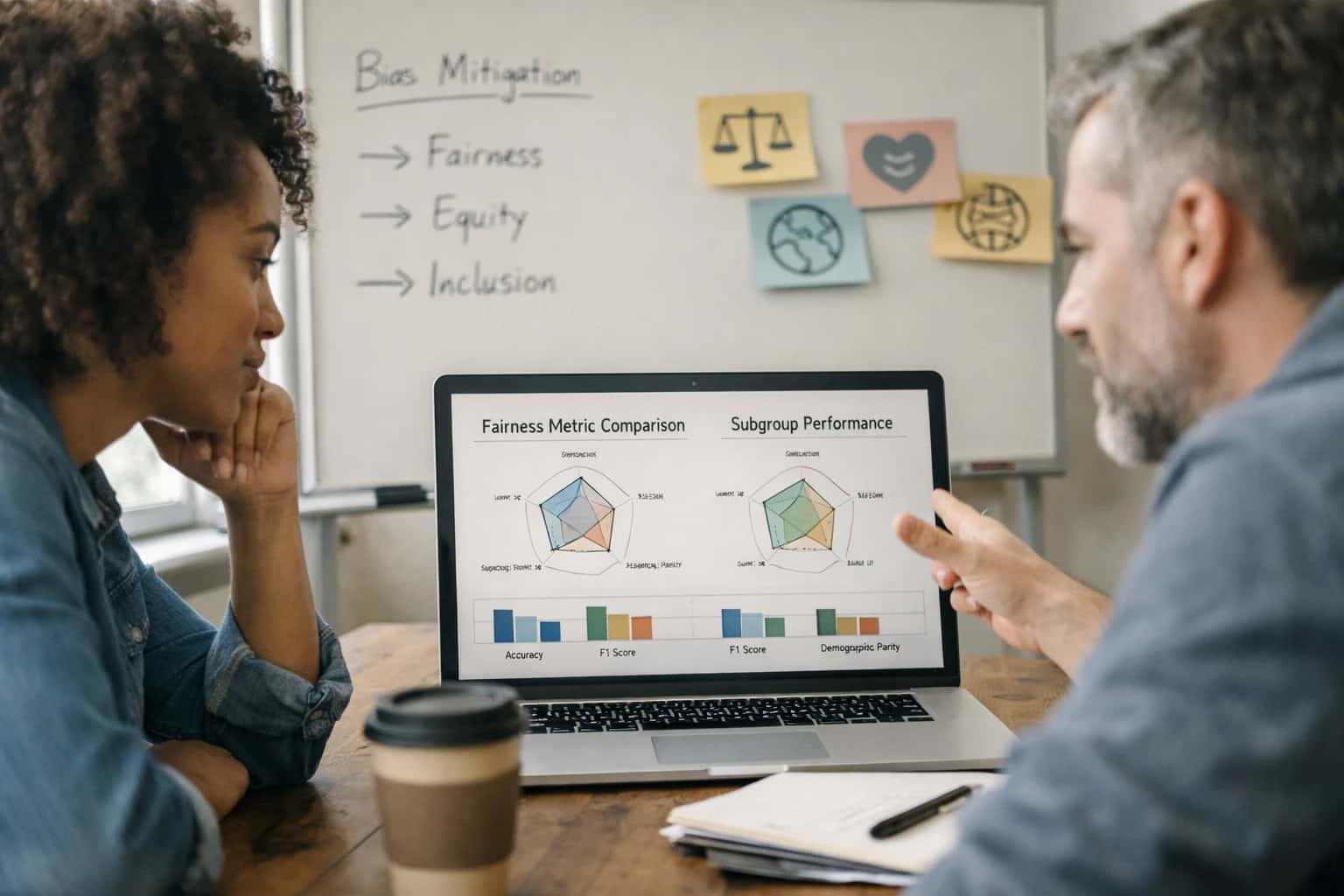
THE ANALYSIS
Introduction
A data-driven comparison of IBM's comprehensive bias mitigation toolkit and the University of Chicago's statistical audit framework for public sector AI governance.
Aequitas takes a different approach by functioning as a rigorous, audit-first statistical toolkit designed for oversight bodies rather than model builders. It generates a detailed 'Group' and 'Bias' report that maps disparities across user-defined demographic groups using metrics like Statistical Parity Difference and False Discovery Rate Disparity. This results in a highly interpretable audit artifact suitable for a civil rights oversight hearing, but it intentionally omits mitigation algorithms, leaving the remediation strategy to policy makers.
The key trade-off: If your priority is an integrated workflow for detecting and fixing bias within a data science team, choose AI Fairness 360. If you prioritize a transparent, legally defensible statistical audit for an independent compliance body, choose Aequitas. For a complete governance lifecycle, many public sector agencies deploy Aequitas for the formal audit and AIF360 for the subsequent remediation, as detailed in our AI Governance and Compliance Platforms comparison.
HEAD-TO-HEAD COMPARISON
Feature Comparison
Direct comparison of key metrics and features for AI Fairness 360 and Aequitas.
| Metric | AI Fairness 360 | Aequitas |
|---|---|---|
Primary Use Case | Bias Mitigation & Detection | Bias Auditing & Reporting |
Bias Mitigation Algorithms | 10+ (Reweighing, Reject Option, etc.) | 0 (Measurement-Only) |
Fairness Metrics Supported | 70+ | 10+ (Group & Individual) |
Statistical Parity Tests | ||
Disparate Impact Analysis | ||
Interactive Visualization | ||
Audit Report Generation | ||
NIST AI RMF Alignment | High (Mitigation Focus) | High (Measurement Focus) |
AI Fairness 360 vs Aequitas
TL;DR Summary
A side-by-side comparison of strengths and trade-offs for auditing bias in public benefits allocation.
01
AI Fairness 360: Comprehensive Mitigation Toolkit
Extensive Algorithmic Library: Offers over 70 fairness metrics and 10+ bias mitigation algorithms (e.g., Reweighing, Adversarial Debiasing). This matters for data science teams needing an end-to-end solution from detection to remediation within a single, well-documented Python package.
02
AI Fairness 360: Enterprise-Ready Explainability
Integrated Guidance: Provides detailed metric explanations and bias mitigation tutorials aligned with enterprise governance workflows. This matters for organizations building internal capacity for NIST AI RMF compliance, offering a guided path from metric calculation to intervention strategy.
03
Aequitas: Audit-Centric Statistical Rigor
Disparity-First Philosophy: Designed specifically for auditing, it generates a comprehensive 'Fairness Tree' to systematically identify which demographic groups experience harm based on statistical parity and disparate impact tests. This matters for civil rights oversight bodies requiring a clear, legally defensible audit report.
04
Aequitas: Lightweight & Transparent Reporting
Audit-Ready Output: Focuses on generating transparent, web-based reports that clearly communicate bias metrics to non-technical stakeholders, including policymakers and auditors. This matters for public trust, as it prioritizes the interpretability of results over the complexity of mitigation algorithms.
Enabling Efficiency, Speed & Accuracy
Intelligent Analysis, Decision & Execution
We build AI systems for teams that need search across company data, workflow automation across tools, or AI features inside products and internal software.
Talk to Us
Search across company data
Give teams answers from docs, tickets, runbooks, and product data with sources and permissions.
Useful when people spend too long searching or get different answers from different systems.
Enterprise searchRAGPermissions
Read more
Automate internal workflows
Use AI to route work, draft outputs, trigger actions, and keep approvals and logs in place.
Useful when repetitive work moves across multiple tools and teams.
AI agentsWorkflow automationGovernance
Read more
Add AI to products and internal tools
Build assistants, guided actions, or decision support into the software your team or customers already use.
Useful when AI needs to be part of the product, not a separate tool.
AI integrationDecision supportModel routing
Read moreCHOOSE YOUR PRIORITY
When to Choose Which Tool
AI Fairness 360 for Auditors
Verdict: The comprehensive choice for formal impact assessments. AI Fairness 360 (AIF360) provides the broadest set of metrics and mitigation algorithms, making it ideal for a deep, one-time Algorithmic Impact Assessment. Its strength lies in its exhaustive library, covering everything from individual to group fairness. For an auditor needing to produce a detailed report aligned with the NIST AI RMF, AIF360's extensive metric coverage and bias mitigation algorithms offer a complete toolkit.
Aequitas for Auditors
Verdict: The precise choice for legal compliance testing. Aequitas is purpose-built for the audit workflow. Its core philosophy centers on the 'Fairness Tree,' which guides users to the correct statistical metric based on the specific legal or policy question (e.g., 'Are we under-allocating benefits to a protected group?'). For a civil rights oversight body testing for disparate impact against a specific legal standard, Aequitas provides a more focused, statistically rigorous, and defensible audit trail.
THE ANALYSIS
Verdict
A data-driven breakdown to help public sector CTOs choose between IBM's comprehensive bias mitigation toolkit and UChicago's audit-focused statistical framework.
AI Fairness 360 (AIF360) excels at intervention because it provides not just detection but over 10 bias mitigation algorithms integrated directly into the ML pipeline. For example, its Reweighing and Adversarial Debiasing modules allow a data science team to actively fix a model before deployment, making it the stronger choice for agencies building new citizen-facing allocation systems from scratch. Its comprehensive metric library covers individual and group fairness, aligning tightly with the NIST AI RMF's 'Map' and 'Measure' functions.
Aequitas takes a different approach by prioritizing statistical rigor for auditing. It is designed as a gatekeeper, not a mechanic. Its strength lies in its 'fairness tree' methodology, which forces the user to define the specific harm (e.g., underestimation vs. overestimation) before selecting a metric. This results in a more legally defensible audit trail for disparate impact analysis, making it the superior tool for a civil rights oversight body validating a vendor's black-box model against the 'four-fifths rule'.
The key trade-off: If your priority is remediation and you have an active data science team building models, choose AIF360. If you prioritize audit integrity and need a statistically conservative tool to validate a third-party system for compliance with procurement regulations, choose Aequitas. For a complete governance lifecycle, leading agencies often use Aequitas for the pre-deployment audit and AIF360 for the subsequent mitigation sprint.

About the author
Prasad Kumkar
CEO & MD, Inference Systems
Prasad Kumkar is the CEO & MD of Inference Systems and writes about AI systems architecture, LLM infrastructure, model serving, evaluation, and production deployment. Over 5+ years, he has worked across computer vision models, L5 autonomous vehicle systems, and LLM research, with a focus on taking complex AI ideas into real-world engineering systems.
His work and writing cover AI systems, large language models, AI agents, multimodal systems, autonomous systems, inference optimization, RAG, evaluation, and production AI engineering.
LinkedIn
Limited slotsGet a Free AI Consultation
Partnered with leading AI, data, and software stack.





How We Work
Custom AI workflows for your Business
One-fit-all AI don't work for modern businesses. At Inferensys, we aim to understand your business & custom requirements; which we use to define most efficient agentic workflows, the data, and the tools for your business.
01
Review the use case
We understand the task, the users, and where AI can actually help.
Read more02
Pick the right approach
We define what needs search, automation, or product integration.
Read more03
Build the first useful version
We implement the part that proves the value first.
Read more04
Improve from there
We add the checks and visibility needed to keep it useful.
Read moreThe first call is a practical review of your use case and the right next step.
Talk to Us