
Differences
Agentic Workflow Definition Languages
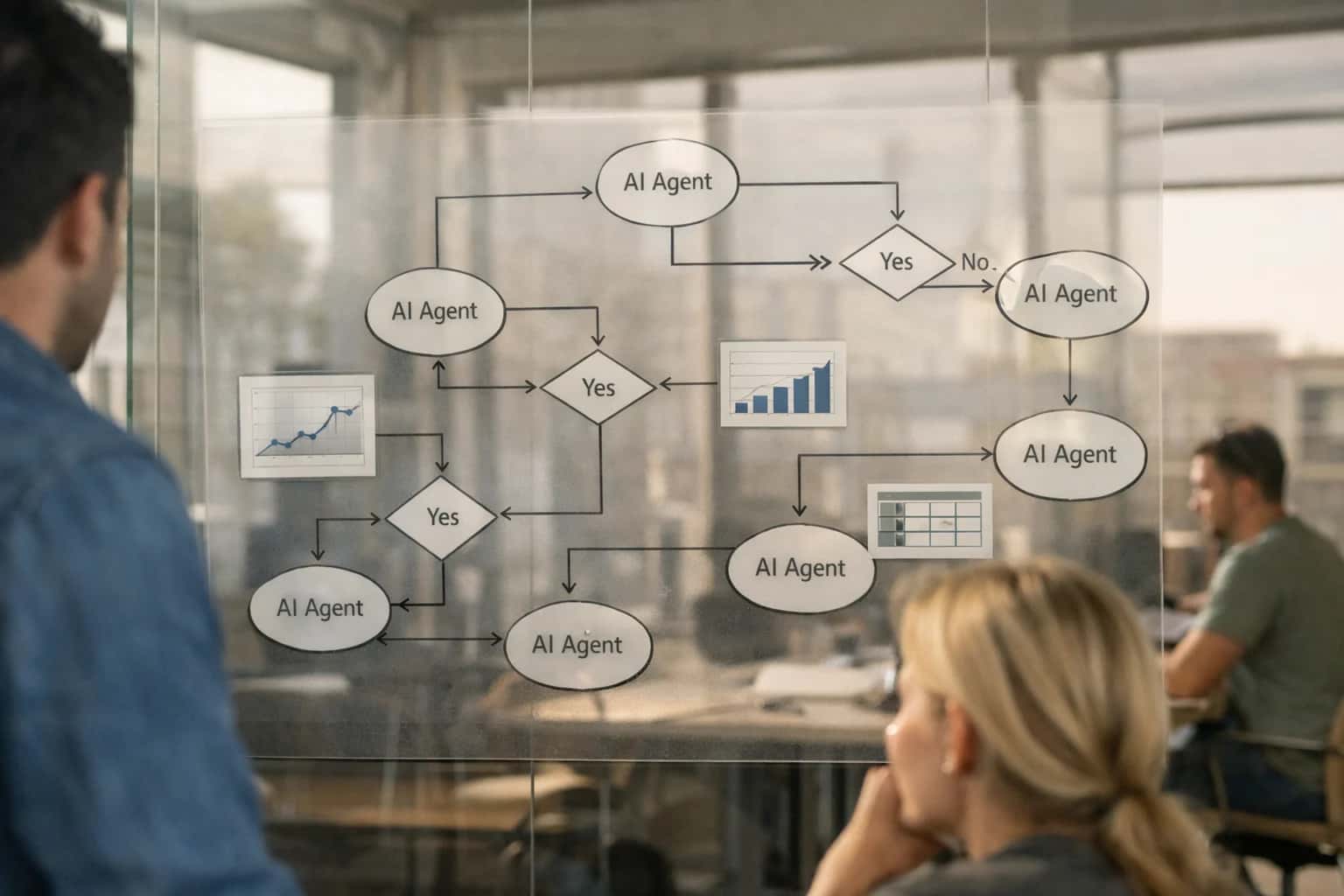
Agentic Workflow Definition Languages
Comparisons related to declarative versus programmatic approaches for defining complex agent logic and control flow. Target: Engineering managers and tech leads standardizing how teams build and maintain agentic workflows.
LangGraph vs AutoGen
Comparing the stateful graph execution of LangGraph against the event-driven, conversational architecture of AutoGen for building complex, multi-step agentic workflows. Focuses on control flow, state persistence, and human-in-the-loop integration patterns.
CrewAI vs AutoGen
Evaluating the role-based, sequential task execution model of CrewAI versus the flexible, conversational agent chat model of AutoGen. Focuses on ease of defining agent teams, task delegation, and output consistency for multi-agent orchestration.
Dify vs LangFlow
Comparing two leading visual, low-code platforms for prototyping and deploying LLM-powered agentic workflows. Focuses on drag-and-drop interface design, RAG pipeline construction, and enterprise deployment capabilities.
Semantic Kernel vs LangChain
Analyzing Microsoft's enterprise-first, SDK-style orchestration framework against the community-driven, Pythonic ecosystem of LangChain for building and integrating AI agents into existing business applications.
Prefect vs Temporal.io for AI Pipelines
Comparing the Python-native workflow orchestration of Prefect with the durable execution and language-agnostic design of Temporal.io for managing long-running, resilient, and stateful AI agent tasks.
Dagster vs Prefect for Agent Orchestration
Evaluating Dagster's asset-centric, declarative approach to data pipelines against Prefect's dynamic, imperative workflow orchestration for managing the data dependencies and lifecycle of agentic systems.
MCP vs A2A for Agent Communication
Comparing Anthropic's Model Context Protocol (MCP) for standardizing agent-to-tool connections against Google's Agent-to-Agent (A2A) protocol for enabling direct, multi-agent delegation and discovery.
LangSmith vs Arize Phoenix for Agent Tracing
Comparing LangChain's native debugging and evaluation platform with the open-source observability library Arize Phoenix for tracing, monitoring, and evaluating complex, multi-step agentic workflows in production.
OpenAI Assistants API vs Custom LangGraph Agents
Evaluating the managed, stateful agent infrastructure of OpenAI's Assistants API against the flexibility and control of building custom, graph-based agents with LangGraph for complex enterprise use cases.
Anthropic Tool Use vs OpenAI Function Calling
Comparing the native tool-use capabilities of Anthropic's models against OpenAI's function calling for enabling agents to reliably and accurately interact with external APIs and software.
Google Vertex AI Agent Builder vs AWS Bedrock Agents
Comparing the fully managed agent development platforms from Google Cloud and AWS for building, deploying, and scaling AI agents using proprietary and open-source foundation models within their respective ecosystems.
Pydantic vs Zod for Agent Schema Validation
Comparing the Python-based Pydantic library against the TypeScript-first Zod library for defining, validating, and structuring the inputs and outputs of AI agents and their tools in different language ecosystems.
OpenAPI vs gRPC for Agent Tool Specification
Evaluating the widely adopted RESTful API standard against the high-performance gRPC framework for defining the contracts that AI agents use to discover and interact with external services.
WebSockets vs Server-Sent Events for Agent Streaming
Comparing full-duplex WebSocket connections against unidirectional Server-Sent Events (SSE) for streaming real-time agent reasoning, tool calls, and responses to user-facing applications.
NATS vs Kafka for Agent Message Brokering
Comparing the lightweight, high-performance NATS messaging system against the durable, high-throughput Apache Kafka for building the asynchronous communication backbone of a distributed multi-agent system.
PostgreSQL vs MongoDB for Agent State Persistence
Evaluating a relational database with vector capabilities against a document-oriented NoSQL database for storing and querying the structured conversation history, task progress, and long-term memory of AI agents.
ChromaDB vs Qdrant for Agent Vector Memory
Comparing the developer-friendly, embedded ChromaDB against the high-performance, Rust-based Qdrant vector database for providing agents with fast, semantic long-term memory and retrieval capabilities.
FastAPI vs Flask for Agent Microservices
Comparing the modern, high-performance FastAPI framework against the battle-tested, minimalist Flask framework for building the scalable, asynchronous API microservices that wrap and serve AI agents.
Partnered with leading AI, data, and software stack.





How We Work
Custom AI workflows for your Business
One-fit-all AI don't work for modern businesses. At Inferensys, we aim to understand your business & custom requirements; which we use to define most efficient agentic workflows, the data, and the tools for your business.
01
Review the use case
We understand the task, the users, and where AI can actually help.
Read more02
Pick the right approach
We define what needs search, automation, or product integration.
Read more03
Build the first useful version
We implement the part that proves the value first.
Read more04
Improve from there
We add the checks and visibility needed to keep it useful.
Read moreThe first call is a practical review of your use case and the right next step.
Talk to Us