[Dagster] excels at providing a declarative, software-defined asset (SDA) model that treats data products as first-class citizens. This approach forces a rigorous, testable structure, making it ideal for environments where data lineage, backfilling, and explicit dependency mapping are non-negotiable. For example, a financial services firm using Dagster can automatically track how a specific raw market data table transforms into a final risk report, enabling precise impact analysis and one-click remediation of stale partitions.

Difference
Dagster vs Prefect for Agent Orchestration
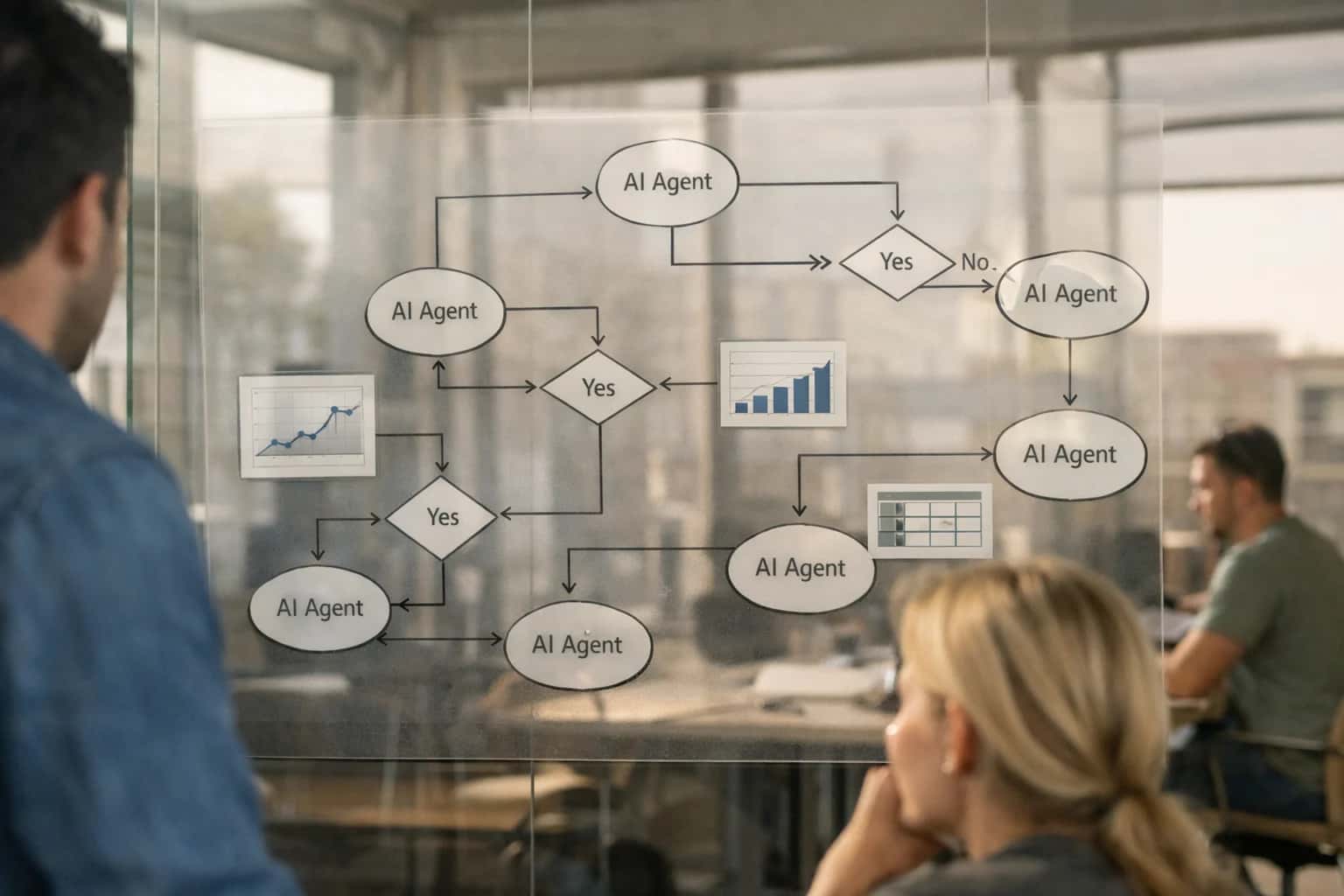
A technical comparison of Dagster's asset-centric, declarative approach against Prefect's dynamic, imperative workflow orchestration for managing the data dependencies and lifecycle of agentic systems. Covers architecture, state management, and operational fit for AI agent pipelines.
THE ANALYSIS
Introduction
A data-driven comparison of Dagster's declarative, asset-centric approach versus Prefect's dynamic, imperative orchestration for managing the data lifecycle of agentic systems.
[Prefect] takes a different approach by prioritizing dynamic, imperative workflow orchestration. Its Pythonic, decorator-based API allows developers to write standard Python code and seamlessly elevate it into a resilient, production-grade pipeline. This results in a faster development loop for complex, logic-heavy tasks, but it shifts the burden of defining data lineage to the developer, who must explicitly manage inputs and outputs rather than relying on a declarative framework.
The key trade-off: If your priority is strict data governance, audibility, and a 'unified control plane' for data assets, choose Dagster. If you prioritize developer velocity, dynamic workflow logic, and the flexibility to run any Python code with robust retry and caching semantics, choose Prefect. For agent orchestration, this means Dagster is better for governing the data an agent consumes and produces, while Prefect is better for orchestrating the process of an agent's multi-step, dynamic reasoning loop.
HEAD-TO-HEAD COMPARISON
Feature Comparison Matrix
Direct comparison of key architectural and operational metrics for orchestrating agentic workflows.
| Metric | Dagster | Prefect |
|---|---|---|
Core Paradigm | Declarative (Asset-Centric) | Imperative (Task-Centric) |
Agent State Management | Externalized via I/O Manager | Native Result Persistence |
Dynamic Workflow Support | ||
Human-in-the-Loop Trigger | Via Sensors | Via Pause/Suspend Tasks |
Execution Model | Step-wise, Static Graph | DAG + Dynamic Subflows |
Native Streaming Support | ||
Open Source License | Apache 2.0 | Apache 2.0 |
Dagster Pros
TL;DR Summary
Key strengths and trade-offs at a glance.
01
Asset-Centric Lineage
Declarative data awareness: Dagster models workflows as Software-Defined Assets, automatically tracking data lineage and dependencies. This matters for agentic systems where data provenance is critical for debugging and auditing. You always know which agent output depends on which upstream data.
02
First-Class Testability
Isolated execution contexts: Dagster's I/O manager system allows you to swap production storage for in-memory storage during tests. This matters for building reliable agent pipelines where you need to validate business logic without hitting external APIs or databases.
03
Branching & Backfilling
Time-travel and replay: Dagster's partitions and backfills allow you to re-run agent workflows on historical data slices. This matters for reprocessing agent decisions when you update your prompting logic or fix a bug in a tool definition.
Enabling Efficiency, Speed & Accuracy
Intelligent Analysis, Decision & Execution
We build AI systems for teams that need search across company data, workflow automation across tools, or AI features inside products and internal software.
Talk to Us
Search across company data
Give teams answers from docs, tickets, runbooks, and product data with sources and permissions.
Useful when people spend too long searching or get different answers from different systems.
Enterprise searchRAGPermissions
Read more
Automate internal workflows
Use AI to route work, draft outputs, trigger actions, and keep approvals and logs in place.
Useful when repetitive work moves across multiple tools and teams.
AI agentsWorkflow automationGovernance
Read more
Add AI to products and internal tools
Build assistants, guided actions, or decision support into the software your team or customers already use.
Useful when AI needs to be part of the product, not a separate tool.
AI integrationDecision supportModel routing
Read moreCHOOSE YOUR PRIORITY
When to Choose Dagster vs Prefect
Dagster for Data Engineers
Strengths: The asset-centric, declarative model is a paradigm shift for data platform teams. By defining the assets (tables, files, ML models) your agentic system produces, Dagster automatically understands data lineage and dependency graphs. This makes it the superior choice for orchestrating the data pipelines that feed agentic workflows, especially when you need to backfill historical data or understand upstream/downstream impacts of a schema change. The native integration with dbt, Airbyte, and Fivetran makes it a natural fit for the modern data stack.
Verdict: Choose Dagster if your primary goal is building a maintainable, observable data platform where the agent's data dependencies are the core product.
Prefect for Data Engineers
Strengths: Prefect's dynamic, imperative approach feels more like writing native Python. For data engineers who need to orchestrate highly dynamic, event-driven workflows—like an agent that triggers a new pipeline based on an unpredictable API response—Prefect's flexibility is unmatched. Its first-class support for asynchronous tasks and its ability to handle long-running, resilient processes make it ideal for the 'always-on' data services that agents rely on.
Verdict: Choose Prefect if your agentic workflows are highly dynamic, require Pythonic flexibility, and must react to real-time events rather than scheduled batch processes.
THE ANALYSIS
Verdict
A final, data-driven assessment to help CTOs choose between Dagster's declarative asset model and Prefect's dynamic orchestration for agentic workflows.
Dagster excels at building maintainable, observable data platforms because of its software-defined asset (SDA) approach. This declarative model forces developers to explicitly define the data products their agents produce, creating a living map of upstream and downstream dependencies. For example, a financial compliance agent built on Dagster provides an auto-generated, cross-tool lineage graph, making it trivial to trace a regulatory report back to the exact API call and LLM prompt that generated it. This drastically reduces audit preparation time from weeks to hours.
Prefect takes a different approach by prioritizing dynamic, imperative workflow execution. Its Pythonic, decorator-based API allows developers to build resilient agentic loops that can adapt to non-deterministic LLM outputs without pre-defining every possible state. This results in faster initial development for exploratory agent projects. Prefect's lightweight concurrency model and built-in retry logic, which can handle transient API failures with exponential backoff, make it a strong choice for orchestrating thousands of short-lived, unpredictable agent tasks where a rigid DAG structure would be a bottleneck.
The key trade-off: If your priority is long-term governance, data lineage, and creating a discoverable, asset-centric platform for a large engineering team, choose Dagster. Its declarative model forces a discipline that pays off in maintainability and auditability. If you prioritize developer speed, dynamic workflow patterns, and need to rapidly prototype agents that react to unpredictable LLM outputs, choose Prefect. Its imperative style offers the flexibility needed for highly experimental, non-linear agentic reasoning.

About the author
Prasad Kumkar
CEO & MD, Inference Systems
Prasad Kumkar is the CEO & MD of Inference Systems and writes about AI systems architecture, LLM infrastructure, model serving, evaluation, and production deployment. Over 5+ years, he has worked across computer vision models, L5 autonomous vehicle systems, and LLM research, with a focus on taking complex AI ideas into real-world engineering systems.
His work and writing cover AI systems, large language models, AI agents, multimodal systems, autonomous systems, inference optimization, RAG, evaluation, and production AI engineering.
LinkedIn
Limited slotsGet a Free AI Consultation
Partnered with leading AI, data, and software stack.





How We Work
Custom AI workflows for your Business
One-fit-all AI don't work for modern businesses. At Inferensys, we aim to understand your business & custom requirements; which we use to define most efficient agentic workflows, the data, and the tools for your business.
01
Review the use case
We understand the task, the users, and where AI can actually help.
Read more02
Pick the right approach
We define what needs search, automation, or product integration.
Read more03
Build the first useful version
We implement the part that proves the value first.
Read more04
Improve from there
We add the checks and visibility needed to keep it useful.
Read moreThe first call is a practical review of your use case and the right next step.
Talk to Us