
Comparisons
Multimodal Foundation Model Benchmarking
Multimodal Foundation Model Benchmarking
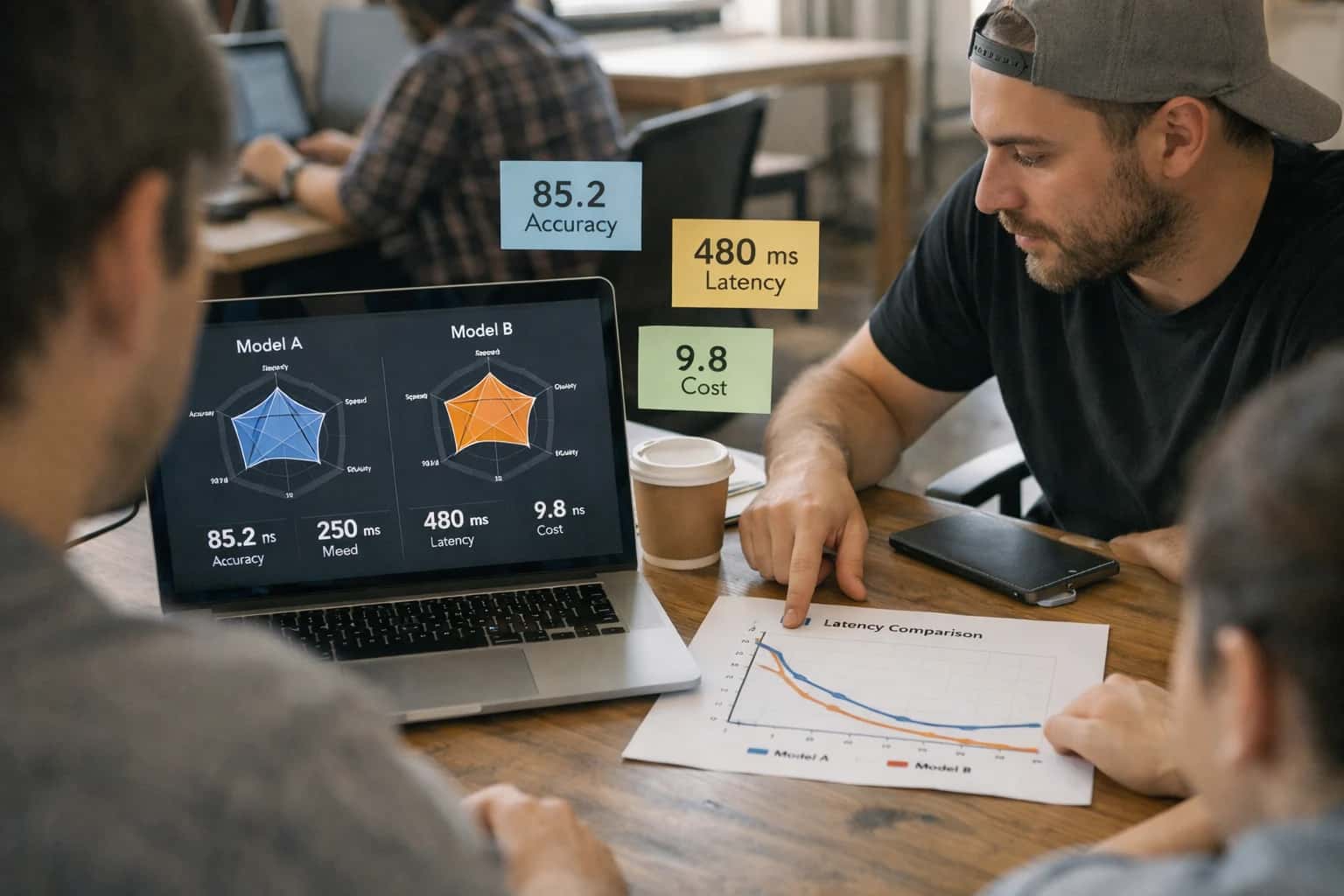
In 2026, the race between GPT-5, Gemini 2.5 Pro, and Claude 4.5 Sonnet is no longer just about text. This pillar addresses comparisons of 'unified systems' that intelligently route prompts across text, audio, image, and video modalities. Key comparison metrics include 'Extended Thinking' modes, context window sizes (e.g., 1M vs. 10M tokens), and SWE-bench verified scores for agentic coding. Comparisons help clients select models based on 'cognitive density' and reasoning reliability.
GPT-5 vs. Gemini 2.5 Pro
Direct comparison of the two leading frontier multimodal models in 2026, focusing on unified system architecture, cognitive density, and reasoning reliability for enterprise agentic workflows.
GPT-5 vs. Claude 4.5 Sonnet
Head-to-head evaluation of OpenAI's flagship against Anthropic's reasoning-focused model, comparing extended thinking modes, SWE-bench performance, and multimodal routing efficiency.
Gemini 2.5 Pro vs. Claude 4.5 Sonnet
Analysis of Google's high-context model versus Anthropic's safety-aligned Sonnet, focusing on 1M vs. 10M token context trade-offs, video understanding, and cost per token.
GPT-5 vs. GPT-4o
Benchmarking OpenAI's latest generation against its predecessor, highlighting improvements in multimodal capabilities, agentic coding performance, and latency for real-time applications in 2026.
Claude 4.5 Sonnet vs. Claude 3.5 Sonnet
Intra-family comparison assessing Anthropic's generational leap in reasoning reliability, extended thinking mode, and fine-tuning capabilities for regulated enterprise use.
Gemini 2.5 Pro vs. Gemini 2.0 Ultra
Evaluating Google's model evolution, focusing on the shift to a unified multimodal architecture, improvements in long-context reasoning, and API latency reductions.
GPT-5 vs. Llama 4
Comparing the leading proprietary frontier model against Meta's premier open-source alternative, focusing on multimodal agentic performance, fine-tuning flexibility, and total cost of ownership.
GPT-5 vs. Grok 3
Analysis of OpenAI's model versus xAI's contender, emphasizing real-time reasoning capabilities, unique data access, and performance in conversational and coding tasks.
Claude 4.5 Sonnet vs. Mistral Large 2
Comparing Anthropic's safety-focused model with Mistral AI's European contender, evaluating reasoning benchmarks, multilingual support, and sovereign AI infrastructure compatibility.
Gemini 2.5 Pro vs. DeepSeek-V3
Benchmarking Google's model against the leading Chinese multimodal foundation model, focusing on long-context processing, coding proficiency, and cost-effectiveness for global deployments.
GPT-5 Codex vs. Claude 4.5 Sonnet for SWE-bench
Focused comparison on agentic coding performance, using the SWE-bench benchmark to evaluate pass rates, code correctness, and repository reasoning for software engineering automation.
GPT-5 Vision vs. Gemini 2.5 Pro Vision
Direct evaluation of core visual understanding capabilities, including image analysis, document parsing, and compositional reasoning accuracy for enterprise document workflows.
GPT-5 with 10M Context vs. Claude 4.5 Sonnet with 1M Context
Technical deep dive on the practical implications of massive context windows, analyzing retrieval accuracy, inference latency, and cost for long-document analysis in 2026.
GPT-5 API Latency vs. Claude 4.5 Sonnet API Latency
Performance benchmarking focused on real-world p95/p99 response times, throughput, and reliability for high-volume enterprise integrations and user-facing applications.
GPT-5 Cost per Token vs. Claude 4.5 Sonnet Cost per Token
FinOps-focused analysis comparing the total cost of operation, including input/output pricing, extended thinking surcharges, and effective cost for complex reasoning tasks.
GPT-5 for Multimodal Agentic Workflows vs. Claude 4.5 Sonnet for Multimodal Agentic Workflows
Use-case specific comparison evaluating tool-calling reliability, state management, and reasoning traceability for building autonomous, multi-step agentic systems.
GPT-5 Fine-Tuning Capabilities vs. Claude 4.5 Sonnet Fine-Tuning Capabilities
Evaluation of proprietary model adaptation options, comparing data requirements, performance retention, and governance features for creating domain-specific enterprise models.
Partnered with leading AI, data, and software stack.





How We Work
Custom AI workflows for your Business
One-fit-all AI don't work for modern businesses. At Inferensys, we aim to understand your business & custom requirements; which we use to define most efficient agentic workflows, the data, and the tools for your business.
01
Review the use case
We understand the task, the users, and where AI can actually help.
Read more02
Pick the right approach
We define what needs search, automation, or product integration.
Read more03
Build the first useful version
We implement the part that proves the value first.
Read more04
Improve from there
We add the checks and visibility needed to keep it useful.
Read moreThe first call is a practical review of your use case and the right next step.
Talk to Us