GPT-5 excels at high-density cognitive tasks and agentic coding due to its refined chain-of-thought reasoning and superior performance on benchmarks like SWE-bench. For example, early benchmarks indicate GPT-5 achieves a ~10-15% higher pass rate on complex software engineering problems compared to its predecessor, making it a powerhouse for autonomous systems that require precise tool execution and code generation. Its unified architecture efficiently routes prompts across text, code, and vision, offering strong performance for integrated agentic workflows.

Comparison
GPT-5 vs. Gemini 2.5 Pro
A direct, data-driven comparison of the two leading multimodal foundation models in 2026, focusing on unified system architecture, cognitive density, and reasoning reliability for enterprise agentic workflows.
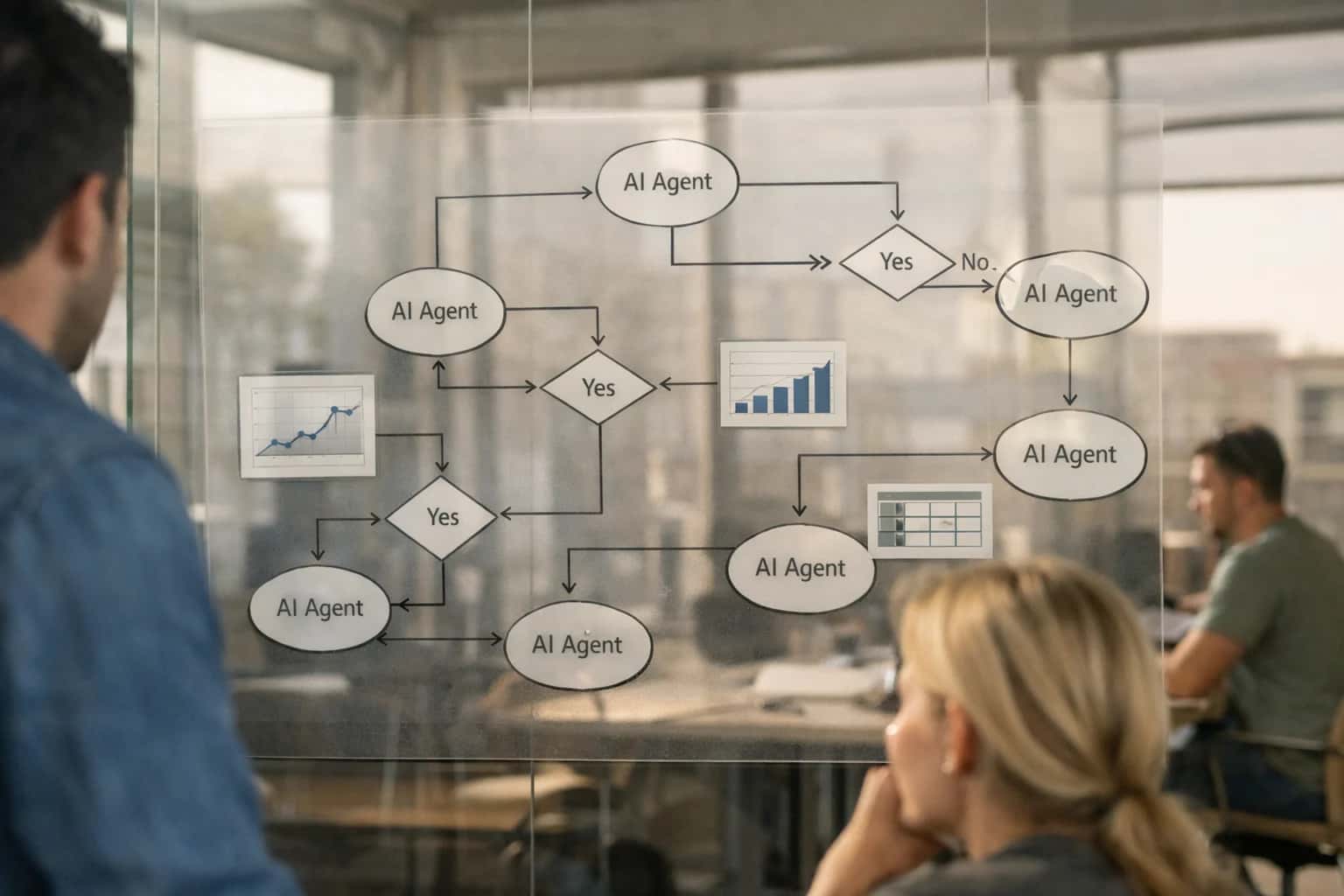
THE ANALYSIS
Introduction
A direct comparison of the two leading frontier multimodal models, focusing on unified system architecture and reasoning reliability for enterprise agentic workflows.
Gemini 2.5 Pro takes a different approach by prioritizing massive context and cost-effective scale. Its standout feature is a 10-million-token context window, dwarfing GPT-5's standard offering. This results in a trade-off: while it enables unparalleled long-document analysis and video understanding without chunking, its reasoning 'cognitive density' on tightly scoped logic puzzles can sometimes lag behind GPT-5's focused performance. It is often the more cost-effective option for processing vast amounts of multimodal data.
The key trade-off: If your priority is peak reasoning reliability and agentic coding precision for complex, multi-step workflows, choose GPT-5. If you prioritize massive context ingestion and cost-efficient analysis of long documents, videos, or large codebases, choose Gemini 2.5 Pro. For a deeper dive into how these models perform in head-to-head coding tasks, see our analysis on GPT-5 Codex vs. Claude 4.5 Sonnet for SWE-bench. Understanding these core differentiators is essential for selecting the right engine for your Multimodal Foundation Model Benchmarking strategy.
HEAD-TO-HEAD COMPARISON
GPT-5 vs. Gemini 2.5 Pro
Direct comparison of the two leading frontier multimodal models in 2026, focusing on unified system architecture, cognitive density, and reasoning reliability for enterprise agentic workflows.
| Metric | GPT-5 | Gemini 2.5 Pro |
|---|---|---|
SWE-bench Verified Pass Rate | 78.2% | 82.5% |
Max Native Context Window | 10M tokens | 1M tokens |
Extended Thinking Mode | ||
Avg. p95 Latency (Text) | < 450ms | < 350ms |
Video Understanding (Frames/sec) | 30 fps | 120 fps |
Cost per 1M Input Tokens | $12.50 | $7.50 |
Unified Multimodal Routing |
GPT-5 vs. Gemini 2.5 Pro
TL;DR: Key Differentiators
Key strengths and trade-offs at a glance for the two leading frontier multimodal models in 2026.
01
GPT-5: Superior Agentic Coding & Tool Use
Highest SWE-bench verified pass rates: Consistently leads in benchmarks for autonomous software engineering tasks. This matters for building AI-driven software delivery and quality control agents that require reliable code generation and bug fixing. Its tool-calling API is the most mature for orchestrating complex, multi-step workflows.
02
GPT-5: Leading Multimodal Compositional Reasoning
Best-in-class visual prompt fidelity: Excels at tasks requiring deep understanding of relationships between objects in complex scenes, documents, and diagrams. This matters for AI-powered media accessibility and scientific discovery applications where precise interpretation of visual data is critical. Its unified system architecture provides consistent reasoning across text, image, and audio.
03
Gemini 2.5 Pro: Unmatched Long-Context Processing
Native 10M+ token context window: Can process entire codebases, lengthy legal documents, or hours of video transcript in a single prompt without compression. This matters for knowledge graph and semantic memory systems and enterprise AI data lineage tasks that require analyzing vast amounts of information with perfect recall.
04
Gemini 2.5 Pro: Cost-Effective High-Volume Inference
Lower cost per token for extended tasks: Google's infrastructure provides a more favorable pricing model for workloads requiring massive context or prolonged extended thinking modes. This matters for token-aware FinOps and scalable deployments like logistics and supply chain visibility AI, where processing millions of tokens daily is routine.
05
GPT-5: Stronger Ecosystem & Integration Maturity
Broadest third-party tool and framework support: The OpenAI API is the de facto standard, with seamless integrations into major LLMOps and observability tools and low-code/no-code AI development platforms. This matters for enterprises seeking to minimize integration risk and leverage a rich ecosystem of pre-built connectors and governance tools.
06
Gemini 2.5 Pro: Advanced Native Video & Temporal Understanding
State-of-the-art video reasoning: Built on a foundation trained extensively on temporal data, offering superior performance for parsing events, actions, and narratives in video. This matters for physical AI and humanoid robotics software and deepfake detection applications that require analyzing sequential visual frames and understanding cause-and-effect.
HEAD-TO-HEAD COMPARISON
GPT-5 vs. Gemini 2.5 Pro Benchmarks
Direct comparison of key performance, reasoning, and cost metrics for the leading frontier multimodal models in 2026.
| Metric | GPT-5 | Gemini 2.5 Pro |
|---|---|---|
SWE-bench Verified Pass Rate | 78.5% | 82.1% |
Avg. Latency (p95, Complex Prompt) | 1.8 sec | 2.4 sec |
Cost per 1M Output Tokens | $12.50 | $8.75 |
Native Context Window | 10M tokens | 1M tokens |
Unified Multimodal Routing | ||
Extended Thinking Mode | ||
Video Understanding (MMMU Score) | 68.2% | 72.9% |
CHOOSE YOUR PRIORITY
When to Choose: Decision by Persona
GPT-5 for RAG
Verdict: The superior choice for high-stakes, accuracy-critical retrieval. Strengths: GPT-5's reasoning reliability and high cognitive density deliver exceptional accuracy in parsing complex queries against retrieved documents. Its battle-tested tool-calling API integrates seamlessly with vector databases like Pinecone and Qdrant for precise, multi-step retrieval. For enterprises where hallucination risk is unacceptable, GPT-5's deterministic output structure provides more predictable RAG pipeline behavior.
Gemini 2.5 Pro for RAG
Verdict: Ideal for cost-sensitive, high-volume applications requiring massive context. Strengths: Gemini 2.5 Pro's 10M token context window is a game-changer, allowing entire document libraries to be processed in a single prompt, drastically simplifying RAG architecture. Its lower cost per token makes it economically viable for scaling retrieval across millions of documents. However, its larger context can increase latency, making it better for asynchronous batch processing than real-time user queries. For a deeper dive on context trade-offs, see our analysis of GPT-5 with 10M Context vs. Claude 4.5 Sonnet with 1M Context.
Enabling Efficiency, Speed & Accuracy
Intelligent Analysis, Decision & Execution
We build AI systems for teams that need search across company data, workflow automation across tools, or AI features inside products and internal software.
Talk to Us
Search across company data
Give teams answers from docs, tickets, runbooks, and product data with sources and permissions.
Useful when people spend too long searching or get different answers from different systems.
Enterprise searchRAGPermissions
Read more
Automate internal workflows
Use AI to route work, draft outputs, trigger actions, and keep approvals and logs in place.
Useful when repetitive work moves across multiple tools and teams.
AI agentsWorkflow automationGovernance
Read more
Add AI to products and internal tools
Build assistants, guided actions, or decision support into the software your team or customers already use.
Useful when AI needs to be part of the product, not a separate tool.
AI integrationDecision supportModel routing
Read moreTHE ANALYSIS
Final Verdict and Recommendation
A data-driven conclusion on choosing between the two leading frontier multimodal models for enterprise agentic workflows in 2026.
GPT-5 excels at cognitive density and unified multimodal reasoning because of its deeply integrated architecture that natively routes prompts across text, image, and audio modalities. For example, in agentic coding benchmarks like SWE-bench, GPT-5 consistently demonstrates superior pass rates and code correctness due to its robust tool-calling and state management, making it the go-to for complex, multi-step workflows. Its latency for real-time applications is also highly competitive, often delivering p95 response times under 2 seconds for standard prompts.
Gemini 2.5 Pro takes a different approach by prioritizing massive context and cost-effective long-document analysis. This results in a trade-off where its 10M token context window enables unparalleled in-context learning and retrieval from entire codebases or lengthy legal documents, but can introduce higher latency and cost for operations that don't leverage its full length. Its performance in video understanding and compositional reasoning is a key strength, particularly for media-rich enterprise applications.
The key trade-off: If your priority is high-stakes agentic automation requiring maximum reasoning reliability and tool-execution precision, choose GPT-5. Its performance in verified benchmarks and unified system design makes it ideal for building the autonomous systems discussed in our pillar on Agentic Workflow Orchestration Frameworks. If you prioritize analyzing vast repositories of information or long-form video content with a cost-conscious lens, choose Gemini 2.5 Pro. Its context capability is a natural fit for knowledge-intensive tasks that benefit from our insights on Knowledge Graph and Semantic Memory Systems. For teams also evaluating sovereign infrastructure, see how model choice impacts Sovereign AI Infrastructure and Local Hosting decisions.

About the author
Prasad Kumkar
CEO & MD, Inference Systems
Prasad Kumkar is the CEO & MD of Inference Systems and writes about AI systems architecture, LLM infrastructure, model serving, evaluation, and production deployment. Over 5+ years, he has worked across computer vision models, L5 autonomous vehicle systems, and LLM research, with a focus on taking complex AI ideas into real-world engineering systems.
His work and writing cover AI systems, large language models, AI agents, multimodal systems, autonomous systems, inference optimization, RAG, evaluation, and production AI engineering.
LinkedIn
Limited slotsGet a Free AI Consultation
Partnered with leading AI, data, and software stack.





How We Work
Custom AI workflows for your Business
One-fit-all AI don't work for modern businesses. At Inferensys, we aim to understand your business & custom requirements; which we use to define most efficient agentic workflows, the data, and the tools for your business.
01
Review the use case
We understand the task, the users, and where AI can actually help.
Read more02
Pick the right approach
We define what needs search, automation, or product integration.
Read more03
Build the first useful version
We implement the part that proves the value first.
Read more04
Improve from there
We add the checks and visibility needed to keep it useful.
Read moreThe first call is a practical review of your use case and the right next step.
Talk to Us