Prospera excels at providing high-resolution, field-scale insights through its multispectral and hyperspectral camera networks. Its strength lies in correlating complex spectral signatures with specific plant stresses, delivering actionable alerts for issues like nutrient deficiencies or fungal infections with high accuracy. For example, its models can detect early signs of Phytophthora in avocado orchards with a reported 92% precision, enabling targeted intervention before visible symptoms appear.

Comparison
Prospera vs SeeTree
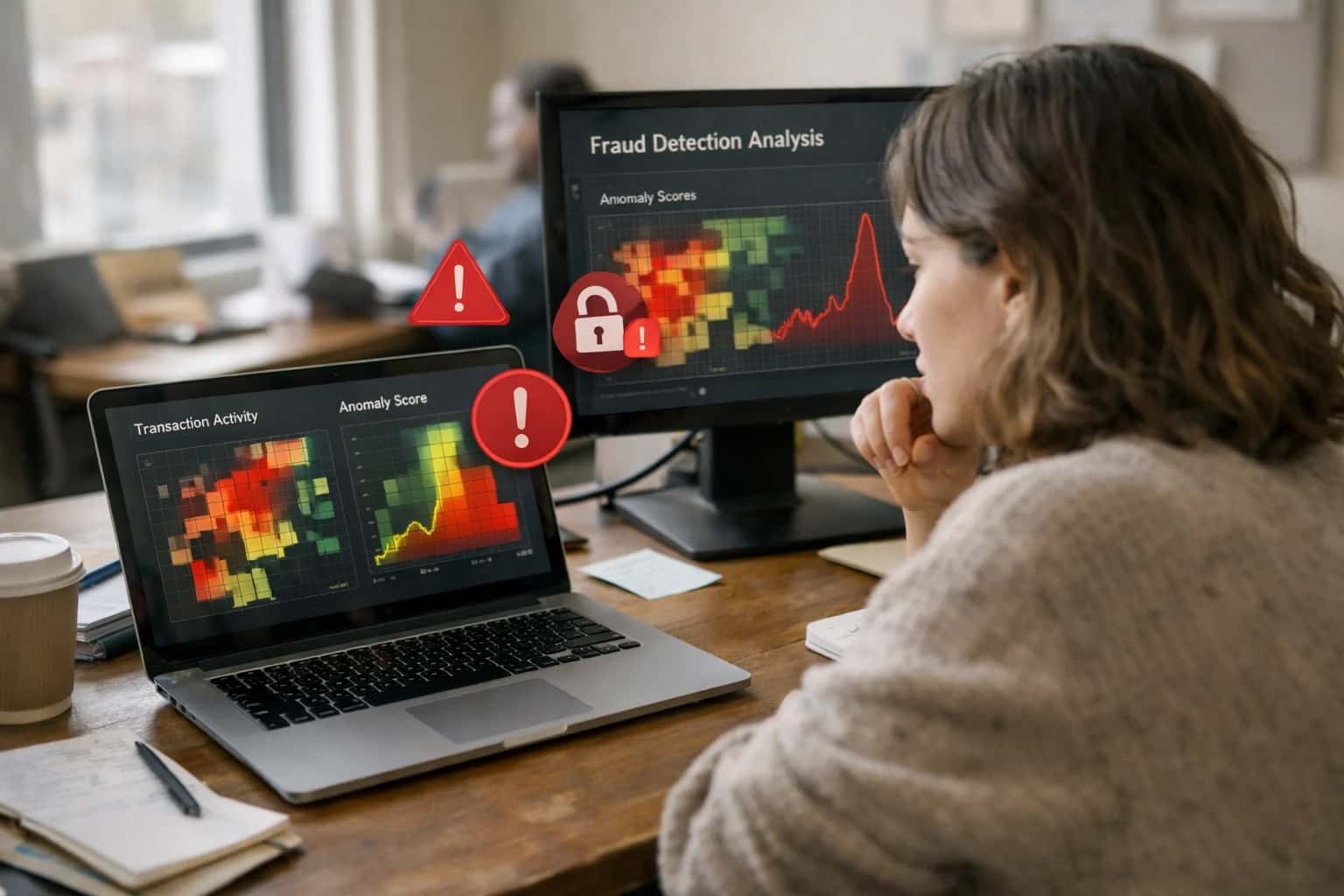
A technical comparison of two leading AI-powered computer vision platforms for crop health monitoring, focusing on multispectral analysis, per-tree insights for orchards, and actionable pest/disease detection alerts for precision agriculture.
THE ANALYSIS
Introduction
A data-driven comparison of two leading AI-powered crop health monitoring platforms for precision agriculture.
SeeTree takes a different approach by focusing on per-tree intelligence for high-value permanent crops. Its platform combines drone, satellite, and ground sensor data with proprietary algorithms to create a unique health and vigor score for every tree. This granular strategy results in a trade-off: while it provides unparalleled insights for orchard management and yield forecasting, it is primarily optimized for structured crops like citrus, almonds, and grapes rather than row crops.
The key trade-off: If your priority is broad-acre field monitoring with deep spectral analysis for disease detection, choose Prospera. Its strength in multispectral analytics aligns with needs for compliance with EU Circular Economy Act principles by minimizing blanket chemical applications. If you prioritize individual tree health management, yield prediction, and harvest planning for orchards, choose SeeTree. Its per-plant insights directly support circularity risk assessment by optimizing resource use on a micro-scale. For more on AI in sustainable agriculture, see our pillar on AI for Sustainable Food and Urban Infrastructure.
HEAD-TO-HEAD COMPARISON
Prospera vs SeeTree: Head-to-Head Feature Comparison
Direct comparison of key metrics and features for computer vision crop health monitoring systems.
| Metric | Prospera | SeeTree |
|---|---|---|
Primary Analysis Focus | Per-field multispectral health scoring | Per-tree granular insights for orchards |
Actionable Pest/Disease Alerts | ||
Sensor Data Sources | Satellite, drone, ground sensors | Drone, ground IoT sensors, manual scouting |
Typical Deployment Scale | 500+ acres (field crops) | 20-500 acres (high-value orchards) |
Integration with Farm Management Software | Major platforms (e.g., John Deere Operations Center) | API & custom integrations |
Compliance Reporting for EU Regulations | General sustainability metrics | Circularity risk assessment for supply chains |
Prospera vs SeeTree
TL;DR: Key Differentiators
A direct comparison of strengths and trade-offs for two leading AI-powered crop health monitoring systems in precision agriculture.
01
Prospera: Broad-Acre & Greenhouse Specialization
Optimized for dense crops: Excels at analyzing large fields of row crops (e.g., lettuce, tomatoes) and greenhouse environments using fixed cameras and multispectral imagery. Its algorithms are tuned for early pest and disease detection across uniform plantings. This matters for high-volume vegetable producers and controlled environment agriculture (CEA) operations seeking fleet-wide health alerts.
02
Prospera: Actionable Alert System
Integrated agronomic insights: Goes beyond detection by providing prescribed treatment recommendations (e.g., specific fungicide, adjusted irrigation) directly linked to identified issues. This closed-loop system is critical for farm managers who need to act quickly to mitigate yield loss, reducing the time from detection to action.
03
SeeTree: Per-Tree Intelligence for Orchards
Individual tree health scoring: Uses high-resolution drone and aerial imagery combined with ground sensors to create a unique health and yield profile for every tree in an orchard (e.g., almonds, citrus, apples). This granularity matters for high-value permanent crop growers where managing variability tree-by-tree directly impacts profitability and resource use.
04
SeeTree: Long-Term Yield & Asset Management
Multi-season analytics platform: Focuses on tracking tree vitality, growth, and predicted yield over years. It functions as a digital twin for orchards, aiding in capital planning (e.g., replanting strategies) and harvest forecasting. This is essential for large-scale orchard operators and investors managing long-term agricultural assets.
CHOOSE YOUR PRIORITY
When to Choose: Use Case Breakdown
SeeTree for High-Value Orchards
Verdict: The definitive choice for per-tree management. Strengths: SeeTree's core differentiator is its individual tree-level analytics. Using drones and ground sensors, it creates a digital twin of each tree, tracking health, size, and fruit yield over multiple seasons. This granularity is critical for precision interventions like targeted fertilization or irrigation, maximizing ROI on high-value crops like almonds, citrus, or avocados. Its platform excels at yield forecasting and labor optimization by identifying underperforming trees.
Prospera for High-Value Orchards
Verdict: A strong broad-field system, but lacks the same tree-level fidelity. Strengths: Prospera provides excellent broad canopy health analysis using multispectral and thermal imaging. It can effectively identify regional stress patterns and pest hotspots across an orchard. However, its analytics are typically zonal, not per-tree. It's better suited for orchards where management is done by block rather than by individual tree, or as a complementary system for initial broad-scale scouting.
Enabling Efficiency, Speed & Accuracy
Intelligent Analysis, Decision & Execution
We build AI systems for teams that need search across company data, workflow automation across tools, or AI features inside products and internal software.
Talk to Us
Search across company data
Give teams answers from docs, tickets, runbooks, and product data with sources and permissions.
Useful when people spend too long searching or get different answers from different systems.
Enterprise searchRAGPermissions
Read more
Automate internal workflows
Use AI to route work, draft outputs, trigger actions, and keep approvals and logs in place.
Useful when repetitive work moves across multiple tools and teams.
AI agentsWorkflow automationGovernance
Read more
Add AI to products and internal tools
Build assistants, guided actions, or decision support into the software your team or customers already use.
Useful when AI needs to be part of the product, not a separate tool.
AI integrationDecision supportModel routing
Read moreTHE ANALYSIS
Final Verdict and Recommendation
A direct comparison of two leading AI-powered crop health monitoring systems, highlighting their core architectural trade-offs for different agricultural operations.
Prospera excels at providing broad-field, high-frequency health analytics for row crops and large-scale monocultures because its platform is built on fixed, in-field multispectral sensors. This results in continuous, hyperlocal data streams. For example, its VMS (Visual Monitoring System) sensors can detect early-stage nutrient deficiencies or irrigation issues with a claimed 95% accuracy, enabling preventative actions before visible symptoms appear. This makes it ideal for operations where constant, automated vigilance over vast, uniform areas is the priority, such as large wheat or soybean fields.
SeeTree takes a fundamentally different approach by specializing in high-resolution, per-tree insights for high-value permanent crops like orchards and vineyards. Its strategy combines drone-based multispectral imaging with ground-truthing from human scouts equipped with mobile apps. This results in a trade-off between continuous monitoring and ultra-granular, actionable intelligence. SeeTree's platform generates individual tree health scores, size, and yield estimates, which is critical for precision interventions like targeted pruning or variable-rate application in heterogeneous orchards.
The key trade-off is between continuous field-level surveillance and discrete, asset-level intelligence. If your priority is automated, always-on monitoring of uniform crops to optimize inputs like water and fertilizer at a field scale, choose Prospera. Its sensor network provides the constant data flow needed for such systems. If you prioritize per-plant management and actionable insights for high-value, variable orchards to maximize yield and quality from individual assets, choose SeeTree. Its drone-scout hybrid model delivers the granularity required for precision horticulture. For more on AI in sustainable agriculture, see our comparisons of CropX vs Taranis for irrigation and AeroFarms AI vs Plenty AI for vertical farming.

About the author
Prasad Kumkar
CEO & MD, Inference Systems
Prasad Kumkar is the CEO & MD of Inference Systems and writes about AI systems architecture, LLM infrastructure, model serving, evaluation, and production deployment. Over 5+ years, he has worked across computer vision models, L5 autonomous vehicle systems, and LLM research, with a focus on taking complex AI ideas into real-world engineering systems.
His work and writing cover AI systems, large language models, AI agents, multimodal systems, autonomous systems, inference optimization, RAG, evaluation, and production AI engineering.
LinkedIn
Limited slotsGet a Free AI Consultation
Partnered with leading AI, data, and software stack.





How We Work
Custom AI workflows for your Business
One-fit-all AI don't work for modern businesses. At Inferensys, we aim to understand your business & custom requirements; which we use to define most efficient agentic workflows, the data, and the tools for your business.
01
Review the use case
We understand the task, the users, and where AI can actually help.
Read more02
Pick the right approach
We define what needs search, automation, or product integration.
Read more03
Build the first useful version
We implement the part that proves the value first.
Read more04
Improve from there
We add the checks and visibility needed to keep it useful.
Read moreThe first call is a practical review of your use case and the right next step.
Talk to Us