LangGraph excels at defining complex, stateful reasoning loops for LLM agents because it is purpose-built for AI, with native primitives for managing chat history, tool execution, and conditional branching. For example, its StateGraph abstraction allows developers to model multi-step agentic workflows—like a research agent that sequentially performs web search, synthesis, and drafting—with built-in persistence for human-in-the-loop handoffs, achieving sub-100ms step latency for in-memory execution.

Comparison
LangGraph vs Prefect for Agent Orchestration
A technical comparison between LangGraph's graph-based LLM agent orchestration and Prefect's durable workflow engine for building and monitoring enterprise agentic pipelines.
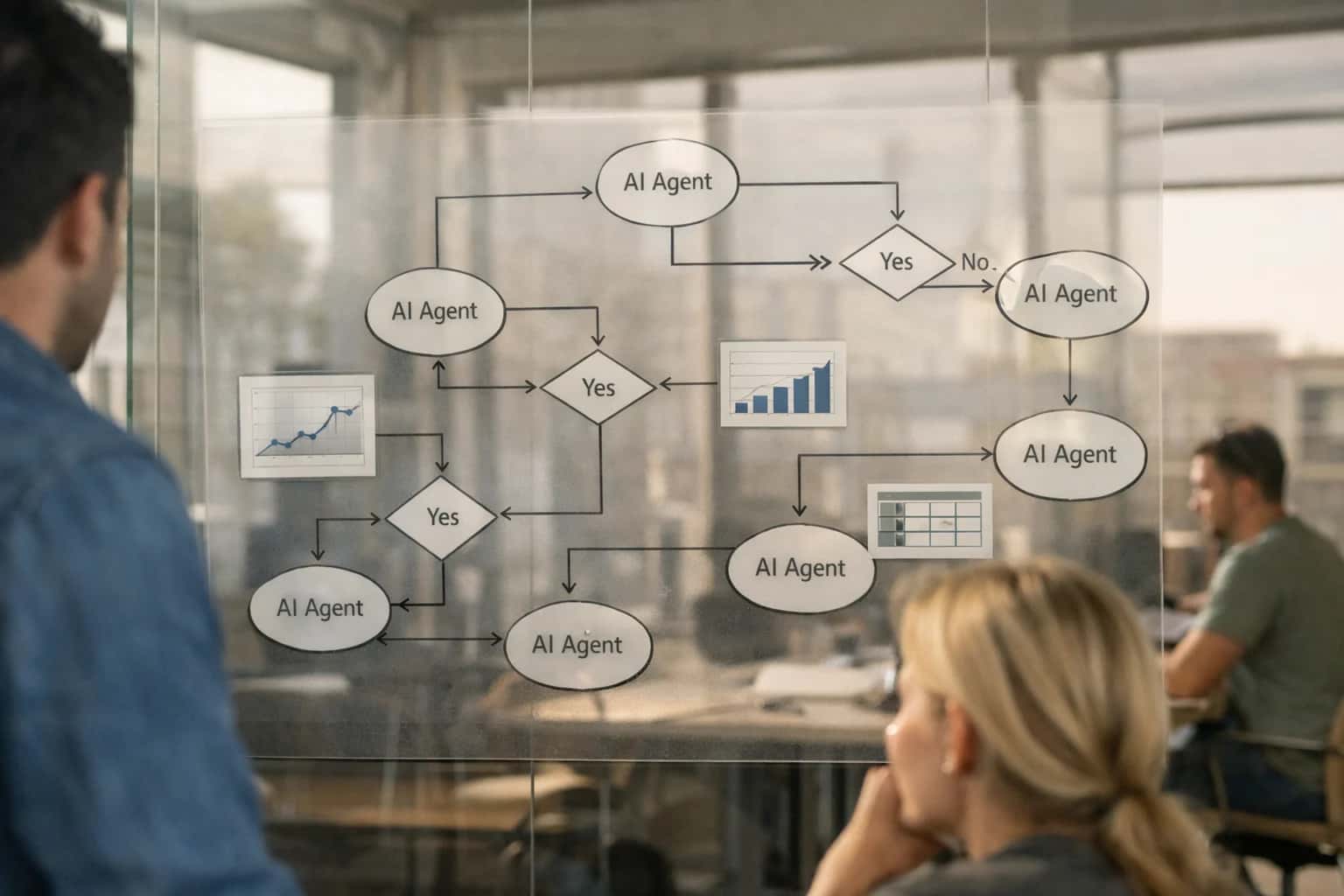
THE ANALYSIS
Introduction
A foundational comparison of LangGraph's LLM-native state machines versus Prefect's enterprise workflow engine for orchestrating AI agents.
Prefect takes a different approach by treating agentic pipelines as a class of data workflows, leveraging its robust engine for scheduling, observability, and dependency management. This results in a trade-off: you gain enterprise-grade features like distributed execution, retry logic, and a centralized UI for monitoring, but introduce overhead unsuitable for tight, low-latency LLM reasoning loops that require rapid state transitions.
The key trade-off: If your priority is tight integration with LLM logic and fast, iterative agent development, choose LangGraph. It is the definitive tool for building the agent's 'brain.' If you prioritize orchestrating and monitoring the entire pipeline where the agent is one node among many external tools and data jobs, choose Prefect. For a deeper dive on stateful agent frameworks, see our comparison of LangGraph vs AutoGen and the critical architectural decision in LangGraph vs Temporal for Agent Workflows.
HEAD-TO-HEAD COMPARISON
LangGraph vs Prefect for Agent Orchestration
Direct comparison of LangGraph's LLM-native state machines and Prefect's workflow engine for orchestrating autonomous AI agents.
| Metric / Feature | LangGraph | Prefect |
|---|---|---|
Primary Abstraction | Stateful Graphs & LLM Reasoning Loops | DAGs & Parameterized Data Workflows |
State Management | In-memory, LLM-aware (StateGraph) | Persistent, durable via external storage |
Human-in-the-Loop Integration | Built-in (interrupt nodes, messages) | Via task decorators & webhook events |
Native LLM Tool Calling | ||
Workflow Observability | Basic step tracing & LLM call logs | Enterprise-grade UI, metrics, & dashboards |
Fault Tolerance & Retries | Manual implementation required | Automatic, configurable policies |
Typical Latency (Agent Loop) | < 1 sec |
|
Best For | Fast, iterative LLM agent logic | Mission-critical, hybrid (AI + data) pipelines |
LangGraph vs Prefect
TL;DR Summary
Key strengths and trade-offs for orchestrating AI agents at a glance. LangGraph excels at defining LLM reasoning loops, while Prefect manages complex, durable pipelines.
03
LangGraph's Key Strength
Tight LLM Integration: Built as an extension of LangChain, it provides primitives like ToolNode and conditional edges that map directly to LLM tool-calling and reasoning. Enables rapid prototyping of complex agentic loops like ReAct or Plan-and-Execute with minimal boilerplate.
04
Prefect's Key Strength
Enterprise-Grade Robustness: Offers a managed cloud platform or self-hosted option with features like distributed queues, concurrency limits, and dynamic infrastructure provisioning. Essential for orchestrating large-scale agent fleets that interact with unreliable external services.
05
LangGraph's Trade-off
In-Memory State Limitation: By default, workflows are ephemeral and state is managed in memory. For long-running, fault-tolerant agents, you must implement custom persistence, unlike frameworks built for durability like Temporal for Agent Workflows.
06
Prefect's Trade-off
LLM-Agnostic Design: While it can orchestrate any Python function, it lacks built-in abstractions for LLM-specific patterns (e.g., streaming responses, managing conversation context). You must wire these yourself, adding complexity versus a native agent framework.
CHOOSE YOUR PRIORITY
When to Choose LangGraph vs Prefect
LangGraph for LLM Agents
Verdict: The definitive choice for orchestrating LLM reasoning loops.
Strengths: LangGraph is purpose-built for defining cyclical, stateful workflows where LLMs call tools, process results, and decide the next step. Its StateGraph abstraction natively handles the complex state (like conversation history, partial answers, tool outputs) that agents require. It integrates seamlessly with LangChain's tool ecosystem and provides built-in persistence for long-running conversations. For building autonomous agents that need to reason, act, and iterate, LangGraph is the specialized tool.
Prefect for LLM Agents
Verdict: A robust engine for the surrounding pipeline, not the agent's core brain. Strengths: Prefect excels at orchestrating the entire agentic pipeline as a production workflow. This includes pre-processing data, managing API calls to multiple LLM services, executing external data jobs (e.g., running a Spark job for retrieval), and handling post-processing and observability. Use Prefect to wrap your LangGraph agent, providing durability, scheduling, complex dependencies, and enterprise-grade monitoring. It manages the agent's execution environment, not its internal decision logic.
Key Trade-off: LangGraph defines how the agent thinks; Prefect defines when, where, and how reliably the agent runs. For a deep dive on stateful agent frameworks, see our comparison of LangGraph vs AutoGen.
Enabling Efficiency, Speed & Accuracy
Intelligent Analysis, Decision & Execution
We build AI systems for teams that need search across company data, workflow automation across tools, or AI features inside products and internal software.
Talk to Us
Search across company data
Give teams answers from docs, tickets, runbooks, and product data with sources and permissions.
Useful when people spend too long searching or get different answers from different systems.
Enterprise searchRAGPermissions
Read more
Automate internal workflows
Use AI to route work, draft outputs, trigger actions, and keep approvals and logs in place.
Useful when repetitive work moves across multiple tools and teams.
AI agentsWorkflow automationGovernance
Read more
Add AI to products and internal tools
Build assistants, guided actions, or decision support into the software your team or customers already use.
Useful when AI needs to be part of the product, not a separate tool.
AI integrationDecision supportModel routing
Read moreTHE ANALYSIS
Final Verdict and Recommendation
Choosing between LangGraph and Prefect hinges on whether your primary need is LLM-native reasoning loops or robust, observable pipeline orchestration.
LangGraph excels at defining and managing the complex, stateful reasoning loops intrinsic to LLM agents because it is purpose-built for this domain. Its StateGraph abstraction and built-in support for tools, human review, and LLM providers like ChatOpenAI or ChatAnthropic allow developers to rapidly prototype and iterate on agentic logic. For example, a customer support agent built with LangGraph can maintain context across multiple tool calls (e.g., querying a knowledge base, then updating a CRM) within a single, traceable execution graph, enabling fine-grained control over the AI's decision path.
Prefect takes a fundamentally different approach by treating agentic components as tasks within a generalized, production-hardened workflow engine. This results in superior operational guarantees—like automatic retries, distributed execution, and rich observability dashboards—but adds abstraction between the LLM's reasoning state and the workflow's execution state. While you can orchestrate calls to GPT-4 or Claude models as tasks, you lose the native, in-memory control flow that LangGraph provides for managing an agent's internal messages state and conditional branching.
The key trade-off is control versus robustness. If your priority is tight integration with LLM reasoning, rapid prototyping of agent logic, and explicit management of conversational state, choose LangGraph. It is the definitive tool for building the agent's brain. If you prioritize mission-critical reliability, complex scheduling, monitoring of long-running pipelines that include non-LLM jobs (e.g., data ETL), and enterprise-grade observability, choose Prefect. It is the superior engine for orchestrating the agent's entire operational environment, as explored in our guide on LLMOps and Observability Tools.
For most enterprises, the optimal architecture is a hybrid: use LangGraph to build the core, intelligent agent nodes, and then use Prefect (or a similar orchestrator like Temporal) to schedule, monitor, and ensure the durability of the overarching workflow that contains these agents alongside other business processes. This pattern aligns with the emerging best practice of separating agentic reasoning from workflow durability, a concept detailed in our comparison of LangGraph vs Temporal for Agent Workflows.

About the author
Prasad Kumkar
CEO & MD, Inference Systems
Prasad Kumkar is the CEO & MD of Inference Systems and writes about AI systems architecture, LLM infrastructure, model serving, evaluation, and production deployment. Over 5+ years, he has worked across computer vision models, L5 autonomous vehicle systems, and LLM research, with a focus on taking complex AI ideas into real-world engineering systems.
His work and writing cover AI systems, large language models, AI agents, multimodal systems, autonomous systems, inference optimization, RAG, evaluation, and production AI engineering.
LinkedIn
Limited slotsGet a Free AI Consultation
Partnered with leading AI, data, and software stack.





How We Work
Custom AI workflows for your Business
One-fit-all AI don't work for modern businesses. At Inferensys, we aim to understand your business & custom requirements; which we use to define most efficient agentic workflows, the data, and the tools for your business.
01
Review the use case
We understand the task, the users, and where AI can actually help.
Read more02
Pick the right approach
We define what needs search, automation, or product integration.
Read more03
Build the first useful version
We implement the part that proves the value first.
Read more04
Improve from there
We add the checks and visibility needed to keep it useful.
Read moreThe first call is a practical review of your use case and the right next step.
Talk to Us