LangGraph excels at rapid prototyping and orchestrating complex, LLM-driven reasoning loops within a single process. Its strength is modeling agentic logic as a cyclic graph of nodes (LLM calls, tools, conditional logic) with built-in persistence for the agent's state object. For example, you can implement a ReAct (Reasoning + Acting) loop or a plan-and-execute agent in under 100 lines of Python, with the framework managing context and tool execution history. This makes it ideal for interactive, conversational agents where the primary state is the LLM's conversation history and the workflow is defined by fast, in-memory transitions.

Comparison
LangGraph vs Temporal for Agent Workflows
A definitive technical comparison for CTOs and engineering leads. We analyze LangGraph's graph-based, LLM-native orchestration against Temporal's battle-tested durable execution engine for building reliable, long-running agentic systems.
THE ANALYSIS
Introduction: The Core Architectural Divide
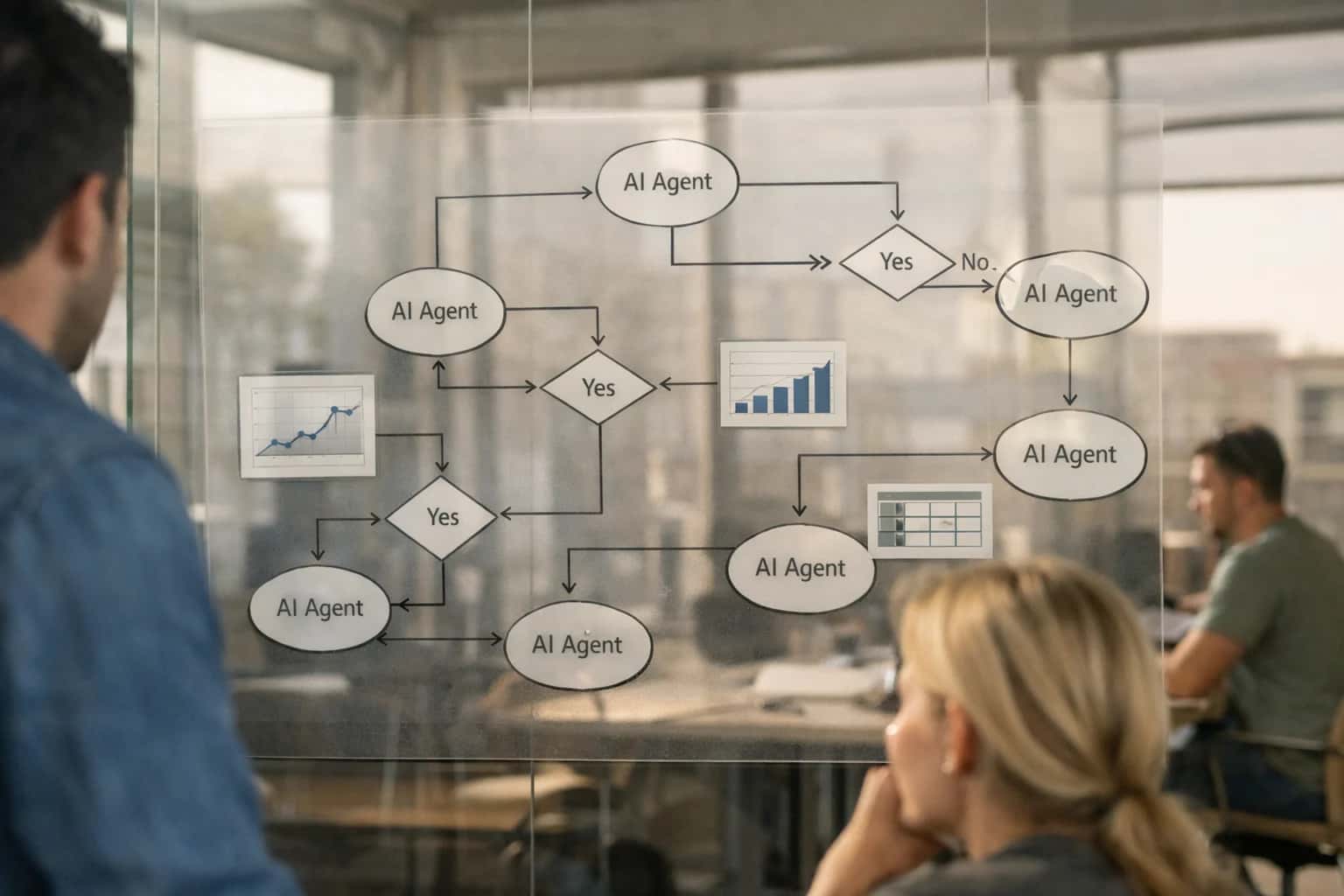
LangGraph and Temporal represent fundamentally different philosophies for building reliable agentic workflows, centered on in-memory state machines versus durable execution engines.
Temporal takes a different approach by providing a durable execution engine designed for mission-critical, long-running business processes. It guarantees fault tolerance by automatically persisting every step of a workflow's execution (a 'Workflow'), allowing it to survive process crashes, host failures, or deployments. This results in a trade-off of higher initial complexity but provides enterprise-grade reliability. A Temporal workflow for an AI agent can seamlessly call LLM APIs, execute tools, and wait for human approval for days or weeks, resuming exactly where it left off after any interruption.
The key trade-off: If your priority is developer velocity and building sophisticated, LLM-centric agent logic where the entire state fits in memory, choose LangGraph. It is the definitive tool for crafting the agent's 'brain.' If you prioritize production resilience, long-running processes, and integrating agentic steps with existing microservices and databases, choose Temporal. It is the industrial-grade 'central nervous system' for workflows that must never fail. For a deeper look at LangGraph's role in multi-agent systems, see our comparison of LangGraph vs AutoGen and LangGraph vs CrewAI.
HEAD-TO-HEAD COMPARISON
LangGraph vs Temporal for Agent Workflows
Direct comparison of a Python library for LLM-driven state machines versus a durable execution engine for mission-critical workflows.
| Metric / Feature | LangGraph | Temporal |
|---|---|---|
Primary Architecture | In-memory state machine | Durable execution engine |
State Persistence & Recovery | ||
Native LLM/Tool Integration | ||
Max Workflow Duration | Process lifetime | Unlimited (years) |
Built-in Human-in-the-Loop | ||
Guaranteed Execution (Exactly-Once) | ||
Typical P99 Latency | < 1 sec | ~100-500 ms + queue time |
Primary Use Case | Rapid prototyping, conversational agents | Mission-critical, long-running business processes |
LangGraph vs Temporal
TL;DR: Key Differentiators
A critical architecture choice: LangGraph for rapid, in-memory LLM state machines versus Temporal for mission-critical, fault-tolerant workflows.
03
LangGraph Limitation
In-memory, ephemeral state**: By default, state is not durable. A server restart loses workflow progress. Requires custom persistence layers (e.g., Redis) for production reliability, adding complexity. Not designed for long-running processes (hours/days).
04
Temporal Limitation
Higher complexity for LLM-native tasks**: You orchestrate the LLM calls; Temporal doesn't provide built-in LLM primitives. Integrating tool-calling, context management, and reasoning loops requires more boilerplate compared to frameworks like LangGraph or AutoGen.
05
LangGraph Strength
Native support for LLM reasoning patterns**: Built-in constructs for streaming, interrupts for human approval, and seamless integration with RAG pipelines and tool-execution agents. The abstraction is purpose-built for the non-deterministic, branching nature of LLM actions.
06
Temporal Strength
Proven at massive scale**: Used by companies like Stripe and Snap for billions of workflows. Offers deterministic execution, versioning, and visibility (Temporal Web UI) that enterprise SRE teams require. The backbone for Agentic AI that interacts with core banking or ERP systems.
99.99%+
Uptime SLA
CHOOSE YOUR PRIORITY
When to Choose LangGraph vs Temporal
LangGraph for Developers
Verdict: The clear choice for rapid prototyping and LLM-native state machines.
Strengths: Deep integration with the LangChain ecosystem (tools, retrievers, chat models) allows you to build complex reasoning loops in minutes. Its Python-native, in-memory graph is intuitive for developers familiar with async/await patterns. Debugging is straightforward with built-in tracing to LangSmith.
Limitations: Not designed for long-running processes (hours/days). State is ephemeral unless explicitly persisted. Lacks built-in retries, queues, or cron scheduling.
Temporal for Developers
Verdict: Essential for mission-critical, durable workflows that must never fail. Strengths: Provides rock-solid guarantees (exactly-once execution, infinite retries, versioning). You write your agent logic as simple, deterministic functions (Activities) and define the workflow (Workflow) separately. Temporal's Worker model and Web UI offer production-grade observability from day one. Limitations: Higher initial complexity. Requires understanding Temporal's core concepts (Workflow Definitions, Task Queues). Less LLM-specific tooling out of the box; you orchestrate LLM calls as Activities.
Quick Decision: Building a chatbot with memory? Use LangGraph. Building a loan approval agent that must survive server restarts? Use Temporal.
Enabling Efficiency, Speed & Accuracy
Intelligent Analysis, Decision & Execution
We build AI systems for teams that need search across company data, workflow automation across tools, or AI features inside products and internal software.
Talk to Us
Search across company data
Give teams answers from docs, tickets, runbooks, and product data with sources and permissions.
Useful when people spend too long searching or get different answers from different systems.
Enterprise searchRAGPermissions
Read more
Automate internal workflows
Use AI to route work, draft outputs, trigger actions, and keep approvals and logs in place.
Useful when repetitive work moves across multiple tools and teams.
AI agentsWorkflow automationGovernance
Read more
Add AI to products and internal tools
Build assistants, guided actions, or decision support into the software your team or customers already use.
Useful when AI needs to be part of the product, not a separate tool.
AI integrationDecision supportModel routing
Read moreTHE ANALYSIS
Final Verdict and Recommendation
Choosing between LangGraph and Temporal hinges on your primary requirement: rapid prototyping of LLM-driven logic versus mission-critical durability for production systems.
LangGraph excels at building and iterating on complex, LLM-driven state machines with minimal boilerplate because it is purpose-built for AI agentic workflows. For example, its native integration with LangChain's tool ecosystem and support for StateGraph abstractions allow developers to model multi-agent reasoning loops, like a customer support triage system, in hours rather than days. Its in-memory execution offers sub-100ms step latency for fast feedback during development, making it ideal for exploring non-deterministic LLM behaviors. However, this comes with the trade-off of being a library, not a platform, leaving concerns like distributed execution, observability, and fault tolerance to the developer.
Temporal takes a fundamentally different approach by providing a durable execution engine designed for mission-critical, long-running business processes. This results in a trade-off of higher initial complexity for unparalleled reliability. Temporal's core innovation is its ability to guarantee workflow progress through system failures by persisting every step's state and using event sourcing. For an agent workflow, this means an AI-powered procurement negotiation that runs for days can survive host crashes, network partitions, or code deployments without losing context or duplicating actions, a critical requirement for financial or operational processes.
The key trade-off: If your priority is developer velocity and deep LLM integration for prototyping or deploying moderate-risk agents, choose LangGraph. Its Python-native, graph-based model is the fastest path from idea to a working AI agent. If you prioritize production-grade resilience, auditability, and scaling complex, long-running business logic that happens to use AI, choose Temporal. Its platform guarantees are non-negotiable for workflows where a single failure or lost state carries significant cost or risk. For a complete landscape, see our comparison of LangGraph vs AutoGen for multi-agent systems and LangGraph vs Prefect for broader pipeline orchestration.

About the author
Prasad Kumkar
CEO & MD, Inference Systems
Prasad Kumkar is the CEO & MD of Inference Systems and writes about AI systems architecture, LLM infrastructure, model serving, evaluation, and production deployment. Over 5+ years, he has worked across computer vision models, L5 autonomous vehicle systems, and LLM research, with a focus on taking complex AI ideas into real-world engineering systems.
His work and writing cover AI systems, large language models, AI agents, multimodal systems, autonomous systems, inference optimization, RAG, evaluation, and production AI engineering.
LinkedIn
Limited slotsGet a Free AI Consultation
Partnered with leading AI, data, and software stack.





How We Work
Custom AI workflows for your Business
One-fit-all AI don't work for modern businesses. At Inferensys, we aim to understand your business & custom requirements; which we use to define most efficient agentic workflows, the data, and the tools for your business.
01
Review the use case
We understand the task, the users, and where AI can actually help.
Read more02
Pick the right approach
We define what needs search, automation, or product integration.
Read more03
Build the first useful version
We implement the part that proves the value first.
Read more04
Improve from there
We add the checks and visibility needed to keep it useful.
Read moreThe first call is a practical review of your use case and the right next step.
Talk to Us