CIOs and innovation leaders face a critical pain point: the exploding energy and water consumption of AI models is creating significant financial, operational, and reputational risk. Manually compiling data from disparate cloud providers, on-premises clusters, and edge devices for ESG disclosures is error-prone, resource-intensive, and fails to provide the real-time insights needed for strategic decision-making. This lack of visibility turns sustainability from a strategic goal into a compliance nightmare and a hidden cost center.

Use Case
Automated Sustainability Reporting for AI Ops
Automate audit-ready ESG and regulatory reports by aggregating energy, water, and carbon data from your AI stack, turning compliance from a cost center into a strategic advantage.
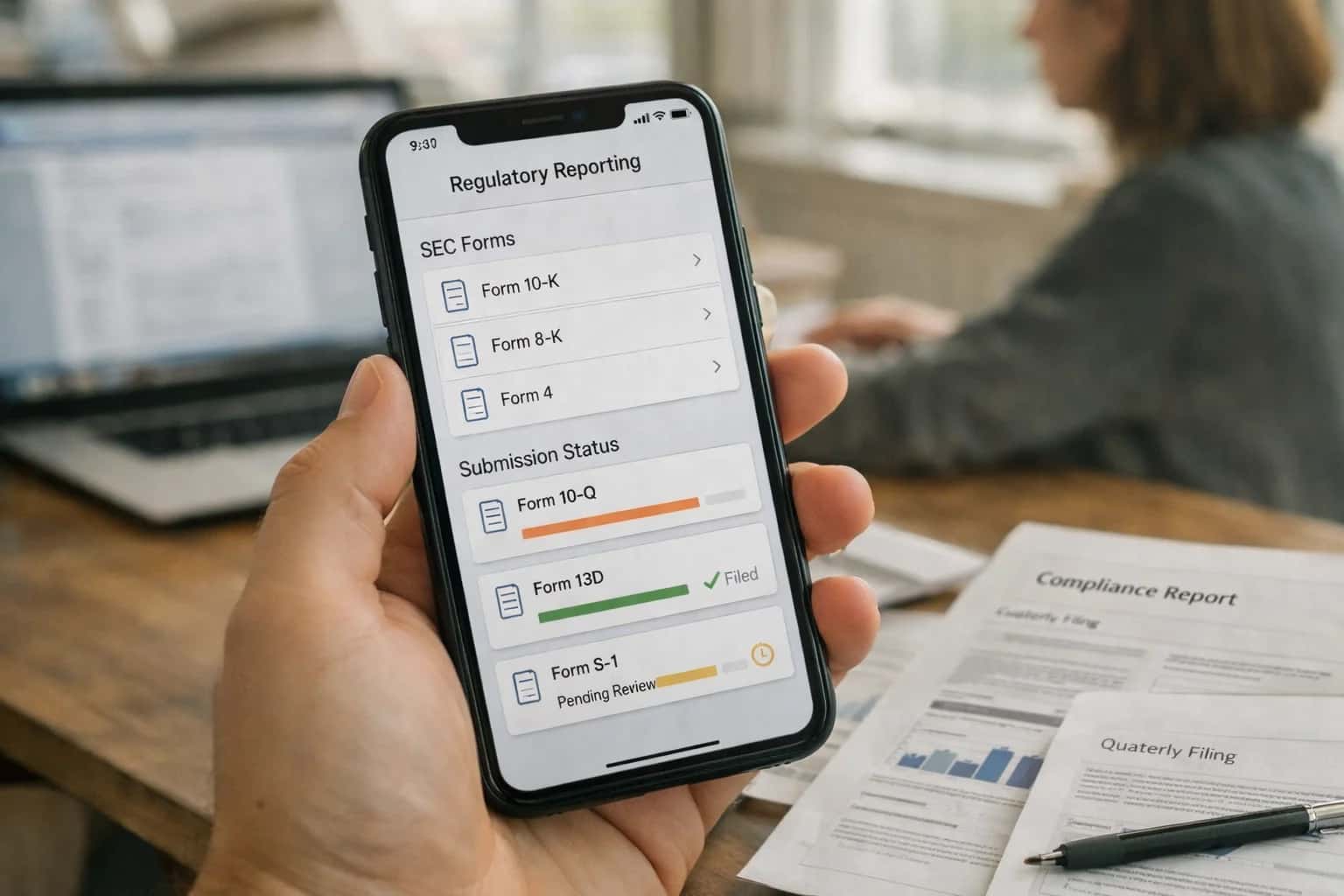
FROM MANUAL BURDEN TO AUDIT-READY INSIGHT
What is Automated Sustainability Reporting for AI Ops Used For?
Automated Sustainability Reporting transforms the chaotic, manual task of tracking AI's environmental impact into a strategic, data-driven function. It directly addresses the growing pressure from regulators, investors, and internal ESG mandates to quantify and manage the carbon, energy, and water footprint of artificial intelligence operations.
The solution is an automated system that continuously aggregates granular metrics—energy (kWh), carbon equivalent (CO2e), water usage, and compute utilization—from across your entire AI stack. This creates a single source of truth, enabling audit-ready reports for frameworks like CSRD, real-time dashboards to identify high-impact reduction opportunities, and data-driven procurement through automated vendor circularity scoring. The outcome is measurable ROI: reduced compliance costs, identified infrastructure waste, and a verifiable competitive advantage in green AI.
SUSTAINABLE AI OPS
Common Use Cases
Automated sustainability reporting transforms ESG compliance from a manual, error-prone burden into a strategic, data-driven advantage. These use cases demonstrate how to quantify and reduce the environmental impact of your AI infrastructure.
01
Automated ESG & Regulatory Report Generation
Manually compiling sustainability reports is costly and risky. Our platform automatically aggregates data on energy, water, and carbon metrics from across your AI stack—from cloud providers to on-premise GPUs. It generates audit-ready reports compliant with frameworks like CSRD and SEC climate rules, turning months of work into a continuous, automated process. This eliminates manual errors, ensures consistency, and provides a single source of truth for stakeholders and regulators.
80%
Reduction in manual reporting time
100%
Audit trail compliance
IMPLEMENTATION ROADMAP
Automated Sustainability Reporting for AI Ops
Transform ESG compliance from a manual, error-prone burden into a strategic, automated advantage. This roadmap details how to systematically capture and report the environmental impact of your AI infrastructure.
The Pain Point: Manual sustainability reporting for AI operations is a costly, high-risk bottleneck. Teams struggle to aggregate energy, water, and carbon data across disparate cloud providers, on-premise clusters, and edge devices. This leads to inaccurate ESG disclosures, regulatory non-compliance risks, and missed opportunities to reduce costs and improve your brand's environmental stewardship. Without automation, you cannot achieve the transparency demanded by boards and investors.
The AI Fix: Deploy an automated platform that integrates with your entire AI stack—from training clusters to inference endpoints. It continuously collects granular metrics (GPU watt-hours, PUE, water usage) and applies carbon conversion factors. The outcome is audit-ready reports for frameworks like CSRD, plus a real-time dashboard identifying your highest-impact reduction levers. This turns compliance from a cost center into a source of operational intelligence and competitive differentiation, directly supporting our Circular IT and Green AI pillar.
Enabling Efficiency, Speed & Accuracy
Intelligent Analysis, Decision & Execution
We build AI systems for teams that need search across company data, workflow automation across tools, or AI features inside products and internal software.
Talk to Us
Search across company data
Give teams answers from docs, tickets, runbooks, and product data with sources and permissions.
Useful when people spend too long searching or get different answers from different systems.
Enterprise searchRAGPermissions
Read more
Automate internal workflows
Use AI to route work, draft outputs, trigger actions, and keep approvals and logs in place.
Useful when repetitive work moves across multiple tools and teams.
AI agentsWorkflow automationGovernance
Read more
Add AI to products and internal tools
Build assistants, guided actions, or decision support into the software your team or customers already use.
Useful when AI needs to be part of the product, not a separate tool.
AI integrationDecision supportModel routing
Read moreCOST & EFFICIENCY BREAKDOWN
ROI Calculator: Manual vs. Automated Sustainability Reporting
A direct comparison of the operational and financial impact of manual data aggregation versus an AI-driven automated platform for sustainability reporting.
| Key Metric | Manual Reporting | Automated AI Platform | Annualized Impact |
|---|---|---|---|
Data Aggregation Time (per report) | 40-60 person-hours | < 1 person-hour | Saves ~1,200+ hours |
Report Generation & Validation | 2-3 weeks | 1-2 days | Accelerates cycle by 85% |
Error Rate in Data Entry & Calculation | 5-8% | < 0.5% | Reduces audit findings by 90%+ |
FTE Capacity Required | 1.5-2 FTE | 0.25 FTE | Frees 1.25+ FTE for strategic work |
Cost of Compliance (Annual) | $120K - $180K | $30K - $50K | Saves $90K - $130K |
Audit Preparation & Support | High (Weeks of prep) | Low (Pre-packaged evidence) | Cuts audit prep time by 70% |
Ability to Model 'What-If' Scenarios | Enables proactive carbon strategy | ||
Real-Time Carbon KPI Dashboard | Provides continuous operational insight |

About the author
Prasad Kumkar
CEO & MD, Inference Systems
Prasad Kumkar is the CEO & MD of Inference Systems and writes about AI systems architecture, LLM infrastructure, model serving, evaluation, and production deployment. Over 5+ years, he has worked across computer vision models, L5 autonomous vehicle systems, and LLM research, with a focus on taking complex AI ideas into real-world engineering systems.
His work and writing cover AI systems, large language models, AI agents, multimodal systems, autonomous systems, inference optimization, RAG, evaluation, and production AI engineering.
LinkedIn
Limited slotsGet a Free AI Consultation
Partnered with leading AI, data, and software stack.





How We Work
Custom AI workflows for your Business
One-fit-all AI don't work for modern businesses. At Inferensys, we aim to understand your business & custom requirements; which we use to define most efficient agentic workflows, the data, and the tools for your business.
01
Review the use case
We understand the task, the users, and where AI can actually help.
Read more02
Pick the right approach
We define what needs search, automation, or product integration.
Read more03
Build the first useful version
We implement the part that proves the value first.
Read more04
Improve from there
We add the checks and visibility needed to keep it useful.
Read moreThe first call is a practical review of your use case and the right next step.
Talk to Us