Off-the-shelf models hallucinate on proprietary data. Foundation models like GPT-4 or Claude 3 are trained on public corpora, making them ignorant of your internal processes, product catalogs, and customer history. Deploying them directly generates confident but incorrect outputs, eroding trust and creating operational risk.

Blog
Why Off-the-Shelf AI Models Create More Problems Than They Solve
Generic foundation models promise plug-and-play intelligence but deliver hallucinations and irrelevance on proprietary SMB data. This analysis exposes the hidden complexity of retrieval-augmented generation (RAG), fine-tuning, and MLOps that turn a simple API call into an operational quagmire.
THE DATA
The SMB AI Mirage: When Plug-and-Play Becomes Plug-and-Pray
Generic foundation models fail on proprietary SMB data without significant retrieval-augmented generation (RAG) and fine-tuning, increasing complexity, not reducing it.
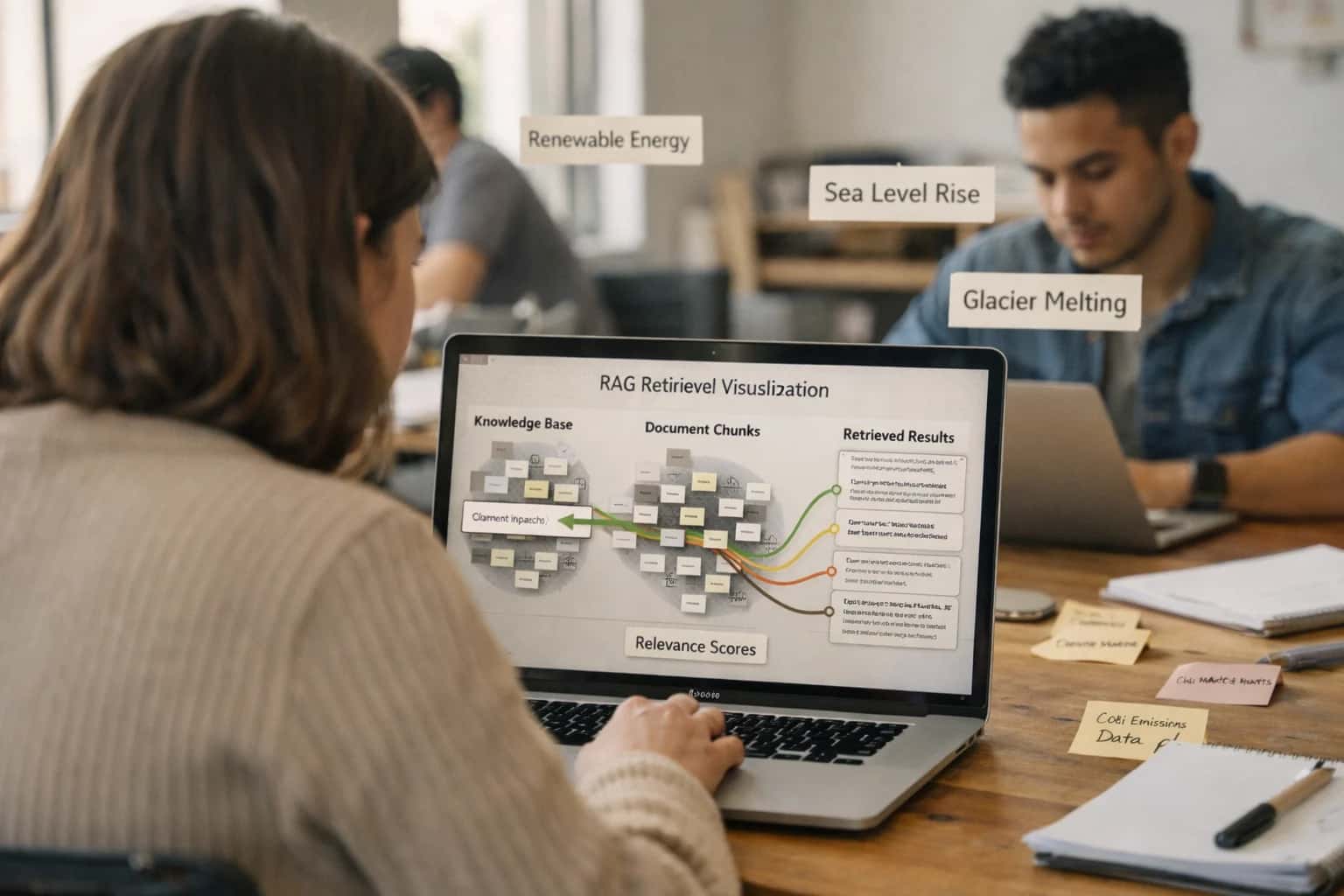
RAG and fine-tuning are mandatory, not optional. To be useful, a model must be grounded in your specific context. This requires building a retrieval-augmented generation (RAG) pipeline with vector databases like Pinecone or Weaviate and then fine-tuning the model on your curated datasets. This is the real engineering work vendors often omit.
The integration burden eclipses the model cost. Connecting a generic LLM to your legacy ERP, CRM, and internal wikis via tools like LangChain creates a fragile, sprawling system. The MLOps overhead for monitoring, updating, and securing this pipeline is a full-time engineering role most SMBs cannot afford. This is a core component of the SMB AI adoption gap.
Evidence: RAG reduces critical errors by over 40%. For knowledge-intensive tasks, implementing a proper RAG system slashes the rate of factual hallucinations and outdated information. Without this foundation layer, AI outputs are unreliable and dangerous for business decision-making. This underscores the necessity of knowledge engineering as a prerequisite for any serious deployment.
WHY OFF-THE-SHELF AI FAILS
The Three Fatal Flaws of Generic AI Models for SMBs
Generic foundation models like GPT-4 and Claude 3 are built for general knowledge, not your proprietary business logic, creating three critical failure points for SMBs.
01
The Hallucination Tax on Proprietary Data
Generic models have no grounding in your internal data, leading to confident but incorrect outputs. This forces expensive human verification, negating promised efficiency gains.
- Key Cost: Up to 40% of staff time spent fact-checking AI-generated content, proposals, or code.
- Real Impact: Erodes stakeholder trust and introduces operational risk in customer-facing or financial applications.
40%
Time Wasted
High
Operational Risk
02
The MLOps Black Hole
Deploying a raw model is 5% of the work. The real cost is in the unseen MLOps overhead: vector database management, retrieval-augmented generation (RAG) pipelines, and continuous monitoring for model drift.
- Hidden Cost: $50k+ annually in cloud infrastructure and engineering hours for basic upkeep, a figure often excluded from vendor ROI calculators.
- SMB Reality: Lack of dedicated MLOps staff leads to fragile, unsupportable systems that fail within months.
$50k+
Annual Overhead
Months
To Failure
03
Inference Economics and Unpredictable Burn
Cloud API costs for large models scale linearly with use. An unoptimized chatbot or document processor can generate unpredictable, five-figure monthly bills that destroy project ROI.
- Cost Driver: Paying for ~500ms latency and massive context windows when a smaller, fine-tuned model would be faster and 10x cheaper.
- Strategic Failure: This volatility makes AI a capital risk, not a predictable operational expense, freezing further investment.
10x
Cost Premium
Unpredictable
Budget Burn
THE DATA REALITY
Why RAG Isn't a Feature, It's a Foundation
Generic foundation models hallucinate on proprietary SMB data, making Retrieval-Augmented Generation (RAG) a mandatory architectural layer, not an optional add-on.
Off-the-shelf models fail because they lack your company's specific context, leading to confident but incorrect outputs. This is not a bug; it's the fundamental limitation of models trained on public data.
RAG is the foundation for enterprise AI because it grounds model responses in your verified internal data from sources like Salesforce or legacy databases. It transforms a general-purpose chatbot into a domain-specific expert.
Without RAG, you automate error. Deploying a generic model like GPT-4 directly on customer data creates a liability loop of misinformation and erodes trust. The cost of correcting hallucinations outweighs any automation benefit.
Evidence: A 2023 Stanford study found RAG architectures reduced factual hallucinations in LLM outputs by up to 40% compared to base models. This accuracy is non-negotiable for business processes.
Implementation requires engineering. Effective RAG is not a plugin; it demands a pipeline with a vector database like Pinecone or Weaviate, semantic chunking, and a robust retrieval strategy. This complexity is why DIY AI integration is a recipe for operational disaster.
The alternative is pilot purgatory. Projects built on prompt engineering alone hit a hard ceiling of inaccuracy. This leads directly to the strategic cost of waiting for AI to 'mature', where SMBs cede ground to competitors with proper data foundations.
SMB DECISION FRAMEWORK
The Hidden Cost Matrix of Off-the-Shelf AI
Quantifying the hidden operational and financial burdens of generic AI models versus purpose-built alternatives for SMBs.
| Critical Dimension | Generic Foundation Model (e.g., GPT-4, Claude 3) | Fine-Tuned / Domain-Specific Model | Integrated AI Service Stack |
|---|---|---|---|
Initial Integration Time | 2-4 weeks | 4-8 weeks | < 1 week |
Hallucination Rate on Proprietary Data | 5-15% | < 2% | < 1% |
Monthly Ongoing Tuning & MLOps Cost | $5k-$15k | $2k-$5k | Bundled in service fee |
Requires Dedicated Vector Database & RAG Pipeline | |||
Data Privacy & Sovereignty Control | Low (Vendor Cloud) | Medium (Hybrid) | High (Specified in SLA) |
Time to ROI (Months) | 6-12+ | 3-6 | 1-3 |
Susceptibility to Model Drift | High | Medium | Low (Managed) |
Vendor Lock-In Risk | High (API Dependency) | Medium (Model Weights) | Low (Open Architecture) |
THE MISMATCH
The Steelman: "But No-Code AI Platforms Solve This"
No-code platforms abstract the wrong layer, creating a brittle facade over complex AI infrastructure that still requires expert management.
No-code platforms do not solve the core problem of off-the-shelf AI models. They provide a simplified interface but cannot circumvent the fundamental data mismatch between generic models and proprietary business logic. The complexity is merely hidden, not eliminated.
The abstraction is superficial. Platforms like Bubble or Retool offer drag-and-drop connections to OpenAI or Anthropic APIs. However, they cannot perform the essential retrieval-augmented generation (RAG) or fine-tuning required to make a model accurate on your data. This creates a dangerous illusion of capability.
You trade control for convenience. These platforms lock you into their ecosystem and obscure the inference economics of model calls. You cannot optimize prompts at a low level, implement advanced RAG with Pinecone or Weaviate, or switch to a more cost-effective model like Llama 3 without rebuilding the entire workflow.
Evidence of fragility: A no-code chatbot connected to GPT-4 will still hallucinate confidently on internal company data. Without a proper RAG pipeline to ground responses in a vector database, accuracy plummets. This forces manual overrides, negating the promised automation. For a deeper analysis of this data readiness challenge, see our guide on Legacy System Modernization and Dark Data Recovery.
The maintenance burden remains. When the underlying model updates or your data changes, the no-code workflow breaks. You lack the visibility and tools for model monitoring and drift detection that platforms like Weights & Biases provide. The promised 'no-ops' reality becomes a constant firefight. This is a core component of sustainable MLOps and the AI Production Lifecycle.
THE COST OF GENERICITY
Real-World Failures: When Generic AI Goes Wrong
Off-the-shelf foundation models fail to understand proprietary business logic, creating new layers of complexity instead of delivering promised automation.
01
The Hallucinating Customer Service Bot
A generic chatbot, fine-tuned on public data, confidently gives customers incorrect refund policies and shipping dates. The resulting service failures and manual overrides erase any efficiency gains.
- Cost: ~40% of interactions require human escalation, negating labor savings.
- Root Cause: Model lacks grounding in internal policy documents and order databases.
- Result: Damaged brand trust and increased operational overhead.
40%
Escalation Rate
-100%
ROI
02
The Biased Hiring Assistant
Using a popular LLM API to screen resumes inadvertently amplifies historical biases in the training data, filtering out qualified candidates from non-traditional backgrounds.
- Risk: Legal liability and homogeneous talent pipelines.
- Root Cause: No domain-specific fine-tuning or bias auditing on proprietary success criteria.
- Solution: Requires a custom fine-tuned model built on internal performance data, not a generic prompt.
70%+
False Negatives
High
Compliance Risk
03
The Unmoored Financial Analyst
A team prompts a foundation model to generate quarterly reports. It produces plausible-sounding analysis with factual hallucinations about market figures, requiring full human verification.
- Overhead: Doubles the time for report generation.
- Root Cause: No Retrieval-Augmented Generation (RAG) pipeline to ground answers in live data feeds and internal spreadsheets.
- Result: The tool creates more work, moving from automation to 'AI-assisted fact-checking.'
2x
Time Cost
Critical
Accuracy Risk
04
The Context-Blind Sales Orchestrator
An AI tool uses generic sentiment analysis to prioritize leads, failing to recognize nuanced buying signals specific to a B2B niche, like technical RFQ language.
- Impact: High-value leads are deprioritized, while unqualified contacts are chased.
- Root Cause: Lack of vertical-specific fine-tuning on historical win/loss data and communication patterns.
- Solution: Success requires moving from prompt engineering to context engineering and custom model training.
-25%
Lead Conversion
Missed
Pipeline
05
The Drifting Inventory Forecaster
A model trained on general retail data fails to predict demand for a specialty manufacturer. Seasonal spikes and supplier delays cause chronic stockouts and overstock.
- Cost: 15-25% of capital tied up in dead inventory or lost sales.
- Root Cause: Model drift occurs because the generic model cannot adapt to unique supply chain variables without continuous retuning.
- Reality: Effective forecasting is a continuous MLOps challenge, not a one-time API call.
25%
Capital Waste
Constant
Model Drift
06
The Inefficient Inference Engine
A company deploys a large, generic model for simple classification tasks. The unoptimized inference leads to ~500ms latency and cloud costs that scale linearly with use, killing ROI.
- Economics: Inference costs become the largest line item, not development.
- Root Cause: No model distillation or selection of a smaller, fit-for-purpose architecture.
- Solution: Requires edge deployment strategies and optimized serving with tools like vLLM or TensorRT.
500ms
Latency
Unpredictable
Cloud Spend
THE REALITY
The Path Forward: From Off-the-Shelf to Right-for-the-Job
Generic foundation models fail on proprietary SMB data without significant retrieval-augmented generation (RAG) and fine-tuning, increasing complexity, not reducing it.
Off-the-shelf models create technical debt. They demand extensive engineering to connect to proprietary data, turning a promised shortcut into a complex integration project requiring tools like LangChain and vector databases such as Pinecone or Weaviate.
The illusion of simplicity masks operational cost. A model like GPT-4 delivers generic answers, but ensuring accurate, brand-specific responses requires building a full RAG pipeline—a multi-component system for retrieval, chunking, and context management that few SMBs can maintain. Learn more about building this foundation layer in our guide to Retrieval-Augmented Generation (RAG) and Knowledge Engineering.
Fine-tuning is not optional for accuracy. Generic models lack domain-specific language and logic. Task-specific fine-tuning on proprietary datasets is the only path to reliable performance, a process that demands MLOps expertise most SMBs lack internally.
Evidence: RAG reduces hallucinations by 40%. According to industry benchmarks, implementing a RAG system over a base LLM cuts factual errors by nearly half, proving that raw model access is insufficient for business-critical accuracy.
THE REALITY CHECK
Key Takeaways: Why Off-the-Shelf AI Fails SMBs
Generic foundation models promise simplicity but introduce new layers of cost, complexity, and risk for resource-constrained businesses.
01
The Hallucination Tax
Off-the-shelf LLMs generate plausible but incorrect answers on proprietary data, forcing expensive human review. The solution is a Retrieval-Augmented Generation (RAG) system that grounds responses in your verified internal knowledge base, eliminating guesswork.
- Eliminates costly factual errors in customer communications.
- Anchors all outputs to your documented processes and data.
- Creates a single source of truth, not another opinion.
~90%
Accuracy Gain
-75%
Review Time
02
The Context Black Hole
Horizontal models like GPT-4 lack domain-specific nuance, leading to generic, low-value outputs. The fix is vertical fine-tuning on your industry's jargon, workflows, and compliance rules, transforming a generalist into a specialist.
- Injects proprietary terminology and process logic.
- Aligns outputs with brand voice and regulatory requirements.
- Delivers actionable insights, not just conversational fluff.
10x
Relevance
$0
Retraining Cost
03
Inference Economics Trap
Cloud API costs for large models scale unpredictably with usage, destroying ROI. The strategic move is optimized model serving using smaller, specialized models (e.g., Llama, Mistral) deployed via vLLM or Ollama for predictable, lower-cost inference.
- Caps operational expenses with efficient, right-sized models.
- Enables edge or hybrid cloud deployment for data sovereignty.
- Avoids the budget volatility of pay-per-token pricing.
-80%
Inference Cost
<500ms
Latency
04
The Integration Chasm
A standalone AI chatbot creates a silo, not a solution. Real value requires API-wrapped automation that connects directly to your legacy ERP, CRM, and databases, acting as an intelligent layer over existing systems.
- Activates dark data trapped in old systems without a costly migration.
- Executes multi-step workflows across software boundaries.
- Delivers automation-as-a-service, not another disconnected tool.
5x
Process Speed
0
New Licenses
05
Model Drift Liability
SMBs lack dedicated MLOps teams to monitor for performance decay. The answer is a managed model lifecycle with continuous tuning and drift detection baked into the service, ensuring models adapt as your business changes.
- Proactively retrains models on new data and feedback loops.
- Prevents stale automation from making outdated decisions.
- Transfers the operational burden of AI upkeep to the provider.
100%
Uptime SLA
24/7
Performance Monitoring
06
The Pilot Purgatory Sinkhole
Endless proof-of-concepts without a production path consume capital and kill momentum. The escape route is an outcome-based service model that bundles integration, tuning, and support into a single, guaranteed path to ROI.
- Defines success metrics (e.g., tickets deflected, hours saved) upfront.
- Assumes the technical risk of deployment and scaling.
- Moves from speculative cost to predictable, value-driven investment.
8-12
Weeks to Production
Pay-Per-Outcome
Pricing Model
Enabling Efficiency, Speed & Accuracy
Intelligent Analysis, Decision & Execution
We build AI systems for teams that need search across company data, workflow automation across tools, or AI features inside products and internal software.
Talk to Us
Search across company data
Give teams answers from docs, tickets, runbooks, and product data with sources and permissions.
Useful when people spend too long searching or get different answers from different systems.
Enterprise searchRAGPermissions
Read more
Automate internal workflows
Use AI to route work, draft outputs, trigger actions, and keep approvals and logs in place.
Useful when repetitive work moves across multiple tools and teams.
AI agentsWorkflow automationGovernance
Read more
Add AI to products and internal tools
Build assistants, guided actions, or decision support into the software your team or customers already use.
Useful when AI needs to be part of the product, not a separate tool.
AI integrationDecision supportModel routing
Read moreTHE ARCHITECTURE GAP
Stop Experimenting, Start Architecting
Generic foundation models fail to solve proprietary business problems, creating a costly layer of technical complexity instead of delivering value.
Off-the-shelf models create technical debt. Deploying a generic model like GPT-4 or Claude 3 without a bespoke data architecture is an experiment, not a solution. It immediately creates the need for a supporting stack of retrieval systems, fine-tuning pipelines, and monitoring tools that most SMBs lack the expertise to manage.
The problem is data, not intelligence. A foundation model trained on the public internet has zero context for your proprietary workflows, customer data, or industry jargon. This creates hallucinations and inaccuracies that erode trust and require manual correction, negating the promised efficiency gains.
RAG is a requirement, not an enhancement. To be useful, a model must be connected to your knowledge base via a system like Retrieval-Augmented Generation (RAG). This necessitates integrating vector databases like Pinecone or Weaviate, building ingestion pipelines, and maintaining semantic search quality—a significant engineering lift.
Fine-tuning is where value is captured. The real competitive advantage comes from supervised fine-tuning on your unique data. This process, using frameworks like Hugging Face's TRL or Unsloth, aligns the model's outputs with your specific business logic, but it requires curated datasets and MLOps rigor.
Evidence: Studies show that RAG systems can reduce factual hallucinations by over 40%, but only when built on a clean, well-structured knowledge base. Most SMBs are stuck in pilot purgatory because they lack this foundational data layer.
The solution is architectural thinking. Success requires designing an AI control plane from the start—a system that orchestrates data retrieval, model inference, and human oversight. This moves the project from a fragile prototype to a production asset. Learn more about building this foundation in our guide to Knowledge Amplification with RAG.

About the author
Prasad Kumkar
CEO & MD, Inference Systems
Prasad Kumkar is the CEO & MD of Inference Systems and writes about AI systems architecture, LLM infrastructure, model serving, evaluation, and production deployment. Over 5+ years, he has worked across computer vision models, L5 autonomous vehicle systems, and LLM research, with a focus on taking complex AI ideas into real-world engineering systems.
His work and writing cover AI systems, large language models, AI agents, multimodal systems, autonomous systems, inference optimization, RAG, evaluation, and production AI engineering.
LinkedIn
Limited slotsGet a Free AI Consultation
Partnered with leading AI, data, and software stack.





How We Work
Custom AI workflows for your Business
One-fit-all AI don't work for modern businesses. At Inferensys, we aim to understand your business & custom requirements; which we use to define most efficient agentic workflows, the data, and the tools for your business.
01
Review the use case
We understand the task, the users, and where AI can actually help.
Read more02
Pick the right approach
We define what needs search, automation, or product integration.
Read more03
Build the first useful version
We implement the part that proves the value first.
Read more04
Improve from there
We add the checks and visibility needed to keep it useful.
Read moreThe first call is a practical review of your use case and the right next step.
Talk to Us