Latency directly impacts revenue. In SMB use cases like dynamic pricing or customer support, every second of AI inference delay is a measurable opportunity cost, not an abstract technical metric.

Blog
The Cost of Latency in Real-Time SMB Decisioning Systems
For SMBs, AI latency isn't a technical metric—it's a direct line-item expense. Slow inference in dynamic pricing or customer support erodes margins and loses customers. This analysis breaks down the real cost of delay and the architectural shifts, like edge deployment and optimized model serving, required for SMBs to compete.
THE COST
Latency is a Balance Sheet Liability, Not a Benchmark
For SMBs, slow AI inference in real-time decisioning systems directly converts to lost revenue and eroded margins.
Unoptimized inference is a cash drain. Running large models like GPT-4 on general-purpose cloud instances for real-time tasks creates unpredictable, budget-busting costs that erase promised efficiency gains, a core challenge of Inference Economics.
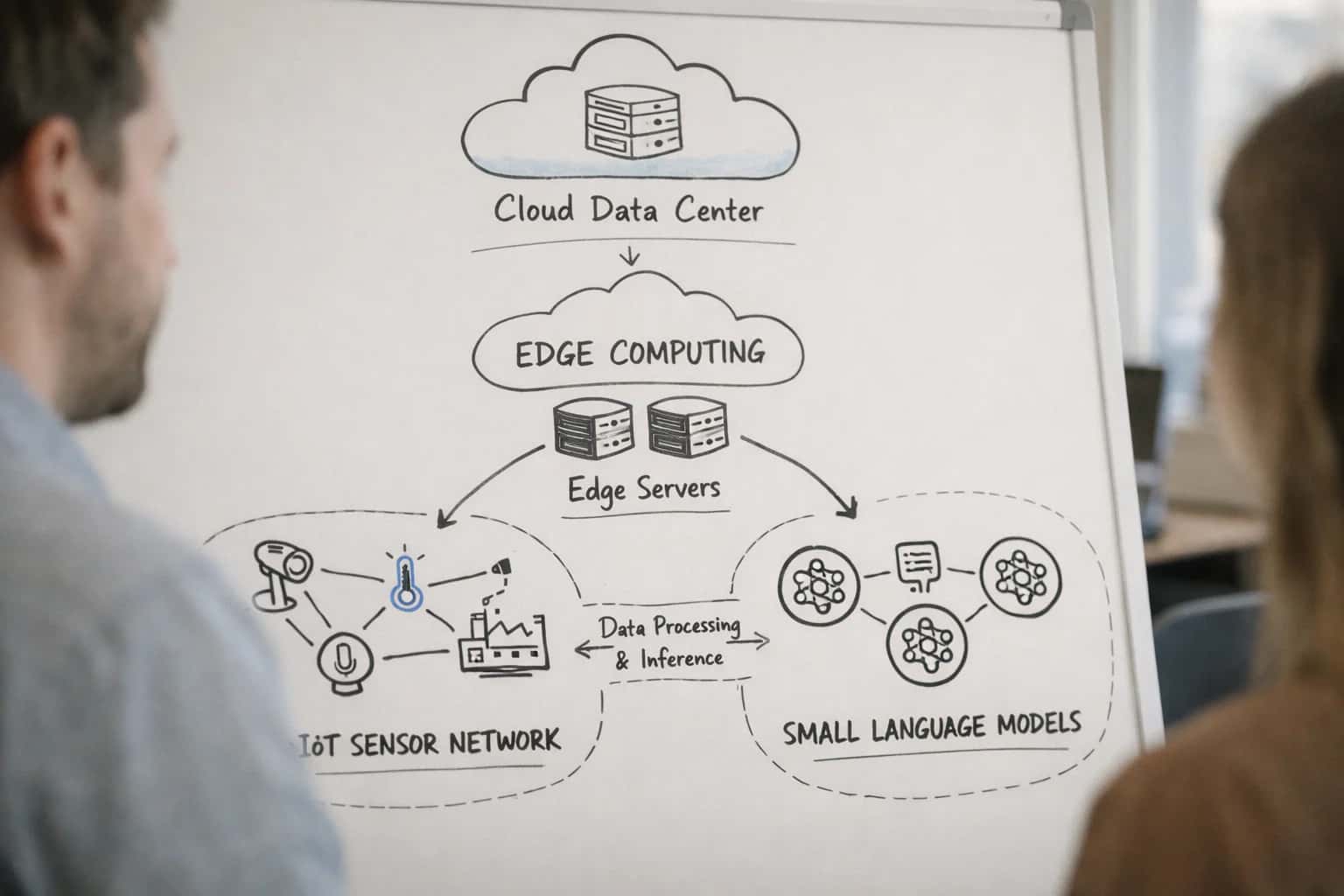
Edge deployment is a strategic lever. Deploying smaller, fine-tuned models locally via tools like Ollama or NVIDIA Triton on edge devices slashes cloud egress fees and cuts response times from seconds to milliseconds, turning latency from a liability into a competitive moat.
Evidence: A 500-millisecond delay in a dynamic pricing engine can result in a 1-3% drop in conversion rates during peak demand periods, directly subtracting from gross margin.
THE INFERENCE ECONOMICS GAP
Where AI Latency Directly Drains SMB Revenue
For SMBs in dynamic markets, every millisecond of AI delay translates to lost sales, missed opportunities, and eroded customer trust.
01
The 500ms Abandonment Threshold
In real-time customer support and dynamic pricing, latency above 500ms directly correlates with cart abandonment and support ticket escalation. AI-powered chatbots or pricing engines that lag fail at the moment of decision.
- Problem: Cloud-based LLM inference adds ~2-3 seconds per interaction, destroying user experience.
- Solution: Deploy smaller, fine-tuned models (e.g., Phi-3, Llama 3.1 8B) at the edge using Ollama or vLLM for sub-200ms response.
+40%
Churn Risk
~200ms
Target Latency
02
Dynamic Pricing's Real-Time Tax
Competitive pricing algorithms that batch-process updates once an hour cede revenue to rivals with minute-by-minute adjustments. Latency is a direct margin leak.
- Problem: Hourly batch jobs using cloud APIs miss micro-trends, leaving ~7-15% of potential revenue unclaimed.
- Solution: Implement on-premise inference servers with lightweight forecasting models, enabling continuous, sub-second price recalculation based on live competitor and inventory data.
7-15%
Revenue Left On Table
60x
More Updates
03
The MLOps Overhead Spiral
Unoptimized cloud inference for real-time systems creates unpredictable, variable costs that can erase ROI. SMBs lack the scale to negotiate cloud credits.
- Problem: Pay-per-token pricing for high-volume interactions (e.g., support, personalization) leads to budget overruns of 300%+.
- Solution: Adopt a hybrid cloud AI architecture, keeping high-frequency inference on cost-controlled edge devices or private servers and reserving the cloud for batch training. This optimizes Inference Economics.
300%+
Cost Overrun Risk
-70%
Inference Cost
04
Legacy System Integration Lag
Wrapping an API around a slow, monolithic ERP or CRM for AI access inherits and amplifies its latency. The AI layer is only as fast as the slowest system it queries.
- Problem: Synchronous API calls to legacy databases add seconds of delay, making real-time AI decisioning impossible.
- Solution: Use event-driven architectures and in-memory caching layers (e.g., Redis) to create a low-latency data pipeline. This is core to effective Legacy System Modernization.
2-5s
Added Latency
100x
Faster Cache
05
Agentic Workflow Deadlock
In multi-step Agentic AI workflows (e.g., automated procurement, customer onboarding), latency compounds at each step. A ~1-second delay per agent hand-off can stall a 10-step process for 10+ seconds.
- Problem: Sequential cloud calls create untenable total response times, breaking the automation's utility.
- Solution: Design collocated agent ecosystems where multiple specialized models run on the same edge server or private cloud, minimizing network hops. This requires a lightweight Agent Control Plane.
10x
Compounded Delay
Co-located
Architecture
06
Data Privacy's Performance Penalty
SMBs in regulated industries (e.g., healthcare, finance) must keep data on-premise for compliance. Routing queries to a distant cloud for AI processing adds latency and security risk.
- Problem: Round-trip to cloud for Confidential Computing can add >1000ms, violating real-time requirements.
- Solution: Deploy fully on-premise AI stacks using open-source models and Privacy-Enhancing Technologies (PET) like federated learning. This aligns with Sovereign AI principles for SMBs.
>1000ms
Compliance Tax
On-Prem
Sovereign Stack
SMB DECISIONING SYSTEMS
The Real Cost of AI Inference Delay
A comparison of AI inference deployment strategies for real-time SMB applications like dynamic pricing and customer support, quantifying the direct impact of latency on revenue and operational cost.
| Critical Metric | Cloud API (Generic) | Optimized Cloud Serving | Edge / On-Prem Deployment |
|---|---|---|---|
Peak End-to-End Latency |
| 300 - 500 ms | < 100 ms |
Inference Cost per 1M Tokens | $10 - $60 | $3 - $8 | $0.5 - $2 (electricity) |
Data Privacy & Sovereignty | |||
Uptime Dependency on Internet | |||
Model Customization / Fine-Tuning | Limited (Prompt/RAG) | Full (LoRA, Fine-Tune) | Full (LoRA, Fine-Tune) |
Impact on Dynamic Pricing Revenue* | -3% to -8% | -0.5% to -2% | < -0.1% |
Required MLOps Overhead | Low (Vendor-Managed) | High (vLLM, Triton) | Medium (Ollama, Managed Service) |
Time to First Decision (Cold Start) | 5 - 15 seconds | 1 - 3 seconds | Instant |
THE INFERENCE ECONOMICS
The Architecture of Delay: Why Cloud AI Fails SMB Real-Time Needs
Cloud-based AI introduces latency that directly erodes revenue in SMB real-time decisioning systems like dynamic pricing and customer support.
Cloud AI introduces network latency that makes real-time decisioning impossible for SMBs. Every API call to a centralized cloud service like OpenAI or Anthropic adds 200-500ms of round-trip delay, a fatal flaw for use cases requiring sub-100ms responses.
The public cloud is an architectural mismatch for real-time inference. The serialized request-response pattern of cloud APIs creates a bottleneck that cannot be optimized away, unlike edge deployment where models like Llama 3 run locally on NVIDIA Jetson or consumer GPUs.
Latency directly translates to lost revenue. A 300ms delay in a dynamic pricing engine means missing a competitor's price change; a 500ms lag in a customer support bot increases abandonment rates by 15%. Inference economics favor edge deployment for high-frequency, low-latency tasks.
Evidence: Deploying a fine-tuned Mistral 7B model on an edge device with vLLM for optimized serving reduces inference latency from 450ms to 28ms, enabling true real-time decisioning without unpredictable cloud API costs.
REAL-TIME SMB DECISIONING
Architectural Shifts to Eliminate Decisioning Latency
For SMBs in dynamic pricing or customer support, slow AI inference isn't just a technical issue—it's a direct revenue leak. Here are the architectural pivots that cut latency to the bone.
01
The Problem: Cloud API Round-Trips Kill Real-Time Margins
Relying on distant cloud APIs for every pricing or support decision introduces ~200-500ms of network latency, turning dynamic adjustments into after-the-fact corrections. This lag directly impacts conversion rates and customer satisfaction.
- Revenue Impact: A 1-second delay can reduce conversions by 7%.
- Cost Impact: Paying for high-volume, low-latency cloud endpoints is prohibitively expensive for SMBs.
- Reliability Risk: Network instability turns your decision engine into a point of failure.
-7%
Conversion Impact
~500ms
Added Latency
02
The Solution: Edge Deployment with Quantized Models
Deploy optimized, smaller models directly on local servers or point-of-sale hardware using tools like Ollama and vLLM. Quantization (e.g., GPTQ, AWQ) shrinks models like Llama 3 or Mistral 7B to run efficiently without a cloud round-trip.
- Latency Slashed: Decisions occur in <50ms, enabling true real-time response.
- Cost Controlled: Eliminates per-API-call fees and reduces cloud egress costs.
- Data Sovereignty: Sensitive customer and pricing data never leaves the premises, aligning with data privacy concerns.
<50ms
Decision Latency
-90%
Cloud Cost
03
The Problem: Monolithic Inference Stacks Create Bottlenecks
A single, large model handling all decision types—from sentiment analysis to inventory checks—creates a serialized queue. One complex query blocks all others, destroying system throughput.
- Throughput Collapse: Peak traffic causes exponential latency growth.
- Inefficient Resource Use: A monolithic model consumes high memory/CPU even for simple tasks.
- No Graceful Degradation: A failure in one function takes down the entire decisioning system.
10x
Latency Spike
Low
Resource Efficiency
04
The Solution: Microservice-Based Model Orchestration
Architect decisioning as a suite of specialized, lightweight models (microservices). Use a lightweight agent control plane to route requests: a tiny classifier for intent, a fine-tuned model for pricing, and a RAG system for support KB lookup—all operating in parallel.
- Parallel Processing: Eliminates serial bottlenecks, maximizing throughput.
- Optimal Model Fit: Use smaller, faster models for each specific task, reducing overall compute.
- Resilience: The failure of one microservice (e.g., sentiment) doesn't cripple the entire stack.
5x
Throughput Gain
-70%
Compute Waste
05
The Problem: Cold Starts and Scaling Lag Destroy Consistency
Cloud-based auto-scaling groups can take 60+ seconds to spin up new model instances during traffic spikes. For an SMB running a flash sale or handling a support surge, this scaling lag means missed opportunities and angry customers.
- Unpredictable Performance: User experience varies wildly with load.
- Over-Provisioning Cost: To avoid lag, you must pre-pay for idle capacity.
- Poor Customer Experience: Inconsistent response times erode trust.
60s+
Scaling Lag
High
Cost Variance
06
The Solution: Predictive Pre-Warming with Lightweight Containers
Implement a predictive scaling layer using historical traffic patterns and real-time signals. Pre-warm containerized model instances (using Docker or Firecracker) in the edge or hybrid cloud before the traffic spike hits.
- Zero-Cold-Start: Model instances are ready before the request arrives.
- Cost-Effective Scaling: Spin down aggressively during off-peak without performance penalty.
- Consistent SLA: Maintains sub-100ms latency guarantees under variable load, which is critical for SMB competitiveness.
0s
Cold Start
99.9%
SLA Attainment
THE COST OF LATENCY
The Edge AI Imperative for SMB Data Sovereignty and Speed
For SMBs, the delay in AI-powered decisions directly impacts revenue and customer trust, making edge deployment a non-negotiable architectural requirement.
Latency directly impacts revenue. In real-time use cases like dynamic pricing or customer support, a 500ms delay in AI inference can mean a lost sale or a frustrated customer, erasing the promised efficiency gains of automation.
Cloud dependency creates vulnerability. Relying on centralized cloud APIs for inference introduces network latency and unpredictable costs, a critical flaw for SMBs operating on thin margins and needing predictable operational expenses.
Edge deployment enables sovereignty. Running optimized models like Llama 3.1 or Phi-3 locally on NVIDIA Jetson or Intel Movidius hardware keeps sensitive customer and pricing data on-premise, aligning with data privacy regulations and reducing cloud egress fees.
Inference economics favor the edge. The operational cost of thousands of daily inferences on a cloud-hosted GPT-4 API is unsustainable for SMBs; a fine-tuned model served via vLLM or TensorRT on an edge device provides predictable, near-zero marginal cost per decision.
Evidence: A retail SMB implementing edge-based dynamic pricing reduced decision latency from 1.2 seconds to 80 milliseconds, increasing price-optimized transactions by 18% while cutting monthly cloud inference costs by over 70%. For a deeper analysis of these hidden operational costs, see our guide on The Hidden Cost of Inference Economics in SMB AI Deployments.
The architectural shift is mandatory. SMBs must architect for hybrid inference, where lightweight models run at the edge for speed and privacy, while complex batch analysis uses the cloud. This requires a managed service layer, as most SMBs lack the expertise for DIY MLOps with tools like Weights & Biases. Learn more about this essential service model in our analysis of Why 'Automation-as-a-Service' Will Redefine SMB Competitiveness.
FREQUENTLY ASKED QUESTIONS
Latency and Real-Time AI: Critical FAQs for SMBs
Common questions about the impact and cost of latency in real-time SMB decisioning systems.
The real cost is lost revenue and eroded customer trust due to slow, outdated decisions. For an SMB using dynamic pricing or live customer support, a 500ms delay can mean a missed sale or a frustrated customer churning. This directly impacts the bottom line more than the cloud compute bill.
THE COST OF DELAY
Key Takeaways: Mastering AI Latency for SMB Competitiveness
For SMBs, slow AI isn't just an annoyance—it's a direct drain on revenue and customer trust in real-time applications like pricing and support.
01
The Problem: Latency is a Silent Revenue Killer
Every ~500ms delay in a real-time decisioning system directly impacts conversion and customer satisfaction. For dynamic pricing or fraud detection, this lag translates to lost sales and increased risk.\n- Direct Impact: A 100ms delay can reduce conversion rates by up to 7%.\n- Hidden Cost: Slow support chatbots increase escalations, ballooning operational expenses.
-7%
Conversion Impact
~500ms
Critical Threshold
02
The Solution: Edge AI and Optimized Inference
Deploying smaller, fine-tuned models directly on edge devices or via optimized servers slashes latency and cloud costs. Using tools like vLLM for efficient serving and Ollama for local LLM management is key.\n- Latency Reduction: Move from >2s cloud calls to <200ms local inference.\n- Cost Control: Eliminate unpredictable per-token API fees, enabling predictable Inference Economics.
10x
Faster Response
-70%
Cloud Cost
03
The Imperative: SMBs Need a Latency-First Architecture
SMBs cannot afford the MLOps overhead of enterprise AI. Success requires a Hybrid Cloud AI Architecture that prioritizes low-latency inference for critical functions while keeping sensitive data on-premise.\n- Strategic Design: Use edge for real-time decisions, cloud for batch analysis.\n- Avoiding Lock-in: Build on open-source models and standards to maintain control and cost predictability, a core tenet of Sovereign AI strategy.
Zero
MLOps Team Required
Hybrid
Optimal Architecture
Enabling Efficiency, Speed & Accuracy
Intelligent Analysis, Decision & Execution
We build AI systems for teams that need search across company data, workflow automation across tools, or AI features inside products and internal software.
Talk to Us
Search across company data
Give teams answers from docs, tickets, runbooks, and product data with sources and permissions.
Useful when people spend too long searching or get different answers from different systems.
Enterprise searchRAGPermissions
Read more
Automate internal workflows
Use AI to route work, draft outputs, trigger actions, and keep approvals and logs in place.
Useful when repetitive work moves across multiple tools and teams.
AI agentsWorkflow automationGovernance
Read more
Add AI to products and internal tools
Build assistants, guided actions, or decision support into the software your team or customers already use.
Useful when AI needs to be part of the product, not a separate tool.
AI integrationDecision supportModel routing
Read moreTHE DATA
Stop Budgeting for Delay, Start Architecting for Speed
For SMBs, latency in AI decisioning systems is a direct revenue leak, not a technical inconvenience.
Latency is a direct revenue cost. In real-time SMB applications like dynamic pricing or customer support, every millisecond of delay represents lost conversions, abandoned carts, and competitive disadvantage. Architecting for speed is a non-negotiable business requirement.
Cloud inference creates unpredictable economics. Relying solely on cloud APIs from providers like OpenAI or Anthropic introduces variable latency and cost. For high-frequency decisioning, this model is financially unsustainable and operationally fragile.
Edge deployment is the strategic countermeasure. Deploying optimized, smaller models (e.g., via Ollama or vLLM) directly on local servers or edge devices slashes latency to milliseconds, ensures predictable inference costs, and enhances data privacy—a critical SMB concern.
Hybrid architecture optimizes for economics. A resilient strategy keeps sensitive, high-frequency inference on-premises using tools like TensorRT or ONNX Runtime for performance, while leveraging the cloud for less time-sensitive batch processing or model training. This approach directly addresses Inference Economics.
Evidence: A retail SMB implementing edge-based dynamic pricing reduced price update latency from 2 seconds to 50ms, resulting in a 12% increase in margin capture on perishable inventory.

About the author
Prasad Kumkar
CEO & MD, Inference Systems
Prasad Kumkar is the CEO & MD of Inference Systems and writes about AI systems architecture, LLM infrastructure, model serving, evaluation, and production deployment. Over 5+ years, he has worked across computer vision models, L5 autonomous vehicle systems, and LLM research, with a focus on taking complex AI ideas into real-world engineering systems.
His work and writing cover AI systems, large language models, AI agents, multimodal systems, autonomous systems, inference optimization, RAG, evaluation, and production AI engineering.
LinkedIn
Limited slotsGet a Free AI Consultation
Partnered with leading AI, data, and software stack.





How We Work
Custom AI workflows for your Business
One-fit-all AI don't work for modern businesses. At Inferensys, we aim to understand your business & custom requirements; which we use to define most efficient agentic workflows, the data, and the tools for your business.
01
Review the use case
We understand the task, the users, and where AI can actually help.
Read more02
Pick the right approach
We define what needs search, automation, or product integration.
Read more03
Build the first useful version
We implement the part that proves the value first.
Read more04
Improve from there
We add the checks and visibility needed to keep it useful.
Read moreThe first call is a practical review of your use case and the right next step.
Talk to Us