
Blog
Retrieval-Augmented Generation (RAG) and Knowledge Engineering
Retrieval-Augmented Generation (RAG) and Knowledge Engineering
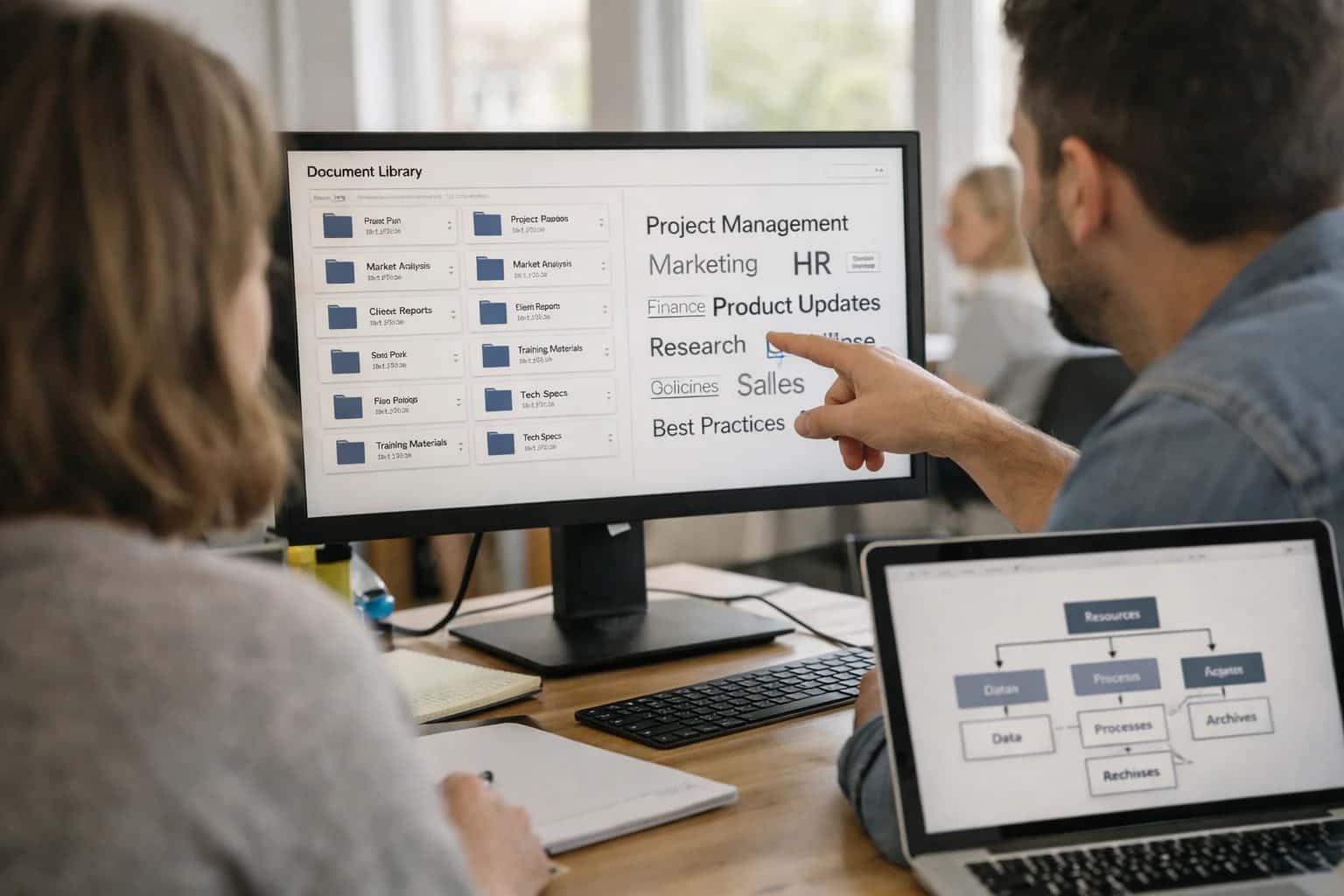
RAG has evolved into the 'Foundation Layer' of the enterprise, allowing organizations to 'bring their own data' to general-purpose models to ensure accuracy and eliminate hallucinations. This pillar focuses on 'Knowledge Amplification,' moving beyond simple content generation to creating interfaces for institutional knowledge. Sub-topic clusters include high-speed RAG for instant knowledge retrieval, federated RAG across hybrid clouds, and semantic data enrichment.
Why Vector Search Alone Dooms Your RAG Implementation
Simple vector similarity fails on complex queries, requiring hybrid search and semantic enrichment to achieve enterprise-grade accuracy.
How Semantic Data Enrichment Creates Competitive Moats
Transforming raw documents into structured, interconnected knowledge is the highest-leverage investment for building defensible AI applications.
Why Knowledge Graphs Are the Missing Link in Advanced RAG
Graph-based retrieval provides the relational context that vector embeddings lack, enabling complex reasoning over enterprise data.
The Hidden Cost of Ignoring Query Understanding in RAG
Without intent classification and query rewriting, even the best retrieval pipeline will return irrelevant or incomplete results.
Why Federated RAG Across Hybrid Clouds is a Compliance Imperative
Distributed retrieval architectures keep sensitive data sovereign while enabling unified access, a core requirement for regulated industries.
How High-Speed RAG Enables Real-Time AI Agents
Sub-second retrieval latency is non-negotiable for agentic workflows that make decisions and take action without human delay.
The Cost of Poor Chunking Strategies in Knowledge Retrieval
Arbitrary document splitting destroys semantic context, crippling retrieval relevance and the quality of the final LLM response.
Why Explainable RAG is Critical for Board-Level AI Adoption
Traceable citations and retrieval confidence scores are mandatory for audit trails and building stakeholder trust in generative outputs.
How RAG Eliminates the Hallucination Tax in Enterprise AI
Grounding LLM responses in verified source data is the only scalable method to ensure factual accuracy and mitigate brand risk.
The Future of RAG: From Document Search to Proactive Knowledge Delivery
Next-generation systems will anticipate user needs and push relevant insights, transforming passive retrieval into active intelligence.
Why RAG Demands a New Discipline: Enterprise Knowledge Architecture
Successful deployment requires a strategic framework for data modeling, ontology design, and pipeline governance, not just engineering.
The Hidden Cost of Static Embeddings in a Dynamic Knowledge World
Models like OpenAI's text-embedding-ada-002 decay as your data changes, necessitating continuous embedding updates and versioning strategies.
How RAG Integrates Structured and Unstructured Enterprise Data
The true power lies in unifying SQL queries, API calls, and vector search into a single, coherent context for the LLM.
Why RAG is the Foundation for Trustworthy Generative AI
It provides the verifiable source material that makes generative outputs reliable, aligning directly with AI TRiSM principles for responsible deployment.
The Cost of Data Silos in Enterprise Knowledge Amplification
Isolated data repositories prevent RAG systems from forming a complete picture, leading to fragmented and unreliable answers.
How RAG Enables Seamless Integration with Agentic Workflows
It acts as the reliable memory and research layer for autonomous agents, allowing them to execute tasks based on current, verified information.
Why Fine-Tuning Alone is a Bankrupt Strategy Without RAG
Static model weights cannot incorporate new information post-training, making fine-tuning insufficient for dynamic, real-world knowledge.
The Future of RAG: Multi-Modal Retrieval for a Multi-Modal World
Systems must jointly retrieve across text, images, audio, and video to answer complex queries, leveraging models like GPT-4V and Claude 3.
The Hidden Cost of Black-Box Embedding Models in Your RAG Stack
Opaque embedding APIs from OpenAI or Cohere create vendor lock-in, hidden costs, and an inability to debug retrieval failures.
Why Real-Time Data Streams Are the Next Frontier for RAG
Connecting retrieval pipelines to Kafka or WebSocket feeds is essential for applications in trading, customer support, and IoT diagnostics.
How RAG Makes AI a Strategic Asset, Not Just a Tool
By operationalizing institutional knowledge, RAG transforms AI from a point solution into the core nervous system of the enterprise.
The Cost of Inadequate Evaluation for RAG Systems
Without metrics like context precision/recall and answer faithfulness, you cannot measure improvement or catch regressions in production.
Why RAG is the Bridge Between Legacy Data and Modern LLMs
It provides the essential connector layer that mobilizes dark data trapped in mainframes and legacy databases for use with models like Llama 3.
The Future of RAG: Self-Optimizing Knowledge Pipelines
Automated systems will use feedback loops and LLM judgments to improve chunking, indexing, and retrieval strategies without manual intervention.
The Hidden Cost of Ignoring the User Experience in RAG Interfaces
Poorly designed citation displays and response formatting erode user trust, regardless of the underlying retrieval accuracy.
Why RAG is the Key to Unlocking Dark Data Value
It provides the mechanism to index and query unstructured content like old reports, emails, and logs that traditional systems cannot access.
How RAG Enables Privacy-Preserving Retrieval with Confidential Computing
Techniques like encrypted search allow sensitive data to remain protected during the retrieval process, meeting stringent compliance mandates.
The Cost of Context Collapse in Naive RAG Implementations
Overloading the LLM context window with irrelevant retrieved chunks drowns the signal, degrading answer quality more than having no context at all.
Why RAG Requires a Paradigm Shift in Data Management
It forces organizations to think of data as a queryable knowledge asset, necessiting new roles, processes, and quality standards.
The Future of RAG: Benchmarking Against Business KPIs, Not Just MRR
Success must be measured by reduced support tickets, faster decision cycles, and increased revenue, not just technical retrieval metrics.
Partnered with leading AI, data, and software stack.





How We Work
Custom AI workflows for your Business
One-fit-all AI don't work for modern businesses. At Inferensys, we aim to understand your business & custom requirements; which we use to define most efficient agentic workflows, the data, and the tools for your business.
01
Review the use case
We understand the task, the users, and where AI can actually help.
Read more02
Pick the right approach
We define what needs search, automation, or product integration.
Read more03
Build the first useful version
We implement the part that proves the value first.
Read more04
Improve from there
We add the checks and visibility needed to keep it useful.
Read moreThe first call is a practical review of your use case and the right next step.
Talk to Us