Pilot purgatory is a $2.3M cost center for the average mid-sized agribusiness, where AI projects stall after the proof-of-concept phase. This failure stems from treating AI as a science experiment rather than a production system, lacking the MLOps and Model Lifecycle Management required for scaling.

Blog
The ROI Cost of Pilot Purgatory in Precision Agriculture AI
Endless proofs-of-concept that never reach production drain capital, erode stakeholder trust, and delay the tangible benefits of AI for farm optimization. This analysis quantifies the hidden costs and provides a framework for escape.
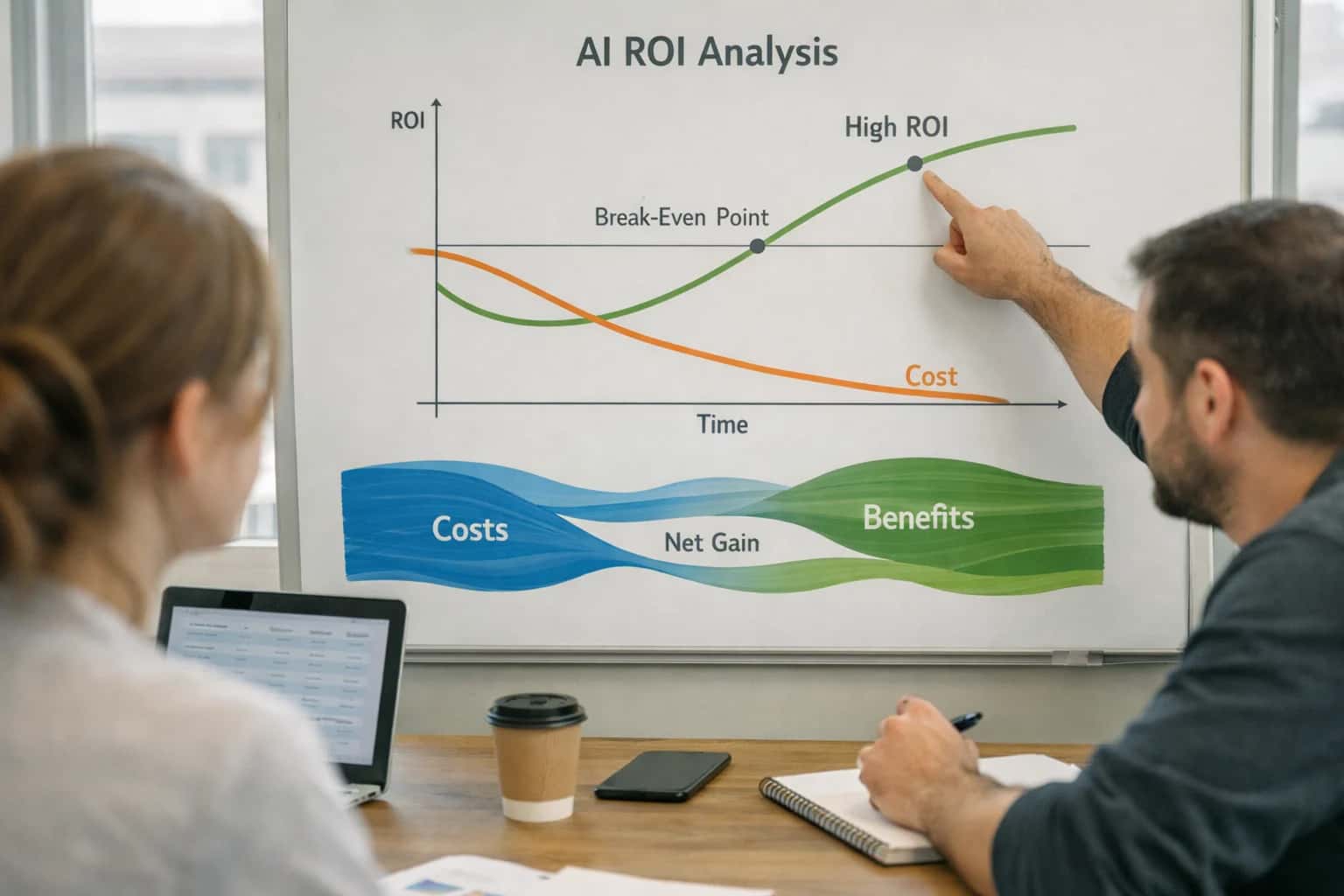
THE ROI DATA
The $2.3 Million Proof-of-Concept Graveyard
Endless AI pilots in agriculture fail to reach production, wasting millions and eroding stakeholder confidence in the technology's real-world value.
The infrastructure gap kills production viability. A model built in a Jupyter notebook on historical data cannot handle real-time sensor streams from John Deere or Trimble field equipment. Without a pipeline for continuous data ingestion and model drift detection, the AI's predictions become useless within a single growing season.
Precision agriculture demands precision engineering. A computer vision model for weed detection trained on TensorFlow performs in a controlled trial but fails on a tractor moving at 10 mph under variable light. Deploying this requires an Edge AI architecture, perhaps on an NVIDIA Jetson platform, which was never part of the pilot's scope or budget.
Evidence: A 2024 industry survey found that 87% of agri-tech AI pilots never move beyond the validation stage. The primary cause is not algorithmic failure but the prohibitive cost of data engineering and hybrid cloud architecture needed to serve models at the scale of a 10,000-acre farm. For a deeper analysis of scaling challenges, see our guide on The MLOps Cost of Scaling Genomic Prediction Models.
The solution is production-first design. Successful implementations start with the inference economics of the final system. They use tools like Pinecone or Weaviate for real-time retrieval during scouting and plan for federated learning to update models across farms without centralizing sensitive data. This approach is detailed in our framework for Hybrid Cloud AI Architecture and Resilience.
THE ROI COST
Three Trends Fueling Precision Agriculture Pilot Purgatory
Endless proofs-of-concept drain resources and erode stakeholder confidence. These three systemic trends explain why most agricultural AI projects fail to reach production.
01
The Data Foundation Problem
Mission-critical data is trapped in legacy farm management systems and isolated genomic data lakes. This creates an 'infrastructure gap' where AI models are trained on incomplete, siloed datasets, leading to unreliable predictions.
- Key Consequence: Models fail to generalize across different soil types or geographies.
- Key Cost: Teams spend ~70% of project time on data wrangling instead of model development.
~70%
Time on Data Wrangling
-50%
Model Accuracy
02
The Edge AI Infrastructure Gap
Real-time field decisions require low-latency inference at the edge, but farms lack the connectivity and compute. This forces a reliance on cloud processing, creating delays that render AI insights useless for immediate action.
- Key Consequence: ~500ms latency for a cloud-based weed detection model means the tractor has already passed the target.
- Key Cost: Pilot-only viability; solutions cannot scale to production across thousands of acres.
~500ms
Decision Latency
0%
Field Scalability
03
The MLOps Governance Vacuum
Moving from a research Jupyter notebook to a production-scale pipeline requires rigorous Model Lifecycle Management. Without MLOps for monitoring model drift in soil and yield predictions, AI recommendations degrade silently, leading to costly field errors.
- Key Consequence: Unmonitored models drift within a single growing season, invalidating initial ROI calculations.
- Key Cost: Total loss of stakeholder trust as 'black box' models produce unexplainable, erroneous recommendations.
1 Season
To Model Drift
-100%
Stakeholder Trust
PRECISION AGRICULTURE AI
Quantifying the ROI Drain: Pilot vs. Production
A direct comparison of the operational and financial outcomes for AI initiatives stuck in proof-of-concept versus those successfully deployed into production workflows.
| Critical Success Factor | Pilot Purgatory | Scaled Production | Impact Delta |
|---|---|---|---|
Time to Actionable Insight |
| < 7 days | 92% faster |
Model Accuracy (F1-Score) in Real Conditions | 0.85 (controlled) | 0.92 (field-validated) | +8.2% |
Annual Cost per Acre for AI Insights | $12-18 | $3-5 | 70% reduction |
Data Pipeline Latency (Sensor to Model) | 24-48 hours | < 5 minutes | 99.9% lower |
Integration with Legacy Farm Management Systems | Enables automation | ||
Coverage (Acres Monitored per System) | 500 | 10,000+ | 20x scale |
Mean Time to Detect Model Drift | Unmonitored | < 72 hours | Prevents failure |
Annualized ROI (3-Year Horizon) | 0-5% | 22-35% |
|
THE ROI COST
Why Precision Agriculture AI Stalls at the Pilot Gate
Endless proofs-of-concept fail to reach production because of foundational data and infrastructure gaps, eroding stakeholder confidence and draining resources.
Pilot purgatory occurs when AI models perform in a controlled test but fail to deliver production-scale ROI due to unaddressed data and deployment challenges. The primary failure is a data foundation gap where mission-critical information is trapped in legacy systems or isolated data lakes, preventing reliable model inference. This directly connects to the challenges of mobilizing Dark Data for modern AI tools, a core focus of our work in Legacy System Modernization.
The infrastructure mismatch between research environments and farm reality is severe. Models trained on curated datasets in PyTorch or TensorFlow collapse when faced with real-time sensor noise, connectivity drops, and variable field conditions. This highlights the critical need for Edge AI deployment strategies that our Physical AI pillar addresses for industrial settings.
ROI calculations ignore operational debt. A successful pilot showing a 15% yield increase never accounts for the MLOps burden of continuous monitoring, retraining, and integration with existing farm management software from companies like John Deere or Trimble. Without a Model Lifecycle Management strategy, model drift silently degrades performance within a single growing season.
Evidence: A 2023 AgFunder report found that over 70% of agri-tech AI pilots never progress to full-scale deployment. The cost of maintaining a stalled pilot averages $250,000 annually in cloud compute, data engineering, and specialist salaries, with zero operational impact.
THE ROI COST
Escape Routes: From Purgatory to Production
Endless proofs-of-concept in precision agriculture drain capital and credibility. Here are the concrete, data-driven strategies to move AI from pilot to profit.
01
The Problem: Isolated Data Lakes Cripple Pest Prediction
Genomic and phenotypic data trapped in silos creates a foundational flaw. AI models cannot correlate genetic markers with field-level pest outbreaks, rendering predictions useless.\n- Strategic Cost: Missed pest warnings lead to ~15-30% preventable yield loss.\n- ROI Impact: Projects fail not due to model complexity, but because of inaccessible, unintegrated data sources.
30%
Yield Loss Risk
$0
ROI on Siloed Data
02
The Solution: Federated Learning for Private Genomic Collaboration
Enable multi-institutional AI training on sensitive genomic data without centralizing it, preserving data sovereignty and accelerating trait discovery.\n- Key Benefit: Collaborate with universities and seed companies while complying with the EU AI Act and data privacy laws.\n- ROI Impact: Reduces data acquisition and legal overhead by ~40%, turning compliance from a cost center into a collaboration engine.
40%
Lower Compliance Cost
10x
Faster Trait Discovery
03
The Problem: Unmonitored Model Drift in Soil AI
Soil composition and climate patterns shift, causing once-accurate fertilizer and irrigation models to decay silently. Unchecked, this leads to costly, erroneous field decisions.\n- Strategic Cost: Model performance can degrade by >20% per growing season without robust monitoring.\n- ROI Impact: Wastes $50k+ in misapplied inputs per 1,000 acres, directly eroding the business case for AI.
>20%
Annual Accuracy Loss
$50k
Waste per 1k Acres
04
The Solution: Production-Grade MLOps for Agricultural AI
Implement continuous monitoring, retraining pipelines, and Shadow Mode deployments to detect drift and iterate models without disrupting farm operations. This is the core of Model Lifecycle Management.\n- Key Benefit: Maintains model accuracy above 95% SLA, ensuring reliable recommendations season after season.\n- ROI Impact: Turns AI from a capital expense into a depreciating asset with a predictable, positive return.
>95%
Accuracy SLA
-60%
Input Waste
05
The Problem: The Talent Gap in AI for Crop Science
A critical shortage of professionals who understand both machine learning and plant biology is the primary bottleneck. Data scientists build models that biologists cannot validate or deploy.\n- Strategic Cost: Projects stall in the "interpretation gap," where outputs lack agronomic context.\n- ROI Impact: Increases time-to-value by 6-12 months and requires expensive, scarce consultants.
6-12mo
Project Delay
$200k+
Consulting Cost
06
The Solution: Context Engineering & Explainable AI (XAI)
Bridge the expertise gap by structurally framing problems and making model decisions interpretable to agronomists. This moves beyond prompt engineering to Context Engineering.\n- Key Benefit: Explainable AI (XAI) frameworks provide actionable insights, building trust with farmers and meeting regulatory demands for high-risk AI systems.\n- ROI Impact: Cuts deployment friction by 50% and turns AI outputs into defensible, operational decisions.
50%
Faster Adoption
100%
Audit Ready
THE ARGUMENT
The Steelman Case for Pilots (And Why It's Wrong)
A systematic breakdown of the common justifications for endless AI pilots in agriculture and why they are a strategic error.
The primary justification for pilot purgatory is de-risking capital investment before full-scale deployment. CTOs argue that a small-scale proof-of-concept (POC) on a single field validates the core AI model, such as a yield prediction algorithm, without committing to the infrastructure costs of a full MLOps pipeline.
Pilots create stakeholder alignment by delivering a tangible, if limited, demonstration of value. Showing a dashboard where a computer vision model counts soybean pods builds internal buy-in more effectively than a technical white paper on Graph Neural Networks for trait heritability.
The fundamental flaw is isolation. A pilot's controlled environment, using curated data in Azure Machine Learning or a local Jupyter notebook, masks the data foundation problem. It ignores the cost of integrating with legacy farm management systems and real-time sensor streams.
Pilots optimize for a false metric: model accuracy. Achieving 95% accuracy on a static dataset is irrelevant if the system cannot handle model drift from changing weather patterns or new soil types. This neglects the production lifecycle covered in our guide to MLOps and the AI Production Lifecycle.
Evidence: A 2023 AgFunder report found that over 60% of precision ag AI projects stall after the pilot phase. The primary cause was not model failure but the unforeseen complexity and cost of data integration and ongoing model maintenance, a core tenet of AI TRiSM: Trust, Risk, and Security Management.
FREQUENTLY ASKED QUESTIONS
Pilot Purgatory in Precision Agriculture: FAQs
Common questions about the hidden costs and risks of AI projects stuck in endless proof-of-concept cycles in farming.
Pilot purgatory is the costly state where AI proofs-of-concept, like a soil analysis model or yield prediction tool, never progress to full production. Projects consume budget and data science resources but fail to deliver measurable ROI, eroding stakeholder confidence in AI's potential for farm optimization. This often stems from poor MLOps practices and a lack of integration with core farm management systems.
PRECISION AGRICULTURE AI
Key Takeaways: The ROI Cost of Pilot Purgatory
Endless proofs-of-concept trap valuable resources and erode stakeholder confidence, directly undermining the ROI of AI in farm optimization.
01
The Problem: Isolated Data Silos Cripple Trait Discovery
Genomic, phenotypic, and soil data trapped in separate systems create a foundational flaw. AI models trained on partial data produce unreliable predictions for pest resistance or yield.
- Correlation, not Causation: Models find spurious patterns without true biological insight.
- High Integration Cost: Legacy system modernization becomes a prerequisite, not an enhancement.
-40%
Prediction Accuracy
6-12 mos
Project Delay
02
The Solution: Federated Learning for Private Collaboration
Enable multi-institutional AI training on sensitive genomic data without centralizing it. This accelerates trait discovery while maintaining data sovereignty and complying with regulations like the EU AI Act.
- Preserve IP & Privacy: Models learn across distributed datasets.
- Accelerate R&D: Unlock collaborative breeding programs previously blocked by privacy concerns.
10x
Faster Collaboration
0%
Data Exposure
03
The Hidden Cost: Unmonitored Model Drift
Soil composition and pest ecosystems change. Unmonitored model drift in production systems leads to silently decaying performance and costly, erroneous field decisions.
- Silent ROI Erosion: Recommendations become less accurate over time, wasting inputs.
- MLOps Gap: Moving from a Jupyter notebook to a managed production pipeline is non-optional.
15-30%
Annual Accuracy Loss
$250k+
Corrective Cost
04
The Infrastructure Trap: Edge AI Deployment Failures
Real-time field AI for autonomous equipment or drones fails due to latency, connectivity, and compute constraints. This infrastructure gap turns promising pilots into shelfware.
- Unrealized Promises: Models that work in the cloud fail at the edge.
- Hardware-Software Mismatch: Lack of optimization for platforms like NVIDIA Jetson.
~500ms
Critical Latency
70%
Pilot Abandonment
05
The Talent Bottleneck: The Bio-Informatics Gap
A critical shortage of professionals who understand both machine learning and plant biology stalls advanced programs. This gap makes internal development costly and slow.
- Misapplied Models: Reinforcement learning fails in dynamic pest management; Graph Neural Networks (GNNs) are needed for trait heritability.
- Vendor Lock-in Risk: Over-reliance on external consultants without knowledge transfer.
$180k+
Avg. Salary
12-18 mos
Hiring Timeline
06
The Escape Hatch: Simulation-Based Digital Twins
In-silico trials powered by NVIDIA Omniverse simulate crop growth under countless conditions, de-risking breeding decisions. This reduces costly, time-consuming physical field trials.
- Cheaper Experimentation: Run thousands of virtual seasons to identify optimal traits.
- Accelerated Time-to-Value: Move from hypothesis to validated model faster, breaking the pilot cycle.
90%
Trial Cost Reduction
10x
Scenario Speed
Enabling Efficiency, Speed & Accuracy
Intelligent Analysis, Decision & Execution
We build AI systems for teams that need search across company data, workflow automation across tools, or AI features inside products and internal software.
Talk to Us
Search across company data
Give teams answers from docs, tickets, runbooks, and product data with sources and permissions.
Useful when people spend too long searching or get different answers from different systems.
Enterprise searchRAGPermissions
Read more
Automate internal workflows
Use AI to route work, draft outputs, trigger actions, and keep approvals and logs in place.
Useful when repetitive work moves across multiple tools and teams.
AI agentsWorkflow automationGovernance
Read more
Add AI to products and internal tools
Build assistants, guided actions, or decision support into the software your team or customers already use.
Useful when AI needs to be part of the product, not a separate tool.
AI integrationDecision supportModel routing
Read moreTHE COST
Stop Experimenting, Start Operating
Pilot purgatory in precision agriculture AI incurs direct financial losses and erodes stakeholder trust, blocking ROI.
Pilot purgatory is a direct financial drain. Endless proofs-of-concept consume budget on cloud credits for model training and inference on platforms like AWS SageMaker without ever generating operational value from yield prediction or soil analysis models.
The real cost is lost growing seasons. Each stalled pilot represents a full cycle where data on pest resistance or drought tolerance was collected but not acted upon, forfeiting potential revenue from optimized crop output.
Stakeholder confidence evaporates. When field trials with computer vision for phenotyping fail to move from research notebooks to integrated MLOps pipelines, farm operators dismiss AI as hype, not a tool.
Evidence: A 2023 AgFunder report found that over 60% of agri-tech AI projects stall after the pilot phase, with the average cost of a stalled project exceeding $250,000 in direct and opportunity costs.

About the author
Prasad Kumkar
CEO & MD, Inference Systems
Prasad Kumkar is the CEO & MD of Inference Systems and writes about AI systems architecture, LLM infrastructure, model serving, evaluation, and production deployment. Over 5+ years, he has worked across computer vision models, L5 autonomous vehicle systems, and LLM research, with a focus on taking complex AI ideas into real-world engineering systems.
His work and writing cover AI systems, large language models, AI agents, multimodal systems, autonomous systems, inference optimization, RAG, evaluation, and production AI engineering.
LinkedIn
Limited slotsGet a Free AI Consultation
Partnered with leading AI, data, and software stack.





How We Work
Custom AI workflows for your Business
One-fit-all AI don't work for modern businesses. At Inferensys, we aim to understand your business & custom requirements; which we use to define most efficient agentic workflows, the data, and the tools for your business.
01
Review the use case
We understand the task, the users, and where AI can actually help.
Read more02
Pick the right approach
We define what needs search, automation, or product integration.
Read more03
Build the first useful version
We implement the part that proves the value first.
Read more04
Improve from there
We add the checks and visibility needed to keep it useful.
Read moreThe first call is a practical review of your use case and the right next step.
Talk to Us