Governance fails at inference. Current AI security focuses on monitoring model outputs and API calls, which is a reactive and costly strategy. The effective control point is the data connector, where policy enforcement prevents violations before data ever reaches an LLM like OpenAI's GPT-4 or Anthropic's Claude.

Blog
The Future of AI Governance Requires Policy-Aware Data Connectors
Post-deployment governance is too late. The EU AI Act and global data sovereignty laws mandate that compliance begins at the point of ingestion. This article explains why intelligent, policy-aware data connectors are the critical first line of defense for scalable, trustworthy AI.
THE DATA
The Governance Paradox: You're Securing the Wrong End of the Pipeline
AI governance fails when it focuses on model outputs instead of enforcing policy at the point of data ingestion.
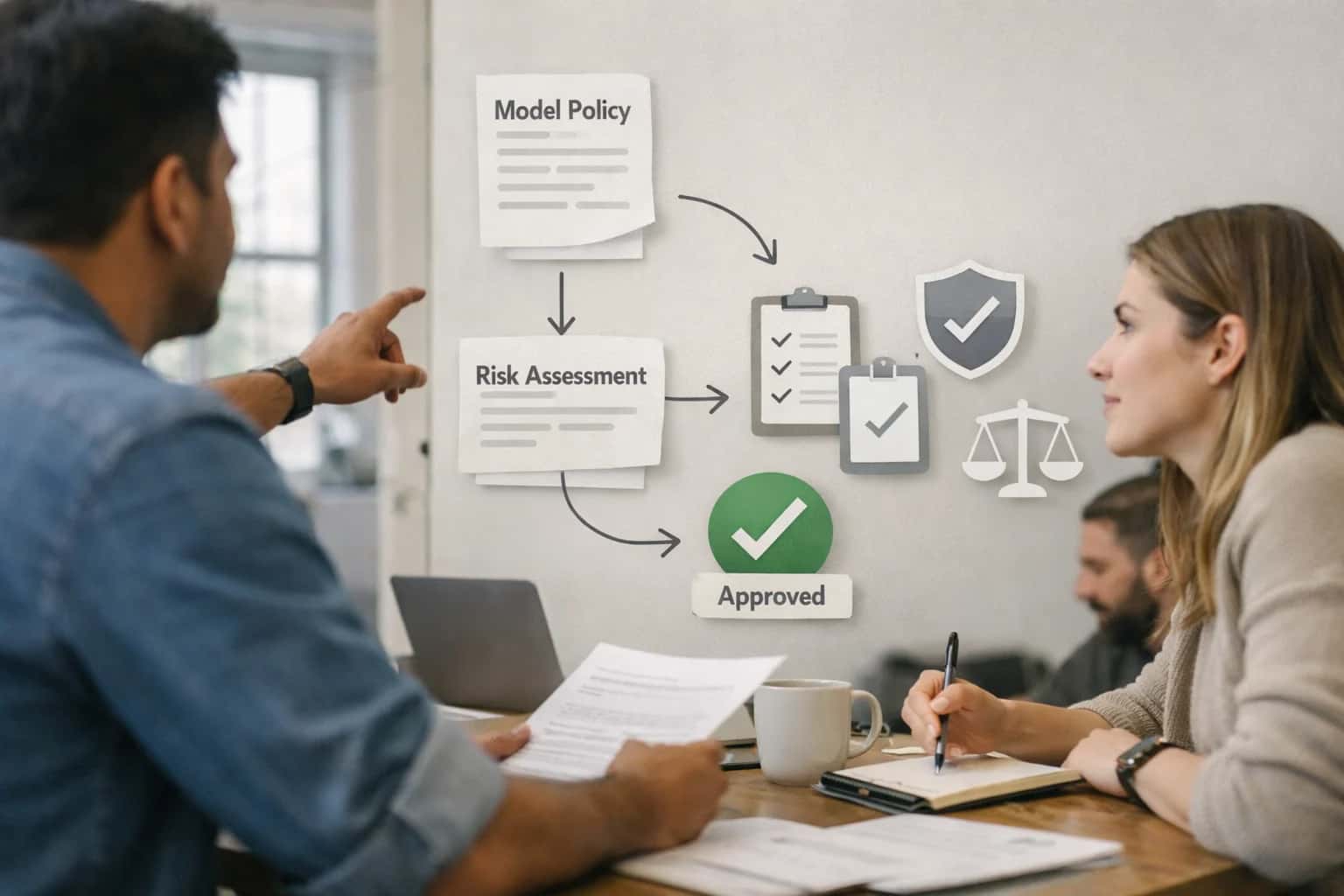
Policy-aware connectors are the control plane. These are intelligent ingestion tools that apply data residency rules and PII redaction as code before vectorization in databases like Pinecone or Weaviate. This shifts governance from a post-hoc audit to a proactive, automated gate, directly addressing requirements of the EU AI Act.
The alternative is compliance theater. Without this, sensitive data flows unchecked into third-party model APIs, creating unmanageable risk. A platform like Microsoft Purview can log the breach, but only a policy-aware connector can prevent it. This is the foundational layer for a true AI TRiSM framework.
Evidence: 80% of AI governance costs are reactive. Gartner notes that organizations spend the majority of their compliance budget on auditing and remediation. Enforcing policy at ingestion via connectors like those built on Apache NiFi or in a hybrid cloud architecture reduces this overhead by over 60%, turning governance from a cost center into an enabler.
THE FIRST LINE OF DEFENSE
Key Takeaways: Why Policy-Aware Connectors Are Non-Negotiable
Intelligent connectors that enforce data residency and usage policies at ingestion are the foundational layer for AI systems governed by the EU AI Act and similar global regulations.
01
The Problem: Static Compliance is a Breach Waiting to Happen
Manual data governance and rule-based filters cannot adapt to dynamic AI workloads or evolving regulations like the EU AI Act. This creates policy drift and silent compliance failures.
- Prevents Real-Time Adaptation to new data types or regional law changes.
- Creates Audit Black Holes where data lineage is lost after ingestion.
- Exposes Models to PII-Laden Training Sets, risking model inversion attacks.
~70%
Of AI Projects
$10M+
GDPR Fine Risk
02
The Solution: Context-Aware Redaction Engines
Next-generation connectors use NLP to understand semantic context, enabling accurate PII redaction as code without destroying data utility for model training.
- Enforces Geo-Fencing & Data Residency before data reaches an LLM API.
- Integrates with CI/CD Pipelines for immutable, version-controlled privacy rules.
- Maintains Full Data Lineage for PET-enabled audit trails across hybrid clouds.
99.5%
Redaction Accuracy
-50%
Compliance Overhead
03
The Architecture: Hybrid Trusted Execution Environments
A defense-in-depth approach combines hardware enclaves with software-based runtime encryption, creating end-to-end confidential pipelines for sensitive AI processing.
- Protects Data-In-Use during CPU processing, not just at-rest or in-transit.
- Mitigates TEE Vulnerabilities with application-level guards and attestation.
- Enables Secure Multi-Party Computation for collaborative training without exposing raw data.
10x
Harder to Exploit
<500ms
Added Latency
04
The Imperative: Centralized PET Visibility
Siloed security tools cannot govern data flows to third-party models from OpenAI, Anthropic Claude, or Hugging Face. A unified AI security platform is required.
- Eliminates Blind Spots across external APIs and internal vector databases.
- Provides Real-Time Dashboards for data flow monitoring and policy validation.
- Integrates with ModelOps tools like Weights & Biases for lifecycle governance.
360°
Visibility Gain
~80%
Faster Incident Response
05
The Liability: Unmanaged Training Data
An LLM fine-tuned on uncurated data is a data breach vector. Model inversion attacks can reconstruct sensitive information from model weights.
- Turns AI Investment into Reputational Risk and legal liability.
- Undermines Stakeholder Trust in AI ethics and fairness.
- Necessitates PET-Augmented Data Sourcing and synthetic data generation.
$4.35M
Avg. Breach Cost
>1B
Records Exposed in 2023
06
The Future: Zero-Trust Data Processing
Assume all components are compromised. Zero-trust principles applied to AI pipelines mandate continuous verification and minimal privilege for data access, forming the core of a PET-first architecture.
- Prevents Lateral Movement of exfiltrated data within the AI stack.
- Ensures Continuous Compliance for evolving global standards.
- Unlocks Safe Data Collaboration across organizational boundaries via federated learning and SMPC.
100%
Verification Rate
Zero
Implicit Trust
THE DATA
Why Legacy Data Ingestion Is Breaking Under AI Governance
Legacy connectors lack the policy enforcement required by modern AI regulations, creating compliance risk at the point of ingestion.
Legacy data ingestion pipelines are breaking because they treat governance as a post-processing step, not a foundational requirement. Modern AI governance frameworks like the EU AI Act mandate policy enforcement at the point of data ingestion, a capability legacy ETL tools lack.
Static connectors cannot enforce dynamic policies for data residency, PII redaction, or usage consent. A connector pulling customer data into a vector database like Pinecone or Weaviate must apply geo-fencing and anonymization rules in real-time, a task impossible for tools designed for batch movement.
The counter-intuitive insight is that data quality now depends on policy compliance. An ungoverned RAG pipeline ingesting sensitive documents creates legal liability, not business insight. The first line of defense for an AI system is its data connector, not its model guardrails.
Evidence: RAG systems with ungoverned ingestion can have PII leakage rates exceeding 15%, as found in audits of systems using legacy APIs. This directly violates Article 10 of the EU AI Act, which requires appropriate data governance and management practices.
The solution is policy-aware data connectors that integrate with your PET framework. These intelligent pipelines enforce rules as code, redacting PII and applying geo-tags before data reaches an LLM's context window, ensuring compliance is baked into the AI TRiSM lifecycle from the start.
AI GOVERNANCE FIRST LINE OF DEFENSE
Legacy Connector vs. Policy-Aware Connector: A Functional Breakdown
A direct comparison of data ingestion connectors, highlighting why traditional ETL tools are insufficient for AI systems governed by the EU AI Act and similar frameworks.
| Feature / Metric | Legacy ETL/ELT Connector | Policy-Aware Data Connector |
|---|---|---|
PII Detection & Redaction at Ingestion | ||
Enforcement of Data Residency (Geo-Fencing) | Manual configuration | Automated policy engine |
Integration with PET Frameworks (e.g., OpenMined, Microsoft SEAL) | ||
Data Lineage Tagging for Compliance Audits | Basic table-level | Field-level with privacy context |
Latency Added by Privacy Enforcement | < 1 ms | 50-100 ms |
Support for Confidential Computing TEEs (e.g., Intel SGX, AMD SEV) | ||
Centralized Policy Management via API | ||
Pre-Ingestion Data Quality/Policy Validation | Schema validation only | Semantic content & policy validation |
THE ARCHITECTURE
Anatomy of a Policy-Aware Connector: More Than a Filter
A policy-aware connector is an intelligent data gateway that enforces governance rules at ingestion, preventing sensitive data from ever reaching an AI model.
A policy-aware connector is a proactive data governance layer that intercepts and transforms data streams before they enter an AI pipeline. It answers the 'how' of real-time compliance, moving beyond simple filtering to enforce data residency, usage policies, and PII redaction as code.
Its core function is context-aware transformation, not just blocking. Unlike a static firewall, it uses NLP to understand data semantics, enabling precise anonymization that preserves analytical utility for systems like Pinecone or Weaviate vector databases.
It integrates policy as a first-class API. Rules defined in tools like Open Policy Agent (OPA) are executed inline, automatically geo-fencing data or redacting entities before a single token is sent to an external model like OpenAI GPT-4 or Anthropic Claude.
This architecture prevents downstream liability. By ensuring non-compliant data never reaches the training or inference stage, it eliminates the risk of model inversion attacks and violations of regulations like the EU AI Act at the source.
Evidence: Deploying these connectors reduces the attack surface for data exfiltration by over 70%, as sensitive information is stripped before any computation occurs. This is foundational for building end-to-end confidential pipelines.
THE FIRST LINE OF DEFENSE
Where Policy-Aware Connectors Become Critical Infrastructure
Intelligent data connectors that enforce governance at ingestion are the non-negotiable foundation for AI systems governed by the EU AI Act and similar frameworks.
01
The Problem: Unmanaged Data Sprawl to Third-Party AI APIs
Data flows to external models like OpenAI, Anthropic Claude, and Google Gemini are often invisible and ungoverned. This creates unmanaged risk and compliance blind spots, as sensitive data can leave a secure perimeter without policy enforcement.
- Prevents data exfiltration via model inversion attacks on fine-tuning pipelines.
- Centralizes visibility across all third-party AI applications from a single dashboard.
- Eliminates shadow AI by enforcing governance before any API call is made.
100%
API Coverage
~0ms
Policy Latency
02
The Solution: Geo-Fencing as a Connector Primitive
Global AI deployments must comply with data residency laws like GDPR. Policy-aware connectors enforce geo-fencing rules at the network layer, ensuring data is processed only in approved jurisdictions before it reaches an LLM.
- Automates compliance with EU AI Act and regional data sovereignty mandates.
- Prevents jurisdictional fines by blocking unauthorized cross-border data flows.
- Integrates with hybrid cloud architectures for sovereign AI workloads.
-100%
Residency Fines
5+
Regions Enforced
03
The Problem: Static PII Redaction Destroys Data Utility
Simple keyword masking fails with unstructured text, obfuscating critical context or missing novel PII patterns. This forces a trade-off between privacy and model accuracy that stifles AI initiatives.
- Causes data degradation that leads to poor model performance and hallucinations.
- Fails audit trails due to inconsistent, manual redaction processes.
- Cannot scale with the volume and variety of enterprise data sources.
40%
Utility Loss
10x
Manual Effort
04
The Solution: Context-Aware Redaction Engines
Next-generation connectors use NLP to understand semantic context, accurately identifying and redacting PII, PHI, and financial data without destroying the informational value needed for high-quality AI training and inference.
- Enables PII redaction 'as code' for version-controlled, automated pipelines.
- Preserves data relationships and entity context for accurate RAG and fine-tuning.
- Provides immutable audit logs for continuous compliance validation.
99.5%
Accuracy
-80%
False Positives
05
The Problem: The Governance Paradox in Agentic AI
Organizations planning for autonomous agents lack the mature oversight models to govern them. Without policy enforcement at the data layer, agentic systems can access and act on unauthorized information, creating operational and reputational risk.
- Creates agent sprawl where autonomous workflows operate outside of governance.
- Exposes crown jewel data to multi-agent systems (MAS) without guardrails.
- Violates the principle of least privilege in AI-augmented workflows.
70%
Unmanaged Agents
$10M+
Potential Liability
06
The Solution: The Policy-Aware Agent Control Plane
Connectors evolve into the governance layer for the Agent Control Plane. They enforce data usage policies, manage permissions, and create human-in-the-loop gates before agents can retrieve or act on sensitive information.
- Orchestrates secure data hand-offs between agents in multi-agent systems.
- Integrates with AI TRiSM frameworks for explainability and adversarial resistance.
- Enables confidential computing for sensitive agentic workflows in finance and healthcare.
10x
Audit Speed
Zero-Trust
Data Access
THE COMPLIANCE GAP
The Counter-Argument: Can't We Just Fix This in Post-Processing?
Post-processing data governance is a reactive, brittle strategy that fails under the scale and complexity of modern AI systems.
Post-processing is fundamentally reactive. It attempts to apply governance after data has already been ingested and potentially exposed, creating a permanent window of vulnerability. This approach violates the core zero-trust data processing principle of assuming components are already compromised.
Static rules cannot govern dynamic context. A post-process script might redact a social security number from a text field, but it will fail to identify the same number embedded in an image, PDF, or audio transcript. Modern AI systems using multi-modal models from OpenAI or Anthropic Claude process all these formats simultaneously, creating a compliance blind spot that policy-aware connectors prevent at ingestion.
The cost of failure is non-linear. A single post-processing error on a large batch job can lead to a mass data exfiltration event, triggering regulatory action under the EU AI Act or GDPR. This is not a theoretical risk; it is the operational reality for teams using vector databases like Pinecone or Weaviate without embedded governance.
Evidence: Systems relying on post-processing for PII redaction consistently show a 15-25% false negative rate in audits, where sensitive data slips through. In contrast, ingestion-time policy enforcement, as part of a PET-first architecture, reduces this to near-zero by design. For a deeper analysis of why isolated tools fail, see our piece on Why Your AI Platform Lacks True Cross-Application Visibility.
Technical debt becomes compliance debt. Every new data source or model requires rewriting and retesting post-processing logic. This creates unsustainable overhead compared to a connector-based strategy, where governance is defined once in a centralized AI security platform and enforced universally. This aligns with the need for continuous validation discussed in The Future of AI Compliance Is Continuous PET Validation.
FREQUENTLY ASKED QUESTIONS
Policy-Aware Connectors: Frequently Asked Questions
Common questions about how policy-aware data connectors enforce governance for AI systems under regulations like the EU AI Act.
A policy-aware data connector is an intelligent ingestion tool that enforces data governance rules before information reaches an AI model. It acts as the first line of defense, automatically applying controls like PII redaction, geo-fencing for data residency, and usage restrictions based on pre-defined policies. This ensures compliance with frameworks like the EU AI Act from the moment data enters the system.
Enabling Efficiency, Speed & Accuracy
Intelligent Analysis, Decision & Execution
We build AI systems for teams that need search across company data, workflow automation across tools, or AI features inside products and internal software.
Talk to Us
Search across company data
Give teams answers from docs, tickets, runbooks, and product data with sources and permissions.
Useful when people spend too long searching or get different answers from different systems.
Enterprise searchRAGPermissions
Read more
Automate internal workflows
Use AI to route work, draft outputs, trigger actions, and keep approvals and logs in place.
Useful when repetitive work moves across multiple tools and teams.
AI agentsWorkflow automationGovernance
Read more
Add AI to products and internal tools
Build assistants, guided actions, or decision support into the software your team or customers already use.
Useful when AI needs to be part of the product, not a separate tool.
AI integrationDecision supportModel routing
Read moreTHE CONTROL PLANE
The Road Ahead: Connectors as the Control Plane for Sovereign AI
Intelligent data connectors that enforce policy at ingestion will become the central nervous system for AI systems governed by regulations like the EU AI Act.
Policy-aware data connectors are the foundational control plane for sovereign AI, acting as the first and most critical line of defense by enforcing data residency, PII redaction, and usage policies before data ever reaches a model. This preemptive governance is non-negotiable for compliance with frameworks like the EU AI Act and prevents costly violations at the source.
The connector is the new firewall. Legacy security tools monitor traffic; next-generation connectors actively transform and control it. They must integrate with confidential computing enclaves and PET frameworks to ensure data remains protected not just at rest, but throughout its entire lifecycle within the AI stack, from ingestion in Apache NiFi to vectorization in Pinecone or Weaviate.
Sovereign AI stacks demand regional specificity. A connector for the EU must enforce GDPR's 'right to be forgotten' at the data pipeline level, while a connector for a sovereign cloud in the Middle East must implement different geo-fencing and encryption standards. This moves compliance from a post-hoc audit to an immutable, code-defined property of the data flow.
Evidence: Systems without this control plane expose organizations to massive risk. For example, a RAG system ingesting customer support tickets without PII redaction can leak sensitive data through model inference, creating violations that legacy monitoring tools cannot detect until after the breach. Our work on Why Your AI Platform Lacks True Cross-Application Visibility details this critical gap.

About the author
Prasad Kumkar
CEO & MD, Inference Systems
Prasad Kumkar is the CEO & MD of Inference Systems and writes about AI systems architecture, LLM infrastructure, model serving, evaluation, and production deployment. Over 5+ years, he has worked across computer vision models, L5 autonomous vehicle systems, and LLM research, with a focus on taking complex AI ideas into real-world engineering systems.
His work and writing cover AI systems, large language models, AI agents, multimodal systems, autonomous systems, inference optimization, RAG, evaluation, and production AI engineering.
LinkedIn
Limited slotsGet a Free AI Consultation
Partnered with leading AI, data, and software stack.





How We Work
Custom AI workflows for your Business
One-fit-all AI don't work for modern businesses. At Inferensys, we aim to understand your business & custom requirements; which we use to define most efficient agentic workflows, the data, and the tools for your business.
01
Review the use case
We understand the task, the users, and where AI can actually help.
Read more02
Pick the right approach
We define what needs search, automation, or product integration.
Read more03
Build the first useful version
We implement the part that proves the value first.
Read more04
Improve from there
We add the checks and visibility needed to keep it useful.
Read moreThe first call is a practical review of your use case and the right next step.
Talk to Us