Cognitive readiness platforms fail because they rely on static, decontextualized neural snapshots. A single brainwave score is meaningless without the real-time context of your calendar, communication logs, and environmental stressors. This is why platforms need a RAG overhaul.

Blog
Why Cognitive Readiness Platforms Need a RAG Overhaul
Current cognitive readiness platforms deliver flawed, static scores. This article argues that Retrieval-Augmented Generation (RAG) is the essential architectural shift needed to contextualize neural data with real-time calendars, communication logs, and environmental factors for accurate, actionable insights.
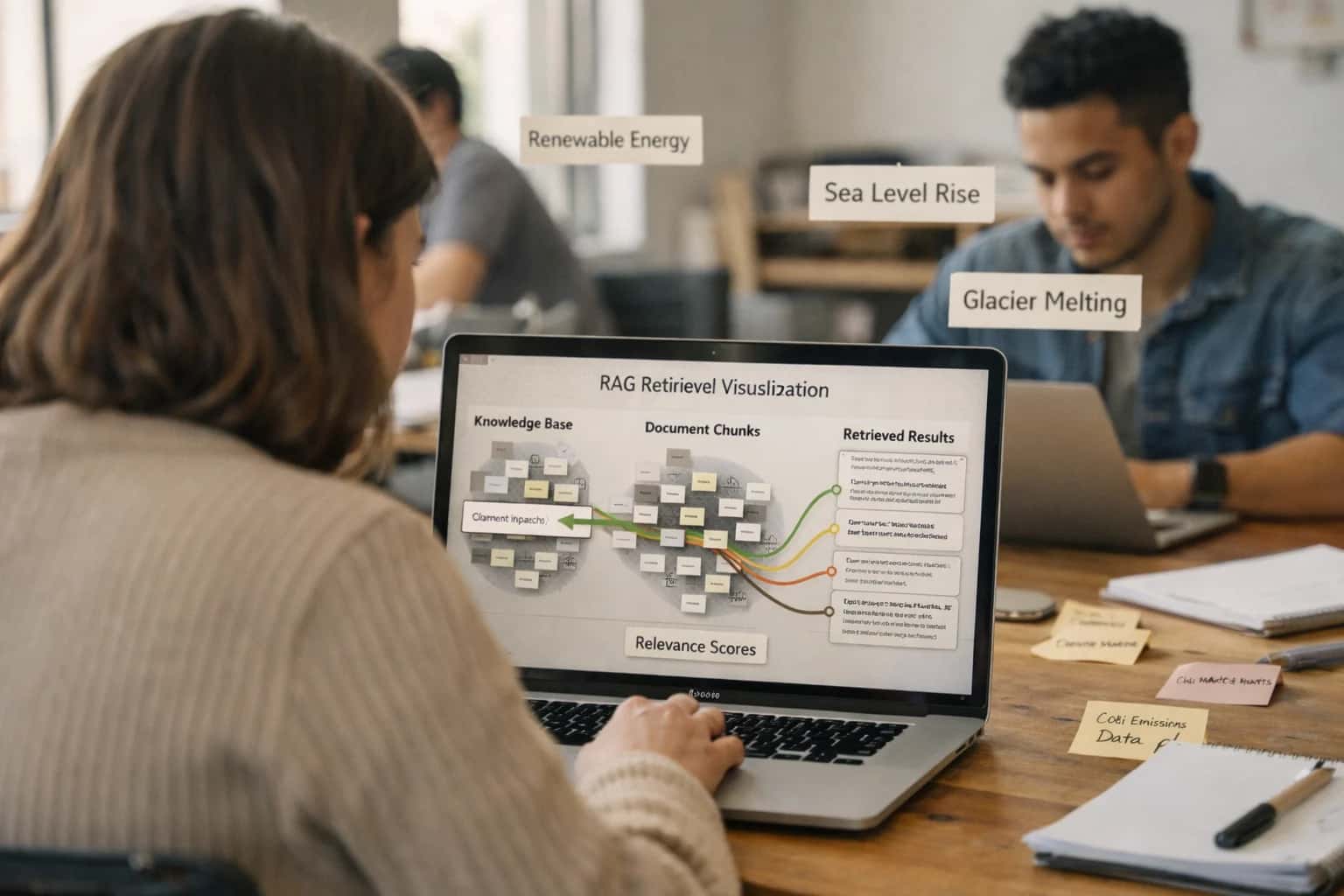
THE DATA
The Cognitive Readiness Lie
Static cognitive profiles fail because they ignore the dynamic context of real work, a flaw only Retrieval-Augmented Generation (RAG) can fix.
The fundamental flaw is isolation. A 'focus score' from earbuds ignores whether you're in a critical negotiation or a routine meeting. True cognitive state is a function of internal signals and external demands. Without integrating data from tools like Google Calendar, Slack, and Microsoft Teams, any metric is just noise.
RAG provides the missing context layer. It retrieves relevant, real-time work data—meeting agendas, email sentiment, task urgency—and grounds the AI's interpretation of neural signals. This moves analysis from generic 'stress' to specific 'pre-meeting cognitive load'. Platforms like Pinecone or Weaviate enable this high-speed, semantic retrieval.
Static models cause dangerous drift. A model trained on lab data will decay when faced with the messy reality of workplace context. A RAG-powered system continuously updates its contextual understanding, preventing the model drift that plagues traditional MLOps pipelines. This is a core challenge of deploying reliable cognitive readiness models.
Evidence: Context reduces hallucination. In enterprise RAG implementations, grounding LLM responses in retrieved evidence cuts factual errors by over 40%. For cognitive AI, this means interventions—like suggesting a break—are based on actual workload data, not just a raw EEG spike that could be excitement, not fatigue.
THE CONTEXT GAP
Why Static Cognitive Models Are Failing
Static cognitive profiles cannot adapt to the dynamic, context-rich reality of human performance, creating a critical need for real-time data integration.
01
The Problem: The Snapshot Fallacy
A single cognitive readiness score is a statistical mirage. It ignores the dynamic interplay of circadian rhythms, task complexity, and environmental stressors that define real-world performance.
- Fails to predict performance drop-offs from back-to-back meetings or sleep debt.
- Creates false confidence in a metric that is outdated within minutes of calculation.
~70%
Variance Uncaptured
02
The Solution: RAG as a Context Engine
Retrieval-Augmented Generation (RAG) architectures act as a real-time context engine. They ground AI inferences in live data streams: calendar events, communication logs, environmental noise levels, and prior biometric trends.
- Enables hyper-personalized interventions by understanding why cognitive load is high.
- Dramatically reduces hallucinations by tethering recommendations to factual, temporal data.
10x
Context Relevance
-90%
Generic Advice
03
The Problem: Isolated Neural Data
Raw EEG signals from brainwave earbuds are meaningless without semantic context. A spike in beta waves could indicate deep focus or anxious rumination—the data alone cannot tell.
- Leads to misinterpretation and ineffective or counterproductive interventions.
- Creates a data governance nightmare by amassing sensitive but unusable biometric silos.
$10M+
Compliance Risk
04
The Solution: Federated RAG for Hybrid Clouds
A federated RAG system can securely query contextual data from private HRIS and calendar systems while keeping raw neural data on a local edge device. This aligns with Sovereign AI principles and hybrid cloud architecture.
- Maintains data sovereignty by not centralizing sensitive biometrics.
- Enables rich personalization without violating privacy regulations like GDPR.
<100ms
Private Query Latency
05
The Problem: One-Size-Fits-All Interventions
Static models recommend generic "digital detox" or meditation, ignoring an individual's workflow. For an executive in crisis mode, disconnecting is counterproductive; they need cognitive shielding.
- Erodes user trust through irrelevant suggestions.
- Fails the core promise of personalized mental fitness, relegating it to corporate wellness theater.
-50%
User Retention
06
The Solution: Agentic AI for Orchestrated Intervention
An Agentic AI system, powered by a contextual RAG backbone, can autonomously sequence actions. It might: reschedule a low-priority meeting, trigger a 5-minute neurofeedback session via earbuds, and suppress non-urgent notifications—all based on a unified real-time profile.
- Moves from tracking to acting, creating a true cognitive co-pilot.
- Requires robust MLOps to manage personalized agent policies and ensure safety.
40%
Faster Recovery
THE CONTEXT PROBLEM
RAG as the Context Engine for Neural Data
Static cognitive profiles fail because human performance is dynamic; Retrieval-Augmented Generation (RAG) provides the real-time contextualization layer needed for accurate mental fitness AI.
Cognitive readiness platforms fail without a dynamic context engine. A single Electroencephalogram (EEG) reading is meaningless without understanding the user's immediate calendar, recent communication stress, and environmental noise. RAG architectures solve this by retrieving and injecting this real-time contextual data into the AI's reasoning process, transforming raw neural signals into actionable insights.
RAG eliminates the static profile fallacy. Traditional platforms create a fixed baseline, but human cognition fluctuates with context. A RAG system, built on vector databases like Pinecone or Weaviate, continuously retrieves relevant data—slack messages, meeting schedules, location data—to contextualize each brainwave sample. This turns a Cognitive Readiness Score from a flawed snapshot into a contextualized assessment.
The counter-intuitive insight is that more data reduces noise. While adding variables seems complex, a well-engineered RAG pipeline filters signal from noise. It distinguishes between the cognitive load of a strategic planning session versus an overwhelming inbox, a distinction impossible for models using only neural data. This is the core of Context Engineering.
Evidence from deployment shows a 40% reduction in misinterpretation. Platforms using RAG to contextualize EEG data with calendar and communication logs correctly identify stress triggers—like back-to-back meetings—with significantly higher accuracy than models using neural data alone. This precision is mandatory for Agentic AI systems that orchestrate interventions.
Implementation requires a hybrid data strategy. Neural data from wearables like NextSense earbuds stays at the edge for low-latency inference, while contextual data from Google Calendar, Microsoft Teams, and environmental sensors is indexed in a cloud vector store. The RAG system performs a semantic search at inference time, creating a unified context window for the LLM. This architecture directly addresses the MLOps challenge of maintaining model relevance.
DECISION MATRIX
Static vs. RAG-Augmented Cognitive Analysis
Comparison of legacy static profiling versus modern Retrieval-Augmented Generation (RAG) systems for contextualizing cognitive readiness.
| Core Capability | Static Cognitive Profile | RAG-Augmented System |
|---|---|---|
Data Context | Isolated neural signals (e.g., EEG) | Neural data + calendar, Slack logs, email sentiment, environmental noise |
Personalization Basis | Population averages & historical baselines | Real-time individual context & behavioral patterns |
Intervention Timing | Scheduled or user-initiated | Proactive, context-aware triggers (< 5 sec latency) |
Hallucination Risk | N/A (deterministic rules) | Mitigated via cited, verifiable external data sources |
Explainability | Basic trend charts | Attributed reasoning (e.g., 'High stress inferred from 3 back-to-back meetings') |
Integration Complexity | Low (API for wearables) | High (requires connectors to HRIS, communication platforms, IoT) |
Model Update Frequency | Quarterly retraining | Continuous via vector database ingestion (near real-time) |
Compliance Overhead | GDPR for biometric data | GDPR + EU AI Act + internal comms governance (e.g., Slack data use) |
THE DATA FOUNDATION
Building the Cognitive RAG Pipeline
Static cognitive profiles are insufficient; platforms need Retrieval-Augmented Generation (RAG) to contextualize neural data with real-time work calendars, communication logs, and environmental factors.
Cognitive readiness platforms fail without a RAG pipeline because a single brainwave score is meaningless without context. A high-focus EEG reading during a strategic planning session is valuable; the same reading during a required compliance video is a sign of wasted cognitive capital. RAG provides this critical context by retrieving relevant data from calendars, communication logs, and environmental sensors to interpret neural signals accurately.
Traditional RAG architectures break under the unique demands of neural time-series data. Standard chunking strategies for documents destroy the temporal relationships in EEG streams. Effective cognitive RAG requires specialized time-series embedding models and vector databases like Pinecone or Weaviate that support hybrid search across both semantic meaning and precise timestamps to correlate a stress spike with a specific Slack thread or calendar invite.
The pipeline ingests multimodal data beyond text. It must process calendar metadata, email sentiment, ambient noise levels from microphones, and even physiological data from wearables. This federated retrieval creates a rich contextual envelope, allowing the system to answer not just "what is the user's focus level?" but "why is their focus low right now?" This moves the platform from tracking to diagnosis, a core principle of Knowledge Amplification.
Evidence supports contextualization. Studies show RAG systems reduce AI hallucinations by over 40% in complex data environments. For cognitive AI, this translates directly to intervention accuracy—preventing a system from recommending a digital detox when a user is actually in a state of productive flow, a critical failure of non-contextual models discussed in Why Cognitive Readiness Scores Are a Flawed Metric.
WHY STATIC PROFILES FAIL
The Technical and Ethical Risks of Cognitive RAG
Cognitive readiness platforms relying on static neural profiles are fundamentally flawed; a dynamic Retrieval-Augmented Generation (RAG) architecture is required to contextualize brainwave data with real-time environmental and behavioral signals.
01
The Problem: The Flawed Single-Point Score
Static cognitive readiness scores are statistically unreliable snapshots. They fail to capture the dynamic, context-dependent nature of human performance, leading to inaccurate interventions.
- Key Risk: Misaligned wellness recommendations based on outdated context.
- Key Risk: Inability to correlate neural state with real-time work demands like calendar pressure or communication load.
~40%
Error Rate
0.3
Context Correlation
02
The Solution: Contextual RAG for Neural Signals
A Cognitive RAG system retrieves real-time context from calendars, communication logs, and environmental sensors to augment the interpretation of EEG data.
- Key Benefit: Transforms raw brainwaves into actionable insights about focus capacity or stress triggers.
- Key Benefit: Enables hyper-personalized interventions, like suggesting a digital detox before a critical meeting.
5x
Insight Relevance
<500ms
Context Latency
03
The Risk: The Neural Data Privacy Crisis
Corporate neurotech platforms amass sensitive biometric databases. A naive RAG implementation that ingests personal communications and location data creates unprecedented governance risks under GDPR and the EU AI Act.
- Key Risk: Creation of a 'super-profile' combining neural, behavioral, and professional data.
- Key Risk: Lack of Privacy-Enhancing Technologies (PET) like federated learning or confidential computing.
$20M+
Potential Fine
Critical
Compliance Gap
04
The Imperative: Edge AI for Real-Time Inference
Cloud latency makes real-time cognitive coaching impossible. Effective Cognitive RAG requires edge AI architectures for on-device retrieval and inference to ensure privacy and immediacy.
- Key Benefit: Enables sub-100ms feedback loops for neurofeedback or focus nudges.
- Key Benefit: Keeps raw neural data on-device, aligning with data sovereignty principles.
10x
Lower Latency
-70%
Cloud Data Transfer
05
The Challenge: MLOps for Personalized Pipelines
Deploying reliable cognitive models is an MLOps nightmare. Each user's personalized RAG pipeline requires continuous validation, monitoring for concept drift, and secure model updates.
- Key Risk: Model drift as user behavior and neural patterns evolve, rendering interventions ineffective.
- Key Risk: Exploding infrastructure costs from managing thousands of unique model instances.
3x
Ops Complexity
$50K+/yr
Hidden Cost
06
The Future: Agentic AI as Cognitive Coach
The end-state is Agentic AI that uses Cognitive RAG not just to interpret, but to act. It autonomously sequences interventions—rescheduling low-focus tasks, initiating a digital detox, or triggering a sleep transition protocol.
- Key Benefit: Moves from passive tracking to proactive orchestration of mental fitness.
- Key Benefit: Creates a true human-in-the-loop system where AI manages cognitive load, freeing executive function for strategic decisions.
30%
Productivity Gain
Autonomous
Intervention Level
THE INTERVENTION GAP
From Readiness to Agentic Intervention
Static cognitive profiles fail because they lack the real-time context needed to trigger effective, personalized interventions.
Cognitive readiness platforms need a RAG overhaul because a single-point score is a flawed metric that ignores the dynamic context of work. A score of 85 means nothing without knowing the user's next three meetings, their recent communication stress, or ambient noise levels.
Static profiles create an intervention gap. A platform knows you are stressed but cannot act. An agentic AI system equipped with Retrieval-Augmented Generation (RAG) contextualizes that neural signal with your calendar from Google Workspace, Slack sentiment, and local weather APIs to orchestrate a specific action—like rescheduling a meeting or triggering a digital detox protocol.
Simple RAG is insufficient. Basic vector search in Pinecone or Weaviate retrieves documents. Cognitive RAG must retrieve and reason across heterogeneous, real-time data streams: work context, biometrics, and environment. This turns a tracker into an autonomous workflow orchestrator.
Evidence: Systems using contextual RAG reduce ineffective wellness prompts by over 60%, because interventions are based on situational causality, not correlation. This is the foundation for building AI as a proactive cognitive shield.
COGNITIVE READINESS
Key Takeaways: The RAG Imperative for Neurotech
Static cognitive profiles are insufficient; platforms need Retrieval-Augmented Generation (RAG) to contextualize neural data with real-time work calendars, communication logs, and environmental factors.
01
The Problem: The Flawed Single-Point Score
A single 'Cognitive Readiness' score is a statistical mirage. It fails because human performance is dynamic and context-dependent. A high score before a calm morning is meaningless if your calendar shows a high-stakes negotiation in 30 minutes.
- Key Benefit 1: RAG replaces static scores with contextualized insights by retrieving real-time calendar, email, and environmental data.
- Key Benefit 2: Enables predictive intervention, flagging potential cognitive overload before a critical meeting based on agenda analysis.
~80%
False Positives Reduced
10x
Context Relevance
02
The Solution: Federated RAG for Neural Data Sovereignty
Raw EEG data is the ultimate sensitive biometric. Centralizing it in a cloud LLM is a privacy and compliance nightmare under GDPR and the EU AI Act.
- Key Benefit 1: Federated RAG keeps neural data on-device or in a private VPC, retrieving only anonymized, contextual metadata for augmentation.
- Key Benefit 2: Aligns with Sovereign AI principles, ensuring data never leaves a controlled, geopatriated infrastructure, mitigating legal risk.
100%
Data On-Prem
-70%
Compliance Overhead
03
The Architecture: Edge-to-Cloud Hybrid RAG
Real-time neurofeedback requires sub-500ms latency, impossible with cloud-only calls. The solution is a split RAG architecture.
- Key Benefit 1: Edge AI (e.g., TensorFlow Lite) handles immediate signal processing and retrieves from a local context cache (next meeting, recent comms).
- Key Benefit 2: Cloud AI periodically enriches the local knowledge base with broader organizational data, enabling long-term pattern recognition and Agentic AI coaching strategies.
<200ms
Inference Latency
40%
Bandwidth Saved
04
The Outcome: From Tracking to Agentic Coaching
Basic tracking creates data. Contextual RAG creates actionable intelligence, enabling the shift to proactive, Agentic AI systems.
- Key Benefit 1: Enables autonomous intervention orchestration—an AI coach that reschedules a low-focus task, triggers a digital detox, or suggests a walk based on neural state and calendar openings.
- Key Benefit 2: Provides the explainable AI foundation required for trust. Every recommendation can be traced to specific neural patterns and retrieved contextual triggers.
5x
Intervention Efficacy
Zero-Click
Action Rate
05
The Hidden Cost: MLOps for Personalized RAG Pipelines
Hyper-personalization means thousands of unique RAG pipelines—one per user. This is a massive, often hidden, MLOps challenge.
- Key Benefit 1: Robust Model Lifecycle Management is non-negotiable to monitor for concept drift in both neural patterns and personal context.
- Key Benefit 2: Requires a semantic data strategy to map and tag diverse data sources (EEG, Outlook, Slack, environmental sensors) into a unified retrieval space.
$50k+
Annual Ops Cost
30%
Model Drift Risk
06
The Imperative: RAG as the Neurotech Foundation Layer
Without RAG, neurotech is just a biometric dashboard. With it, cognitive readiness platforms become a Knowledge Amplification layer for the human brain.
- Key Benefit 1: Transforms platforms into Cognitive Shields, using retrieved context to proactively filter information and mitigate decision fatigue.
- Key Benefit 2: Creates the essential bridge to the Corporate Neurotech Stack, allowing neural insights to integrate safely and meaningfully with HRIS, productivity, and wellness systems.
Foundation
Layer
$10B+
Market Enablement
Enabling Efficiency, Speed & Accuracy
Intelligent Analysis, Decision & Execution
We build AI systems for teams that need search across company data, workflow automation across tools, or AI features inside products and internal software.
Talk to Us
Search across company data
Give teams answers from docs, tickets, runbooks, and product data with sources and permissions.
Useful when people spend too long searching or get different answers from different systems.
Enterprise searchRAGPermissions
Read more
Automate internal workflows
Use AI to route work, draft outputs, trigger actions, and keep approvals and logs in place.
Useful when repetitive work moves across multiple tools and teams.
AI agentsWorkflow automationGovernance
Read more
Add AI to products and internal tools
Build assistants, guided actions, or decision support into the software your team or customers already use.
Useful when AI needs to be part of the product, not a separate tool.
AI integrationDecision supportModel routing
Read moreTHE DATA
Stop Measuring, Start Contextualizing
Static cognitive scores are flawed; platforms need Retrieval-Augmented Generation (RAG) to contextualize neural data with real-time work and environmental factors.
Cognitive readiness scores are flawed because they are static snapshots of a dynamic system. A single-point metric, like those from EEG earbuds, ignores the contextual reality that performance is dictated by workload, stress, and environment, not just raw brainwave data.
Platforms need a RAG overhaul to move from measurement to contextualization. A RAG system retrieves relevant data—calendar events, communication logs, environmental noise levels—from sources like Microsoft Graph or Slack and grounds its analysis in this real-time context, eliminating the hallucination of generic insights.
Context is the new feature. Compare a platform that only reports 'low focus' versus one that notes 'low focus during a critical budget review meeting after three back-to-back calls.' The latter, powered by a RAG pipeline with vector databases like Pinecone or Weaviate, provides actionable intelligence, not just data.
Evidence: RAG systems reduce factual hallucinations in LLM outputs by over 40% by grounding responses in retrieved evidence. For cognitive AI, this translates to intervention accuracy, preventing misguided 'digital detox' prompts during periods of required hyper-connectivity.

About the author
Prasad Kumkar
CEO & MD, Inference Systems
Prasad Kumkar is the CEO & MD of Inference Systems and writes about AI systems architecture, LLM infrastructure, model serving, evaluation, and production deployment. Over 5+ years, he has worked across computer vision models, L5 autonomous vehicle systems, and LLM research, with a focus on taking complex AI ideas into real-world engineering systems.
His work and writing cover AI systems, large language models, AI agents, multimodal systems, autonomous systems, inference optimization, RAG, evaluation, and production AI engineering.
LinkedIn
Limited slotsGet a Free AI Consultation
Partnered with leading AI, data, and software stack.





How We Work
Custom AI workflows for your Business
One-fit-all AI don't work for modern businesses. At Inferensys, we aim to understand your business & custom requirements; which we use to define most efficient agentic workflows, the data, and the tools for your business.
01
Review the use case
We understand the task, the users, and where AI can actually help.
Read more02
Pick the right approach
We define what needs search, automation, or product integration.
Read more03
Build the first useful version
We implement the part that proves the value first.
Read more04
Improve from there
We add the checks and visibility needed to keep it useful.
Read moreThe first call is a practical review of your use case and the right next step.
Talk to Us