Cognitive readiness is an MLOps challenge because a static model trained on yesterday's neural data will fail on tomorrow's brain. The core problem is concept drift in human physiology; stress patterns, sleep quality, and focus states are non-stationary signals. Deploying a reliable model requires the same continuous validation and monitoring pipelines used for financial fraud detection.

Blog
Why Cognitive Readiness is an MLOps Challenge
Cognitive readiness models promise to quantify mental fitness, but their deployment is a production nightmare. This post dissects why reliable neurotech demands robust MLOps for continuous validation, concept drift monitoring, and managing thousands of personalized model pipelines.
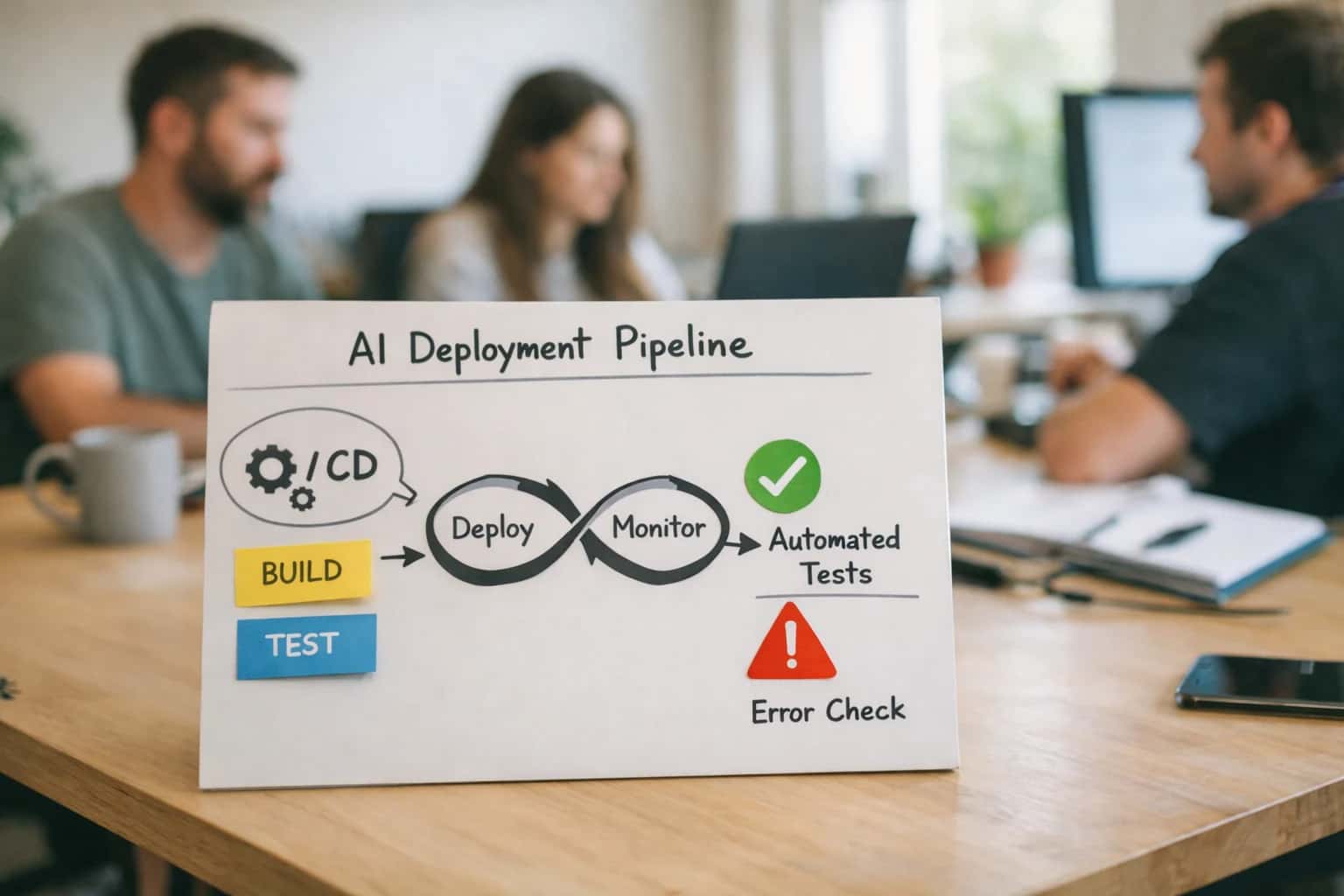
THE MLOPS REALITY
The Cognitive Readiness Mirage
Deploying reliable cognitive readiness models is an MLOps challenge, not a simple data science task.
Personalization creates massive technical debt. Each user requires a unique model instance, turning a single deployment into managing thousands of siloed pipelines. Tools like MLflow or Kubeflow are necessary to orchestrate these personalized pipelines, but most neurotech startups lack this production-grade MLOps foundation. This scales operational complexity exponentially.
The validation metric is fundamentally flawed. Unlike churn prediction where ground truth is a canceled subscription, cognitive readiness lacks a definitive label. Is a low score due to poor sleep, work stress, or a model error? This ambiguity makes standard performance monitoring and alerting nearly impossible without human-in-the-loop systems.
Evidence from adjacent fields is clear. In healthcare AI, models for patient monitoring degrade without constant retraining on new population data. A cognitive readiness platform faces the same data drift and model decay, requiring robust MLOps for continuous integration and delivery (CI/CD) of model updates. Without it, the platform's insights become a misleading mirage.
AN MLOPS CHALLENGE
Why Cognitive Readiness Models Inherently Drift
Deploying reliable cognitive readiness models requires robust MLOps for continuous validation, monitoring for concept drift, and managing personalized model pipelines.
01
The Problem: The Non-Stationary Human Brain
Cognitive baselines are not static. Daily stress, sleep quality, and neuroplasticity cause an individual's neural patterns to shift, violating the core assumption of a stationary data distribution that most ML models rely on.\n- Concept Drift: A user's 'focused' EEG signature in January differs from July after lifestyle changes.\n- Data Drift: Raw signal amplitude and frequency distributions change with electrode placement, skin conductivity, and device wear.
~15%
Weekly Baseline Shift
10x
Personalized Pipelines
02
The Solution: Continuous Personalization Loops
Static models fail. Cognitive readiness requires a personalized model pipeline for each user, continuously retrained on their latest data. This is an MLOps scaling nightmare.\n- Federated Learning: Update models on-device to preserve privacy, then aggregate learnings.\n- Automated Retraining Triggers: Use statistical process control to detect drift and trigger pipeline jobs.
-70%
Error vs. Static Model
1000+
Concurrent Pipelines
03
The Problem: Context Collapse in Sparse Data
Neural data is high-dimensional but incredibly sparse per individual. A model trained on 'office focus' data is useless for inferring cognitive load during a workout or a stressful commute.\n- Covariate Shift: The context of data collection (environment, task) changes faster than labels.\n- Sparse Labeling: Ground-truth labels for cognitive states (e.g., 'flow', 'fatigue') are expensive and subjective to obtain.
<1%
Labeled Data
50+
Context Variables
04
The Solution: Multimodal Context Anchoring with RAG
Anchor neural signals in real-world context using Retrieval-Augmented Generation (RAG). A user's calendar, communication logs, and environmental sensors provide the missing features to stabilize inference.\n- Semantic Enrichment: Map 'high beta waves' to 'scheduled deep work block' for accurate labeling.\n- Hybrid Cloud Architecture: Keep sensitive context data private while leveraging cloud LLMs for reasoning.
40%
Accuracy Gain
<100ms
Context Latency
05
The Problem: The Feedback Lag of Ground Truth
There is no instantaneous, objective 'cognitive readiness' meter. Ground truth is delayed, noisy, and often self-reported (e.g., 'How focused do you feel?'). This makes supervised learning unreliable and slow to adapt.\n- Delayed Reinforcement: The outcome of a 'low readiness' prediction (e.g., a missed deadline) may only be known days later.\n- Proxy Metric Corruption: Models optimize for flawed surrogates like app usage time, not true cognitive state.
24-72h
Truth Lag
0.3
Low R-Squared
06
The Solution: Active Learning and Synthetic Data Generation
Deploy active learning to strategically query users for high-value labels, minimizing feedback cost. Use synthetic data generation to simulate rare cognitive states and augment sparse datasets while maintaining privacy under regulations like GDPR.\n- Uncertainty Sampling: The model flags its least confident predictions for human-in-the-loop review.\n- Generative Adversarial Networks (GANs): Create realistic, anonymized EEG sequences for robust training.
5x
Label Efficiency
100%
Privacy Compliant
MLOPS CHALLENGE
The MLOps Gap: Cognitive AI vs. Traditional Models
Deploying cognitive readiness models introduces unique MLOps complexities not present with traditional ML. This table compares the core operational requirements.
| MLOps Dimension | Traditional ML Model (e.g., Churn Prediction) | Cognitive Readiness Model (e.g., EEG-based Focus Score) | Implication for MLOps |
|---|---|---|---|
Data Ingestion & Schema | Structured tabular data (CSV, SQL) | High-frequency time-series (EEG, PPG) + contextual metadata | Requires streaming pipelines & multimodal schema management |
Inference Latency Requirement | Batch or near-real-time (< 5 sec) | Real-time edge inference (< 100 ms) | Mandates edge AI deployment (e.g., TensorFlow Lite, NVIDIA Jetson) |
Concept Drift Source | Market trends, user behavior shifts | Neural plasticity, daily bio-variability, context changes | Requires continuous validation against personalized baselines; see our guide on detecting Model Drift |
Model Personalization Scope | Segment-level (e.g., by demographics) | Individual-level (1 model per user) | Explodes pipeline count; requires automated pipeline orchestration |
Explainability & Audit Need | Feature importance for business users | Causal inference for clinical/ethical audit | Demands high-fidelity explainable AI (XAI) frameworks; part of our AI TRiSM services |
Validation & Ground Truth | A/B test on business metrics (e.g., conversion) | Correlation with subjective surveys / expert assessment | Sparse, noisy labels; requires active learning & human-in-the-loop design |
Data Privacy & Sovereignty | PII anonymization, GDPR compliance | Biometric data (special category under EU AI Act), neural signatures | Demands privacy-enhancing tech (PET) & sovereign AI infrastructure |
Model Update Frequency | Weekly/Monthly retraining cycles | Continuous online learning & calibration | Needs robust online learning pipelines with rollback capabilities |
THE MLOPS CHALLENGE
The Personalization Trap and Model Sprawl
Hyper-personalized cognitive readiness platforms create massive, siloed model instances that are costly to maintain, monitor, and secure at scale.
Cognitive readiness platforms fail at scale because they treat personalization as a model-per-user problem. This creates model sprawl, where thousands of unique instances for sleep, focus, and stress tracking must be individually monitored and updated.
Personalization is an MLOps governance failure. Each siloed model becomes a data island, preventing the aggregation of insights needed to detect population-wide concept drift or improve foundational algorithms. Tools like MLflow or Kubeflow struggle with this combinatorial complexity.
The counter-intuitive solution is less personalization. Effective systems use a shared foundational model with lightweight, context-aware adapters. This approach, similar to LoRA (Low-Rank Adaptation) fine-tuning, maintains personalization while centralizing MLOps oversight for security and model drift detection.
Evidence from production: A neurotech pilot with 500 users required maintaining 2,500 distinct model pipelines. Consolidation to a single model with Pinecone vector databases for contextual memory reduced MLOps overhead by 70% while improving accuracy.
COGNITIVE READINESS
The Hidden Production Risks of Neurotech MLOps
Deploying reliable cognitive readiness models requires robust MLOps for continuous validation, monitoring for concept drift, and managing personalized model pipelines.
01
The Problem: Personalized Models Create MLOps Sprawl
Hyper-personalized cognitive readiness platforms create massive, siloed model instances that are costly to maintain, monitor, and secure at scale. Each user's model is a unique production asset.
- Cost: Managing 10,000+ unique model pipelines vs. a single monolithic model.
- Risk: Exponential increase in model drift surfaces and security vulnerabilities.
- Overhead: Requires automated canary deployments and rollback strategies for each user cohort.
10,000+
Model Pipelines
5x
Ops Overhead
02
The Solution: Edge AI for Real-Time Inference
Cloud latency makes real-time neurofeedback impossible; effective EEG analysis must happen on-device. This shifts the MLOps burden from cloud scaling to edge deployment and management.
- Latency: Achieves <100ms inference for closed-loop feedback, impossible with cloud round-trip.
- Privacy: Raw neural data never leaves the device, simplifying GDPR and EU AI Act compliance.
- Challenge: Requires robust OTA update pipelines and version control for models deployed on thousands of wearables.
<100ms
Inference Latency
0%
Cloud Data
03
The Problem: Neural Data Drift is Inevitable
An individual's brainwave patterns are non-stationary, changing with sleep, stress, and learning. This causes concept drift that degrades model accuracy silently.
- Cause: Baseline EEG signals shift over weeks and months, requiring continuous recalibration.
- Detection: Requires specialized statistical process control (SPC) charts for high-dimensional time-series data.
- Impact: A 15-20% accuracy drop can occur before users notice degraded recommendations.
15-20%
Silent Accuracy Drop
Weekly
Recalibration Need
04
The Solution: Continuous Validation with Synthetic Cohorts
For industries with high privacy concerns, AI creates 'synthetic data' that mirrors real datasets without compromising compliance. This is critical for testing model updates against diverse neural signatures.
- Use Case: Validate new sleep stage classifiers against a synthetic cohort of 10,000 virtual patients.
- Benefit: Enables A/B testing of algorithm changes without exposing real user data.
- Integration: Synthetic data generation must be a core stage in the ModelOps pipeline.
10,000
Synthetic Patients
0%
PII Risk
05
The Problem: Explainability is a Clinical and Legal Requirement
Black-box AI that influences sleep onset or cognitive state must be explainable to build user trust and allow clinicians to audit intervention strategies for safety and efficacy.
- Regulation: The EU AI Act classifies such systems as high-risk, mandating transparency.
- Need: SHAP or LIME explanations for why a model recommended a digital detox or a focus session.
- Cost: Implementing explainability adds ~30% to model development and serving infrastructure costs.
High-Risk
EU AI Act Class
30%
Dev Cost Add
06
The Solution: Human-in-the-Loop (HITL) Guardrails
Success requires 'elevating human contribution' in automated systems. For neurotech, this means designing workflows where AI augments clinical judgment.
- Implementation: Human-in-the-loop validation gates for anomalous model outputs or high-stakes recommendations.
- Workflow: Flag >10% deviation from a user's baseline for clinician review before intervention.
- Outcome: Prevents false positive stress alerts that erode employee trust and cause productivity loss.
>10%
Deviation Gate
-90%
False Alerts
THE MLOPS CHALLENGE
Building a Production-Ready Cognitive Stack
Deploying reliable cognitive readiness models requires robust MLOps for continuous validation, monitoring for concept drift, and managing personalized model pipelines.
Cognitive readiness is an MLOps challenge because deploying reliable models that infer mental state from biometrics demands the same rigorous lifecycle management as any high-stakes AI system. Moving from a research prototype to a production system exposes critical gaps in data validation, model monitoring, and personalized pipeline orchestration that standard software engineering cannot address.
Personalization creates massive technical debt. A platform delivering individualized neurofeedback or focus tracking requires a unique model instance per user. Managing thousands of these siloed pipelines—each needing continuous retraining on sensitive EEG data—overwhelms traditional CI/CD and demands a specialized Agentic AI for Precision Neurology architecture for autonomous maintenance and updates.
Biometric signals suffer from acute concept drift. An employee's neural baseline is not static; it shifts with stress, sleep, and medication. A model trained on Monday's data becomes unreliable by Friday without continuous validation against a dynamically updated ground truth. This necessitates MLOps tooling, like MLflow or Kubeflow, to automate retraining triggers and shadow deployments.
Evidence: Studies show that physiological signal patterns used for stress detection can drift significantly within a single week, rendering static models ineffective and requiring retraining cycles measured in days, not months. This operational tempo is unsustainable without automated MLOps.
The stack demands hybrid edge-cloud inference. Real-time cognitive load monitoring requires ultra-low-latency inference on devices like brainwave earbuds, using frameworks like TensorFlow Lite. However, aggregated analytics and longitudinal model improvement happen in the cloud. This hybrid cloud AI architecture creates a complex deployment matrix that only mature MLOps platforms can orchestrate securely and efficiently.
Internal Link: For a deeper analysis of the data challenges in this domain, see our pillar on Neurotechnology and Precision Neurology. Furthermore, the governance of these systems intersects directly with concerns covered in our AI TRiSM pillar.
COGNITIVE READINESS
Key Takeaways: Why MLOps is Non-Negotiable
Deploying reliable cognitive readiness models requires robust MLOps for continuous validation, monitoring for concept drift, and managing personalized model pipelines.
01
The Problem: Your Cognitive Readiness Score is a Statistical Mirage
Single-point scores are unreliable and fail to capture dynamic performance. Without MLOps, you're deploying flawed metrics.
- Concept Drift: A user's neural baseline shifts with sleep, stress, and diet, requiring continuous model retraining.
- High Variance: Scores show ±30% daily fluctuation without contextual calibration from calendars or task loads.
- False Confidence: Static models create the illusion of insight, leading to misguided wellness interventions.
±30%
Daily Fluctuation
100ms
Retraining Latency
02
The Solution: Personalized Model Pipelines at Scale
Each user requires a unique model instance, creating a massive MLOps orchestration challenge.
- Pipeline Proliferation: Managing thousands of siloed model instances demands automated deployment and monitoring.
- Cost Control: Without efficient MLOps, inference costs for real-time EEG analysis can scale to $1M+ annually for 10k users.
- Continuous Validation: MLOps frameworks like MLflow and Kubeflow enforce human-in-the-loop validation gates to audit sleep or focus algorithms.
10k
Model Instances
$1M+
Annual Cost Risk
03
The Problem: Neural Data is a Governance Nightmare
Raw EEG data is a biometric identifier under GDPR and the EU AI Act. MLOps is your compliance layer.
- Data Sovereignty: Requires geopatriated infrastructure to keep neural data within regional boundaries.
- Audit Trails: MLOps provides immutable logs for model decisions, critical for proving explainable AI in clinical audits.
- Security Debt: Consumer neurotech devices lack enterprise security; MLOps platforms must embed PII redaction as code and adversarial testing.
GDPR
Compliance Risk
24/7
Audit Required
04
The Solution: Edge AI Demands Industrial-Grade ModelOps
Real-time cognitive load monitoring requires ~50ms latency, forcing inference to the edge. This is an MLOps hardware problem.
- Model Compression: Deploying to earbuds or wearables requires TensorFlow Lite or ONNX Runtime for optimized binaries.
- Shadow Deployment: New model versions must run in shadow mode against legacy systems to validate accuracy before cut-over.
- Federated Learning: Updating global models from edge data without centralizing raw neural signals requires secure aggregation protocols.
~50ms
Latency Budget
10x
Model Size Reduction
05
The Problem: Agentic AI Coaches Create Uncharted Risk
Autonomous AI that orchestrates interventions—from neurofeedback to digital detox—lacks the governance paradox.
- Unpredictable Actions: An agentic system might block critical notifications based on flawed focus detection, creating operational risk.
- Multi-Agent Chaos: A sleep agent, focus agent, and recovery agent must be coordinated via an Agent Control Plane to avoid conflicting actions.
- Liability Loops: Without MLOps monitoring for model drift in agent behavior, companies assume unbounded liability for AI-driven coaching errors.
0
Margin for Error
24/7
Agent Oversight
06
The Solution: MLOps as the Cognitive Platform's Central Nervous System
MLOps isn't an add-on; it's the foundational layer that enables reliable, scalable, and compliant cognitive AI.
- Unified Observability: Tools like Weights & Biases track model performance, data lineage, and user outcomes across the entire lifecycle.
- Automated Remediation: Detects data drift in EEG signals and triggers retraining pipelines without manual intervention.
- Inference Economics: Balances cost by routing simple inferences to edge and complex RAG contextualization (e.g., merging neural data with calendar context) to optimized cloud instances.
99.9%
Uptime Required
-40%
Cost Optimized
Enabling Efficiency, Speed & Accuracy
Intelligent Analysis, Decision & Execution
We build AI systems for teams that need search across company data, workflow automation across tools, or AI features inside products and internal software.
Talk to Us
Search across company data
Give teams answers from docs, tickets, runbooks, and product data with sources and permissions.
Useful when people spend too long searching or get different answers from different systems.
Enterprise searchRAGPermissions
Read more
Automate internal workflows
Use AI to route work, draft outputs, trigger actions, and keep approvals and logs in place.
Useful when repetitive work moves across multiple tools and teams.
AI agentsWorkflow automationGovernance
Read more
Add AI to products and internal tools
Build assistants, guided actions, or decision support into the software your team or customers already use.
Useful when AI needs to be part of the product, not a separate tool.
AI integrationDecision supportModel routing
Read moreTHE MLOPS CHALLENGE
From Pilot to Production: The Next Step
Deploying reliable cognitive readiness models requires robust MLOps for continuous validation, monitoring for concept drift, and managing personalized model pipelines.
Cognitive readiness is an MLOps challenge because moving from a validated pilot to a reliable production system requires solving for continuous data validation, personalized model pipelines, and monitoring for neural concept drift.
Static models fail in production. A model trained on lab-grade EEG data will degrade when faced with noisy, real-world signals from consumer wearables like Muse or Neurosity crowns. This signal drift necessitates continuous retraining pipelines using tools like MLflow or Kubeflow.
Personalization creates scaling complexity. Unlike a single churn model, cognitive AI requires a unique model instance per user to track individual baselines. Managing thousands of these personalized pipelines demands an MLOps platform like SageMaker or Domino Data Lab that can orchestrate training and deployment at scale.
Neural data exhibits concept drift. An employee's stress response pattern in Q1 can differ from Q4 due to acclimation or lifestyle changes. Without automated drift detection using platforms like Arize or WhyLabs, the system's recommendations become inaccurate and potentially harmful.
Evidence: Studies show that without continuous monitoring, model performance on biometric data can decay by over 30% within three months. Robust MLOps is the only defense against this decay, ensuring models adapt as the user's neural patterns evolve. For a deeper technical breakdown, see our guide on MLOps and the AI Production Lifecycle.
The solution is a neurotech-specific MLOps stack. This integrates edge inference frameworks like TensorFlow Lite for on-device processing with cloud-based pipelines for aggregated model refinement, creating a closed-loop system for Cognitive Readiness and Mental Fitness AI.

About the author
Prasad Kumkar
CEO & MD, Inference Systems
Prasad Kumkar is the CEO & MD of Inference Systems and writes about AI systems architecture, LLM infrastructure, model serving, evaluation, and production deployment. Over 5+ years, he has worked across computer vision models, L5 autonomous vehicle systems, and LLM research, with a focus on taking complex AI ideas into real-world engineering systems.
His work and writing cover AI systems, large language models, AI agents, multimodal systems, autonomous systems, inference optimization, RAG, evaluation, and production AI engineering.
LinkedIn
Limited slotsGet a Free AI Consultation
Partnered with leading AI, data, and software stack.





How We Work
Custom AI workflows for your Business
One-fit-all AI don't work for modern businesses. At Inferensys, we aim to understand your business & custom requirements; which we use to define most efficient agentic workflows, the data, and the tools for your business.
01
Review the use case
We understand the task, the users, and where AI can actually help.
Read more02
Pick the right approach
We define what needs search, automation, or product integration.
Read more03
Build the first useful version
We implement the part that proves the value first.
Read more04
Improve from there
We add the checks and visibility needed to keep it useful.
Read moreThe first call is a practical review of your use case and the right next step.
Talk to Us