
Blog
Cognitive Readiness and Mental Fitness AI
Cognitive Readiness and Mental Fitness AI
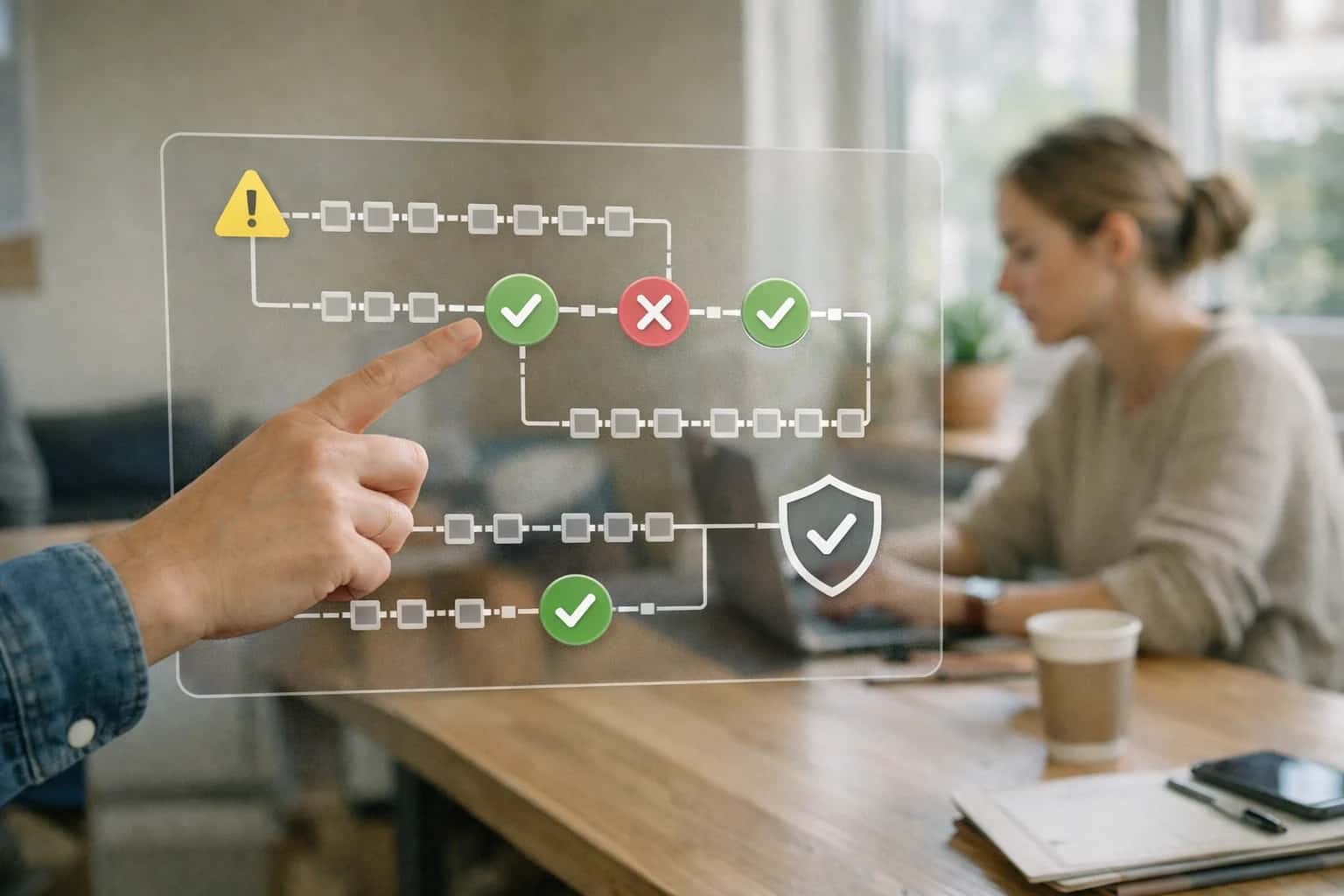
'Mental Fitness' is an emerging wellness revolution for 2026. This pillar covers neurotech that tracks cognitive performance and facilitates sleep transitions. Sub-topic clusters include earbuds that translate brainwaves into 'Cognitive Readiness' scores, auditory feedback for sleep initiation, and apps that reward 'Digital Detox' and time offline.
Why Cognitive Readiness Scores Are a Flawed Metric
Single-point cognitive readiness scores are statistically unreliable and fail to capture the dynamic, context-dependent nature of human performance.
Passive Brainwave Monitoring Will Disrupt Corporate Wellness
Continuous, passive EEG monitoring via wearables provides a more accurate and less intrusive foundation for corporate mental fitness programs than self-reported surveys.
The Hidden Cost of Quantified Cognitive Performance
The relentless quantification of mental performance can paradoxically increase cognitive load and anxiety, undermining the very metrics it seeks to improve.
Why Sleep Transition Algorithms Are an Edge AI Problem
Detecting and influencing the transition from wakefulness to sleep requires ultra-low-latency inference, making edge AI architectures non-negotiable for effective neurotech.
When AI Becomes Your Cognitive Coach
Agentic AI systems are evolving from passive trackers to proactive coaches that orchestrate interventions across digital detox, focus, and recovery based on real-time neural signals.
The Neural Data Privacy Crisis in Workplace Wellness
Corporate neurotech platforms are amassing sensitive biometric databases, creating unprecedented data governance and privacy risks under regulations like GDPR and the EU AI Act.
Why Digital Detox Apps Fail Modern Executives
Most digital detox apps rely on simplistic gamification, ignoring the complex behavioral economics and context-switching demands of executive work.
Brain-Computer Interfaces for Mainstream Productivity
Consumer-grade BCIs are shifting from medical rehabilitation to productivity enhancement, enabling direct neural control over workflows and information filtering.
Why Brainwave Earbuds Are a Data Governance Nightmare
Consumer neurotech devices collect raw neural data with unclear ownership and security protocols, posing a severe corporate data governance challenge.
The Cost of Real-Time Cognitive Load Monitoring for Teams
While real-time team cognitive load monitoring promises efficiency gains, it introduces significant technical debt around model drift, data synchronization, and ethical oversight.
Why Agentic AI Will Redefine Mental Fitness Interventions
Agentic AI can autonomously sequence and personalize cognitive interventions—from neurofeedback to task scheduling—creating truly adaptive mental fitness regimens.
The Future of Neurofeedback: Autonomous Systems for Peak Performance
Next-generation neurofeedback uses reinforcement learning to autonomously adjust stimuli in real-time, optimizing for individual peak performance states without human intervention.
Why Your Focus-Tracking AI is Probably Wrong
Most focus-tracking AI relies on proxy metrics like app usage or eye gaze, failing to correlate with actual neural engagement and leading to flawed productivity insights.
The Hidden Cost of Personalization in Cognitive Platforms
Hyper-personalized cognitive readiness platforms create massive, siloed model instances that are costly to maintain, monitor, and secure at scale.
Why Sleep Initiation Algorithms Demand Explainable AI
Black-box AI that influences sleep onset must be explainable to build user trust and allow clinicians to audit intervention strategies for safety and efficacy.
The Rise of the Corporate Neurotech Stack
Enterprises are building integrated neurotech stacks that combine EEG wearables, agentic AI coaches, and HRIS systems, creating a new layer of people analytics infrastructure.
Why Cognitive Readiness is an MLOps Challenge
Deploying reliable cognitive readiness models requires robust MLOps for continuous validation, monitoring for concept drift, and managing personalized model pipelines.
The Cost of False Positives in Stress Detection AI
Inaccurate stress detection AI can trigger unnecessary interventions, erode employee trust, and lead to significant productivity loss from false alarms.
Why Brainwave-Based Authentication is a Security Mirage
Current brainwave-based authentication systems are vulnerable to replay and adversarial attacks, making them unsuitable for high-security applications without significant hardening.
AI as a Proactive Cognitive Shield
Advanced AI systems can act as proactive cognitive shields, predicting periods of high fatigue or stress and automatically restructuring information flows to mitigate load.
Why Sleep Scoring AI Needs Human-in-the-Loop Validation
Automated sleep stage scoring is prone to error on individual variance; human-in-the-loop validation is critical for clinical-grade accuracy and user acceptance.
The Hidden Cost of Biased Data in Neurotech Models
Neurotech models trained on non-representative datasets encode biases that can misdiagnose or under-serve diverse populations, creating ethical and legal liabilities.
Why Cognitive Readiness Platforms Need a RAG Overhaul
Static cognitive profiles are insufficient; platforms need Retrieval-Augmented Generation (RAG) to contextualize neural data with real-time work calendars, communication logs, and environmental factors.
The Future of Neuroethics: Who Owns Your Neural Signature?
As neural data becomes a unique biometric identifier, unresolved questions about ownership, portability, and commercial use define the emerging field of neuroethics.
Why Real-Time EEG Analysis Demands Edge AI
Cloud latency makes real-time neurofeedback impossible; effective EEG analysis must happen on-device using edge AI frameworks like TensorFlow Lite or NVIDIA Jetson.
The Cost of Over-Reliance on AI for Decision Fatigue
Delegating all decision-filtering to AI can atrophy critical executive function and create a dangerous dependency on opaque algorithmic curation.
Why Mental Fitness is the New AI Talent Battleground
Building effective cognitive AI requires rare interdisciplinary talent spanning neuroscience, machine learning, and behavioral psychology, creating a fierce hiring market.
AI as a Neural Co-Pilot for Cognitive Augmentation
Beyond tracking, AI can act as a neural co-pilot, managing information intake, prioritizing tasks, and suppressing distractions based on real-time cognitive state inference.
Why Sleep Initiation AI Fails in Noisy Environments
Most sleep AI relies on auditory cues, but noisy environments require robust multimodal models that integrate sound masking, haptic feedback, and environmental data.
The Hidden Cost of Scalability in Personalized Neurofeedback
Delivering truly personalized neurofeedback at enterprise scale is a massive compute and data engineering challenge, often underestimated in pilot projects.
Partnered with leading AI, data, and software stack.





How We Work
Custom AI workflows for your Business
One-fit-all AI don't work for modern businesses. At Inferensys, we aim to understand your business & custom requirements; which we use to define most efficient agentic workflows, the data, and the tools for your business.
01
Review the use case
We understand the task, the users, and where AI can actually help.
Read more02
Pick the right approach
We define what needs search, automation, or product integration.
Read more03
Build the first useful version
We implement the part that proves the value first.
Read more04
Improve from there
We add the checks and visibility needed to keep it useful.
Read moreThe first call is a practical review of your use case and the right next step.
Talk to Us