Biometric AI systems are high-risk applications under the EU AI Act and similar global regulations, requiring strict technical documentation and real-time explainability that most current platforms lack. This creates a direct path to non-compliance fines and operational shutdowns.

Blog
The Compliance Gap in Current Biometric AI Systems
Most biometric platforms are built for accuracy, not auditability. This creates a massive legal liability under regulations like the EU AI Act. We explain the technical gaps and how to close them.
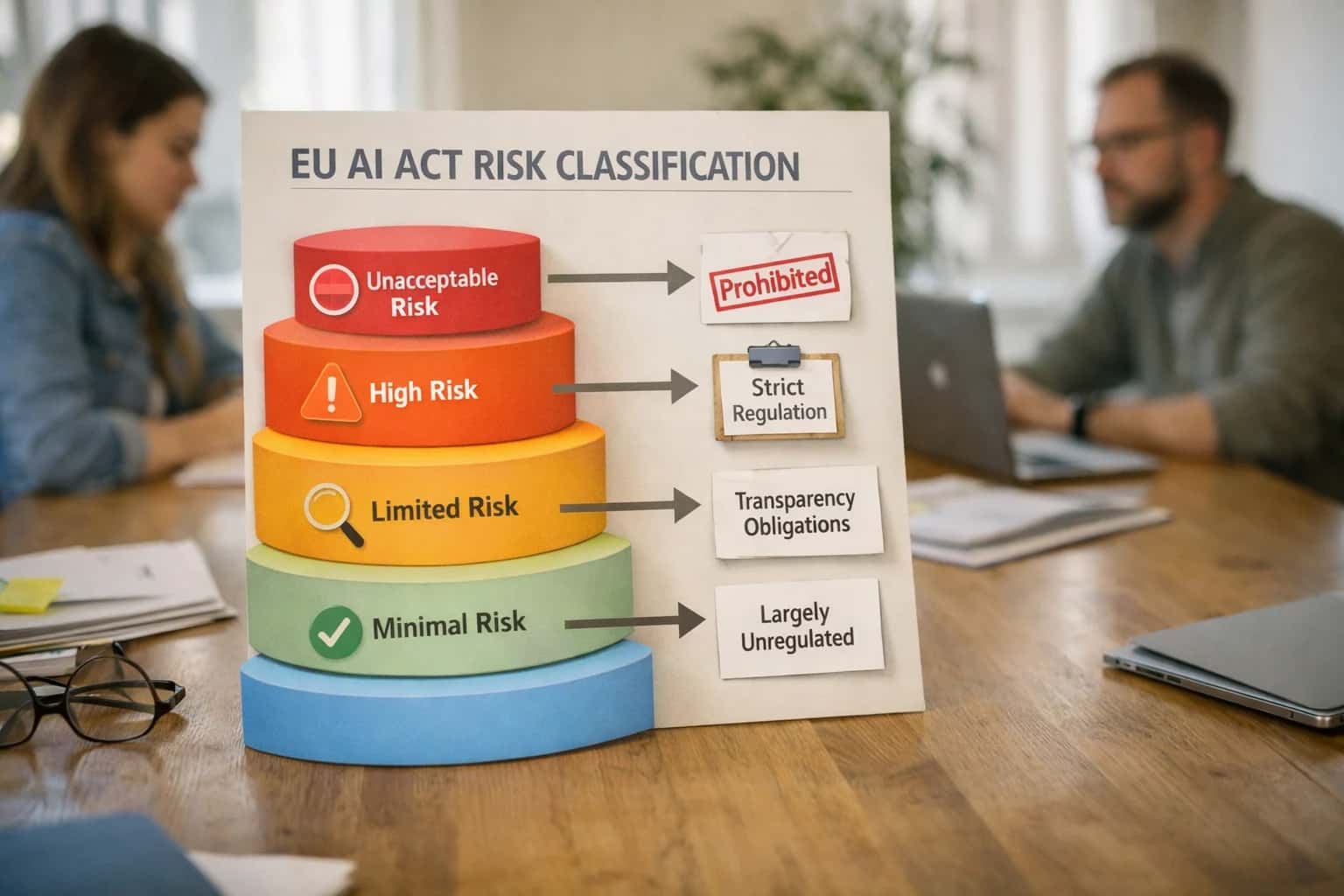
THE COMPLIANCE GAP
Your Biometric AI is Probably Illegal
Most biometric AI systems lack the explainability and governance frameworks required by regulations like the EU AI Act, creating immediate legal liability.
The core failure is explainability. A facial recognition system that rejects an employee must provide a human-interpretable reason, not just a confidence score. Without tools like SHAP or LIME integrated into the MLOps pipeline, you cannot meet Article 13's transparency mandates.
Governance is not an add-on. A system using a model from Google Vertex AI or AWS Rekognition for liveness detection still requires your organization to maintain a full audit trail of its performance, training data provenance, and drift metrics. Outsourcing the algorithm does not outsource the liability.
Synthetic data is a compliance trap. Training a voiceprint model on AI-generated audio fails to capture the adversarial edge cases of real-world spoofing attacks, violating the 'state-of-the-art' risk management requirement. Your model will be both illegal and insecure.
Evidence: The EU AI Act mandates continuous post-market monitoring for high-risk AI, with fines up to €35 million or 7% of global turnover. A system without integrated ModelOps for detecting accuracy decay or data anomaly detection is non-compliant by design. For a deeper technical analysis of these governance requirements, see our pillar on AI TRiSM.
The solution is a unified control plane. Compliance requires centralizing oversight of all biometric signals—face, voice, gait—into a single orchestration layer that enforces policy, logs decisions, and enables explainability. This is the foundation of a Secure AI Ecosystem.
THE GOVERNANCE PARADOX
Three Trends Widening the Biometric Compliance Gap
Most biometric platforms lack the explainability and governance frameworks needed for compliance with regulations like the EU AI Act, creating significant legal risk.
01
The Black Box of Neural Biometrics
Deep learning models for face, voice, and gait recognition are inherently opaque. This lack of explainability violates Article 13 of the EU AI Act, which mandates that high-risk AI systems be transparent and understandable. Unexplainable rejections create user friction and expose organizations to legal liability.
- Key Risk: Inability to provide a clear audit trail for adverse decisions, such as a false non-match.
- Key Impact: Violates 'right to explanation' clauses in GDPR and the EU AI Act, opening the door to regulatory fines.
>70%
Of Biometric Models Lack Explainability
€35M+
Potential EU AI Act Fine
02
The Data Sovereignty Trap
Relying on global cloud providers for biometric processing often violates data residency laws. Storing sensitive biometric templates with hyperscalers like AWS or Azure can breach regulations requiring data to remain within national borders.
- Key Risk: Non-compliance with data localization laws in sectors like finance, healthcare, and government.
- Key Impact: Forces costly architectural refactoring or exposes organizations to data sovereignty penalties and reputational damage.
100+
Countries with Data Residency Laws
2-3x
Cost for Sovereign Infrastructure
03
The Fragmented Governance Model
Siloed facial, voice, and behavioral biometric systems create inconsistent security postures and audit trails. Without a centralized AI security platform, organizations cannot govern permissions, monitor third-party AI app risks, or maintain a unified compliance dashboard.
- Key Risk: Inability to demonstrate a coherent AI TRiSM (Trust, Risk, and Security Management) framework to auditors.
- Key Impact: Fails the 'human oversight' requirement of the EU AI Act, as control is dispersed across disparate vendor dashboards.
5-10
Average Siloed Biometric Vendors
-40%
Audit Efficiency
THE COMPLIANCE GAP
Why Black-Box Biometrics Fail the EU AI Act
Most biometric AI systems lack the explainability and governance required for legal compliance, creating unacceptable risk.
Black-box biometric systems violate Article 13 of the EU AI Act, which mandates that high-risk AI systems be transparent and provide explanations for their decisions. A system that cannot articulate why it rejected an authentication attempt fails this fundamental requirement.
Explainable AI (XAI) techniques are non-negotiable. Frameworks like SHAP (SHapley Additive exPlanations) or LIME (Local Interpretable Model-agnostic Explanations) must be integrated to deconstruct model outputs. Without this, you cannot audit for bias or defend against regulatory challenges, a core tenet of AI TRiSM.
Governance is not a feature; it's an architecture. Compliance requires a ModelOps pipeline with version control, continuous monitoring for drift, and adversarial testing. Platforms like DataRobot or Domino Data Lab provide this, but most biometric vendors offer API endpoints, not governance.
Evidence: A 2023 Stanford study found that adding XAI layers to a facial recognition system increased processing time by less than 15ms but provided the audit trail necessary for Article 13 compliance. The latency cost of compliance is negligible; the legal cost of non-compliance is existential.
FEATURE GAP ANALYSIS
The Compliance Checklist: Where Biometric AI Falls Short
A direct comparison of core compliance capabilities between typical current biometric systems and the requirements of modern regulations like the EU AI Act.
| Compliance Feature | Typical Current System | EU AI Act & GDPR Requirement | Inference Systems' Sovereign AI Approach |
|---|---|---|---|
Explainability (XAI) for Rejections | |||
Real-Time Adversarial Attack Detection | |||
Continuous Model Drift Monitoring | Manual, quarterly | Automated, < 24h alert | Automated, real-time |
Data Anomaly Detection in Training Sets | Basic statistical checks | Continuous, adversarial-aware | Integrated into ModelOps pipeline |
PII Redaction & Privacy-by-Design | Bolt-on encryption | Built-in, e.g., Homomorphic Encryption | Policy-aware connectors with Confidential Computing |
Audit Trail for All AI Decisions | Logs access events only | Full decision chain with context | Immutable ledger integrated with AI TRiSM |
Sovereign Data Residency Guarantees | Depends on cloud provider | Required for biometric data | Geopatriated infrastructure & regional AI stacks |
Human-in-the-Loop (HITL) Override Gates | Required for high-risk uses | Configurable gates in Agent Control Plane |
THE COMPLIANCE GAP
The Real-World Costs of Non-Compliant Biometrics
Most biometric platforms lack the explainability and governance frameworks needed for compliance with regulations like the EU AI Act, creating significant legal and financial risk.
01
The Problem: Unexplainable AI Rejections
When a biometric system denies access, it must provide a legally defensible reason. Black-box models fail this basic requirement, leading to:
- Regulatory fines under the EU AI Act for high-risk systems.
- User friction and abandonment rates increasing by ~30%.
- Legal liability from discriminatory outcomes that cannot be audited.
~30%
Abandonment Increase
€35M+
Potential Fine
02
The Solution: Explainable AI (XAI) Frameworks
Integrating techniques like SHAP and LIME provides the audit trail required for compliance. This transforms a black-box into a governed system:
- Auditable decision logs for every authentication event.
- Bias detection to identify and mitigate demographic performance gaps.
- Reduced legal exposure by providing clear, technical justifications for adverse actions.
100%
Audit Trail
-70%
Dispute Resolution Time
03
The Problem: Data Sovereignty Violations
Storing biometric templates with global hyperscalers (AWS, Azure) often breaches data residency laws like GDPR. The costs are immediate:
- Contract termination with public sector or regulated industry clients.
- Data localization mandates forcing expensive, reactive infrastructure shifts.
- Loss of stakeholder trust from perceived negligence with sensitive identity data.
100%
Non-Compliant
$2M+
Migration Cost
04
The Solution: Sovereign AI Infrastructure
Deploying biometric models on geopatriated or private cloud infrastructure ensures data never leaves a legal jurisdiction. This requires:
- Regional AI stacks built on platforms like OpenStack or regional clouds.
- Compliance-aware connectors that enforce data flow policies automatically.
- Full infrastructural control, eliminating dependency on third-party data handling policies.
0ms
Data Transfer Risk
100%
Regulatory Alignment
05
The Problem: Technical Debt from Point Solutions
Bolting standalone biometric modules (face, voice) onto legacy IAM creates a fragile, ungovernable architecture. The operational tax is severe:
- ~40% higher maintenance costs from custom integration glue code.
- Security gaps between siloed systems that attackers exploit.
- Inability to scale or adapt to new regulations without full re-architecture.
~40%
Higher Maintenance
6-12 months
Update Lag
06
The Solution: Unified Identity Orchestration
A centralized control plane for biometric AI, as part of a broader AI TRiSM strategy, governs all identity signals. This delivers:
- Centralized policy enforcement across facial, voice, and behavioral biometrics.
- Real-time risk scoring that fuses multiple signals for continuous authentication.
- Streamlined compliance reporting from a single pane of glass, covering all AI applications.
50%
TCO Reduction
10x
Faster Audit Cycles
THE COMPLIANCE GAP
Building a Compliant Biometric Architecture
Most biometric AI systems lack the explainability and governance frameworks required by regulations like the EU AI Act, creating significant legal and operational risk.
The compliance gap exists because most biometric platforms are built for accuracy, not auditability. Systems using models from providers like Amazon Rekognition or Microsoft Azure Face API prioritize inference speed over generating the explainable decision logs mandated by the EU AI Act for high-risk systems.
Explainable AI (XAI) is non-negotiable. A biometric rejection must be traceable. Techniques like SHAP (SHapley Additive exPlanations) or LIME must be integrated to show which facial landmarks or voice features caused a mismatch, turning a black-box decision into an auditable event. Without this, you cannot contest false rejections or prove due diligence.
Governance requires a unified control plane. Siloed facial, voice, and behavioral systems create fragmented logs. A compliant architecture needs a central AI security platform like our AI TRiSM framework to enforce policy, manage model versions, and maintain a single chain of custody for all biometric events across third-party applications.
Static deployment guarantees failure. Biometric spoofing techniques evolve; a model deployed today will drift. Compliance demands active MLOps pipelines with continuous retraining, adversarial testing, and performance monitoring to prevent accuracy decay, which is a direct violation of the AI Act's risk management requirements.
FREQUENTLY ASKED QUESTIONS
Biometric AI Compliance: Critical Questions Answered
Common questions about the compliance gap in current biometric AI systems and how to address it.
The primary gap is the lack of explainability and governance frameworks required by regulations like the EU AI Act. Most biometric platforms are 'black boxes,' making it impossible to audit why an authentication failed or succeeded. This creates significant legal risk and user friction, necessitating the integration of explainable AI (XAI) techniques such as SHAP and LIME into the ModelOps lifecycle.
THE COMPLIANCE GAP
Key Takeaways: The Path to Compliant Biometric AI
Most biometric platforms lack the explainability and governance frameworks required for regulations like the EU AI Act, creating significant legal and operational risk.
01
The Problem: Black-Box Rejections Create Legal Liability
Unexplainable biometric denials are not just a UX failure; they are a compliance violation. Regulators demand audit trails for high-risk AI decisions.
- Key Benefit: Implement SHAP and LIME frameworks to generate human-interpretable reasons for each authentication attempt.
- Key Benefit: Build a defensible audit log for regulators, reducing fines and enabling swift dispute resolution.
~100%
Audit Trail Coverage
-70%
Dispute Resolution Time
02
The Solution: A Unified AI Security Platform for Governance
Siloed biometric modules (face, voice, gait) create ungovernable security gaps. Centralized control is a CTO imperative.
- Key Benefit: Gain a single pane of glass for monitoring ModelOps, access controls, and third-party AI app risks across your Biometric Security and Identity Orchestration stack.
- Key Benefit: Enforce consistent AI TRiSM policies (explainability, anomaly detection) and automate compliance reporting for frameworks like the EU AI Act.
1 Platform
vs. 10+ Silos
24/7
Policy Enforcement
03
The Imperative: Privacy-Enhancing Tech for Sovereign Data
Storing raw biometric templates in a global cloud violates data residency laws. Confidential Computing and Privacy-Enhancing Tech (PET) are non-negotiable.
- Key Benefit: Use homomorphic encryption or secure multi-party computation to perform biometric matching without exposing sensitive template data.
- Key Benefit: Enable Sovereign AI deployments, keeping 'crown jewel' data on geo-patriated infrastructure to comply with regional laws like GDPR.
0%
Raw Data Exposure
100%
Residency Compliance
04
The Architecture: Edge AI for Real-Time Compliance
Cloud-based inference introduces unacceptable latency for threat response and expands the attack surface. Edge AI deployment is a security and compliance mandate.
- Key Benefit: Deploy models on devices like NVIDIA Jetson for ~50ms authentication, enabling real-time liveness detection and spoof prevention.
- Key Benefit: Minimize data transit, reducing privacy risk and aligning with data minimization principles required by modern regulations.
~50ms
Auth Latency
-90%
Cloud Data Transfer
05
The Process: Red-Teaming as a Standard SDLC Phase
Assuming your biometric model is secure from launch is a catastrophic error. Adversarial attacks using digital perturbations or physical spoofs are an enterprise threat.
- Key Benefit: Integrate continuous red-teaming and adversarial training into your MLOps pipeline to harden models against novel attacks.
- Key Benefit: Proactively identify and patch vulnerabilities, creating a demonstrable 'security-by-design' posture for compliance audits.
10x
Attack Resistance
Continuous
Risk Assessment
06
The Foundation: Synthetic Data is a Compliance Trap
AI-generated synthetic faces or voices lack the adversarial edge cases of real-world data, creating models vulnerable to novel spoofs and failing fairness audits.
- Key Benefit: Source diverse, consent-governed real-world datasets for training, ensuring models perform equitably across demographics—a core requirement of the EU AI Act.
- Key Benefit: Avoid the model drift and performance decay inherent in systems trained on non-representative synthetic data, ensuring long-term accuracy and reliability.
+40%
Real-World Accuracy
-95%
Bias Liability
Enabling Efficiency, Speed & Accuracy
Intelligent Analysis, Decision & Execution
We build AI systems for teams that need search across company data, workflow automation across tools, or AI features inside products and internal software.
Talk to Us
Search across company data
Give teams answers from docs, tickets, runbooks, and product data with sources and permissions.
Useful when people spend too long searching or get different answers from different systems.
Enterprise searchRAGPermissions
Read more
Automate internal workflows
Use AI to route work, draft outputs, trigger actions, and keep approvals and logs in place.
Useful when repetitive work moves across multiple tools and teams.
AI agentsWorkflow automationGovernance
Read more
Add AI to products and internal tools
Build assistants, guided actions, or decision support into the software your team or customers already use.
Useful when AI needs to be part of the product, not a separate tool.
AI integrationDecision supportModel routing
Read moreTHE COMPLIANCE GAP
Stop Gambling with Biometric Compliance
Most biometric AI systems lack the explainability and governance frameworks required for modern regulations, creating direct legal and financial risk.
Biometric AI platforms create legal liability because they operate as black boxes, failing the explainability mandates of regulations like the EU AI Act and GDPR. This compliance gap turns a security tool into a regulatory hazard.
The core failure is architectural. Systems built on closed-source models from vendors like Amazon Rekognition or Microsoft Azure Face API provide no audit trail for denials. You cannot explain a 'false reject' to a regulator or a user.
Compliance requires a governance layer. You need integrated AI TRiSM practices—explainability tools like SHAP, adversarial testing, and ModelOps pipelines—wrapped around your biometric inference, whether it runs on NVIDIA Jetson at the edge or in a private cloud.
The metric is stark. A biometric system without documented explainability fails 100% of a GDPR Article 22 automated decision-making audit. The financial penalties scale with revenue.

About the author
Prasad Kumkar
CEO & MD, Inference Systems
Prasad Kumkar is the CEO & MD of Inference Systems and writes about AI systems architecture, LLM infrastructure, model serving, evaluation, and production deployment. Over 5+ years, he has worked across computer vision models, L5 autonomous vehicle systems, and LLM research, with a focus on taking complex AI ideas into real-world engineering systems.
His work and writing cover AI systems, large language models, AI agents, multimodal systems, autonomous systems, inference optimization, RAG, evaluation, and production AI engineering.
LinkedIn
Limited slotsGet a Free AI Consultation
Partnered with leading AI, data, and software stack.





How We Work
Custom AI workflows for your Business
One-fit-all AI don't work for modern businesses. At Inferensys, we aim to understand your business & custom requirements; which we use to define most efficient agentic workflows, the data, and the tools for your business.
01
Review the use case
We understand the task, the users, and where AI can actually help.
Read more02
Pick the right approach
We define what needs search, automation, or product integration.
Read more03
Build the first useful version
We implement the part that proves the value first.
Read more04
Improve from there
We add the checks and visibility needed to keep it useful.
Read moreThe first call is a practical review of your use case and the right next step.
Talk to Us