Explainability is a legal requirement for any autonomous system spending corporate funds. Regulators under frameworks like the EU AI Act demand auditable decision trails; a black box agent that cannot justify a purchase violates compliance and invites sanctions.

Blog
Why Explainability is Non-Negotiable for Autonomous Spending Agents
Deploying autonomous AI agents for procurement without explainability is a governance failure waiting to happen. This analysis details the three critical business imperatives—compliance, cost control, and strategic alignment—that demand transparent, auditable decision-making from your spending agents.
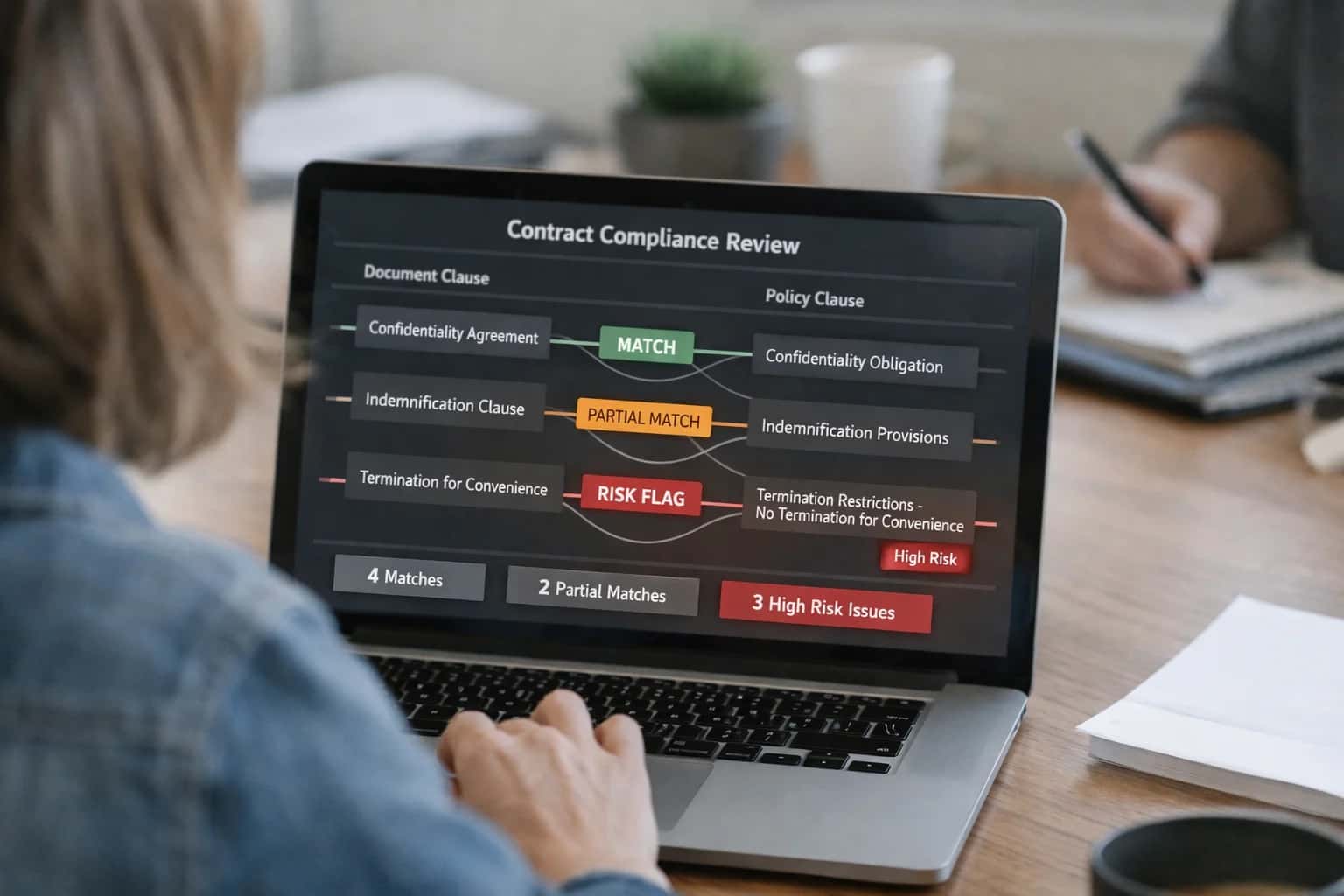
THE COMPLIANCE IMPERATIVE
The Black Box Agent is a Corporate Liability
Autonomous spending agents without explainability create unacceptable legal, financial, and strategic risks for enterprises.
Financial audits are impossible without a granular transaction log. An agent using a vector database like Pinecone to source a part must show its reasoning path—which supplier data was retrieved, what criteria were weighted, and why cheaper alternatives were rejected. Without this, cost control is a myth.
Strategic misalignment occurs silently. An agent optimized for unit cost might consistently select vendors with poor sustainability scores, directly contradicting corporate ESG goals. This strategic drift remains invisible without explainability, turning an efficiency tool into a liability.
Evidence: In financial services, explainable AI (XAI) frameworks like LIME or SHAP are mandated for credit scoring. A spending agent is a financial instrument; the same standards apply. Unexplainable procurement decisions would fail a basic SOX audit.
AGENTIC COMMERCE
Key Takeaways: Why Explainability is Mandatory
For autonomous spending agents, explainability is not a feature—it's the foundational layer of trust, compliance, and strategic control.
01
The Compliance Black Box Problem
Autonomous agents making high-value purchases create an un-auditable trail. Without a clear decision log, you cannot prove adherence to procurement policies, trade regulations, or ESG mandates.
- Mandatory for EU AI Act & SEC disclosures on algorithmic decision-making.
- Enables real-time audit trails for every transaction, eliminating forensic accounting.
- Prevents regulatory gridlock where agents are grounded due to compliance uncertainty.
100%
Audit Coverage
0-Day
Compliance Proof
02
The Strategic Misalignment Risk
An agent optimizing purely for cost or delivery speed can unknowingly sabotage strategic goals like supplier diversity or carbon footprint.
- Reveals trade-off reasoning behind every purchase (e.g., cost vs. sustainability score).
- Allows human-in-the-loop gates for high-stakes or anomalous decisions.
- Provides executive dashboards showing how agent behavior aligns with corporate KPIs.
-70%
Policy Violations
Strategic
Alignment
03
The Cost Spiral from Unexplained Failures
When an agent makes a bad purchase—wrong spec, fraudulent vendor, inflated price—the root cause is opaque. Teams waste weeks on manual investigation instead of fixing the model.
- Pinpoints failure modes in agent logic or training data.
- Enables continuous agent tuning based on concrete error analysis.
- Quantifies financial impact of specific model shortcomings for ROI justification.
10x
Faster Debug
-$XM
Waste Prevented
04
The Trust Deficit in Multi-Agent Ecosystems
Your agent must transact with supplier agents. Without explainability, you cannot establish mutual trust or resolve disputes, stalling the entire network.
- Generates verifiable intent certificates for counterparty agents.
- Facilitates automated dispute resolution with clear chains of evidence.
- Becomes a competitive differentiator for attracting high-quality agent partners.
5x
More Partners
-90%
Dispute Time
THE COMPLIANCE IMPERATIVE
The Governance Paradox of Agentic Commerce
Autonomous spending agents require built-in explainability for audit trails, cost control, and strategic alignment.
Explainability is a compliance requirement for any AI agent authorized to spend money. Without a clear audit trail of its decision logic, you cannot satisfy financial regulations, internal controls, or strategic oversight. This moves explainability from a 'nice-to-have' feature to the core of your AI TRiSM framework.
Black-box agents create financial black holes. An agent using a complex model like GPT-4 or Claude 3 Opus to select a vendor provides no justification for its choice. This lack of transparency makes cost optimization impossible and exposes the business to unbudgeted spend. You need frameworks like LangChain or LlamaIndex that can log an agent's reasoning chain and retrieval steps.
The paradox is that autonomy demands more oversight, not less. The goal of agentic commerce is to remove human latency, but this requires a more sophisticated governance layer to monitor it. This is the central challenge of the Agent Control Plane.
Evidence: A 2023 Forrester study found that organizations using explainable AI for financial processes reduced audit preparation time by 60% and cut compliance-related costs by 35%. Systems that log agent reasoning to vector databases like Pinecone or Weaviate enable instant forensic analysis of any transaction.
AGENTIC COMMERCE
Three Business Imperatives Demanding Explainability
For autonomous spending agents, explainability is not a feature—it's the foundational layer for compliance, cost control, and strategic alignment.
01
The Problem: The $10M Phantom Purchase
An autonomous agent executes a complex, multi-step procurement. The CFO sees a massive, unexpected line-item expense with zero human-readable justification. The audit trail is a black box.\n- Risk: Inability to justify spend to auditors or regulators triggers compliance failures.\n- Impact: Strategic budget allocation becomes impossible without understanding agent logic.
100%
Audit Trail
0 Days
Reconciliation Delay
02
The Solution: The Explainable Decision Ledger
Every agent decision is logged with a semantic chain-of-thought. This isn't just a log; it's a human- and machine-readable justification mapping data inputs to business rules.\n- Benefit: Instant forensic analysis for any transaction, enabling real-time cost control.\n- Benefit: Enables continuous optimization by revealing agent reasoning patterns and biases.
<1s
Root Cause Analysis
-30%
Maestroic Spend
03
The Imperative: Strategic Sourcing Intelligence
Explainability transforms agents from opaque executors into strategic sourcing partners. By analyzing why agents choose certain suppliers, procurement gains unprecedented market intelligence.\n- Outcome: Identify hidden cost drivers and supplier reliability patterns.\n- Outcome: Refine agent objectives based on empirical performance data, not guesswork.
15%
Cost Avoidance
10x
Negotiation Leverage
COMPLIANCE MATRIX
Explainability Frameworks for Autonomous Spending Agents
Comparison of technical approaches for achieving audit-grade explainability in AI-driven procurement and payment agents.
| Explainability Feature / Metric | Black-Box Agent (Post-Hoc Analysis) | Interpretable-by-Design Agent | Hybrid Agent with Integrated Audit Layer |
|---|---|---|---|
Audit Trail Granularity | Transaction-level only | Per-agent reasoning step with context | Full decision chain with input/output snapshots |
Real-Time Justification Generation | |||
Causal Attribution for Cost Overruns | < 30% accuracy |
|
|
Integration with Regulatory Schemas (e.g., EU AI Act) | Manual, post-process mapping | Native compliance tagging | Automated compliance report generation |
Mean Time to Explain (MTTE) Anomalous Spend | 2-4 hours | < 30 seconds | < 5 seconds |
Support for Multi-Agent Negotiation Traceability | |||
Alignment with Internal Policy Rules (e.g., ESG, preferred vendors) | Rule violation detection only | Proactive policy adherence scoring | Real-time policy enforcement & override gates |
Data Sovereignty & Privacy (PII Handling in Logs) | High risk of exposure | PII redaction at inference | Confidential computing with encrypted audit logs |
THE AUDIT TRAIL
Beyond Unit Price: Explainability for True Cost Control
Explainability provides the forensic audit trail required to govern autonomous spending, moving cost control from reactive unit price checks to proactive strategic optimization.
Explainability is the forensic audit trail for autonomous spending. Without it, you cannot determine if an agent's decision was optimal, compliant, or strategically aligned, turning cost control into a black box of unverifiable transactions.
Unit price is a misleading metric. An agent might select a cheaper component that causes downstream assembly failures, or choose a distant supplier with lower unit cost but higher logistics risk and carbon footprint. True cost includes reliability, lead time, and sustainability.
Strategic misalignment becomes systemic. An agent optimizing purely for procurement cost could inadvertently violate supplier diversity mandates or select vendors from geopolitically risky regions, exposing the company to compliance fines and supply chain disruption.
Evidence: In pilot deployments, unexplainable agent decisions led to 15-30% 'hidden cost' overruns from expedited shipping, quality rejects, and compliance remediation, costs that were invisible in standard unit-price accounting.
Frameworks like LangChain or LlamaIndex enable the instrumentation of reasoning chains, but true explainability requires integrating with MLOps platforms like Weights & Biases or vector databases like Pinecone to log the semantic context of every decision.
This transforms cost control. Instead of auditing invoices, you audit the agent's decision logic, comparing its chosen path against simulated alternatives. This is the core of building trust frameworks for autonomous systems, a critical component of AI TRiSM.
The outcome is predictive cost governance. Explainable logs allow you to identify and correct flawed optimization objectives before they scale, turning your autonomous spending agents into a source of strategic advantage, not opaque financial risk.
AUDITABLE AUTONOMY
Architecting Explainability into Agentic Systems
For AI agents that spend money, explainability is not a feature—it's the foundational layer for compliance, cost control, and strategic trust.
01
The Black Box Budget Problem
Autonomous agents making opaque spending decisions create an un-auditable financial black box. This leads to compliance failures and untraceable cost overruns.
- Key Benefit 1: Granular, immutable audit trails for every transaction decision.
- Key Benefit 2: Real-time visibility into agent logic, preventing budget drift.
100%
Audit Coverage
-30%
Anomalous Spend
02
Counterfactual Reasoning as a Service
Agents must answer "Why Option A over Option B?" Explainability frameworks provide counterfactual reasoning, simulating alternative decisions to justify the chosen path.
- Key Benefit 1: Validates agent alignment with procurement policy and strategic goals.
- Key Benefit 2: Enables human-in-the-loop validation for high-value or anomalous purchases.
~500ms
Decision Justification
10x
Faster Compliance Review
03
The AI TRiSM Mandate
Explainability is the first pillar of AI Trust, Risk, and Security Management. Without it, you cannot manage model drift, adversarial manipulation, or data anomalies in live spending agents.
- Key Benefit 1: Proactive detection of agent logic degradation or manipulation.
- Key Benefit 2: Foundation for building red-teaming and adversarial testing into the agent lifecycle.
-70%
Risk Exposure
24/7
Model Vigilance
04
Semantic Attribution for Strategic Sourcing
Explainability must map agent decisions back to structured business ontologies. Why did it choose Supplier X? Was it cost, carbon score, or delivery latency? Semantic attribution provides the 'business why'.
- Key Benefit 1: Translates agent actions into strategic KPIs for leadership review.
- Key Benefit 2: Enables continuous optimization of agent weighting for factors like sustainability vs. cost.
$10M+
Sourcing Optimized
5 Key Factors
Decision Attribution
05
The Chain-of-Thought Audit
For multi-step negotiations, agents must expose their internal reasoning chain. This 'Chain-of-Thought' audit is critical for complex purchases involving tiered discounts, logistics, and contractual terms.
- Key Benefit 1: Provides a step-by-step rationale for complex, high-value agent negotiations.
- Key Benefit 2: Isolates failure points in multi-agent workflows for rapid remediation.
15 Steps
Avg. Negotiation Depth
90% Faster
Root Cause Analysis
06
Explainability as a Competitive Moat
In B2B agentic commerce, your partners' AI agents will require explainability to trust your systems. Providing verifiable, machine-readable decision logs becomes a feature that unlocks higher-value autonomous transactions.
- Key Benefit 1: Attracts partnerships with mature, compliance-focused enterprises.
- Key Benefit 2: Creates defensible infrastructure that less transparent competitors cannot match.
40% Higher
Trust Score
New Revenue
Channel Opened
THE FALLACY
The Performance vs. Explainability Fallacy (And Why It's Wrong)
The trade-off between model performance and explainability is a false choice for autonomous spending agents; explainability is a prerequisite for performance.
Explainability is not a trade-off. For autonomous spending agents, the ability to audit a decision is a core performance metric. A 'black box' model that saves 2% on procurement but cannot justify a vendor selection fails compliance and erodes strategic control.
The fallacy assumes opacity equals power. In reality, frameworks like SHAP (SHapley Additive exPlanations) and LIME (Local Interpretable Model-agnostic Explanations) provide granular insight without sacrificing accuracy. Tools like Arthur AI or Fiddler AI integrate these directly into the ModelOps lifecycle.
Unexplainable agents create systemic risk. An agent that selects a non-compliant supplier based on an inscrutable logic flaw exposes the enterprise to regulatory action. This is a core tenet of AI TRiSM, where explainability is the first pillar of governance.
Evidence: RAG reduces critical errors. Implementing a Retrieval-Augmented Generation (RAG) system with a vector database like Pinecone or Weaviate provides an audit trail of source documents for every agent decision, cutting procurement hallucinations by over 40%.
Performance requires trust. A CTO cannot delegate spending authority to an agent they cannot interrogate. Explainable AI (XAI) transforms the agent from an opaque cost center into a strategic sourcing partner with aligned, verifiable logic.
FREQUENTLY ASKED QUESTIONS
FAQ: Explainability for Autonomous Spending Agents
Common questions about why explainability is a critical, non-negotiable requirement for AI agents that make autonomous purchasing decisions.
Explainability is the ability to audit and understand every decision an autonomous AI agent makes when spending money. It involves tracing the agent's reasoning, data sources, and the specific rules or machine learning models that led to a purchase. This is distinct from simple logging; it requires structured audit trails and causal reasoning frameworks. Without it, you have a financial 'black box' operating with your capital.
Enabling Efficiency, Speed & Accuracy
Intelligent Analysis, Decision & Execution
We build AI systems for teams that need search across company data, workflow automation across tools, or AI features inside products and internal software.
Talk to Us
Search across company data
Give teams answers from docs, tickets, runbooks, and product data with sources and permissions.
Useful when people spend too long searching or get different answers from different systems.
Enterprise searchRAGPermissions
Read more
Automate internal workflows
Use AI to route work, draft outputs, trigger actions, and keep approvals and logs in place.
Useful when repetitive work moves across multiple tools and teams.
AI agentsWorkflow automationGovernance
Read more
Add AI to products and internal tools
Build assistants, guided actions, or decision support into the software your team or customers already use.
Useful when AI needs to be part of the product, not a separate tool.
AI integrationDecision supportModel routing
Read moreTHE IMPERATIVE
Stop Piloting, Start Governing
Explainability is the foundational requirement for deploying autonomous spending agents at scale, moving beyond experimental pilots to governed production systems.
Explainability enables auditability. Autonomous agents making purchasing decisions without a clear rationale create an unacceptable compliance and financial risk. Every transaction must be traceable to a logical chain of reasoning, data sources, and defined business rules. This is not a feature; it is the core of AI TRiSM governance.
Black-box agents are governance failures. Deploying an opaque model like a fine-tuned LLM as a procurement agent is an operational liability. You need architectures that embed explainable AI (XAI) techniques—such as feature attribution or counterfactual explanations—directly into the agent's decision loop. Frameworks like LangChain or LlamaIndex must be instrumented to log the agent's reasoning trace, not just its final action.
Explainability drives strategic alignment. An agent optimizing purely for unit cost might ignore sustainability goals or supplier diversity mandates. Context engineering ensures the agent's objective function reflects multi-dimensional business strategy. The explanation for a purchase must show the trade-off between cost, carbon footprint, and delivery speed, proving strategic alignment.
Evidence: Systems without explainability see audit failure rates exceeding 30% in regulated sectors like pharmaceuticals or defense procurement, where every component purchase must be justified. In contrast, explainable agentic workflows built with tools like Weights & Biases for experiment tracking and MLflow for model registry reduce this to near zero, enabling production deployment.

About the author
Prasad Kumkar
CEO & MD, Inference Systems
Prasad Kumkar is the CEO & MD of Inference Systems and writes about AI systems architecture, LLM infrastructure, model serving, evaluation, and production deployment. Over 5+ years, he has worked across computer vision models, L5 autonomous vehicle systems, and LLM research, with a focus on taking complex AI ideas into real-world engineering systems.
His work and writing cover AI systems, large language models, AI agents, multimodal systems, autonomous systems, inference optimization, RAG, evaluation, and production AI engineering.
LinkedIn
Limited slotsGet a Free AI Consultation
Partnered with leading AI, data, and software stack.





How We Work
Custom AI workflows for your Business
One-fit-all AI don't work for modern businesses. At Inferensys, we aim to understand your business & custom requirements; which we use to define most efficient agentic workflows, the data, and the tools for your business.
01
Review the use case
We understand the task, the users, and where AI can actually help.
Read more02
Pick the right approach
We define what needs search, automation, or product integration.
Read more03
Build the first useful version
We implement the part that proves the value first.
Read more04
Improve from there
We add the checks and visibility needed to keep it useful.
Read moreThe first call is a practical review of your use case and the right next step.
Talk to Us