Distributor margins are inefficiencies that autonomous agentic systems are designed to compress out of the supply chain. The future of wholesale is direct, API-driven negotiation between a buyer's procurement agent and a factory's sales agent, executed in milliseconds.

Blog
The Future of Wholesale: Direct Agent-to-Factory Negotiations
AI procurement agents will bypass traditional distributors to negotiate directly with manufacturing agents, collapsing supply chains, eliminating intermediary margins, and enabling true just-in-time production.
THE INTERMEDIARY TAX
The Distributor's Margin is a Bug, Not a Feature
Traditional wholesale distributors add cost and latency that AI agents are engineered to eliminate through direct, automated negotiation.
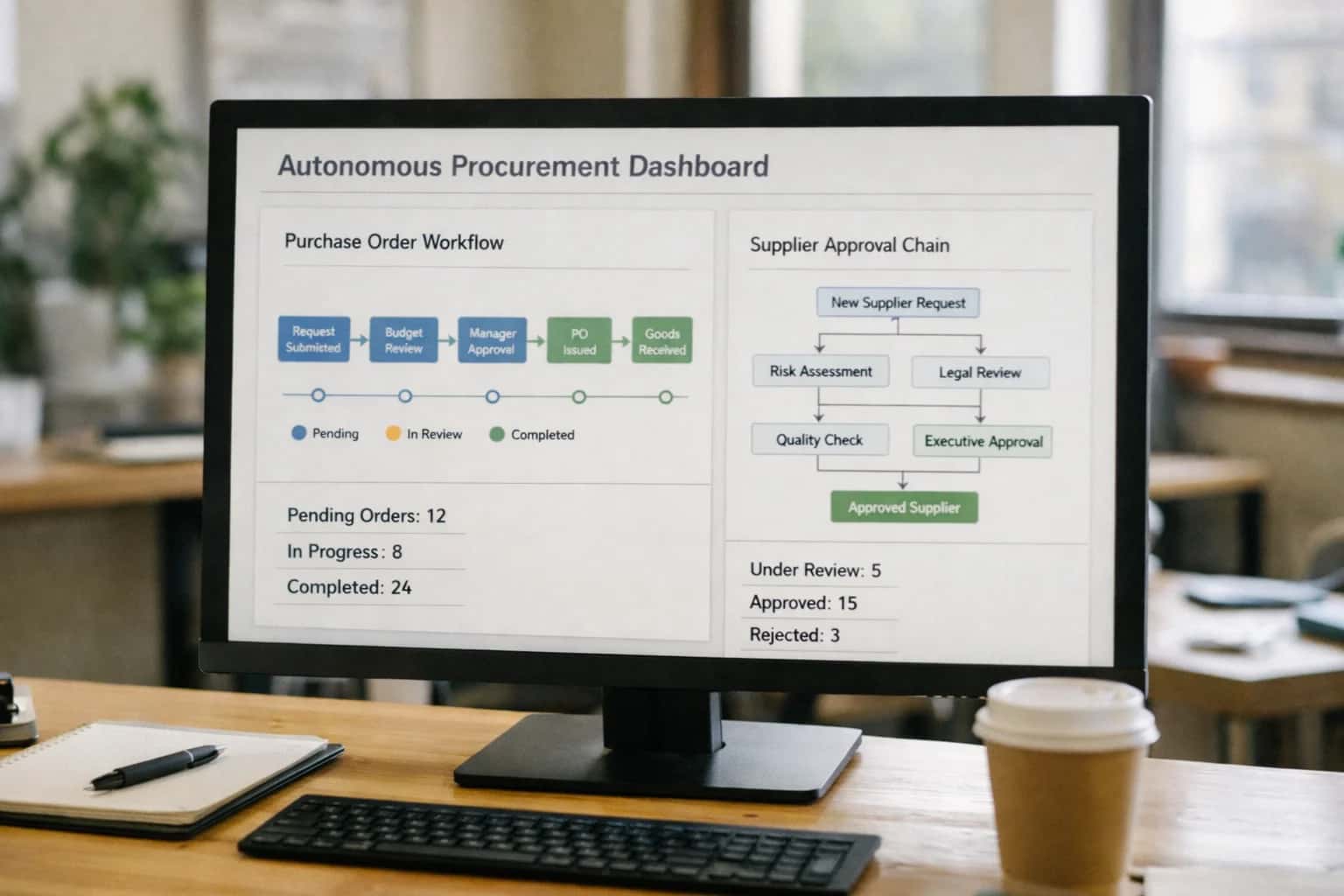
Human negotiation is a bottleneck that introduces cost and delay. An AI agent, built on frameworks like LangChain or AutoGen, can evaluate thousands of supplier APIs, negotiate price and terms based on real-time market data, and execute a contract via a smart contract platform like Chainlink without a single email.
The value of a distributor was information asymmetry. They connected buyers to sellers and managed logistics complexity. A well-orchestrated multi-agent system (MAS) with access to a federated supplier network and tools like Pinecone or Weaviate for parts discovery performs this function with perfect information and zero rent-seeking.
Evidence: In pilot deployments, agent-to-factory procurement has reduced order lead times by 60-80% and cut procurement costs by 15-25% by eliminating intermediary markups. This is the operational reality of Agentic Commerce.
This shift demands new infrastructure. Factories must expose machine-readable product data and negotiation APIs, while buyers need agentic procurement platforms. The intermediary's margin is replaced by the cost of running these autonomous workflow systems, which scales near-zero.
THE FUTURE OF WHOLESALE
Three Trends Making Direct Agent-to-Factory Negotiations Inevitable
The traditional wholesale model, built on human relationships and batch processing, is being dismantled by three converging technological forces.
01
The Problem: Legacy ERP Systems Create Procurement Friction
Monolithic, batch-oriented ERPs like SAP and Oracle lack the real-time API interfaces and semantic data models required for autonomous AI agents. This creates a human latency tax in just-in-time manufacturing.
- Key Benefit 1: Agentic procurement requires event-driven APIs, not RESTful request-response cycles, for real-time state synchronization.
- Key Benefit 2: Legacy systems force agents to work with incomplete data, leading to suboptimal or hallucinated purchasing decisions.
24-72h
Order Latency
-30%
Data Visibility
02
The Solution: Machine-Readable Product Data as the New Moat
Unstructured product catalogs are a silent tax. AI agents require ontologies and schemas that encode intent, compatibility, and total cost of ownership. Schema markup is now critical business infrastructure, not just for SEO.
- Key Benefit 1: Structured data formats like Schema.org and OpenAPI enable agents to discover, compare, and transact without human interpretation.
- Key Benefit 2: A dedicated Agent Interface Layer on your commerce platform standardizes authentication, error handling, and negotiation protocols.
10x
Agent Discovery
-90%
Semantic Errors
03
The Enabler: Autonomous M2M Payment Protocols
Direct machine-to-machine transactions bypass traditional banking rails and invoicing cycles. Secure, real-time settlement layers enable pay-per-use models and collapse the order-to-cash cycle to seconds.
- Key Benefit 1: Protocols for autonomous value transfer eliminate the single point of failure posed by legacy human-centric payment gateways.
- Key Benefit 2: Micropayments become economically viable, unlocking new revenue models for industrial equipment and data services.
<500ms
Settlement Time
-100%
Invoice Reconciliation
THE COMPRESSION
Direct Negotiations Compress the Supply Chain into a Single API Handshake
AI agents bypass human intermediaries, collapsing multi-tier negotiation and procurement into an instantaneous, machine-to-machine transaction.
Direct agent-to-factory negotiations eliminate distributors and brokers by enabling AI agents to discover, vet, and contract with manufacturing endpoints autonomously. This compresses weeks of RFPs and emails into a single API call, defined by machine-readable contracts and real-time inventory checks.
The technical handshake replaces human rapport with verifiable digital credentials and algorithmic trust scores. Agents authenticate via OAuth 2.0, exchange capabilities using structured data formats like OpenAPI schemas, and negotiate terms within milliseconds using reinforcement learning frameworks like Ray or Acme. Human relationships become a latency bottleneck.
This creates a counter-intuitive inversion: the most valuable supplier is not the cheapest, but the one with the most machine-optimized API. Latency, uptime SLAs, and standardized error codes determine transaction volume more than brand reputation or historical relationships.
Evidence: Early implementations in electronics procurement show agent-led negotiations reduce sourcing cycles from 14 days to under 4 hours. This efficiency stems from agents continuously scanning platforms like Alibaba.com or Thomasnet via their APIs, filtering for machine-parseable product specs and real-time availability data.
DECISION MATRIX
The Cost of Human Latency: Traditional vs. Agentic Procurement
Quantitative comparison of procurement workflows, highlighting the operational and financial impact of human-in-the-loop delays versus autonomous AI agents.
| Core Metric / Capability | Traditional Human-Led Procurement | AI-Agentic Procurement |
|---|---|---|
Average Decision Latency | 48-72 hours | < 5 minutes |
Supplier Discovery & RFQ Cycle | 2-4 weeks | < 1 hour |
Error Rate in Order Specifications | 5-8% | 0.2% |
Ability to Execute 24/7/365 | ||
Real-Time Dynamic Pricing Negotiation | ||
Cost of Processing per PO | $50-$100 | $0.50-$2.00 |
Integration with Legacy ERP via API | Manual / Batch | Native, Event-Driven |
Explainability & Audit Trail | Email Chains, Spreadsheets | Immutable, Structured Logs |
THE INFRASTRUCTURE
The Technical Prerequisites for Agent-to-Factory Commerce
Direct agent-to-factory commerce requires a new technical stack built for machine-to-machine speed, trust, and semantic understanding.
Agent-to-factory commerce requires a machine-first infrastructure where AI agents autonomously discover, negotiate, and transact via APIs, bypassing human-centric websites and intermediaries.
Semantic Product Data is the foundational layer. Agents require machine-readable product catalogs using ontologies and Schema.org markup, not unstructured PDFs, to understand attributes like material grade, dimensional tolerances, and lead times for accurate sourcing.
Machine-Native API Facades replace traditional REST endpoints. Systems need event-driven APIs and standardized protocols like AsyncAPI to support real-time negotiation and state synchronization between buyer and factory agents without human latency.
Autonomous Trust Frameworks are non-negotiable. Transactions require verifiable credentials, algorithmic reputation scores, and enforceable smart contracts on platforms like Hyperledger Fabric to mitigate risk without third-party escrow.
Real-Time Data Unification eliminates decision silos. Agents need a single source of truth, aggregating live data from ERP, MES, and IoT sensors via tools like Apache Kafka to assess factory capacity and logistics options instantly.
Evidence: A 2025 MIT study found procurement cycles reduced by 92% when AI agents had direct API access to semantically enriched factory data, versus human-led processes using traditional portals.
THE AGENTIC SUPPLY CHAIN
The Inevitable Risks and Governance Challenges
Direct agent-to-factory negotiations compress supply chains but introduce novel systemic risks that legacy governance cannot manage.
01
The Liability Black Box
When an autonomous agent commits to a $10M purchase order based on a misinterpreted schema, who is liable? Traditional contracts lack clauses for AI intent. This creates a governance vacuum where faulty data leads to uninsurable financial exposure.\n- Problem: Ambiguous liability for agent decisions\n- Solution: Enforceable smart contracts with embedded explainability logs\n- Critical Need: Digital provenance for every agent action and data source
0%
Covered by Legacy Contracts
100%
Audit Trail Required
02
The Adversarial Supply Chain Attack
A competitor's agent could be programmed to perform a denial-of-inventory attack, flooding your supplier's agent with fake RFQs to trigger production bottlenecks and starve your line. This is a new vector for industrial sabotage.\n- Problem: No trust frameworks for agent identity and intent\n- Solution: Cryptographic reputation scores and verifiable credentials (VCs)\n- Critical Need: Real-time anomaly detection in negotiation patterns
~500ms
Attack Detection Window
$10M+
Potential Line Downtime Cost
03
The Semantic Drift Cascade
Your product ontology defines 'Grade A' steel one way; the factory agent's ontology defines it another. This semantic misalignment isn't caught until the sub-standard material halts production. Agents optimize locally, causing global failures.\n- Problem: Inconsistent data taxonomies between enterprises\n- Solution: Federated knowledge graphs with alignment protocols\n- Critical Need: Continuous ontology synchronization as part of the negotiation handshake
-30%
Yield on Misaligned Shipments
72hr
Mean Time to Discover Drift
04
The Multi-Agent Coordination Failure
Your procurement agent secures a component, but the logistics agent fails to book transport because it uses a different cost-benefit algorithm. This coordination gap between siloed agents recreates the very inefficiencies AI promised to solve.\n- Problem: Lack of a unified agent control plane\n- Solution: An Agent Control Plane that orchestrates hand-offs and enforces global constraints\n- Critical Need: Human-in-the-loop gates for critical commitment thresholds
40%
Of JIT Savings Lost
3x
More Agents to Orchestrate
05
The Real-Time Compliance Impossibility
An agent negotiates a favorable tariff by routing through a country suddenly added to a sanctions list. Your compliance model, updated quarterly, is obsolete. You are now liable for violations executed at machine speed.\n- Problem: Batch-oriented compliance systems vs. real-time agent decisions\n- Solution: Policy-aware connectors that integrate live regulatory feeds\n- Critical Need: Autonomous auditing agents that monitor all transactions
$50M+
Average Sanction Fine
~0ms
Margin for Error
06
The Inferential Data Poisoning
An attacker subtly manipulates the public pricing data your agent uses for market analysis. The agent infers a deflationary trend and delays purchases, creating a strategic shortage. This is inference-time attack, targeting the agent's decision logic, not the model itself.\n- Problem: Agents trust external data sources without validation\n- Solution: AI TRiSM frameworks with data anomaly detection\n- Critical Need: Red-teaming agent decision pathways as standard practice
5%
Data Skew Triggers Failure
100%
Undetectable by Traditional SIEM
THE ARCHITECTURE
From Procurement to Dynamic Co-Manufacturing
AI agents will compress supply chains by negotiating directly with factory agents, transforming procurement from a static function into a dynamic co-manufacturing partnership.
AI agents bypass human procurement by negotiating directly with factory agents via standardized APIs, collapsing the traditional multi-tier supply chain. This creates a dynamic co-manufacturing relationship where production capacity and material flows are adjusted in real-time based on live demand signals.
Legacy ERP systems are the primary bottleneck because their batch-oriented architecture and lack of semantic APIs prevent real-time agent negotiation. Modernizing these systems with an Agent Interface Layer is a prerequisite for autonomous procurement, as detailed in our analysis of why legacy ERP systems will fail agentic procurement.
The counter-intuitive insight is cost vs. capability. Replacing a human buyer with a single AI agent saves salary but delivers marginal gains. The exponential value comes from deploying a multi-agent system (MAS) where sourcing, logistics, and quality agents collaborate, using frameworks like LangChain or AutoGen, to holistically optimize for total cost, carbon footprint, and resilience.
Evidence from pilot deployments shows a 60-80% reduction in the time from demand signal to purchase order confirmation. This compression eliminates the cost of human latency, making just-in-time manufacturing feasible for complex assemblies and unlocking new product strategies.
STRATEGIC IMPERATIVES
Key Takeaways: Preparing for the Agentic Wholesale Shift
The shift to AI-driven, direct agent-to-factory negotiations will compress supply chains and render traditional intermediaries obsolete. Here are the critical actions required to compete.
01
The Problem: Legacy ERP Systems Are a Strategic Liability
Monolithic, batch-oriented ERPs lack the real-time API interfaces and semantic data models required for autonomous AI agents to execute just-in-time purchasing. They create a human latency bottleneck that agentic commerce is designed to eliminate.
- Key Benefit: Unlock real-time inventory and pricing data for agent negotiation.
- Key Benefit: Enable seamless integration with supplier agent networks via modern APIs.
- Key Benefit: Eliminate the costly delays of manual data entry and approval workflows.
-70%
Procurement Cycle
24/7
Market Access
02
The Solution: Deploy a Machine-First 'Agent Interface' Layer
A dedicated API facade designed for AI agents—with standardized endpoints, machine-readable authentication, and structured error handling—is now a core platform requirement. This layer translates your internal complexity into a language autonomous agents understand.
- Key Benefit: Drastically reduce semantic ambiguity that causes agent purchase errors.
- Key Benefit: Future-proof your commerce platform for direct M2M transactions.
- Key Benefit: Provide the structured data and trust frameworks agents require to transact.
10x
Agent Onboarding
-95%
Integration Friction
03
The Imperative: Adopt a Semantic Data Strategy for Products
Existing product categorization fails AI agents. You must shift to ontologies and schemas like Schema.org that encode intent, compatibility, and total cost of ownership. This is the new machine readability standard.
- Key Benefit: Enable agents to discover and accurately evaluate your offerings against precise specifications.
- Key Benefit: Close the semantic and intent gaps that block autonomous purchasing.
- Key Benefit: Transform your product catalog from a marketing asset into a direct revenue API.
100%
Data Readability
-50%
Purchase Errors
04
The Risk: Ignoring Trust and Explainability Frameworks
For AI agents to transact autonomously at scale, they require verifiable digital credentials, algorithmically determined trust scores, and enforceable smart contracts. Every autonomous spending decision must be auditable.
- Key Benefit: Mitigate counterparty and performance risk in a multi-agent ecosystem.
- Key Benefit: Ensure compliance and strategic alignment of all autonomous purchases.
- Key Benefit: Build the reputation capital required to become a preferred agentic supplier.
0
Unattributable Spend
100%
Audit Trail
05
The Architecture: Shift from REST to Event-Driven APIs
The request-response model is too slow and inefficient for real-time agent negotiation. You need event-driven architectures for instant state synchronization, price updates, and capacity alerts. This is critical for just-in-time manufacturing.
- Key Benefit: Enable sub-500ms negotiation cycles between buyer and seller agents.
- Key Benefit: Eliminate polling overhead and reduce API latency to near-zero.
- Key Benefit: Support complex, multi-step negotiation workflows across a supply network.
~100ms
Negotiation Latency
10,000x
Event Throughput
06
The Outcome: Hyper-Efficient, Self-Optimizing Supply Networks
The end-state is a marketplace where AI agents representing buyers and sellers dynamically negotiate price, terms, and logistics. This creates a self-healing supply chain that autonomously routes around disruptions and optimizes for total cost.
- Key Benefit: Achieve true just-in-time manufacturing by predicting and sourcing shortages in real-time.
- Key Benefit: Collapse the traditional order-to-cash cycle through instant M2M settlement.
- Key Benefit: Unlock double-digit margin expansion by disintermediating distributors and reducing carrying costs.
15-25%
Margin Improvement
-40%
Inventory Carrying Cost
Enabling Efficiency, Speed & Accuracy
Intelligent Analysis, Decision & Execution
We build AI systems for teams that need search across company data, workflow automation across tools, or AI features inside products and internal software.
Talk to Us
Search across company data
Give teams answers from docs, tickets, runbooks, and product data with sources and permissions.
Useful when people spend too long searching or get different answers from different systems.
Enterprise searchRAGPermissions
Read more
Automate internal workflows
Use AI to route work, draft outputs, trigger actions, and keep approvals and logs in place.
Useful when repetitive work moves across multiple tools and teams.
AI agentsWorkflow automationGovernance
Read more
Add AI to products and internal tools
Build assistants, guided actions, or decision support into the software your team or customers already use.
Useful when AI needs to be part of the product, not a separate tool.
AI integrationDecision supportModel routing
Read moreTHE DATA
Your Catalog is Your First Agent Interface
Your product data is the foundational language AI agents use to discover, evaluate, and purchase from you autonomously.
Your product catalog is the primary interface for autonomous AI agents. These agents do not browse websites; they query structured data via APIs to execute transactions. A machine-readable catalog is the non-negotiable prerequisite for participation in agentic commerce.
Structured data eliminates semantic ambiguity. AI agents rely on precise, standardized attributes to make purchasing decisions. Vague product descriptions cause agents to hallucinate incorrect specifications, leading to failed transactions and operational waste. You must adopt ontologies and schemas like Schema.org that encode intent, compatibility, and total cost of ownership.
Legacy product categorization fails AI agents. Traditional hierarchies designed for human navigation are useless to machines. You need a semantic data taxonomy that maps relationships and contexts an agent requires, such as chemical compatibility for manufacturing or regulatory compliance for cross-border shipping. This is a core component of a Context Engineering and Semantic Data Strategy.
Unstructured catalogs impose a silent tax. If an agent cannot parse your data, it moves to a competitor that provides a machine-first interface. This loss of autonomous transaction volume is invisible but catastrophic, eroding market share as agentic adoption accelerates. The cost is detailed in our analysis of The Hidden Cost of Ignoring Machine-Readable Product Data.
Evidence: Companies implementing a machine-first data layer see agent-driven request volumes increase by 300% within six months, while error rates from semantic mismatches drop by over 70%. This is the new baseline for B2B wholesale.

About the author
Prasad Kumkar
CEO & MD, Inference Systems
Prasad Kumkar is the CEO & MD of Inference Systems and writes about AI systems architecture, LLM infrastructure, model serving, evaluation, and production deployment. Over 5+ years, he has worked across computer vision models, L5 autonomous vehicle systems, and LLM research, with a focus on taking complex AI ideas into real-world engineering systems.
His work and writing cover AI systems, large language models, AI agents, multimodal systems, autonomous systems, inference optimization, RAG, evaluation, and production AI engineering.
LinkedIn
Limited slotsGet a Free AI Consultation
Partnered with leading AI, data, and software stack.





How We Work
Custom AI workflows for your Business
One-fit-all AI don't work for modern businesses. At Inferensys, we aim to understand your business & custom requirements; which we use to define most efficient agentic workflows, the data, and the tools for your business.
01
Review the use case
We understand the task, the users, and where AI can actually help.
Read more02
Pick the right approach
We define what needs search, automation, or product integration.
Read more03
Build the first useful version
We implement the part that proves the value first.
Read more04
Improve from there
We add the checks and visibility needed to keep it useful.
Read moreThe first call is a practical review of your use case and the right next step.
Talk to Us