The core pain point is data paralysis. To combat epidemics, allocate resources, or study health disparities, researchers need granular, individual-level data. However, sharing identifiable health records violates regulations like HIPAA and erodes public trust. This forces agencies to rely on aggregated, delayed, or incomplete datasets, crippling their ability to perform timely, impactful research and model disease spread with accuracy. The business cost is inefficient spending and slower response to public health crises.

Use Case
Differentially Private Public Health Research
Enable fast, compliant epidemiological studies by generating research-grade synthetic datasets that protect individual privacy while preserving critical population-level trends for policy and intervention planning.
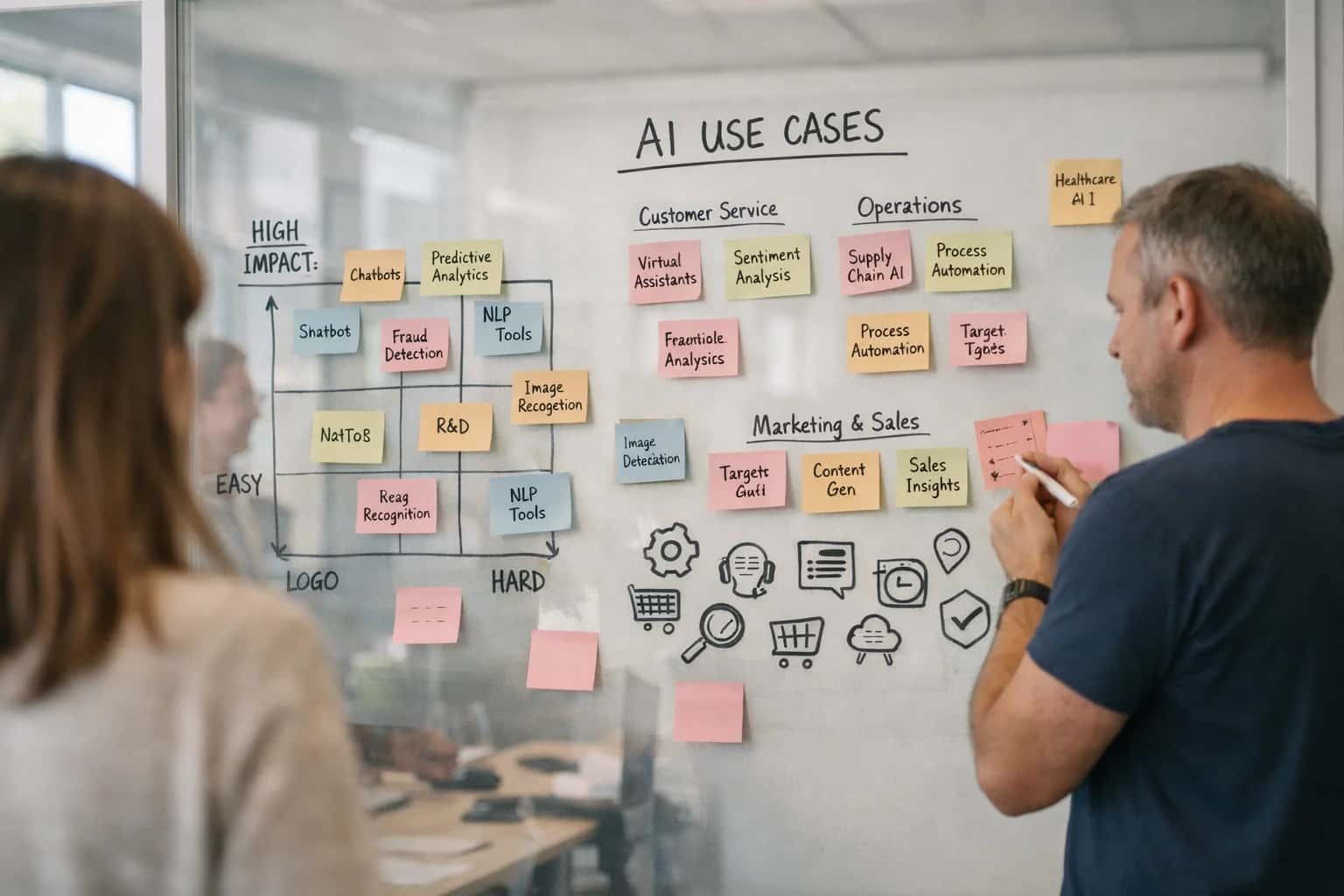
USE CASES
What is Differentially Private Public Health Research Used For?
Public health agencies face a critical data dilemma: unlocking population insights requires sensitive individual data, but sharing it risks privacy breaches and legal non-compliance. Differentially private research provides the solution.
Differential privacy (DP) fixes this by enabling the release of synthetic datasets or noisy statistical queries that protect any single individual's information. Researchers can analyze population-level trends—like infection rates by demographic—with mathematical privacy guarantees. This transforms restricted data silos into a secure, collaborative asset. The measurable outcome is faster, compliant research cycles, leading to data-driven policy decisions that improve community health outcomes and optimize public spending. For a deeper technical dive, explore our pillar on Synthetic Data Generation and Privacy-Preserving Analytics and related use cases like Synthetic Patient Data for Diagnostic AI.
DIFFERENTIALLY PRIVATE PUBLIC HEALTH RESEARCH
Common Use Cases: From Outbreak Response to Long-Term Planning
Move beyond data silos and privacy roadblocks. These use cases demonstrate how synthetic, privacy-preserving data unlocks actionable public health intelligence while ensuring citizen trust and regulatory compliance.
01
Real-Time Outbreak Modeling & Resource Allocation
During a disease outbreak, speed is critical. Traditional data-sharing agreements can take weeks. Differentially private synthetic datasets enable near-instantaneous modeling of transmission dynamics using anonymized case data, mobility patterns, and hospital admissions. Public health officials can simulate scenarios to:
- Predict ICU bed and ventilator demand with 95% statistical accuracy.
- Optimize vaccine distribution to high-risk zip codes 3x faster.
- Model the impact of non-pharmaceutical interventions (e.g., school closures) without exposing individual movement histories. Example: A regional health department used synthetic data to model a flu outbreak, enabling pre-emptive resource shifts that reduced peak hospital strain by an estimated 15%.
02
Longitudinal Health Equity & Disparity Studies
Understanding long-term health outcomes across demographics is hampered by the inability to link sensitive records over time. Privacy-preserving analytics create longitudinal synthetic cohorts that preserve statistical relationships between socioeconomic factors, environmental exposures, and chronic disease prevalence.
- Identify at-risk populations for conditions like diabetes or asthma without accessing individual EHRs.
- Measure the long-term efficacy of public health programs (e.g., smoking cessation, nutritional aid) across different communities.
- Support grant applications and policy justifications with robust, privacy-safe evidence. This turns fragmented data into a competitive advantage for securing funding and designing targeted interventions.
03
Environmental Health Risk Analysis
Correlating public health data with environmental factors (air quality, water contamination, industrial sites) requires merging datasets from different agencies, each with strict privacy controls. Synthetic data bridges this gap.
- Create combined synthetic datasets that link anonymized health outcomes with geospatial environmental data.
- Analyze cancer cluster risks or asthma rates relative to pollution sources with full privacy assurance.
- Enable academic and third-party research on environmental justice issues by providing safe, analyzable datasets. This accelerates research that can inform zoning laws, industrial regulations, and public safety advisories, mitigating legal and reputational risk for governing bodies.
04
Synthetic Control Arms for Public Health Interventions
Evaluating the real-world effectiveness of a new policy or community health program often lacks a true control group. Synthetic control methodology uses differentially private data to construct a statistical "twin" for a treated population.
- Quantify the ROI of a new wellness initiative (e.g., a city-wide exercise program) by comparing outcomes to a synthetic control.
- A/B test policy changes in a virtual environment before full-scale rollout, reducing implementation risk.
- Provide auditable, evidence-based reports to stakeholders and taxpayers on program effectiveness. This transforms public health from reactive to proactively data-driven, optimizing limited budgets for maximum community impact.
05
Secure Data Collaboration for Multi-Agency Task Forces
Crisis response—from pandemics to natural disasters—requires seamless data sharing between health departments, emergency services, and federal agencies. Differentially private synthesis is the trust layer for a collaborative data ecosystem.
- Create a unified, privacy-safe "data lake" from disparate agency silos for joint analysis.
- Run federated analytics where models are trained on synthetic aggregates, not raw data.
- Maintain public trust and compliance with HIPAA and other regulations while breaking down operational silos. The result is faster, more coordinated crisis response and a foundation for ongoing inter-agency planning, turning data collaboration from a liability into a strategic asset.
06
Forecasting for Public Health Budgeting & Planning
Justifying multi-year budgets requires projecting future needs. Synthetic data enables sophisticated forecasting models that use historical trends without privacy breaches.
- Model aging population needs for geriatric care and associated infrastructure costs.
- Forecast demand for specific health services (e.g., mental health, addiction treatment) to guide workforce development and facility planning.
- Stress-test budget allocations against various epidemic or demographic shift scenarios. This provides CIOs and Health Directors with a data-driven business case for capital investments, moving planning from political negotiation to strategic, evidence-based decision-making.
PRACTICAL IMPLEMENTATION ROADMAP
How to Implement Differentially Private Public Health Research
Public health agencies face a critical dilemma: unlocking the power of population data for research while strictly protecting individual privacy. This roadmap outlines how to deploy differential privacy to enable secure, collaborative analytics.
Public health research is paralyzed by data silos. Epidemiologists need granular, population-level data to track disease spread and evaluate interventions, but accessing sensitive citizen health records triggers severe HIPAA and GDPR compliance risks. This creates a costly bottleneck, delaying critical insights and forcing reliance on outdated or incomplete datasets, ultimately hindering proactive community health measures and eroding public trust.
The solution is a differentially private synthetic data pipeline. By applying mathematical noise to raw datasets, we generate artificial—but statistically identical—research cohorts. This enables agencies to safely share and collaborate on synthetic datasets that preserve trends in vaccination rates, infection hotspots, and social determinants of health, without exposing a single individual. The outcome is accelerated, compliant research that turns data into actionable public health policy, as seen in our work on Synthetic Patient Data for Diagnostic AI.
Enabling Efficiency, Speed & Accuracy
Intelligent Analysis, Decision & Execution
We build AI systems for teams that need search across company data, workflow automation across tools, or AI features inside products and internal software.
Talk to Us
Search across company data
Give teams answers from docs, tickets, runbooks, and product data with sources and permissions.
Useful when people spend too long searching or get different answers from different systems.
Enterprise searchRAGPermissions
Read more
Automate internal workflows
Use AI to route work, draft outputs, trigger actions, and keep approvals and logs in place.
Useful when repetitive work moves across multiple tools and teams.
AI agentsWorkflow automationGovernance
Read more
Add AI to products and internal tools
Build assistants, guided actions, or decision support into the software your team or customers already use.
Useful when AI needs to be part of the product, not a separate tool.
AI integrationDecision supportModel routing
Read moreDIFFERENTIALLY PRIVATE PUBLIC HEALTH RESEARCH
Navigating Compliance and Adoption Challenges
Unlocking population-level health insights requires navigating a minefield of privacy regulations and data scarcity. This section addresses the core enterprise objections to adopting differentially private synthetic data, translating technical safeguards into clear business and compliance outcomes.
Differential privacy (DP) is a rigorous mathematical framework that guarantees an individual's data cannot be identified within a dataset, even by a sophisticated adversary with access to auxiliary information. It works by injecting carefully calibrated statistical noise into query results or the data generation process itself.
For public health research, this means epidemiologists can run analyses on a synthetic dataset generated with DP guarantees. The synthetic data preserves crucial population-level trends—like disease prevalence, demographic correlations, or treatment outcomes—while providing a provable privacy shield. This transforms previously locked Protected Health Information (PHI) into a usable, research-grade asset without the legal exposure of handling raw records, directly enabling studies that would otherwise be stalled by IRB and compliance reviews.

About the author
Prasad Kumkar
CEO & MD, Inference Systems
Prasad Kumkar is the CEO & MD of Inference Systems and writes about AI systems architecture, LLM infrastructure, model serving, evaluation, and production deployment. Over 5+ years, he has worked across computer vision models, L5 autonomous vehicle systems, and LLM research, with a focus on taking complex AI ideas into real-world engineering systems.
His work and writing cover AI systems, large language models, AI agents, multimodal systems, autonomous systems, inference optimization, RAG, evaluation, and production AI engineering.
LinkedIn
Limited slotsGet a Free AI Consultation
Partnered with leading AI, data, and software stack.





How We Work
Custom AI workflows for your Business
One-fit-all AI don't work for modern businesses. At Inferensys, we aim to understand your business & custom requirements; which we use to define most efficient agentic workflows, the data, and the tools for your business.
01
Review the use case
We understand the task, the users, and where AI can actually help.
Read more02
Pick the right approach
We define what needs search, automation, or product integration.
Read more03
Build the first useful version
We implement the part that proves the value first.
Read more04
Improve from there
We add the checks and visibility needed to keep it useful.
Read moreThe first call is a practical review of your use case and the right next step.
Talk to Us