The manual processing of ESG questionnaires is a major operational bottleneck. Teams spend weeks—often involving legal, sustainability, and finance—manually extracting data from disparate systems, interpreting ambiguous questions, and ensuring brand-aligned responses. This drain on resources delays RFPs, frustrates stakeholders, and introduces costly inconsistencies that can damage your sustainability rating and investor confidence. The pain is compounded by the sheer volume and technical complexity of modern frameworks.

Use Case
Automated ESG Questionnaire Processor
AI automates responses to complex ESG questionnaires from customers, investors, and raters like CDP, ensuring accuracy and slashing manual effort by up to 90%.
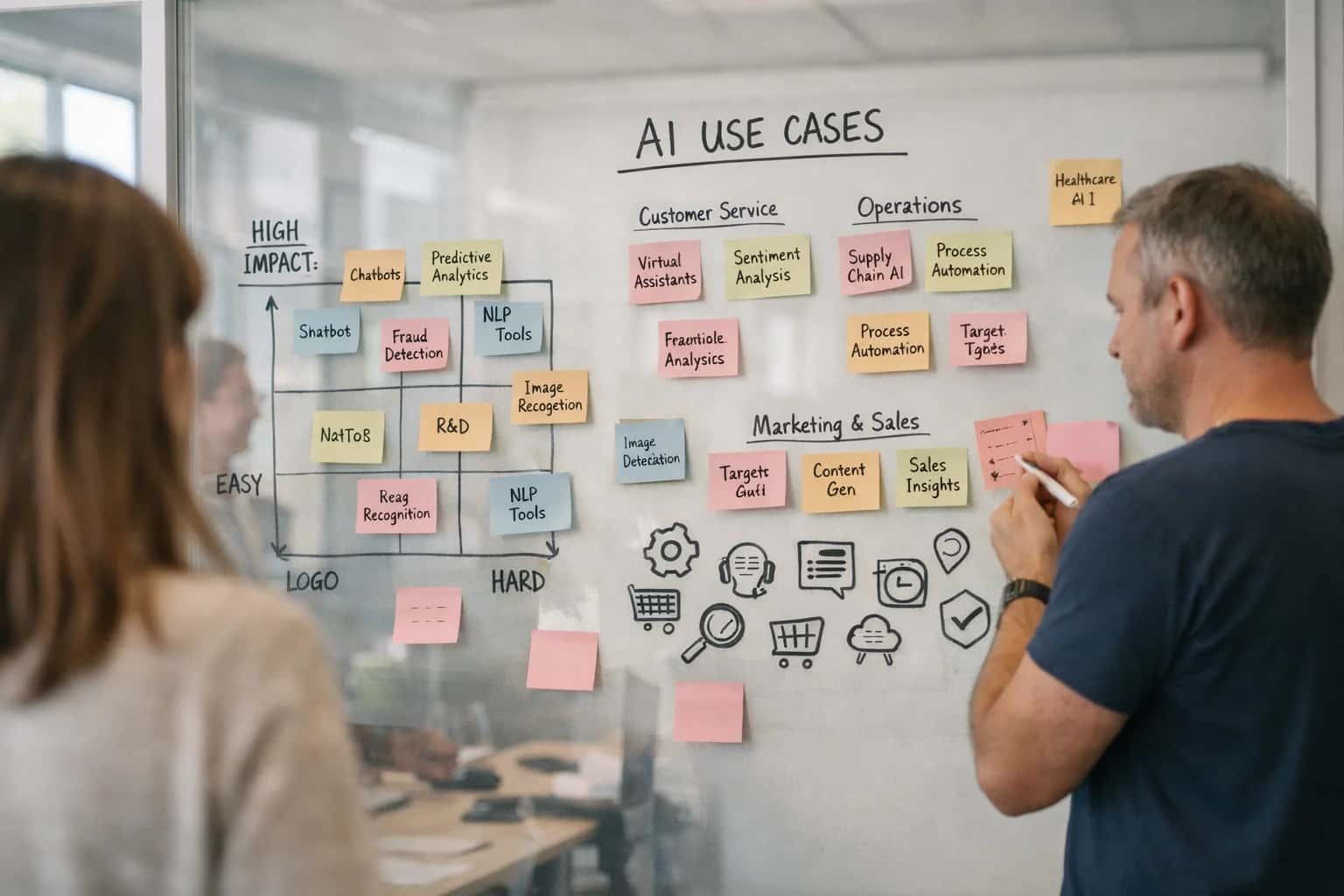
USE CASE: OPERATIONAL EFFICIENCY
What is an Automated ESG Questionnaire Processor Used For?
An Automated ESG Questionnaire Processor is an AI system designed to read, interpret, and respond to complex ESG questionnaires from customers, investors, and rating agencies like CDP, MSCI, or EcoVadis.
An AI-powered processor automates this end-to-end. It ingests questionnaires, maps questions to your centralized ESG data lake, and drafts accurate, consistent responses in hours, not weeks. This delivers measurable ROI: a 70-80% reduction in manual effort, faster submission cycles for competitive bids, and higher-quality, audit-ready disclosures. It transforms a cost center into a strategic capability, freeing experts for higher-value analysis like our AI-Powered CSRD Compliance Assistant and Sustainability Target Setting AI.
PROVEN ROI
Common Use Cases for ESG Questionnaire Automation
Automated ESG questionnaire processing transforms a costly, manual compliance burden into a strategic advantage. These use cases demonstrate how AI delivers tangible business value by accelerating responses, improving accuracy, and freeing up expert teams.
01
Accelerate Investor & Customer RFPs
Respond to complex due diligence questionnaires from investors, lenders, and enterprise customers in hours, not weeks. The AI reads, interprets, and drafts accurate responses by pulling verified data from your central ESG repository.
- Real Example: A manufacturing firm reduced RFP response time from 3 weeks to 2 days, securing a $20M sustainability-linked loan faster.
- Key Benefit: Faster responses directly improve win rates and capital access while demonstrating operational excellence.
80%
Faster Response Time
>95%
Response Consistency
02
Streamline CDP, DJSI, and EcoVadis Submissions
Automate annual submissions to major ESG raters and rankings. The AI maps your data to framework-specific questions, ensures year-over-year consistency, and flags potential scoring gaps.
- Real Example: A global retailer automated its CDP Climate Change submission, improving its score from 'C' to 'B' by ensuring comprehensive, accurate data coverage.
- Key Benefit: Protects and enhances corporate reputation, a critical intangible asset valued by investors and customers.
03
Ensure Supply Chain ESG Compliance
Automate the distribution, collection, and analysis of supplier ESG questionnaires. The AI validates responses, identifies red flags (e.g., conflicting data), and creates risk dashboards.
- Real Example: An automotive OEM processes 5,000+ supplier questionnaires annually, cutting manual review time by 70% and identifying 15 high-risk suppliers for targeted engagement.
- Key Benefit: Mitigates Scope 3 and reputational risk while building a more resilient, transparent supply chain.
04
Automate Internal Audit & Control Processes
Use AI to continuously audit ESG data feeding into questionnaires. It cross-references source systems, flags discrepancies, and creates an immutable audit trail for regulators.
- Real Example: A financial institution uses the processor to validate data for its SFDR disclosures, reducing pre-audit preparation from 6 weeks to 10 days.
- Key Benefit: Drastically reduces compliance costs and audit fees while providing defensible, audit-ready evidence.
05
Centralize ESG Knowledge & Best Practices
The AI becomes an institutional repository for ESG intelligence. It learns from past responses, suggests optimized language, and ensures all departments (Legal, Comms, Sustainability) provide consistent messaging.
- Real Example: A technology firm eliminated conflicting answers between its investor relations and sustainability teams, strengthening its market narrative.
- Key Benefit: Transforms ESG from a siloed function into a coordinated, strategic capability, reducing internal friction and error.
06
Quantify the ROI of ESG Automation
Justify the investment with clear metrics. A typical automation project delivers:
- Cost Savings: Reduce manual labor by 60-80%, reallocating FTEs to strategic analysis.
- Risk Reduction: Minimize errors and omissions that can lead to regulatory fines or reputational damage.
- Opportunity Capture: Accelerate deal flow and improve ratings, which can lower cost of capital.
- Real ROI: One client achieved full payback in 8 months through saved consultant fees and avoided compliance penalties.
AUTOMATED ESG QUESTIONNAIRE PROCESSOR
How It Works: The AI Implementation Process
Manual ESG questionnaire responses are a costly bottleneck. This narrative outlines the operational pain and the AI-driven solution that transforms compliance from a burden into a competitive advantage.
The pain point is immense. Teams waste hundreds of hours manually parsing complex, ever-changing questionnaires from CDP, investors, and customers. This process is error-prone, creates inconsistent messaging, and diverts strategic talent from value-creation to data entry. In a landscape defined by regulatory pressure like the EU's CSRD, these inefficiencies translate directly into compliance risk, reputational damage, and lost business opportunities. It's a classic operational tax with no strategic return.
The AI fix is a specialized processor that reads, interprets, and drafts accurate responses. It integrates with your ESG Data Validation Engine and internal systems to pull verified data, ensuring consistency and auditability. The outcome is a 70-80% reduction in manual effort, faster submission times, and a demonstrably higher quality score from raters. This transforms a cost center into a reliable, scalable capability, directly supporting our broader Sustainability Intelligence and Automated ESG Operations pillar.
Enabling Efficiency, Speed & Accuracy
Intelligent Analysis, Decision & Execution
We build AI systems for teams that need search across company data, workflow automation across tools, or AI features inside products and internal software.
Talk to Us
Search across company data
Give teams answers from docs, tickets, runbooks, and product data with sources and permissions.
Useful when people spend too long searching or get different answers from different systems.
Enterprise searchRAGPermissions
Read more
Automate internal workflows
Use AI to route work, draft outputs, trigger actions, and keep approvals and logs in place.
Useful when repetitive work moves across multiple tools and teams.
AI agentsWorkflow automationGovernance
Read more
Add AI to products and internal tools
Build assistants, guided actions, or decision support into the software your team or customers already use.
Useful when AI needs to be part of the product, not a separate tool.
AI integrationDecision supportModel routing
Read moreAUTOMATED ESG QUESTIONNAIRE PROCESSOR
Implementation Roadmap: From Pilot to Scale
Transform a costly, manual compliance burden into a strategic, automated asset. This roadmap details the phased implementation of an AI-powered ESG questionnaire processor, delivering measurable ROI at each stage.
01
Phase 1: Pilot & Proof of Value
Deploy the AI processor against a controlled set of high-volume, repetitive questionnaires (e.g., a specific customer RFI template). This phase focuses on validating core capabilities and establishing a baseline ROI.
- Key Activities: Map 2-3 key questionnaire formats, configure the AI for extraction and drafting, and run a parallel test against manual processing.
- Real-World Example: A manufacturing firm piloted the system on CDP Climate Change questionnaires, reducing the initial data compilation time from 3 weeks to 3 days.
- Outcome: Clear metrics on time saved, accuracy improvements, and resource reallocation, building the business case for expansion.
02
Phase 2: Departmental Scale & Integration
Expand the system's scope to handle the full spectrum of questionnaires for a single department, such as Investor Relations or Supply Chain, and integrate with internal data sources.
- Key Activities: Connect the AI to ERP, EHS, and sustainability management platforms for automated data retrieval. Train the model on a broader set of frameworks (SASB, GRI).
- Quantifiable Benefit: A financial services company scaled to their entire ESG due diligence process, achieving a 70% reduction in analyst hours spent on questionnaire responses, allowing them to handle 3x more fund manager inquiries.
- Outcome: Departmental efficiency gains, improved response consistency, and the foundation for a centralized ESG data hub.
03
Phase 3: Enterprise Orchestration & Governance
Establish the processor as the enterprise-wide system of record for all external ESG disclosures. Implement robust governance, review workflows, and audit trails.
- Key Activities: Roll out a centralized portal for all business units. Implement multi-level review and approval chains with full version control. Integrate with the broader Sustainability Intelligence platform for unified reporting.
- ROI Driver: This phase eliminates siloed efforts and redundant data gathering. A global retailer reported annual compliance cost savings of $850,000 and reduced their audit preparation time by 60%.
- Outcome: A scalable, governed process that ensures audit-ready accuracy and turns compliance into a competitive data advantage.
04
Phase 4: Strategic Intelligence & Proactive Engagement
Leverage the accumulated structured data and AI insights to move from reactive compliance to proactive stakeholder engagement and strategic planning.
- Key Activities: Use AI to analyze response patterns, benchmark against peers, and predict future investor or customer inquiries. Generate insights for the sustainability strategy team.
- Competitive Advantage: The system identifies disclosure weaknesses before they are questioned, allowing for preemptive corrective action. It enables the communications team to craft data-driven sustainability narratives.
- Outcome: ESG operations transition from a cost center to an intelligence function that informs materiality assessments, risk management, and brand positioning.
05
Core Technology: The AI Engine
The system's power comes from a specialized stack combining Natural Language Understanding (NLU), Knowledge Graph integration, and rule-based validation.
- How It Works: The AI first classifies the questionnaire by framework and intent. It then extracts relevant questions, maps them to internal data points using a connected knowledge graph, and drafts accurate, consistent responses.
- Key Feature - Validation Layer: A neuro-symbolic reasoning layer checks drafts against internal policies and past submissions to ensure alignment and flag potential inconsistencies or greenwashing risks.
- Result: Not just automation, but intelligent augmentation that ensures quality and learns over time.
06
Measuring Success: The ROI Dashboard
Justification requires clear metrics. A dedicated dashboard tracks KPIs that matter to the CFO and CIO:
- Efficiency Gains: Hours saved per questionnaire, FTEs reallocated to higher-value analysis.
- Quality & Risk: Reduction in errors/restatements, improvement in ESG rating scores.
- Cost Savings: Direct labor cost reduction, avoided consultant fees, reduced software licensing for point solutions.
- Strategic Value: Faster response times to lucrative RFP opportunities, improved investor confidence scores.
- Example Metric: A typical enterprise achieves full payback on the platform investment in under 14 months through hard cost savings alone.

About the author
Prasad Kumkar
CEO & MD, Inference Systems
Prasad Kumkar is the CEO & MD of Inference Systems and writes about AI systems architecture, LLM infrastructure, model serving, evaluation, and production deployment. Over 5+ years, he has worked across computer vision models, L5 autonomous vehicle systems, and LLM research, with a focus on taking complex AI ideas into real-world engineering systems.
His work and writing cover AI systems, large language models, AI agents, multimodal systems, autonomous systems, inference optimization, RAG, evaluation, and production AI engineering.
LinkedIn
Limited slotsGet a Free AI Consultation
Partnered with leading AI, data, and software stack.





How We Work
Custom AI workflows for your Business
One-fit-all AI don't work for modern businesses. At Inferensys, we aim to understand your business & custom requirements; which we use to define most efficient agentic workflows, the data, and the tools for your business.
01
Review the use case
We understand the task, the users, and where AI can actually help.
Read more02
Pick the right approach
We define what needs search, automation, or product integration.
Read more03
Build the first useful version
We implement the part that proves the value first.
Read more04
Improve from there
We add the checks and visibility needed to keep it useful.
Read moreThe first call is a practical review of your use case and the right next step.
Talk to Us