Manufacturers face a relentless burden of regulatory documentation, from FDA 21 CFR Part 11 in pharma to ISO 9001 quality audits. Manual data collection, spreadsheet reconciliation, and report generation consume hundreds of skilled hours annually. This process is not only expensive but also prone to human error, creating audit risks, production delays, and potential fines that directly impact the bottom line and operational continuity.

Use Case
Automated Compliance and Reporting
AI automatically generates audit trails, quality documentation, and regulatory reports from production data, saving hundreds of manual hours and ensuring 100% accuracy for manufacturing compliance.
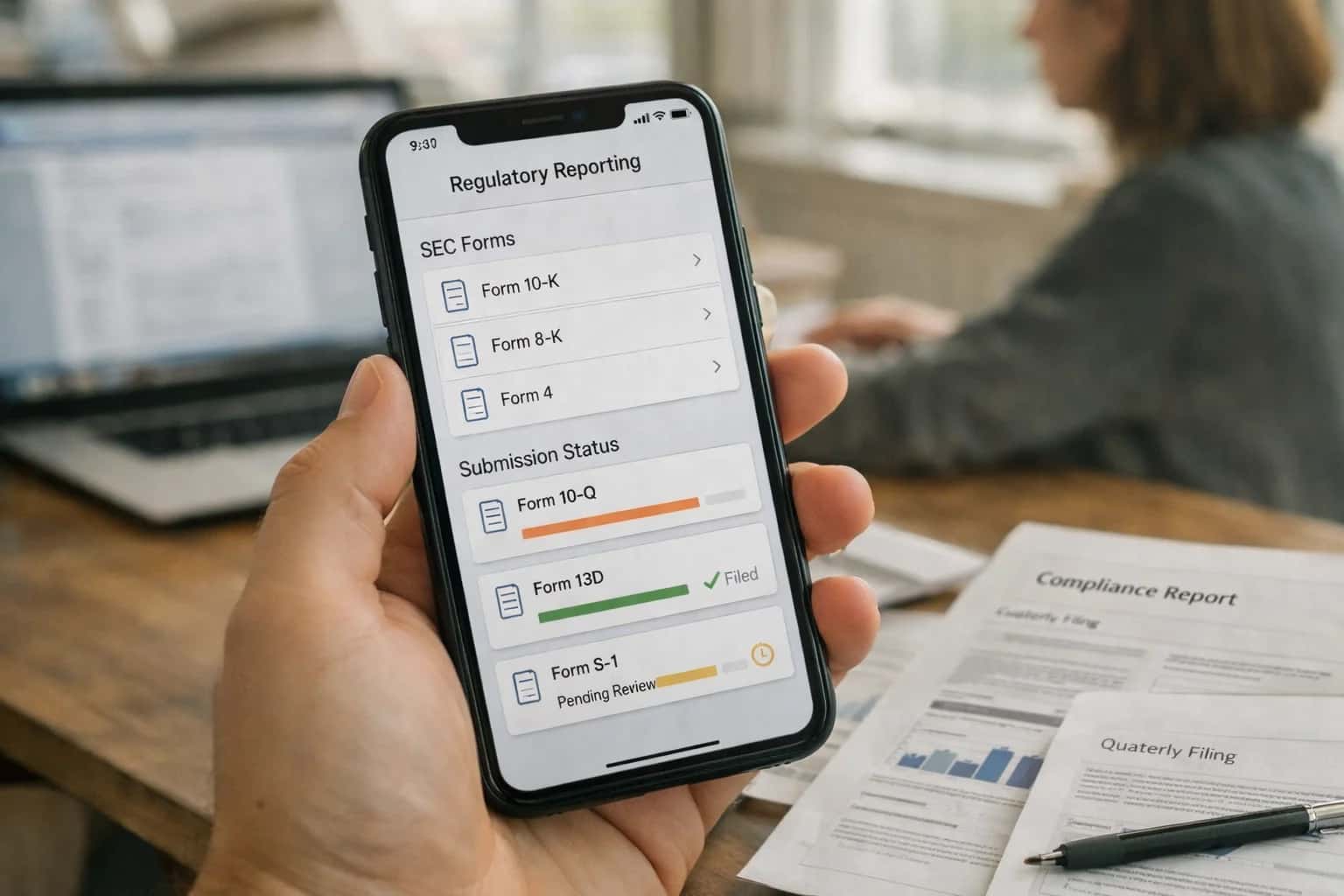
THE PAIN POINT
What is Automated Compliance and Reporting Used For?
Manual compliance is a costly, error-prone drain on manufacturing efficiency, creating significant business risk.
AI-driven Automated Compliance and Reporting acts as a continuous audit engine. It ingests real-time data from MES, SCADA, and ERP systems to automatically generate audit trails, certificates of analysis (CoA), and regulatory submissions. This eliminates manual effort, ensures 100% data accuracy, and provides a single source of truth. The outcome is a 40-60% reduction in manual reporting hours and the elimination of compliance-related production stoppages, turning a cost center into a strategic asset. For related efficiency gains, explore our solutions for Predictive Maintenance for Zero Downtime and Real-Time OEE Monitoring and Analytics.
SMART MANUFACTURING
Common Use Cases: Where AI Delerts Immediate ROI
In regulated manufacturing, manual compliance is a costly bottleneck. AI automates this burden, turning data into audit-ready reports with speed and precision.
01
Automated Audit Trail Generation
AI continuously monitors production data—machine logs, quality checks, operator actions—to automatically generate immutable, time-stamped audit trails. This eliminates hundreds of manual hours spent compiling evidence for ISO, FDA, or customer audits.
- Real Example: A medical device manufacturer reduced audit preparation from 3 weeks to 3 days.
- Ensures 100% data capture and eliminates human error in documentation.
- Provides instant searchability for regulators, slashing response times.
80%
Faster Audit Prep
02
Real-Time Quality & Safety Reporting
AI systems analyze sensor and vision data in real-time to auto-generate mandatory quality reports (e.g., First Article Inspection, COA) and safety compliance documents (OSHA, environmental).
- Bold Benefit: Shift from reactive to proactive compliance; flags deviations as they happen.
- Automatically populates regulatory forms (FDA 483, EU MDR) with validated production data.
- Reduces risk of recalls and non-compliance fines by ensuring nothing is missed.
03
Automated Environmental & ESG Reporting
Machine learning models aggregate data from meters, SCADA systems, and supply chain feeds to calculate and report on emissions, waste, and energy consumption for frameworks like CSRD and SEC climate rules.
- ROI Driver: Turns a complex quarterly manual process into a continuous, automated dashboard.
- Provides accurate, verifiable data for sustainability-linked financing and carbon credits.
- Example: A chemical plant automated its Tier 1 & 2 GHG emissions reporting, saving 200+ person-hours quarterly.
04
Dynamic SOP & Work Instruction Compliance
AI correlates worker actions (from IoT wearables or system logins) with digital Standard Operating Procedures (SOPs). It automatically verifies each step was followed and generates compliance certificates for each batch or job.
- Ensures adherence to cGMP and other strict procedural standards.
- Bold Benefit: Provides objective proof of training effectiveness and procedural compliance.
- Reduces deviations and CAPA (Corrective Action Preventive Action) events by over 25%.
05
Supply Chain Material & Provenance Tracking
AI agents ingest and validate data from supplier portals, IoT sensors, and blockchain ledgers to automatically generate compliance reports for material provenance, conflict minerals (Dodd-Frank), and REACH/ROHS regulations.
- Creates a single source of truth for complex, multi-tier supply chain compliance.
- ROI: Eliminates manual data chasing with suppliers, accelerating time-to-market.
- Enables real-time 'what-if' analysis for sourcing decisions against regulatory constraints.
06
Predictive Compliance Risk Dashboard
Goes beyond reporting to prediction. AI models analyze production, maintenance, and quality data to forecast potential compliance breaches (e.g., equipment calibration drift, trending towards spec limits) weeks in advance.
- Strategic Advantage: Shifts compliance from a cost center to a competitive moat.
- Provides CIOs with a quantifiable risk score and actionable insights to preempt issues.
- Example: A food & beverage company prevented a potential FDA audit finding by predicting a sterilization parameter drift.
SMART MANUFACTURING
How AI Automates Compliance and Reporting
Manual compliance documentation is a costly, error-prone bottleneck. An AI-powered engine transforms this burden into a strategic, automated asset.
The pain point is immense: manual generation of audit trails, quality reports, and regulatory documentation consumes hundreds of hours of skilled labor. This process is not only expensive but also prone to human error, creating significant risk during audits and inspections. Inconsistent data formatting and siloed information systems further complicate traceability, turning compliance from a routine task into a major operational liability that stifles agility and increases overhead.
The AI fix is an automated compliance engine that ingests real-time production data from sensors, MES, and ERP systems. It uses natural language processing to generate accurate, audit-ready reports and maintains a immutable digital thread for full traceability. This slashes manual effort by over 80%, ensures 100% accuracy in documentation, and provides instant access to compliance status, turning a cost center into a source of competitive advantage and risk mitigation. For related strategies, see our insights on Agentic Enterprise Orchestration and Intelligent Content Management.
Enabling Efficiency, Speed & Accuracy
Intelligent Analysis, Decision & Execution
We build AI systems for teams that need search across company data, workflow automation across tools, or AI features inside products and internal software.
Talk to Us
Search across company data
Give teams answers from docs, tickets, runbooks, and product data with sources and permissions.
Useful when people spend too long searching or get different answers from different systems.
Enterprise searchRAGPermissions
Read more
Automate internal workflows
Use AI to route work, draft outputs, trigger actions, and keep approvals and logs in place.
Useful when repetitive work moves across multiple tools and teams.
AI agentsWorkflow automationGovernance
Read more
Add AI to products and internal tools
Build assistants, guided actions, or decision support into the software your team or customers already use.
Useful when AI needs to be part of the product, not a separate tool.
AI integrationDecision supportModel routing
Read moreOVERCOMING IMPLEMENTATION CHALLENGES
Automated Compliance and Reporting
Manual compliance is a costly, error-prone bottleneck. AI transforms this burden into a strategic asset by automating audit trails, documentation, and regulatory reporting directly from production data.
Automated compliance is the use of AI to continuously monitor, document, and report on production processes against regulatory standards (e.g., ISO, FDA, OSHA). It works by ingesting real-time data from IoT sensors, MES/ERP systems, and quality logs. AI models then map this data to specific regulatory clauses, automatically generating audit trails, certificates of analysis (CoAs), and mandated reports. This creates a single source of truth, eliminating manual data aggregation and reducing the risk of human error in critical documentation.

About the author
Prasad Kumkar
CEO & MD, Inference Systems
Prasad Kumkar is the CEO & MD of Inference Systems and writes about AI systems architecture, LLM infrastructure, model serving, evaluation, and production deployment. Over 5+ years, he has worked across computer vision models, L5 autonomous vehicle systems, and LLM research, with a focus on taking complex AI ideas into real-world engineering systems.
His work and writing cover AI systems, large language models, AI agents, multimodal systems, autonomous systems, inference optimization, RAG, evaluation, and production AI engineering.
LinkedIn
Limited slotsGet a Free AI Consultation
Partnered with leading AI, data, and software stack.





How We Work
Custom AI workflows for your Business
One-fit-all AI don't work for modern businesses. At Inferensys, we aim to understand your business & custom requirements; which we use to define most efficient agentic workflows, the data, and the tools for your business.
01
Review the use case
We understand the task, the users, and where AI can actually help.
Read more02
Pick the right approach
We define what needs search, automation, or product integration.
Read more03
Build the first useful version
We implement the part that proves the value first.
Read more04
Improve from there
We add the checks and visibility needed to keep it useful.
Read moreThe first call is a practical review of your use case and the right next step.
Talk to Us