Industrial plants face a critical information gap. Operators rely on disparate 2D schematics, SCADA alarms, and manual inspections, making it difficult to contextualize problems or simulate changes. This leads to costly unplanned downtime, inefficient energy use, and safety risks from undetected anomalies. The pain point is a lack of unified, intuitive situational awareness that connects visual state with operational health. For more on this challenge, see our insights on Multimodal Industrial Fault Diagnosis.

Use Case
3D+Sound Digital Twins for Industrial Plants
Create living virtual replicas of factories that integrate real-time 3D visual data with operational sounds, enabling immersive remote monitoring and scenario testing.
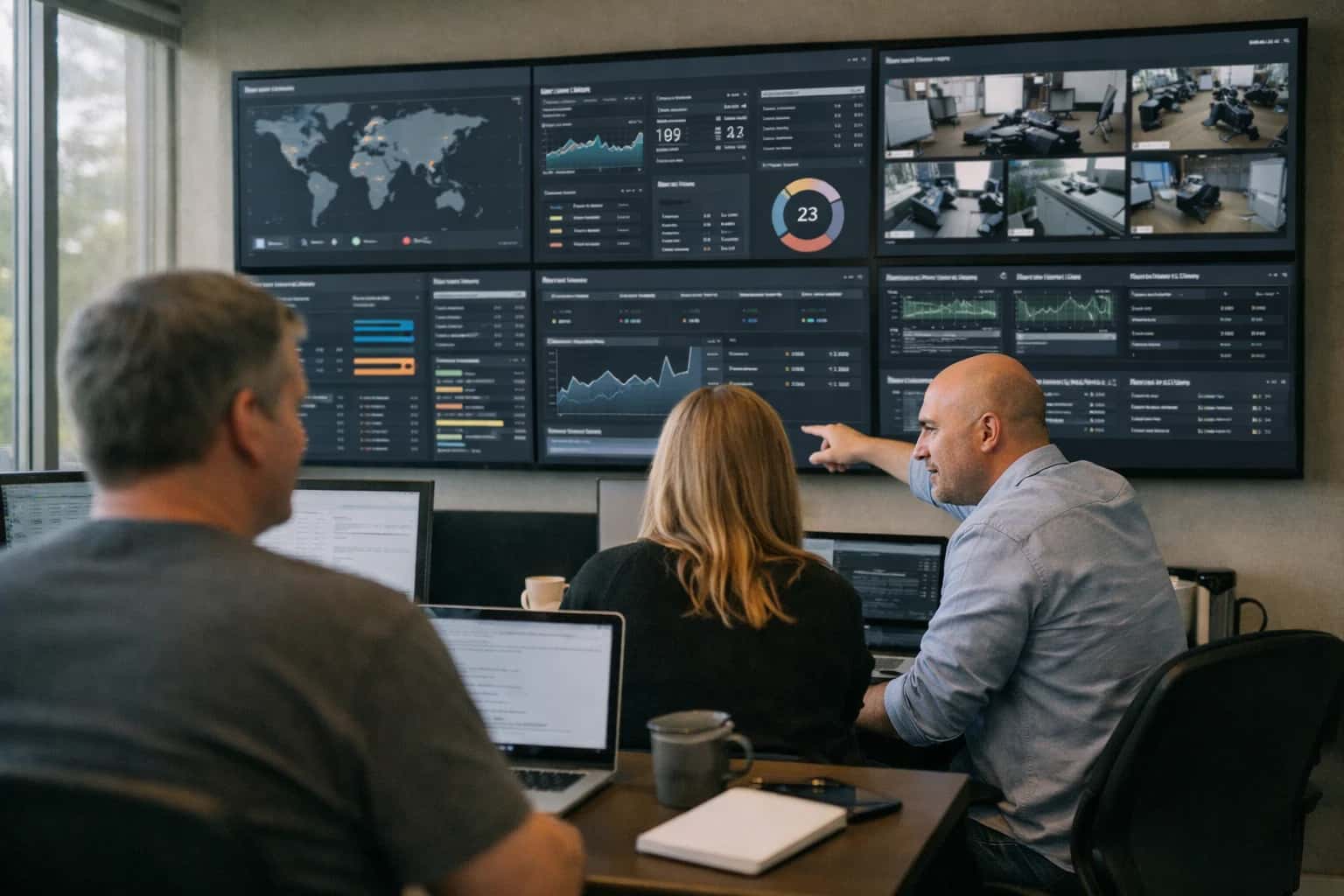
THE BUSINESS CASE
What is 3D+Sound Digital Twins for Industrial Plants Used For?
A 3D+Sound Digital Twin is a living virtual replica of a physical plant, integrating real-time 3D visual data with operational audio. This cross-modal model enables a new paradigm for industrial management, moving from reactive monitoring to immersive, predictive control.
The AI fix is a 3D+Sound Digital Twin. By fusing live 3D LiDAR/camera feeds with acoustic signatures, the system creates a unified conceptual model of the plant. Engineers can remotely 'walk' the virtual floor, hear a pump's abnormal whine correlated with its visual vibration, and run 'what-if' scenarios safely. This enables predictive maintenance, reducing downtime by up to 30%, and optimizes energy consumption by simulating operational changes. It transforms capital planning and safety training. Explore the underlying technology in our pillar on Large Conceptual Models (LCMs).
3D+SOUND DIGITAL TWINS
Common Use Cases
Move beyond static 3D models. Our 3D+Sound Digital Twins create living, breathing virtual replicas of your industrial plant, integrating real-time visual and acoustic data to unlock new levels of operational intelligence and risk mitigation.
01
Predictive Maintenance & Downtime Prevention
Transform from reactive to predictive operations. The digital twin continuously analyzes real-time sound signatures from pumps, turbines, and conveyors against a 3D visual model of wear. AI detects subtle anomalies—like a bearing's high-frequency whine or a valve's irregular vibration—weeks before failure.
- Real-World Example: A chemical plant avoided a $2M unplanned shutdown by flagging a cavitation issue in a critical centrifugal pump 23 days in advance, based on acoustic patterns the human ear couldn't detect.
- ROI Driver: Reduces unplanned downtime by up to 30% and extends asset life through just-in-time maintenance.
02
Immersive Remote Operator Training & Safety
Train new operators and rehearse emergency procedures in a risk-free, hyper-realistic virtual environment. The twin simulates not only the 3D layout and HMI controls but also the authentic sounds of startup sequences, alarm cascades, and equipment under stress.
- Real-World Example: A refinery uses the twin to train control room operators on managing a furnace trip, including the distinct audio alarms and the sound of pressure relief valves, cutting competency time-to-proficiency by 40%.
- ROI Driver: Slashes training costs, minimizes human error, and improves safety recordables by providing experiential learning without plant exposure.
03
Capital Project Planning & Scenario Testing
De-risk multi-million dollar plant modifications by testing them virtually first. Model the installation of new equipment in the 3D space and simulate the acoustic impact on the surrounding environment. Will the new compressor cause harmonic resonance? How will noise levels affect operator stations?
- Real-World Example: A food & beverage manufacturer validated a new packaging line layout in the digital twin, identifying and resolving a potential ergonomic issue and noise hotspot before any steel was cut, saving over $500k in rework.
- ROI Driver: Prevents costly re-engineering, ensures regulatory compliance for noise, and accelerates project time-to-value.
04
Root Cause Analysis & Incident Investigation
Replay plant incidents with forensic accuracy. Synchronize historical sensor data, CCTV footage, and audio logs into the 4D (3D + time) digital twin. Walk through the event sequence to visually and audibly pinpoint the exact chain of failure.
- Real-World Example: Following a minor pressure excursion, a power plant used the twin to replay the 60 seconds prior. The analysis revealed a specific valve's slow actuation sound, corroborated by IoT data, leading to a targeted actuator replacement.
- ROI Driver: Cuts investigation time from weeks to hours, provides irrefutable evidence for reports, and enables precise corrective actions to prevent recurrence.
05
Energy Optimization & Sustainability Auditing
Identify hidden energy waste by correlating 3D thermal imaging with operational sound. The twin visualizes heat loss from insulation or steam leaks while simultaneously identifying equipment, like motors or fans, running inefficiently through their acoustic profile.
- Real-World Example: A pulp & paper mill discovered a compromised steam trap through a combined thermal hotspot and a distinct hissing sound in the twin, saving an estimated 15,000 MMBtu/year in energy.
- ROI Driver: Directly reduces utility costs, supports Scope 1 & 2 emissions reporting, and meets corporate sustainability targets.
06
Unified Command Center for Distributed Assets
Give central engineering teams a 'single pane of glass' to monitor multiple remote facilities. The dashboard presents each plant as an interactive 3D+Sound digital twin, allowing experts to diagnose issues remotely by listening to equipment and inspecting components virtually.
- Real-World Example: A mining company's central asset team in Perth diagnosed a gearbox issue at a remote site in Pilbara by analyzing its sound signature in the twin, guiding local technicians and avoiding a costly fly-in.
- ROI Driver: Reduces travel costs for specialists, standardizes operational oversight, and leverages centralized expertise across the portfolio.
FROM PILOT TO PRODUCTION
How It Works: The Implementation Roadmap
Deploying a 3D+Sound Digital Twin is a phased journey from data integration to operational insight, designed to deliver rapid ROI while building a foundation for continuous optimization.
Industrial plants face a critical visibility gap. Operators rely on disparate 2D schematics, periodic reports, and siloed sensor alarms, making it impossible to holistically understand complex, dynamic systems. This fragmented view leads to reactive firefighting, extended downtime for troubleshooting, and missed optimization opportunities that directly impact throughput and cost. The pain point is a lack of a unified, immersive operational intelligence layer.
The solution is a phased implementation of a living digital twin. Phase 1 integrates real-time IoT data and CAD models into a navigable 3D environment. Phase 2 layers in spatial audio feeds from critical assets, enabling cross-modal anomaly detection. The outcome is a 20-30% reduction in mean time to repair (MTTR) and a 5-15% increase in overall equipment effectiveness (OEE), as detailed in our Smart Manufacturing insights. This creates a command center for predictive, not reactive, operations.
Enabling Efficiency, Speed & Accuracy
Intelligent Analysis, Decision & Execution
We build AI systems for teams that need search across company data, workflow automation across tools, or AI features inside products and internal software.
Talk to Us
Search across company data
Give teams answers from docs, tickets, runbooks, and product data with sources and permissions.
Useful when people spend too long searching or get different answers from different systems.
Enterprise searchRAGPermissions
Read more
Automate internal workflows
Use AI to route work, draft outputs, trigger actions, and keep approvals and logs in place.
Useful when repetitive work moves across multiple tools and teams.
AI agentsWorkflow automationGovernance
Read more
Add AI to products and internal tools
Build assistants, guided actions, or decision support into the software your team or customers already use.
Useful when AI needs to be part of the product, not a separate tool.
AI integrationDecision supportModel routing
Read moreIMPLEMENTATION FAQ
Key Challenges & How to Mitigate Them
Deploying a 3D+Sound Digital Twin is a strategic investment. Here, we address the most common enterprise objections around ROI, compliance, and technical integration to provide a clear path to value.
The ROI is driven by operational efficiency and risk reduction, not just visualization. A well-implemented twin delivers value in three key areas:
- Downtime Prevention: By correlating acoustic anomalies with 3D visual wear, predictive maintenance can reduce unplanned downtime by 15-30%, directly protecting revenue.
- Remote Expertise: Enable senior engineers to diagnose issues from anywhere, cutting travel costs and accelerating resolution times by up to 50%.
- Training & Safety: Immersive scenario testing in the virtual twin reduces onboarding time for new operators and allows for safe practice of emergency procedures, mitigating costly human error.
We structure engagements with clear Key Performance Indicators (KPIs) tied to these outcomes, moving beyond vague promises to measurable business impact.

About the author
Prasad Kumkar
CEO & MD, Inference Systems
Prasad Kumkar is the CEO & MD of Inference Systems and writes about AI systems architecture, LLM infrastructure, model serving, evaluation, and production deployment. Over 5+ years, he has worked across computer vision models, L5 autonomous vehicle systems, and LLM research, with a focus on taking complex AI ideas into real-world engineering systems.
His work and writing cover AI systems, large language models, AI agents, multimodal systems, autonomous systems, inference optimization, RAG, evaluation, and production AI engineering.
LinkedIn
Limited slotsGet a Free AI Consultation
Partnered with leading AI, data, and software stack.





How We Work
Custom AI workflows for your Business
One-fit-all AI don't work for modern businesses. At Inferensys, we aim to understand your business & custom requirements; which we use to define most efficient agentic workflows, the data, and the tools for your business.
01
Review the use case
We understand the task, the users, and where AI can actually help.
Read more02
Pick the right approach
We define what needs search, automation, or product integration.
Read more03
Build the first useful version
We implement the part that proves the value first.
Read more04
Improve from there
We add the checks and visibility needed to keep it useful.
Read moreThe first call is a practical review of your use case and the right next step.
Talk to Us