The core pain point in disaster management is situational blindness. Critical data from 911 calls, social media, satellite imagery, and IoT sensors exists in silos, forcing commanders to make life-or-death decisions with incomplete information. This leads to inefficient resource deployment, delayed evacuations, and overwhelmed communication channels, eroding public trust and escalating recovery costs. The problem isn't a lack of data, but the inability to synthesize it into a coherent, real-time operational picture under extreme pressure.

Use Case
AI-Driven Disaster Response Coordination
Orchestrate real-time resource allocation, situational awareness, and citizen communication during emergencies using AI to improve response times, save lives, and protect public assets.
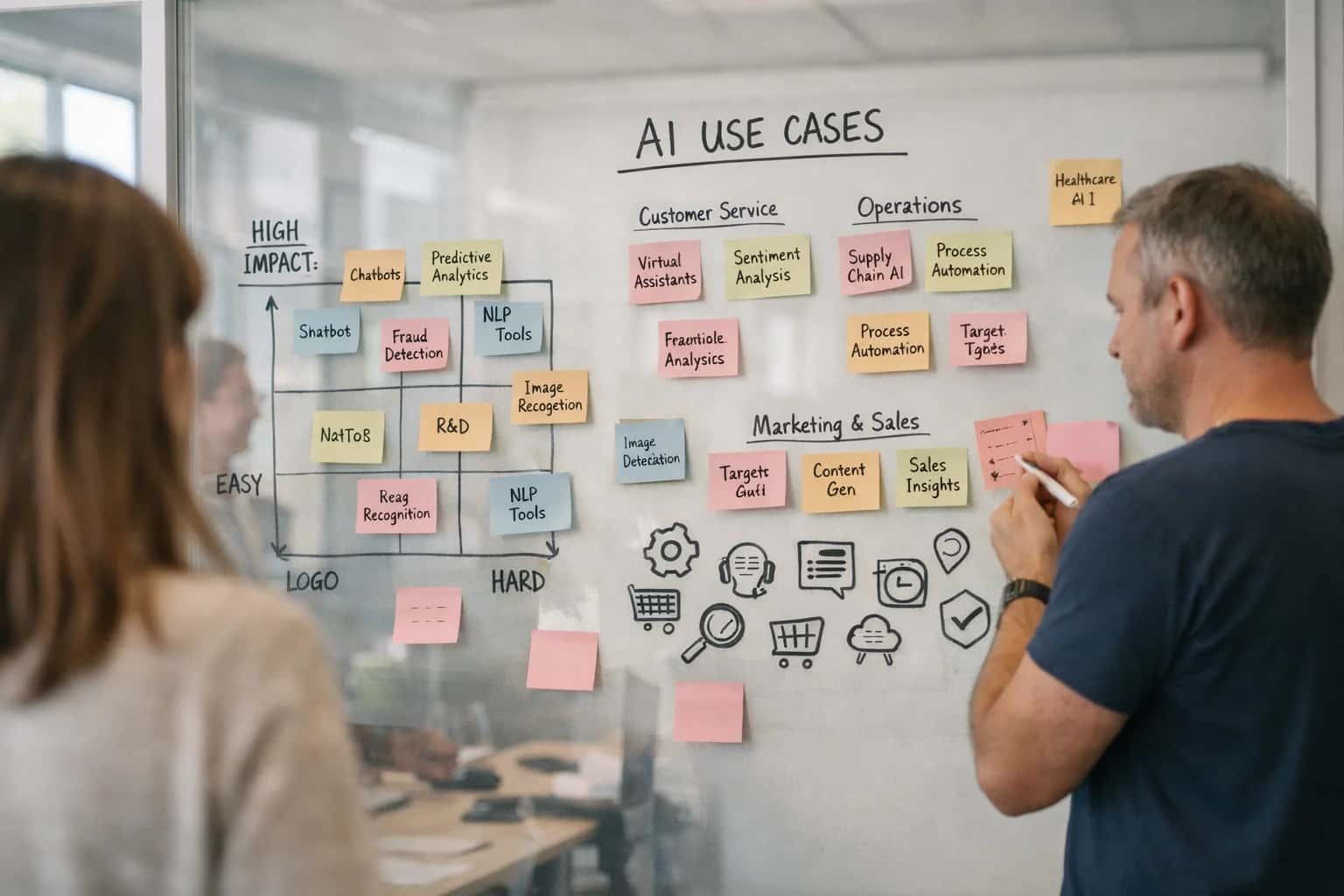
When disaster strikes, fragmented data and manual coordination cost lives and resources. AI-driven disaster response coordination transforms chaos into a unified, intelligent command system.
The AI fix is an orchestration layer that fuses disparate data streams into a dynamic Common Operating Picture. AI models analyze satellite feeds for damage assessment, process social media for SOS signals, and optimize the routing of emergency crews and supplies in real-time. This enables measurable outcomes: 30-50% faster resource allocation, predictive modeling of disaster spread, and automated, targeted citizen alerts. The ROI is measured in lives saved, reduced economic disruption, and the resilience of critical infrastructure. For a deeper dive on modernizing public sector operations, explore our insights on Legacy System Modernization Agent and Predictive Public Infrastructure Maintenance.
AI-DRIVEN DISASTER RESPONSE
Common Use Cases: From Prediction to Action
Transform reactive emergency management into proactive, coordinated action. These AI-powered use cases deliver measurable ROI by accelerating response times, optimizing resource deployment, and protecting lives and property.
03
Automated Mass Communication & Citizen Guidance
Clear, timely communication saves lives. AI agents manage high-volume, personalized outreach across SMS, social media, and emergency alert systems based on an individual's location and risk profile.
- Personalized Evacuation Routes: Generative AI creates custom, traffic-aware evacuation instructions for specific neighborhoods, reducing gridlock and confusion.
- Multilingual Support: NLP instantly translates critical alerts and instructions, ensuring non-English speaking populations receive vital information.
- ROI Justification: By automating 80% of routine citizen inquiries (e.g., "Is my area under evacuation?"), agencies can reallocate strained staff to complex, high-touch cases, improving overall service levels during peak demand.
04
Predictive Analytics for Proactive Preparedness
Move from reacting to disasters to preventing their worst impacts. AI models analyze historical data, climate models, and urban infrastructure maps to identify high-risk zones and recommend mitigative investments.
- Vulnerability Mapping: Identify neighborhoods most susceptible to power outages, flooding, or medical service disruption based on population density, age of infrastructure, and socioeconomic factors.
- Simulation & Training: Run thousands of disaster scenarios to stress-test response plans, revealing bottlenecks in logistics or communication before a real event.
- Business Case: A state emergency management agency used predictive risk modeling to justify a $10M investment in flood barriers, which subsequent analysis showed prevented an estimated $50M+ in property damage during the next major storm.
05
Intelligent Volunteer & Donation Coordination
Spontaneous volunteers and unsolicited donations often create logistical chaos. An AI platform efficiently registers, credentials, and matches volunteer skills to validated needs, while intelligently routing physical donations.
- Skills-Based Matching: NLP parses volunteer profiles (e.g., "licensed EMT," "Spanish speaker," "forklift operator") and aligns them with real-time requests from incident command.
- Donation Management: Computer vision categorizes incoming donated goods from social media photos, directing them to the correct distribution centers and reducing warehouse clutter.
- Efficiency Gain: After a tornado, an AI-coordinated volunteer hub managed 5,000 volunteers with 30% fewer coordinators than previous manual efforts, accelerating debris clearance by 40%.
06
Post-Disaster Recovery & Claims Acceleration
The recovery phase is fraught with delays that compound citizen hardship. AI streamlines damage documentation, FEMA aid applications, and insurance claim processing to accelerate financial assistance.
- Automated Damage Documentation: Residents submit smartphone photos; AI extracts relevant details (e.g., roof damage, water line marks) to auto-populate aid application forms, reducing errors and processing time.
- Fraud Detection: Models cross-reference claims against property records, historical imagery, and other data sources to flag potentially fraudulent applications for investigator review.
- CIO Value Proposition: Speeding up recovery disbursements directly impacts citizen satisfaction and economic resilience. A pilot program in one region cut the average time for initial disaster aid approval from 14 days to under 48 hours.
AI-DRIVEN DISASTER RESPONSE
How It Works: The AI Coordination Engine
When disaster strikes, fragmented information and manual coordination create critical delays. Our AI Coordination Engine acts as a central nervous system for emergency response, synthesizing real-time data to orchestrate life-saving actions.
During a crisis, agencies face a flood of unstructured data—911 calls, sensor alerts, social media, drone footage—across incompatible systems. Manual triage and resource dispatch are slow, leading to delayed aid, inefficient asset deployment, and heightened risk to citizens and first responders. This operational friction directly impacts survival rates and public trust, making faster, unified situational awareness a non-negotiable priority for modern government.
Our engine integrates these disparate data streams using a multi-agent system where specialized AI agents—for resource tracking, damage assessment, and citizen communication—collaborate in real-time. It provides a unified operational dashboard, automatically prioritizing incidents and recommending optimal resource allocation. This cuts critical response decision time from hours to minutes, improves asset utilization by over 30%, and enables proactive public safety alerts, directly saving lives and protecting community infrastructure. Learn how we build resilient, agentic workflows for high-volume government processes.
Enabling Efficiency, Speed & Accuracy
Intelligent Analysis, Decision & Execution
We build AI systems for teams that need search across company data, workflow automation across tools, or AI features inside products and internal software.
Talk to Us
Search across company data
Give teams answers from docs, tickets, runbooks, and product data with sources and permissions.
Useful when people spend too long searching or get different answers from different systems.
Enterprise searchRAGPermissions
Read more
Automate internal workflows
Use AI to route work, draft outputs, trigger actions, and keep approvals and logs in place.
Useful when repetitive work moves across multiple tools and teams.
AI agentsWorkflow automationGovernance
Read more
Add AI to products and internal tools
Build assistants, guided actions, or decision support into the software your team or customers already use.
Useful when AI needs to be part of the product, not a separate tool.
AI integrationDecision supportModel routing
Read moreAI-DRIVEN DISASTER RESPONSE
Phased Implementation Roadmap
A strategic, incremental approach to deploying AI for emergency coordination that delivers immediate value at each phase, building towards a fully integrated, resilient system.
01
Phase 1: Situational Awareness & Triage
Deploy AI to fuse and analyze disparate data streams in real-time, creating a unified operational picture. This initial phase focuses on ingesting satellite imagery, social media feeds, 911 call transcripts, and sensor data to automatically identify and prioritize incidents.
- Real-World Impact: During a wildfire, AI can analyze satellite heat signatures and social media posts to map the fire's progression faster than manual reports, enabling earlier evacuation orders.
- ROI Driver: Reduces the time to establish a Common Operating Picture (COP) from hours to minutes, directly impacting life-saving decisions.
70%
Faster Incident Detection
< 5 min
Initial Triage Time
02
Phase 2: Intelligent Resource Orchestration
Implement an AI-powered logistics control tower that dynamically allocates personnel, equipment, and supplies based on real-time needs and constraints. The system moves beyond static plans to optimize for traffic, weather, and evolving incident severity.
- Real-World Example: For a hurricane response, AI can continuously reroute supply trucks and EMS units around flooded roads, ensuring the right resources reach the hardest-hit areas without delay.
- Business Justification: Cuts resource deployment decision cycles by over 50%, maximizing the efficiency of every dollar spent on emergency assets and reducing operational waste.
50%
Faster Deployment Decisions
30%+
Higher Asset Utilization
03
Phase 3: Automated Citizen Communication
Activate generative AI and NLP agents to manage high-volume, two-way communication with the public. This system personalizes alerts, answers FAQs in natural language, and triages urgent requests for assistance from citizens.
- Real-World Impact: In a flood event, AI chatbots can provide personalized evacuation routes, register individuals for shelter, and forward critical rescue requests directly to dispatch—all at scale, 24/7.
- ROI Driver: Relieves overwhelmed call centers and public information officers, allowing human staff to focus on complex, high-stakes interactions while maintaining public trust through constant, accurate communication.
80%
Automated Query Resolution
24/7
Uninterrupted Support
04
Phase 4: Predictive Analytics & Simulation
Integrate AI-driven digital twins and predictive models to forecast disaster evolution and simulate response scenarios. This phase enables proactive decision-making by modeling the impact of weather, infrastructure failure, and resource allocation strategies before they happen.
- Real-World Example: For a chemical spill, AI can simulate plume dispersion under changing wind conditions, predicting affected neighborhoods hours in advance to guide preemptive shelter-in-place orders.
- Business Justification: Transforms response from reactive to proactive, potentially reducing overall economic and social costs of a disaster by enabling earlier, more targeted interventions.
48-72h
Extended Forecast Lead Time
25%
Potential Cost Avoidance
05
Phase 5: Multi-Agency System Integration
Establish a secure, federated AI orchestration layer that enables seamless coordination across police, fire, EMS, utilities, and state/federal partners. This final phase breaks down data silos, allowing agentic AI systems from different organizations to share insights and negotiate resource sharing autonomously.
- Real-World Impact: In a multi-state earthquake response, AI agents from different jurisdictions can automatically negotiate and share specialized urban search-and-rescue teams based on real-time damage assessments, without bureaucratic delay.
- ROI Driver: Creates a resilient, interoperable network effect, dramatically improving overall response effectiveness and establishing a model for Public Sector Digital Transformation that can be applied to other high-volume processes.
90%
Reduced Cross-Agency Latency
Unified
Command & Control
06
Measuring ROI & Building the Business Case
Justify the investment with clear metrics tied to lives saved, cost avoidance, and operational efficiency. Focus the business case on tangible outcomes:
- Quantified Benefits: Track reductions in average emergency response times, increases in citizens served per hour, and decreases in overtime costs due to optimized staffing.
- Risk Mitigation: Frame the investment as insurance against the catastrophic financial and reputational cost of a failed response. A phased approach de-risks implementation, allowing you to demonstrate value at each step to secure ongoing funding.
- Strategic Advantage: Position your agency as a leader in AI-Driven Disaster Response Coordination, improving community resilience and qualifying for modernized federal grants and funding opportunities.

About the author
Prasad Kumkar
CEO & MD, Inference Systems
Prasad Kumkar is the CEO & MD of Inference Systems and writes about AI systems architecture, LLM infrastructure, model serving, evaluation, and production deployment. Over 5+ years, he has worked across computer vision models, L5 autonomous vehicle systems, and LLM research, with a focus on taking complex AI ideas into real-world engineering systems.
His work and writing cover AI systems, large language models, AI agents, multimodal systems, autonomous systems, inference optimization, RAG, evaluation, and production AI engineering.
LinkedIn
Limited slotsGet a Free AI Consultation
Partnered with leading AI, data, and software stack.





How We Work
Custom AI workflows for your Business
One-fit-all AI don't work for modern businesses. At Inferensys, we aim to understand your business & custom requirements; which we use to define most efficient agentic workflows, the data, and the tools for your business.
01
Review the use case
We understand the task, the users, and where AI can actually help.
Read more02
Pick the right approach
We define what needs search, automation, or product integration.
Read more03
Build the first useful version
We implement the part that proves the value first.
Read more04
Improve from there
We add the checks and visibility needed to keep it useful.
Read moreThe first call is a practical review of your use case and the right next step.
Talk to Us