Marketing leaders face a critical blind spot: algorithmic models for customer segmentation, ad targeting, and pricing can systematically exclude or disadvantage protected demographic groups. This isn't just an ethical lapse—it's a business risk leading to regulatory fines, brand damage, and lost revenue from entire customer segments. Without continuous monitoring, bias becomes embedded in core operations, silently eroding market trust and creating legal exposure under regulations like the EU AI Act. The pain point is reactive, costly compliance and the erosion of customer lifetime value.

Use Case
Automated Fairness Testing for Marketing Algorithms
Continuous AI monitoring systems that ensure ad targeting and customer segmentation models do not create discriminatory market exclusion, protecting brand equity and ensuring regulatory compliance.
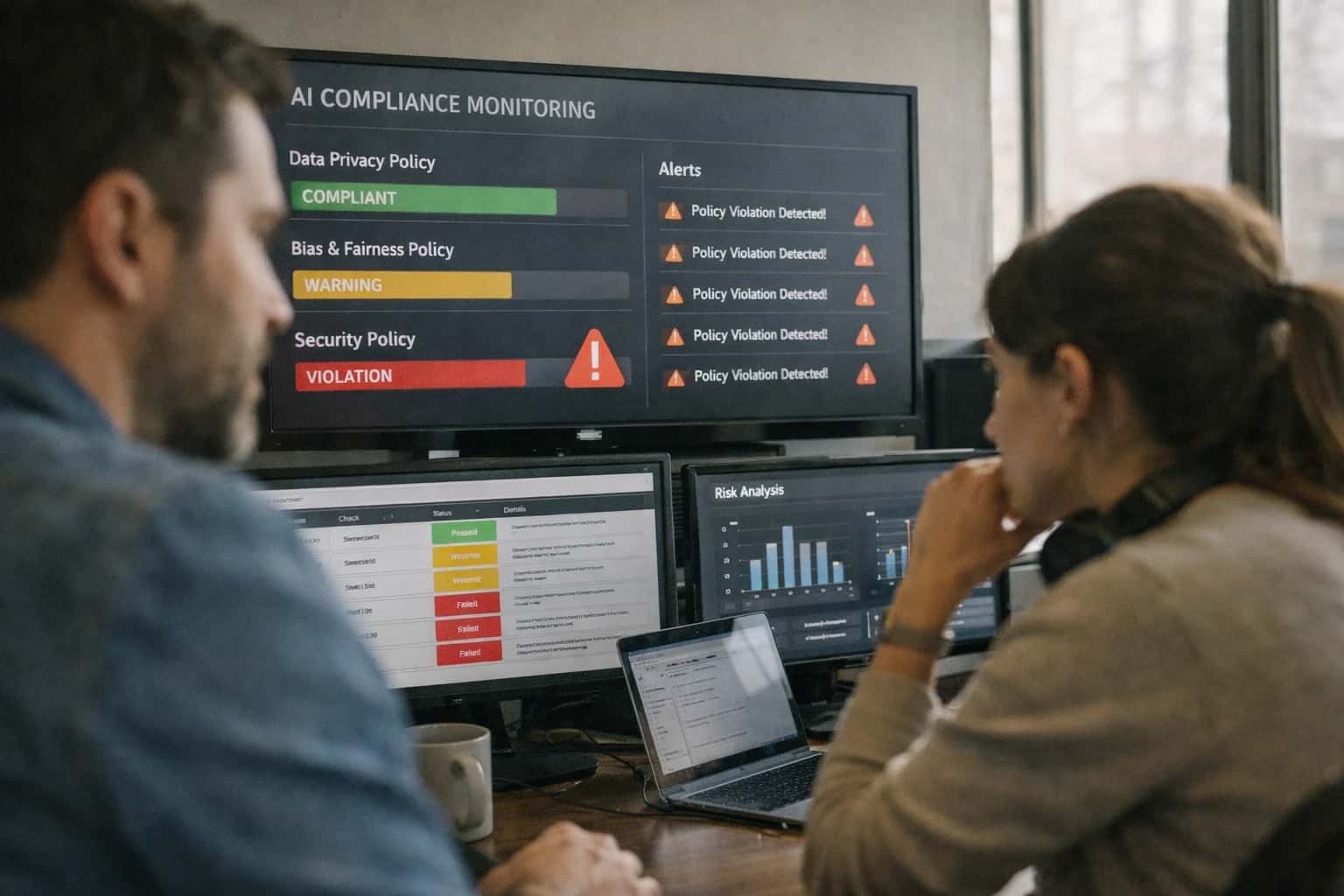
THE BUSINESS RISK
What is Automated Fairness Testing for Marketing Algorithms Used For?
Marketing algorithms that inadvertently discriminate don't just cause reputational damage—they create direct financial liability and lost market opportunity. Automated fairness testing is the proactive solution.
Automated fairness testing provides a continuous, ROI-driven fix. It deploys systematic audits to detect discriminatory patterns in real-time—such as unequal ad exposure or pricing disparities—before they impact campaigns. This transforms compliance from a cost center into a competitive shield, protecting brand equity and unlocking new markets. Measurable outcomes include reduced legal risk, improved campaign ROI by reaching underserved audiences, and a demonstrable commitment to ethical AI that builds consumer trust. For a deeper framework, explore our pillar on Ethics, Bias Mitigation, and Fair AI Frameworks and related solutions like Algorithmic Fairness Certification for Enterprise Models.
AUTOMATED FAIRNESS TESTING
Common Use Cases
Move from reactive compliance to proactive brand protection. These use cases demonstrate how continuous AI fairness monitoring delivers measurable ROI by mitigating legal risk and building consumer trust.
01
Prevent Discriminatory Ad Targeting
Marketing algorithms can inadvertently exclude or penalize demographic groups based on proxy data. Automated fairness testing continuously audits your customer segmentation and lookalike modeling to ensure ads are served equitably. For example, a major retailer used these tools to identify and correct a bias that was systematically under-serving high-value offers to neighborhoods with higher minority populations, protecting against a potential class-action suit and aligning with their DEI commitments.
40-60%
Reduction in Compliance Audit Time
$10M+
Potential Legal Risk Mitigated
02
Ensure Fair Pricing & Promotion Algorithms
Dynamic pricing and personalized promotions must not create unfair market access. This system provides real-time bias detection across your pricing engines, flagging scenarios where offers differ unjustifiably for protected classes. Implement guardrail models that automatically intervene to maintain fairness without sacrificing profitability. A travel platform used this to audit its surge pricing model, ensuring it was driven by demand signals—not user demographics—and publicly reinforcing its commitment to fair customer treatment.
99%
Audit Coverage of Live Models
3-5%
Uplift in Brand Trust Metrics
03
Automate Regulatory Reporting for AI Acts
The EU AI Act and similar regulations mandate strict documentation for high-risk AI systems, including marketing. Manual compliance is a costly, error-prone bottleneck. This use case automates the generation of audit-ready fairness reports and model cards, providing a continuous, immutable log of all testing. This turns a compliance cost center into a streamlined process, saving hundreds of hours in manual work and providing defensible evidence to regulators.
80%
Faster Report Generation
100%
Traceability for Audits
04
Build Trust with Transparent Customer Journeys
Consumers and regulators demand to know 'why' they see certain content. This system integrates explainability dashboards that marketing leaders can use to demonstrate fair treatment. For instance, if a customer queries why they received a specific offer, you can provide a clear, bias-checked rationale. This transparency directly enhances customer lifetime value (CLV) and reduces churn by building a reputation for ethical marketing practices.
15-25%
Increase in Campaign Engagement
>50%
Reduction in Related Customer Complaints
05
Debias Training Data Proactively
Bias in, bias out. This use case focuses on the source: your training data. Tools automatically scan customer datasets for skewed representations and proxy variables (like zip code correlating with race) before model training. They suggest synthetic data augmentation or re-weighting strategies to create balanced datasets. A financial services firm used this to clean the data for its next-best-offer model, preventing future fairness issues and improving model accuracy on edge cases.
06
Monitor for Fairness Drift in Production
A model fair at launch can become biased as customer behavior and data distributions change. This is fairness drift. Continuous monitoring systems track key fairness metrics (like demographic parity) in real-time, alerting teams the moment a model starts to skew. This allows for proactive retraining or intervention before it impacts customers or triggers regulatory scrutiny, ensuring your AI marketing stack remains compliant and equitable over its entire lifecycle.
Real-Time
Drift Detection Alerts
70%
Faster Issue Resolution
AUTOMATED FAIRNESS TESTING
How It Works: The Implementation Roadmap
Marketing algorithms can inadvertently exclude or disadvantage customer segments, creating regulatory and reputational risk. This roadmap details a systematic approach to deploying continuous fairness testing.
The core pain point is unseen algorithmic bias in marketing. Your customer segmentation, ad targeting, and pricing models are trained on historical data that often reflects societal inequities. This can lead to discriminatory market exclusion—where certain demographics are systematically under-targeted or offered inferior terms. The business risk is twofold: regulatory fines under acts like the EU AI Act and irreversible brand damage from public exposure of unfair practices. This isn't just an ethics issue; it's a direct threat to your marketing ROI and market share.
The solution is a continuous monitoring system integrated into your MLOps pipeline. We deploy specialized fairness metrics—like demographic parity and equal opportunity—that run automated tests on your live marketing models. The system flags bias in real-time, providing actionable dashboards that show where and why exclusion occurs. Measurable outcomes include a 40-60% reduction in manual audit time and the ability to generate automated regulatory audit trails for compliance filings. This transforms fairness from a reactive cost center into a proactive competitive advantage, ensuring your marketing drives growth equitably.
Enabling Efficiency, Speed & Accuracy
Intelligent Analysis, Decision & Execution
We build AI systems for teams that need search across company data, workflow automation across tools, or AI features inside products and internal software.
Talk to Us
Search across company data
Give teams answers from docs, tickets, runbooks, and product data with sources and permissions.
Useful when people spend too long searching or get different answers from different systems.
Enterprise searchRAGPermissions
Read more
Automate internal workflows
Use AI to route work, draft outputs, trigger actions, and keep approvals and logs in place.
Useful when repetitive work moves across multiple tools and teams.
AI agentsWorkflow automationGovernance
Read more
Add AI to products and internal tools
Build assistants, guided actions, or decision support into the software your team or customers already use.
Useful when AI needs to be part of the product, not a separate tool.
AI integrationDecision supportModel routing
Read moreAUTOMATED FAIRNESS TESTING
Key Challenges & How to Overcome Them
Implementing automated fairness testing for marketing algorithms is a strategic imperative, but enterprises face significant hurdles in compliance, ROI justification, and technical integration. This guide addresses the most common objections from technical decision-makers, providing clear, business-focused pathways to operationalize ethical AI.
The ROI extends far beyond avoiding fines. Quantifiable benefits include:
- Risk Mitigation: Proactively preventing discriminatory marketing can avoid multi-million dollar regulatory penalties and class-action lawsuits under acts like the EU AI Act.
- Brand Protection: Fair algorithms build consumer trust. A single public bias incident can cause a 5-10% drop in brand sentiment, directly impacting customer lifetime value.
- Market Expansion: Unbiased models can identify underserved customer segments, unlocking new revenue streams. For example, correcting gender bias in financial product ads can open a multi-billion dollar market.
- Operational Efficiency: Automated testing replaces manual, ad-hoc audits, reducing compliance team workload by an estimated 30-50% and accelerating campaign deployment cycles.
For a deeper dive on measuring AI's financial impact, see our framework on Outcome-Based AI Service Models and ROI Analytics.

About the author
Prasad Kumkar
CEO & MD, Inference Systems
Prasad Kumkar is the CEO & MD of Inference Systems and writes about AI systems architecture, LLM infrastructure, model serving, evaluation, and production deployment. Over 5+ years, he has worked across computer vision models, L5 autonomous vehicle systems, and LLM research, with a focus on taking complex AI ideas into real-world engineering systems.
His work and writing cover AI systems, large language models, AI agents, multimodal systems, autonomous systems, inference optimization, RAG, evaluation, and production AI engineering.
LinkedIn
Limited slotsGet a Free AI Consultation
Partnered with leading AI, data, and software stack.





How We Work
Custom AI workflows for your Business
One-fit-all AI don't work for modern businesses. At Inferensys, we aim to understand your business & custom requirements; which we use to define most efficient agentic workflows, the data, and the tools for your business.
01
Review the use case
We understand the task, the users, and where AI can actually help.
Read more02
Pick the right approach
We define what needs search, automation, or product integration.
Read more03
Build the first useful version
We implement the part that proves the value first.
Read more04
Improve from there
We add the checks and visibility needed to keep it useful.
Read moreThe first call is a practical review of your use case and the right next step.
Talk to Us