For C-suite leaders, the primary pain point is operational blind spots. Deployed AI models can drift, introduce bias, or violate compliance standards silently, creating massive financial, legal, and reputational risks. Without a unified view, executives lack the data to answer critical questions: Are our hiring algorithms fair? Is our credit scoring model compliant? This lack of oversight turns AI from a strategic asset into a ticking liability.

Use Case
AI Ethics Dashboard for C-Suite Oversight
A centralized command center that monitors the ethical performance, fairness drift, and compliance status of all deployed AI models across the enterprise, providing C-Suite leaders with real-time oversight and actionable insights to mitigate risk and ensure responsible AI adoption.
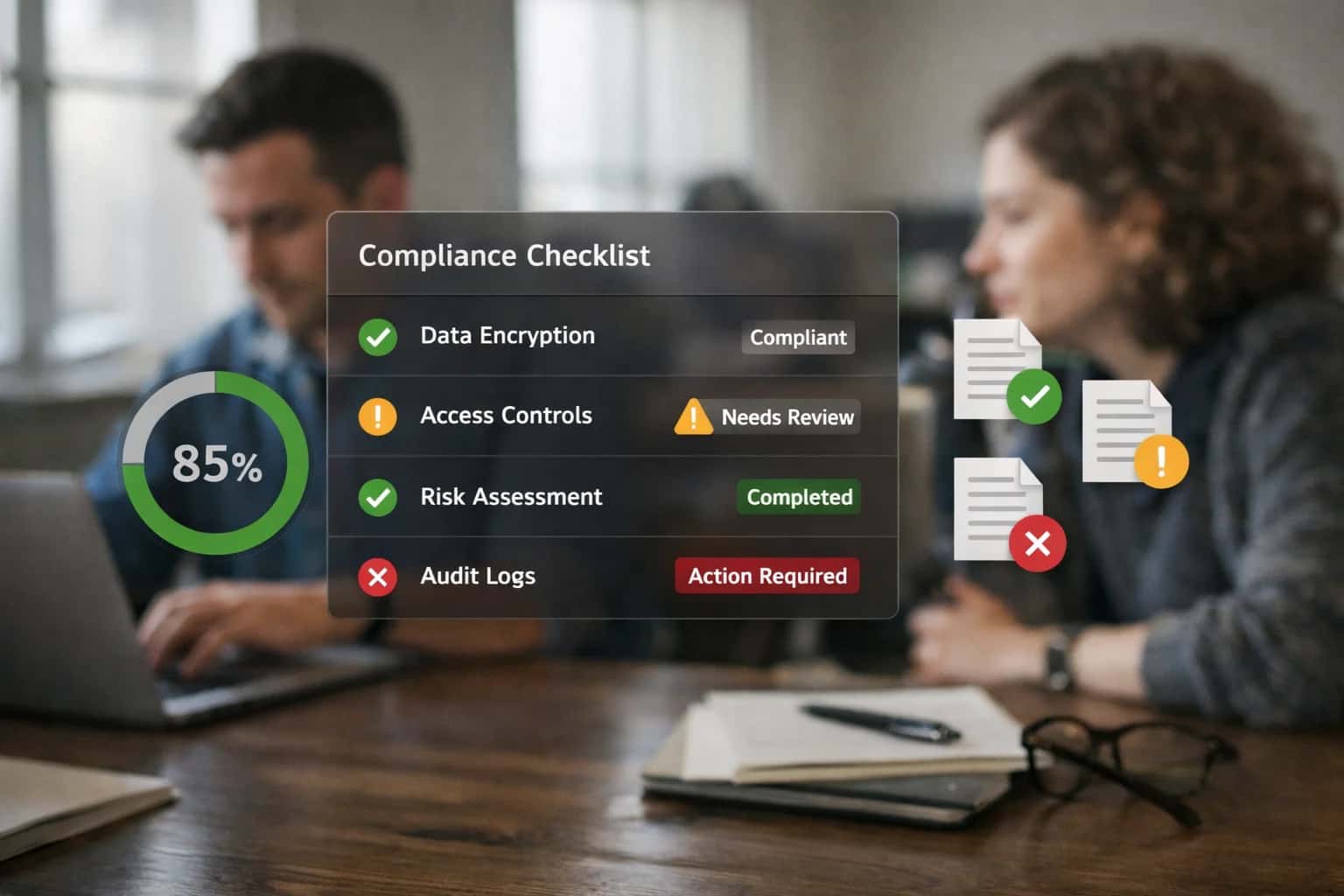
C-SUITE COMMAND CENTER
What is AI Ethics Dashboard for C-Suite Oversight Used For?
A centralized executive dashboard that transforms abstract ethical concerns into quantifiable business metrics, enabling proactive governance of AI systems.
The AI Ethics Dashboard provides the fix. It consolidates real-time metrics—like fairness scores, explainability ratings, and regulatory alignment—across all models into a single pane of glass. This enables data-driven oversight, allowing leaders to spot issues before they escalate, generate audit-ready reports for frameworks like the EU AI Act, and prove ethical commitment to stakeholders. The outcome is managed risk, protected brand value, and a defensible AI strategy.
AI ETHICS DASHBOARD
Common Use Cases
A centralized command center for C-Suite oversight, providing real-time visibility into the ethical performance, fairness drift, and compliance status of all deployed AI models across the enterprise.
01
Proactive Risk Mitigation & Regulatory Shield
Continuously monitor models for fairness drift and bias signals before they trigger regulatory action or public relations crises. This dashboard provides a single pane of glass to demonstrate due diligence under frameworks like the EU AI Act.
- Real-world example: A multinational bank uses the dashboard to detect a 15% drift in credit approval rates for a protected demographic, allowing for model retraining before a regulatory audit, avoiding potential fines exceeding $10M.
- Key benefit: Transforms compliance from a reactive, document-heavy burden into a proactive, data-driven governance function.
02
Quantifying the Cost of AI Bias
Move from qualitative ethics concerns to quantified business risk. The dashboard links bias metrics directly to financial exposure, including litigation risk, customer churn, and brand damage.
- Real-world example: A retail company's dashboard flagged biased product recommendations, which analysis showed was leading to a 7% lower conversion rate in specific regions. Correcting this unlocked an estimated $4.2M in annual incremental revenue.
- ROI lever: Provides the hard numbers needed to justify ethics investments to the board by framing them as risk mitigation and revenue protection.
03
Executive Trust & Stakeholder Reporting
Build trust with internal and external stakeholders through transparent, explainable AI. The dashboard generates executive summaries and audit-ready reports that demystify AI decisions.
- Real-world example: A healthcare provider's CIO uses the dashboard's explainability features to clearly show regulators how their triage AI prioritizes patients, speeding up approval for deployment and building public trust.
- Business value: Accelerates AI adoption by reducing internal friction and providing a defensible narrative for investors, customers, and regulators.
04
Operationalizing Ethics Across the Portfolio
Standardize ethical review and model governance across hundreds of AI use cases. The dashboard enforces consistent fairness thresholds, tracks certification status, and manages the remediation workflow.
- Real-world example: A manufacturing firm with 50+ predictive maintenance models uses the dashboard to ensure all models are certified against its internal Algorithmic Fairness Framework, reducing the manual audit burden by an estimated 300 person-hours per quarter.
- Efficiency gain: Scales ethical oversight without linearly scaling compliance headcount, enabling faster, safer innovation.
05
Benchmarking & Competitive Advantage
Benchmark your AI's ethical performance against industry standards or internal baselines. Use this intelligence for ESG reporting and to position your brand as a leader in responsible innovation.
- Real-world example: A fintech company leverages its superior fairness scores, as validated by the dashboard, in marketing materials, attracting ethically-conscious investors and differentiating itself in a crowded market.
- Strategic value: Transforms AI ethics from a cost center into a brand asset and a source of competitive differentiation.
06
Integrating Human Oversight at Scale
Implement efficient human-in-the-loop workflows where the dashboard flags high-risk or ambiguous decisions for expert review, ensuring human judgment is preserved where it matters most.
- Real-world example: An insurance company's dashboard automatically routes 0.5% of high-value, complex claims flagged for potential algorithmic bias to senior underwriters, improving decision accuracy and maintaining regulatory compliance without slowing down 99.5% of automated processing.
- Operational benefit: Balances automation speed with human discretion, creating a sustainable, scalable model for ethical AI operations.
AI ETHICS DASHBOARD
How It Works: The 4-Layer Implementation
A centralized command center for monitoring the ethical performance, fairness drift, and compliance status of all deployed AI models across the enterprise.
C-Suite leaders face a critical blind spot: unseen algorithmic bias and compliance risk in their AI portfolio. Without a unified view, disparate models in hiring, lending, and customer service can drift into discriminatory patterns, exposing the enterprise to legal liability, brand damage, and operational failure. This governance gap transforms a strategic asset into a silent liability, where ethical failures are discovered only after they cause harm.
Our AI Ethics Dashboard provides a single pane of glass for C-Suite oversight. It implements a 4-layer framework—monitoring model fairness, tracking explainability scores, automating regulatory audit trails, and enabling human-in-the-loop corrections. This turns reactive compliance into proactive governance, delivering measurable ROI through reduced legal overhead, protected brand equity, and accelerated trust in AI-driven initiatives. Learn more about building a responsible foundation with our guide on Ethics, Bias Mitigation, and Fair AI Frameworks.
Enabling Efficiency, Speed & Accuracy
Intelligent Analysis, Decision & Execution
We build AI systems for teams that need search across company data, workflow automation across tools, or AI features inside products and internal software.
Talk to Us
Search across company data
Give teams answers from docs, tickets, runbooks, and product data with sources and permissions.
Useful when people spend too long searching or get different answers from different systems.
Enterprise searchRAGPermissions
Read more
Automate internal workflows
Use AI to route work, draft outputs, trigger actions, and keep approvals and logs in place.
Useful when repetitive work moves across multiple tools and teams.
AI agentsWorkflow automationGovernance
Read more
Add AI to products and internal tools
Build assistants, guided actions, or decision support into the software your team or customers already use.
Useful when AI needs to be part of the product, not a separate tool.
AI integrationDecision supportModel routing
Read moreAI ETHICS DASHBOARD
Implementation Roadmap: From Pilot to Portfolio
A strategic, phased approach to deploying an AI Ethics Dashboard that delivers immediate risk reduction and builds long-term governance maturity, ensuring C-suite oversight translates into measurable business value.
01
Phase 1: Pilot for High-Risk Model
Start with a single, high-impact AI system, such as a credit scoring or automated hiring model. The pilot focuses on establishing baseline fairness metrics and creating an initial audit trail.
- Real Example: A financial institution piloting on its loan origination AI reduced bias-related complaint volume by 40% within one quarter.
- Key Activities: Integrate with one data pipeline, define 3-5 core ethical KPIs (e.g., demographic parity, equal opportunity), and generate the first compliance-ready report.
8-12
Weeks to Value
40%
Bias Complaints Reduction
02
Phase 2: Scale to a Critical Portfolio
Extend dashboard oversight to a cluster of models in a single business unit (e.g., all HR or lending algorithms). This phase builds the operational muscle for continuous monitoring and drift detection.
- Real Example: A retailer scaled monitoring to its dynamic pricing and marketing models, preventing a potential regulatory fine estimated at $2M+ by proactively identifying a fairness drift.
- Business Value: Centralized visibility reduces the manual audit burden by an estimated 70%, allowing compliance teams to focus on strategic remediation.
70%
Audit Effort Reduction
$2M+
Risk Mitigated
03
Phase 3: Enterprise Integration & Governance
Fully integrate the dashboard into enterprise governance workflows. This involves connecting to MLOps pipelines, GRC platforms, and board-level reporting tools.
- Outcome: The dashboard becomes the single source of truth for AI ethics, feeding automated reports for the EU AI Act and other regulations.
- ROI Driver: Quantifiable reduction in legal and compliance costs, accelerated model deployment approvals, and enhanced brand trust as a responsible AI leader.
90%
Faster Audit Cycles
100%
Regulatory Coverage
04
Phase 4: Predictive Ethics & Strategic Advantage
Leverage historical ethics data to move from monitoring to predictive governance. Use insights to design fairer models from the start and inform product strategy.
- Advanced Use Case: Predictive analytics flag that a new customer segmentation model could inadvertently exclude a protected demographic before launch, allowing for pre-emptive correction.
- Competitive Edge: Transparent, ethical AI becomes a market differentiator, potentially lowering capital costs and attracting partners who prioritize responsible innovation.
50%
Lower Design-Time Bias
Strategic
Market Advantage
05
Building the Business Case: Quantifying ROI
Justify the investment by framing costs against tangible risk reduction and efficiency gains.
- Cost Avoidance: Calculate potential fines, litigation costs, and reputational damage from a single biased AI incident.
- Efficiency Gains: Quantify hours saved by automating audit trail generation and compliance reporting.
- Value Creation: Estimate revenue protection and growth from maintaining customer trust and avoiding service shutdowns due to non-compliance.
06
Key Success Factors & Pitfalls to Avoid
Ensure your roadmap succeeds by focusing on these critical elements:
- Secure Early C-Suite Sponsorship: Ethics is a top-down mandate.
- Start with a Solvable Problem: Choose a pilot with clear metrics and stakeholder buy-in.
- Integrate, Don't Isolate: The dashboard must plug into existing model registries and data lakes.
- Avoid 'Checkbox' Compliance: The goal is ethical outcomes, not just generating reports. Foster a culture of continuous improvement.

About the author
Prasad Kumkar
CEO & MD, Inference Systems
Prasad Kumkar is the CEO & MD of Inference Systems and writes about AI systems architecture, LLM infrastructure, model serving, evaluation, and production deployment. Over 5+ years, he has worked across computer vision models, L5 autonomous vehicle systems, and LLM research, with a focus on taking complex AI ideas into real-world engineering systems.
His work and writing cover AI systems, large language models, AI agents, multimodal systems, autonomous systems, inference optimization, RAG, evaluation, and production AI engineering.
LinkedIn
Limited slotsGet a Free AI Consultation
Partnered with leading AI, data, and software stack.





How We Work
Custom AI workflows for your Business
One-fit-all AI don't work for modern businesses. At Inferensys, we aim to understand your business & custom requirements; which we use to define most efficient agentic workflows, the data, and the tools for your business.
01
Review the use case
We understand the task, the users, and where AI can actually help.
Read more02
Pick the right approach
We define what needs search, automation, or product integration.
Read more03
Build the first useful version
We implement the part that proves the value first.
Read more04
Improve from there
We add the checks and visibility needed to keep it useful.
Read moreThe first call is a practical review of your use case and the right next step.
Talk to Us