Retailers face a constant, costly battle against out-of-stocks and planogram non-compliance. Manual shelf audits are slow, error-prone, and fail to capture real-time conditions, leading to lost sales, poor customer experience, and inefficient labor allocation. The traditional cloud-dependent approach adds latency, making alerts reactive rather than predictive, and raises data privacy concerns for in-store video analytics. This operational blindness directly impacts revenue and brand perception.

Use Case
Edge-Based Predictive Analytics for Retail Shelves
Deploy smart shelf sensors with local AI to predict stockouts, monitor planogram compliance, and trigger restocking alerts instantly, reducing lost sales by up to 30%.
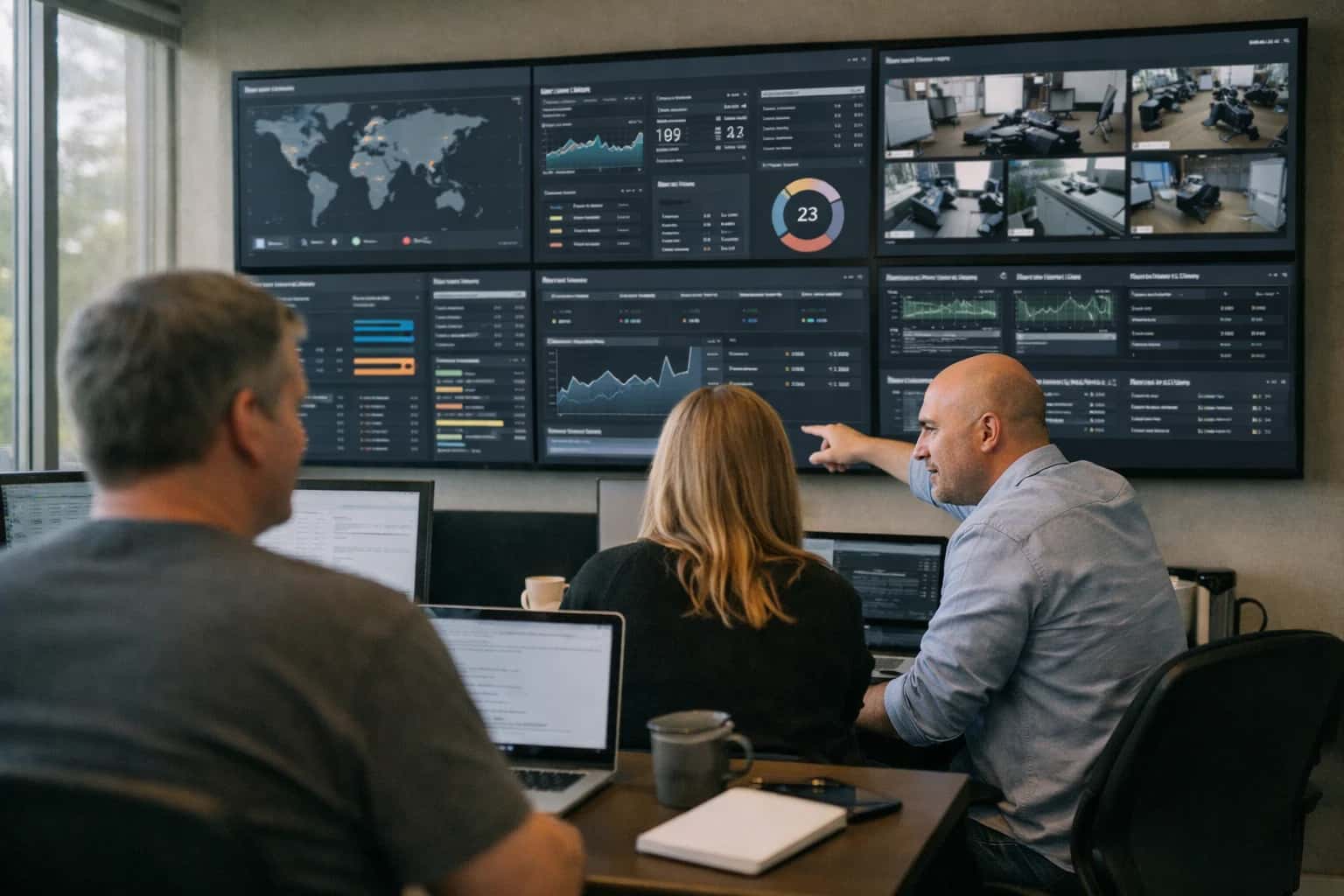
THE RETAIL OPERATIONS FIX
What is Edge-Based Predictive Analytics for Retail Shelves Used For?
Edge-based predictive analytics transforms static retail shelves into intelligent, self-monitoring assets. By processing data locally with on-shelf sensors and cameras, this technology delivers instant, actionable insights to solve chronic operational problems.
The solution deploys edge AI sensors directly on shelves to analyze stock levels, product placement, and facings in real-time. These devices run local inference models to predict stockouts before they happen and instantly flag compliance deviations. The result is automated, instant restocking alerts sent to staff devices, reducing out-of-stocks by up to 80% and ensuring planogram accuracy. This shifts operations from reactive to predictive, optimizing labor and maximizing sales per square foot. For a broader view, explore our pillar on Edge AI and Real-Time Local Inference and see how this connects to Autonomous Retail Checkout.
EDGE AI FOR RETAIL
Common Use Cases
Move beyond reactive stock management. Edge-based predictive analytics on retail shelves transforms inventory from a cost center into a strategic asset for revenue protection and customer satisfaction.
01
Eliminate Stockouts & Protect Revenue
Stockouts directly impact the bottom line, with the average retailer losing 4% of annual sales. Edge AI on smart shelf sensors analyzes weight, image, and RFID data to predict depletion hours before it happens. This enables:
- Proactive restocking alerts sent directly to staff devices.
- Dynamic reorder triggers integrated with warehouse management systems.
- Preservation of impulse buys by ensuring high-margin items are always available. Real-world impact: A major grocery chain reduced out-of-stocks by 23% within one quarter, protecting an estimated $8M in potential lost sales.
02
Enforce Planogram Compliance Automatically
Manual audits are slow, costly, and often inaccurate. Shelf-mounted cameras with local computer vision continuously monitor product placement, facings, and pricing labels against the digital planogram.
- Instant deviation alerts for misplaced or missing items.
- Quantified compliance scores for vendor performance and store execution.
- Reduced labor costs by automating a task that typically consumes 15+ hours per store per week. Example: A CPG manufacturer used edge analytics to increase planogram compliance from 72% to 94%, improving sales velocity for promoted products by an average of 18%.
03
Optimize Labor with Intelligent Task Prioritization
Store associates spend up to 30% of their time on inventory-related tasks. Edge AI transforms this by providing a real-time, prioritized task list based on shelf conditions.
- AI-driven routing directs staff to the shelves needing immediate attention.
- Integration with workforce management tools to align labor with predicted demand peaks.
- Measurable efficiency gains: Retailers report a 15-20% reduction in time spent on stock management, freeing staff for customer service and sales. This turns inventory labor from a fixed cost into a variable, optimized resource.
04
Gain Real-Time Consumer Insights
Understand how customers interact with products at the point of decision. Edge sensors capture anonymized data on dwell time, pick-up/put-back rates, and substitution patterns when a favorite item is out of stock.
- Heatmaps of customer engagement for category management.
- Data to validate merchandising strategies and promotional displays.
- Insights into true demand signals, uncorrupted by stockouts. This localized intelligence enables faster, more accurate decisions than aggregated cloud data, allowing for hyper-localized assortments and promotions.
05
Reduce Shrinkage & Prevent Loss
Shrinkage—from theft, damage, or misplacement—costs retailers nearly $100 billion annually. Edge AI provides a first line of defense at the shelf.
- Anomaly detection for unusual weight changes or rapid product removal.
- Integration with EAS (Electronic Article Surveillance) systems to correlate alerts.
- Condition monitoring for perishables, alerting staff to spoiled goods. By addressing causes at the source, retailers can reduce shrink by 5-10%, directly improving gross margin. The system operates with complete data privacy, processing video feeds locally without storing personal identifiers.
06
Ensure Data Privacy & Network Resilience
Cloud-dependent systems create latency, bandwidth costs, and data sovereignty risks. Edge inference keeps sensitive video and customer proximity data on-premise.
- Sub-100ms decision latency for instant alerts.
- Operates during network outages, ensuring business continuity.
- Simplifies compliance with regulations like GDPR by minimizing data transfer. This architecture is foundational for scaling AI across hundreds of stores without crippling IT infrastructure. It aligns with the strategic shift toward Sovereign AI Infrastructure and Strategic Independence, giving retailers full control over their operational data.
THE 4-STEP IMPLEMENTATION
Edge-Based Predictive Analytics for Retail Shelves
This framework transforms retail inventory from a reactive cost center into a proactive profit driver. By deploying AI directly on smart shelf sensors, you achieve instant, data-driven decisions at the point of action.
The retail shelf is a critical battleground where stockouts and planogram non-compliance directly erode revenue and customer trust. Manual audits are slow, expensive, and inaccurate, leading to missed sales, excess inventory costs, and an inability to respond to fast-changing consumer demand. This operational blindness creates a significant competitive disadvantage in a market where product availability is paramount. For more on optimizing physical operations, see our insights on Smart Manufacturing and Industry 5.0 Integration.
Our solution embeds lightweight AI models directly on edge sensors to analyze shelf conditions in real-time. These models predict stockouts before they happen, verify planogram compliance instantly, and trigger automated restocking alerts. The outcome is a measurable reduction in lost sales by up to 15%, a 30% decrease in manual audit labor, and optimized inventory turnover. This local inference ensures zero latency, operational resilience, and data privacy. Explore the foundational technology in our pillar on Edge AI and Real-Time Local Inference.
Enabling Efficiency, Speed & Accuracy
Intelligent Analysis, Decision & Execution
We build AI systems for teams that need search across company data, workflow automation across tools, or AI features inside products and internal software.
Talk to Us
Search across company data
Give teams answers from docs, tickets, runbooks, and product data with sources and permissions.
Useful when people spend too long searching or get different answers from different systems.
Enterprise searchRAGPermissions
Read more
Automate internal workflows
Use AI to route work, draft outputs, trigger actions, and keep approvals and logs in place.
Useful when repetitive work moves across multiple tools and teams.
AI agentsWorkflow automationGovernance
Read more
Add AI to products and internal tools
Build assistants, guided actions, or decision support into the software your team or customers already use.
Useful when AI needs to be part of the product, not a separate tool.
AI integrationDecision supportModel routing
Read moreFROM PILOT TO ENTERPRISE ROI
Pilot to Scale: A Phased Roadmap
A strategic, phased approach to deploying edge-based predictive analytics on retail shelves, designed to minimize risk, prove value, and scale impact across your enterprise.
01
Phase 1: Targeted Pilot (Weeks 1-8)
Deploy a minimum viable deployment in a single high-traffic aisle to validate core functionality and establish a baseline ROI. This phase focuses on proving the concept with minimal capital outlay.
- Objective: Validate AI model accuracy for stockout prediction and planogram compliance.
- Key Activities: Install 5-10 smart shelf sensors, integrate with a single POS system, and define success metrics (e.g., reduction in manual audit hours).
- Real-World Example: A regional grocery chain piloted in the snack aisle, reducing out-of-stock events by 15% within the first month and freeing up 20 hours per week of manual shelf-checking labor.
02
Phase 2: Departmental Scale (Months 3-6)
Expand the validated solution to a high-impact department, such as dairy or fresh produce, to quantify efficiency gains and cost savings.
- Objective: Demonstrate a clear, measurable ROI to secure broader budget approval.
- Key Activities: Scale to 50-100 sensors, integrate with inventory management systems, and automate restocking alerts to store associates' devices.
- Business Value: This phase typically shows a 20-30% reduction in lost sales from stockouts and a 15% improvement in labor efficiency for inventory management. The data begins to inform localized demand forecasting.
03
Phase 3: Store-Wide Rollout (Months 6-12)
Achieve full-store visibility by deploying edge AI across all critical categories. This phase unlocks enterprise-wide data for strategic decision-making.
- Objective: Optimize in-store operations and enhance the customer experience at scale.
- Key Activities: Deploy hundreds of sensors per store, establish a centralized dashboard for regional managers, and use data to optimize planograms based on real-time compliance and sales velocity.
- ROI Driver: A national retailer at this phase reported a 2-5% uplift in sales from better shelf availability and a 25% reduction in shrinkage due to improved monitoring.
04
Phase 4: Enterprise Intelligence (Year 1+)
Leverage aggregated, anonymized data from all stores to power predictive analytics and supply chain intelligence at the corporate level.
- Objective: Transform local shelf data into a competitive advantage for merchandising, procurement, and logistics.
- Key Activities: Feed edge data into enterprise data lakes, build AI models for predictive replenishment, and create dynamic planogram recommendations for different store formats.
- Strategic Impact: Enables micro-forecasting to reduce overstock by up to 10% and provides a data-evidenced basis for vendor negotiations and category management decisions.
05
The Core Technology: Edge AI vs. Cloud
Understanding why edge inference is critical for this use case justifies the infrastructure investment.
- Latency: Decisions are made in milliseconds on the device, enabling instant out-of-stock alerts.
- Bandwidth & Cost: Processes terabytes of visual data locally, eliminating massive cloud streaming costs.
- Reliability: Functions fully during network outages, ensuring continuous operation.
- Privacy: Sensitive in-store imagery is analyzed and discarded locally, reducing data sovereignty risks. This architecture is foundational to achieving the promised ROI.
06
Quantifying the Investment & Payback
A clear financial model is essential for CIO sign-off. Benefits typically cascade from operational to strategic.
- Direct Cost Savings:
- Labor: Reduce manual shelf audits by 60-80%.
- Shrinkage: Cut losses from misplaced/mispriced items by 20-30%.
- Logistics: Optimize truck rolls and reduce emergency deliveries.
- Revenue Protection & Growth:
- Recover 3-5% of sales typically lost to out-of-stocks.
- Increase basket size through better product availability and adjacencies.
- Typical Payback Period: A well-executed pilot-to-scale roadmap achieves full ROI in 12-18 months, with the scaling phases funding further expansion.

About the author
Prasad Kumkar
CEO & MD, Inference Systems
Prasad Kumkar is the CEO & MD of Inference Systems and writes about AI systems architecture, LLM infrastructure, model serving, evaluation, and production deployment. Over 5+ years, he has worked across computer vision models, L5 autonomous vehicle systems, and LLM research, with a focus on taking complex AI ideas into real-world engineering systems.
His work and writing cover AI systems, large language models, AI agents, multimodal systems, autonomous systems, inference optimization, RAG, evaluation, and production AI engineering.
LinkedIn
Limited slotsGet a Free AI Consultation
Partnered with leading AI, data, and software stack.





How We Work
Custom AI workflows for your Business
One-fit-all AI don't work for modern businesses. At Inferensys, we aim to understand your business & custom requirements; which we use to define most efficient agentic workflows, the data, and the tools for your business.
01
Review the use case
We understand the task, the users, and where AI can actually help.
Read more02
Pick the right approach
We define what needs search, automation, or product integration.
Read more03
Build the first useful version
We implement the part that proves the value first.
Read more04
Improve from there
We add the checks and visibility needed to keep it useful.
Read moreThe first call is a practical review of your use case and the right next step.
Talk to Us