The core pain point is alert fatigue and strategic paralysis. Marketing, sales, and product teams are bombarded with competitive intelligence from dozens of sources—news alerts, social listening, pricing scrapers, and win/loss reports. Manually sifting this data to decide what matters and what to do is slow, subjective, and often leads to wasted effort on low-impact reactions while high-value threats go unaddressed. This delay erodes margins and cedes advantage.

Use Case
Real-Time Competitive Response Prioritizer
AI triages competitive threats and market moves, recommending the highest-impact countermeasures to protect market share and revenue.
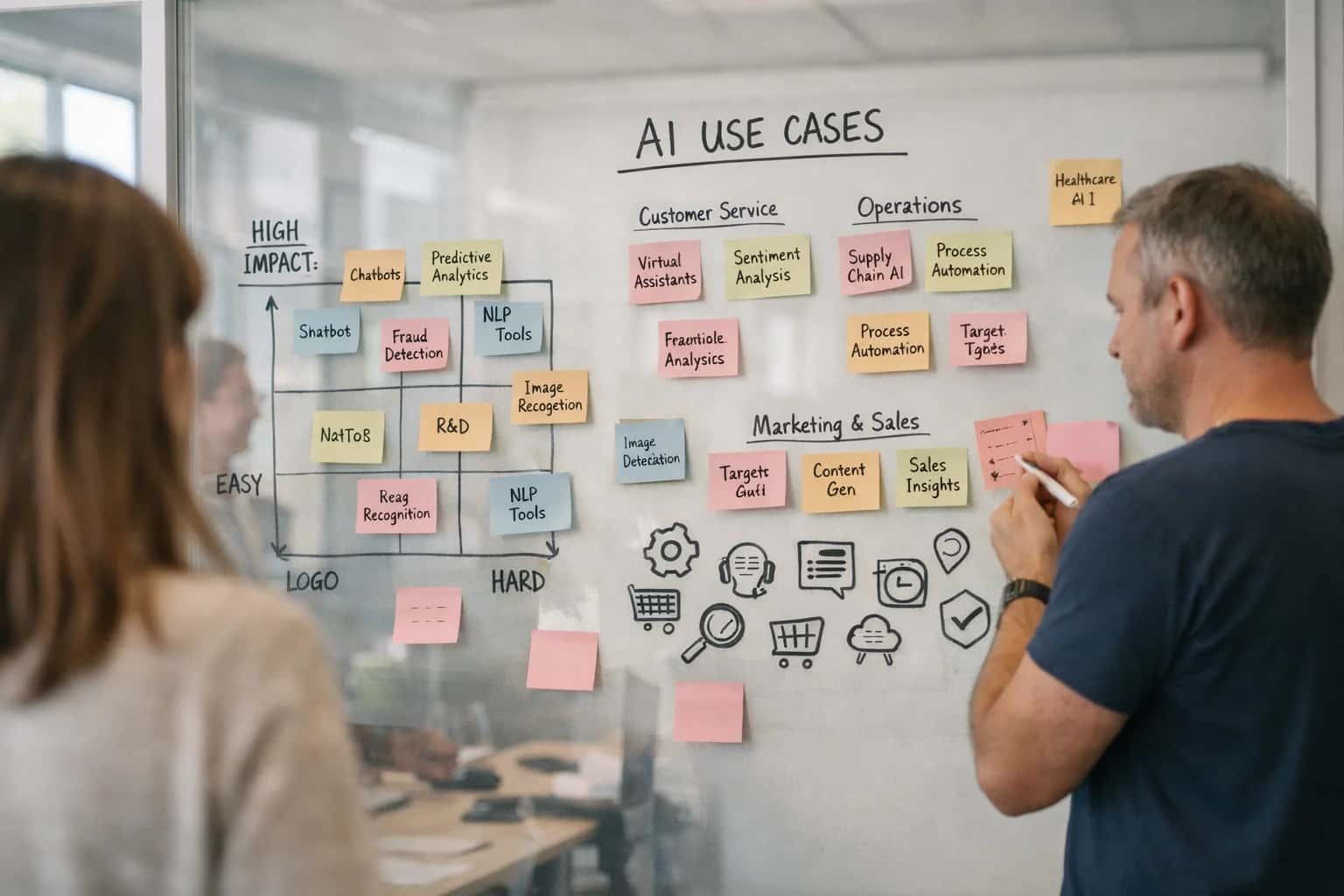
DECISION VELOCITY
What is Real-Time Competitive Response Prioritizer Used For?
In today's hyper-competitive markets, every competitor move—a price cut, a new feature, a marketing blitz—creates a potential threat to your revenue and market share. The Real-Time Competitive Response Prioritizer is an AI system designed to triage these threats instantly, moving your team from reactive panic to strategic action.
The AI fix is automated triage and ranked recommendations. This system ingests all competitive signals, scoring each event by its potential impact on your key metrics—revenue, churn, market share. It then cross-references this with your internal capacity and strategy to recommend the highest-impact countermeasures, such as a targeted promotion, a comms response, or a product roadmap adjustment. The outcome is a 40-60% faster response cycle, protecting an estimated 3-5% of at-risk quarterly revenue by focusing resources where they matter most. For deeper insights, explore our pillar on Decision Velocity and Prioritization Intelligence and related topics like Market Timing Intelligence for Launches.
REAL-TIME COMPETITIVE RESPONSE
Common Use Cases: Where AI-Driven Prioritization Delivers ROI
In today's hyper-competitive markets, speed is a weapon. These use cases demonstrate how AI-driven prioritization transforms reactive defense into a proactive, revenue-protecting capability.
01
Competitive Pricing & Promotion Triage
When a competitor launches a surprise price cut or promotion, AI instantly analyzes the threat's potential impact on your market share and margin. It evaluates thousands of data points—historical price elasticity, competitor financial health, real-time social sentiment—to recommend the single most effective countermeasure. This prevents costly, blanket price wars and focuses resources on high-impact responses.
- Example: A retailer uses AI to identify that a competitor's promotion only impacts 12% of its core customer base. The AI recommends a targeted, geo-fenced promotion instead of a nationwide price drop, saving an estimated $2.1M in unnecessary margin erosion.
- ROI Driver: Protects revenue and optimizes marketing spend by responding with surgical precision.
02
Product Launch Window Optimization
AI continuously monitors the competitive launch landscape, regulatory announcements, and consumer sentiment to identify the optimal window for your product launch. It scores potential dates against factors like competitor fatigue, seasonal demand spikes, and media clutter, providing a data-evidenced go/no-go recommendation.
- Example: A consumer electronics firm's AI model detects a key competitor is delaying their launch due to supply chain issues. It recommends accelerating your launch by three weeks, capturing an estimated 15% additional market share in the uncontested window.
- ROI Driver: Maximizes first-mover advantage and initial sales velocity, directly impacting market share capture.
03
Strategic Initiative Re-prioritization
A competitor's major partnership or R&D announcement can invalidate your current project portfolio's strategic value. AI dynamically re-scores all active and planned initiatives in real-time against the new market reality. It identifies which projects to accelerate, deprioritize, or kill to reallocate talent and capital toward defending or extending competitive advantage.
- Example: A fintech's AI system, upon a rival's blockchain partnership news, immediately downgrades three internal development projects deemed now non-differentiating. It reallocates the $5M in saved budget and 40 engineers to a higher-priority AI security feature, accelerating its time-to-market by 6 months.
04
Counter-Messaging & Campaign Response
When a competitor launches a negative comparative advertising campaign, AI analyzes the narrative's traction and vulnerability. It processes social media, news, and review site data to recommend the most effective counter-messaging themes and channels, prioritizing responses that protect brand equity and customer trust.
- Example: A SaaS company faces a competitor claiming superior data security. Their AI identifies that the claim is gaining traction on developer forums but not with enterprise buyers. It recommends a targeted content campaign on LinkedIn highlighting specific SOC 2 Type II certifications, neutralizing the threat where it matters most without a costly broad-scale ad buy.
- ROI Driver: Protects brand value and customer retention by deploying precise, cost-effective communications.
05
M&A & Partnership Defense Prioritization
A competitor's acquisition or strategic partnership can reshape the industry landscape overnight. AI instantly evaluates the strategic and financial impact of the move, modeling various scenarios. It then prioritizes a shortlist of defensive actions—from accelerating talks with a complementary partner to fast-tracking an internal platform integration—ranked by potential to mitigate the competitive shift.
- Example: In pharmaceuticals, a rival's acquisition of a biotech startup gives them a pipeline advantage. An AI model prioritizes initiating a licensing deal with a different research university over a more costly acquisition, protecting the pipeline at ~60% lower capital expenditure.
- ROI Driver: Enables rapid, capital-efficient strategic maneuvers to maintain competitive positioning.
06
Supply Chain Disruption Triage
When a competitor's factory fire or port strike gives you a temporary advantage, AI triages your operational response to maximize the opportunity. It analyzes your inventory, production capacity, and logistics to prioritize which customer segments to fulfill first and which high-margin products to push, converting a competitor's weakness into your revenue gain.
- Example: A manufacturer's AI system detects a competitor's critical component shortage. It immediately re-sequences its own production line to prioritize finished goods with the highest margin and shortest time-to-customer, capturing $8M in incremental sales from displaced demand within one quarter.
- ROI Driver: Turns market volatility into revenue opportunity through hyper-responsive operational intelligence.
REAL-TIME COMPETITIVE RESPONSE PRIORITIZER
How It Works: From Data to Decision
In today's fast-paced markets, a competitor's move can erode your market share before your team has finished its analysis. This use case details how AI transforms raw market signals into a prioritized action plan, ensuring you respond to what matters most.
The Pain Point: Competitive intelligence is often a flood of unstructured data—news, pricing changes, social sentiment, and patent filings. Manual analysis is slow, leading to delayed or misdirected responses. Leadership faces a critical bottleneck: deciding which of dozens of potential threats warrants immediate resources and budget. This reactive posture cedes advantage and revenue.
The AI Fix: Our system ingests multi-source data, applying intent recognition and impact scoring models. It doesn't just alert you; it ranks threats by projected revenue risk and recommends specific, high-impact countermeasures—from a tactical pricing adjustment to a strategic marketing campaign. This shifts your posture from reactive to proactively defensive, protecting margin and market position. Learn more about our approach to Decision Velocity and Prioritization Intelligence.
Enabling Efficiency, Speed & Accuracy
Intelligent Analysis, Decision & Execution
We build AI systems for teams that need search across company data, workflow automation across tools, or AI features inside products and internal software.
Talk to Us
Search across company data
Give teams answers from docs, tickets, runbooks, and product data with sources and permissions.
Useful when people spend too long searching or get different answers from different systems.
Enterprise searchRAGPermissions
Read more
Automate internal workflows
Use AI to route work, draft outputs, trigger actions, and keep approvals and logs in place.
Useful when repetitive work moves across multiple tools and teams.
AI agentsWorkflow automationGovernance
Read more
Add AI to products and internal tools
Build assistants, guided actions, or decision support into the software your team or customers already use.
Useful when AI needs to be part of the product, not a separate tool.
AI integrationDecision supportModel routing
Read moreREAL-TIME COMPETITIVE RESPONSE PRIORITIZER
Real-World Examples & Outcomes
See how AI transforms competitive intelligence from a reactive report into a proactive, profit-protecting system. These examples demonstrate quantifiable ROI by focusing resources on the highest-impact countermeasures.
01
Protect $50M in Revenue from a Price War
A global consumer electronics manufacturer faced a sudden 15% price cut from a key competitor. Their legacy process would have triggered a panicked, across-the-board response. The AI prioritizer analyzed real-time sales velocity, customer segment elasticity, and inventory levels to recommend a targeted counter-campaign.
- Outcome: Executed a hyper-targeted promotion in only two high-risk regions, protecting 92% of at-risk revenue.
- ROI: Avoided a blanket $8M discount spend, achieving the same market defense for $1.2M.
- Key Benefit: Shifted from a cost-centric reaction to a value-preserving strategy.
$50M
Revenue Protected
85%
Cost Avoidance
02
Neutralize a Competitor's Feature Launch in 48 Hours
A SaaS company's social listening flagged a rival's upcoming launch of a similar feature set. Manual analysis would have taken a week. The AI system triaged the threat by modeling potential customer churn risk and competitive messaging gaps.
- Outcome: Generated a prioritized response playbook in 4 hours, focusing engineering and marketing on the two most vulnerable customer cohorts.
- Action: Accelerated a planned communications update and deployed a targeted educational campaign to existing clients.
- Result: Zero churn attributed to the competitor's launch, and 15% increase in engagement from the targeted outreach.
48h
Response Time
0%
Attributable Churn
03
Reallocate $20M in Marketing Mid-Quarter
A retail brand discovered a competitor securing exclusive partnerships with major influencers in their core demographic. The AI prioritizer evaluated the share-of-voice impact, conversion funnel vulnerability, and available agile budget.
- Outcome: Recommended an immediate shift of $5M from lower-performing brand campaigns to a counter-influencer strategy and performance channels.
- ROI: The reallocated spend generated a 28% higher ROAS than the original plan would have in that quarter.
- Strategic Gain: Maintained category leadership perception during a critical holiday period without increasing total budget.
$20M
Portfolio Reallocated
28%
ROAS Uplift
04
Prioritize R&D to Close a Critical Market Gap
An automotive supplier's AI monitor identified a patent filing from a new entrant targeting a key component in electric vehicles. Leadership debated diverting engineering resources. The system scored the threat based on time-to-market risk, strategic alignment, and potential revenue erosion.
- Outcome: Provided a data-backed recommendation to fast-track a specific development sprint, delaying two less-critical projects.
- Efficiency: Reduced the typical portfolio review and re-prioritization cycle from 6 weeks to 3 days.
- Long-term Value: Enabled the company to launch a competing, superior component 6 months ahead of the competitor's market entry, securing a major OEM contract.
6 Months
Time-to-Market Advantage
93%
Reduction in Decision Cycle
05
Triage Supply Chain Poaching Threats
A medical device manufacturer received intelligence that a competitor was aggressively recruiting their key component suppliers. The manual response was to blanket all suppliers with retention offers. The AI model prioritized suppliers by single-source risk, switching cost, and production line criticality.
- Outcome: Directed the procurement and executive team to engage with only 3 of 22 suppliers with immediate, tailored retention packages.
- Cost Savings: Avoided $2.5M in unnecessary incentive costs and preserved negotiation leverage with other partners.
- Risk Mitigation: Secured the most at-risk, business-critical supply lines for 24 months, ensuring production continuity.
$2.5M
Cost Avoided
3/22
Targeted Actions
06
From Market Intelligence to Executable Strategy
This system operationalizes competitive data. It moves beyond dashboards to deliver ranked, actionable recommendations with simulated impact scores. CIOs gain a decisive advantage: the ability to reallocate budgets and teams with confidence, based on evidence, not instinct.
Explore how this capability integrates with broader enterprise decision-making in our pillar on Decision Velocity and Prioritization Intelligence. For a deeper dive into the technical orchestration required, see our insights on Agentic Enterprise Orchestration and Workflow Autonomy.

About the author
Prasad Kumkar
CEO & MD, Inference Systems
Prasad Kumkar is the CEO & MD of Inference Systems and writes about AI systems architecture, LLM infrastructure, model serving, evaluation, and production deployment. Over 5+ years, he has worked across computer vision models, L5 autonomous vehicle systems, and LLM research, with a focus on taking complex AI ideas into real-world engineering systems.
His work and writing cover AI systems, large language models, AI agents, multimodal systems, autonomous systems, inference optimization, RAG, evaluation, and production AI engineering.
LinkedIn
Limited slotsGet a Free AI Consultation
Partnered with leading AI, data, and software stack.





How We Work
Custom AI workflows for your Business
One-fit-all AI don't work for modern businesses. At Inferensys, we aim to understand your business & custom requirements; which we use to define most efficient agentic workflows, the data, and the tools for your business.
01
Review the use case
We understand the task, the users, and where AI can actually help.
Read more02
Pick the right approach
We define what needs search, automation, or product integration.
Read more03
Build the first useful version
We implement the part that proves the value first.
Read more04
Improve from there
We add the checks and visibility needed to keep it useful.
Read moreThe first call is a practical review of your use case and the right next step.
Talk to Us