CIOs and VPs of Innovation face a constant dilemma: a backlog of promising projects but limited capital and teams. Prioritizing based on gut feel or projected ROI alone is dangerous, as it ignores critical risks to enterprise value—compliance failures, ethical blind spots, operational overruns, or brand damage. This leads to wasted investment on high-reward, high-risk ventures that can derail strategy and destroy stakeholder trust. The pain point is strategic misalignment and preventable value erosion.

Use Case
Instant Risk-Adjusted Project Prioritization
AI scores and sequences projects by balancing potential ROI against compliance, ethical, and operational risks to protect enterprise value and accelerate strategic execution.
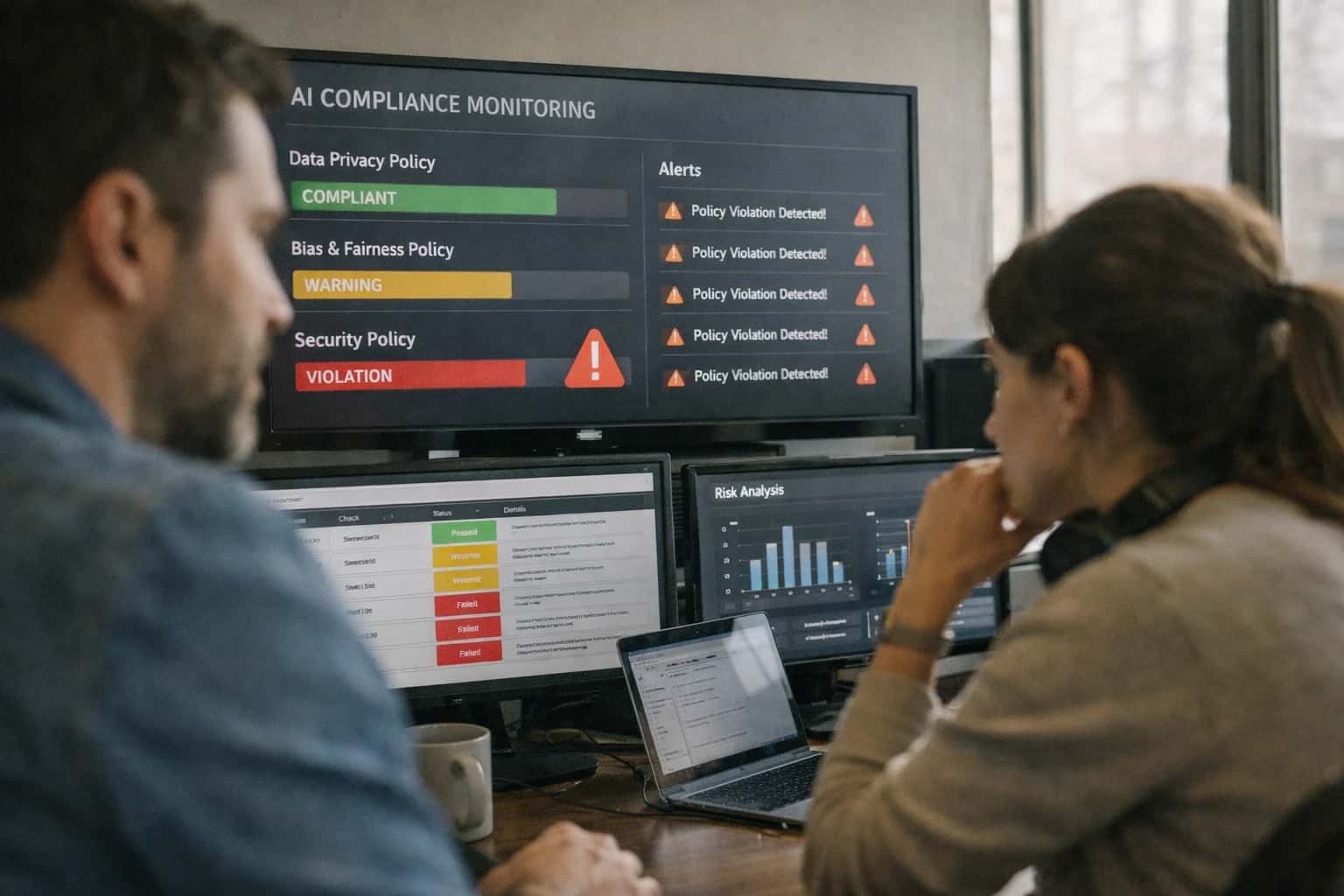
USE CASES
What is Instant Risk-Adjusted Project Prioritization Used For?
This AI-driven capability transforms how enterprises allocate resources by dynamically balancing potential reward against a spectrum of risks.
Instant Risk-Adjusted Project Prioritization is the AI fix. It uses models to score and sequence every initiative, weighing potential financial return against quantified compliance, ethical, and operational risks. The outcome is a dynamically updated project queue that protects enterprise value. This enables leadership to reallocate budgets and teams mid-flight with confidence, capturing opportunity windows while safeguarding reputation. Explore how this fits into broader Decision Velocity and Prioritization Intelligence or see it in action for Dynamic Portfolio Rebalancing.
INSTANT RISK-ADJUSTED PROJECT PRIORITIZATION
Common Use Cases & Business Problems Solved
Move from gut-feel project queues to a dynamic, data-evidenced portfolio. These use cases demonstrate how AI balances potential ROI against compliance, ethical, and operational risks to protect enterprise value and accelerate execution.
01
Strategic Initiative Portfolio Optimization
Replace static annual planning with a dynamic portfolio engine. AI continuously scores and sequences projects by balancing strategic alignment, forecasted ROI, and inherent risk. This enables mid-quarter reallocation of capital and teams to initiatives showing the highest risk-adjusted value, turning your project queue into a competitive advantage.
- Real Example: A financial services firm used this to reallocate $15M from underperforming IT upgrades to a high-potential digital onboarding project, capturing a 22% market share gain.
- Key Benefit: Protects against sunk costs in misaligned projects and accelerates time-to-value for winners.
22%
Avg. Increase in Strategic Alignment
6-8 weeks
Faster Time-to-Value for Top Projects
02
Compliance & Ethical Risk Scoring
Automatically flag projects with high regulatory or ethical exposure before they consume budget. AI models integrate regulatory frameworks, historical audit data, and sentiment analysis to assign a compliance risk score. This allows CIOs to proactively mitigate legal liabilities and protect brand reputation.
- Real Example: A global retailer prevented a $50M potential GDPR fine by identifying a customer data project with inadequate consent mechanisms during the prioritization phase.
- Key Benefit: Transforms compliance from a reactive cost center into a proactive value-protection layer embedded in the investment process.
03
Capacity-Constrained Resource Sequencing
Eliminate project bottlenecks caused by resource contention. AI sequences the project portfolio based on real-time team capacity, skill availability, and inter-project dependencies. This ensures your most valuable initiatives are staffed with the right people at the right time, dramatically improving execution velocity.
- Real Example: A manufacturing company reduced its average project delay from 11 weeks to under 2 weeks by using AI to sequence engineering resources across R&D and maintenance projects.
- Key Benefit: Maximizes ROI from your existing talent pool by ensuring high-value work is never waiting on low-value tasks.
04
Real-Time Investment Opportunity Triage
Instantly evaluate and rank unscheduled opportunities—like M&A targets or partnership proposals—against the active portfolio. AI scores based on financial metrics, strategic fit, and integration risk, providing a clear 'go/no-go' or 'defer' recommendation to leadership within hours, not weeks.
- Real Example: A tech firm used this to rapidly assess and acquire a niche AI startup ahead of competitors, integrating it into their product line 5 months faster than traditional due diligence allowed.
- Key Benefit: Captures fleeting market opportunities by compressing the evaluation cycle, ensuring you don't miss your window.
85%
Reduction in Evaluation Time
05
Market Timing Intelligence for Launches
De-risk major product launches and campaigns by aligning them with the optimal market window. AI analyzes competitive signals, regulatory announcements, consumer sentiment, and macro-economic indicators to recommend launch timing that maximizes impact and minimizes headwinds.
- Real Example: A pharmaceutical company delayed a drug launch by 3 months based on AI analysis of competitor trial results and FDA commentary, avoiding a costly head-to-head marketing battle and increasing initial adoption by 40%.
- Key Benefit: Turns market timing from an art into a science, protecting nine-figure launch investments.
06
Crisis Response & Disruption Prioritization
When a supply chain breaks or a reputational crisis hits, AI triages response actions by potential financial impact and operational criticality. It cuts through the noise to recommend the immediate, high-impact actions that stabilize operations and protect value, guiding executive decision-making under extreme pressure.
- Real Example: During a port closure, a logistics company used AI to instantly re-prioritize shipments, protecting $120M in high-margin, time-sensitive goods while deprioritizing lower-value cargo.
- Key Benefit: Provides a data-driven 'north star' during chaos, reducing recovery time and financial loss.
Enabling Efficiency, Speed & Accuracy
Intelligent Analysis, Decision & Execution
We build AI systems for teams that need search across company data, workflow automation across tools, or AI features inside products and internal software.
Talk to Us
Search across company data
Give teams answers from docs, tickets, runbooks, and product data with sources and permissions.
Useful when people spend too long searching or get different answers from different systems.
Enterprise searchRAGPermissions
Read more
Automate internal workflows
Use AI to route work, draft outputs, trigger actions, and keep approvals and logs in place.
Useful when repetitive work moves across multiple tools and teams.
AI agentsWorkflow automationGovernance
Read more
Add AI to products and internal tools
Build assistants, guided actions, or decision support into the software your team or customers already use.
Useful when AI needs to be part of the product, not a separate tool.
AI integrationDecision supportModel routing
Read moreFAQS FOR DECISION MAKERS
Instant Risk-Adjusted Project Prioritization
Moving from gut-feel project selection to data-driven prioritization is a strategic imperative. Below, we address the most common questions from leaders about implementing AI to balance ROI against compliance, ethical, and operational risks.
Traditional financial models often treat risk as a single, static discount rate. Our AI-driven prioritization engine uses a multi-dimensional risk framework that scores each initiative against:
- Compliance & Regulatory Risk: Cross-references project parameters against evolving regulations (e.g., GDPR, AI Acts, industry-specific mandates).
- Operational Risk: Models dependencies, team capacity constraints, and historical data on similar project delays or cost overruns.
- Ethical & Reputational Risk: Applies bias detection frameworks and sentiment analysis to gauge potential public or stakeholder backlash.
- Strategic Risk: Evaluates alignment with core corporate goals and potential for strategic drift.
The system outputs a composite Risk-Adjusted Value Score, allowing you to compare a high-ROI/high-risk project directly against a moderate-ROI/stable one. This moves the conversation from opinion to evidence-based trade-off analysis.

About the author
Prasad Kumkar
CEO & MD, Inference Systems
Prasad Kumkar is the CEO & MD of Inference Systems and writes about AI systems architecture, LLM infrastructure, model serving, evaluation, and production deployment. Over 5+ years, he has worked across computer vision models, L5 autonomous vehicle systems, and LLM research, with a focus on taking complex AI ideas into real-world engineering systems.
His work and writing cover AI systems, large language models, AI agents, multimodal systems, autonomous systems, inference optimization, RAG, evaluation, and production AI engineering.
LinkedIn
Limited slotsGet a Free AI Consultation
Partnered with leading AI, data, and software stack.





How We Work
Custom AI workflows for your Business
One-fit-all AI don't work for modern businesses. At Inferensys, we aim to understand your business & custom requirements; which we use to define most efficient agentic workflows, the data, and the tools for your business.
01
Review the use case
We understand the task, the users, and where AI can actually help.
Read more02
Pick the right approach
We define what needs search, automation, or product integration.
Read more03
Build the first useful version
We implement the part that proves the value first.
Read more04
Improve from there
We add the checks and visibility needed to keep it useful.
Read moreThe first call is a practical review of your use case and the right next step.
Talk to Us