The core pain point is data exfiltration. Whether it's an employee accidentally emailing a customer list to a personal account, a malicious insider uploading source code to a cloud drive, or malware siphoning credit card numbers, the result is the same: severe financial loss, regulatory fines, and irreversible brand damage. Traditional, rules-based DLP is too slow and rigid, generating thousands of false positives while missing novel, sophisticated leaks.

Use Case
Real-Time Data Loss Prevention
AI-driven monitoring and control of data movement across endpoints, networks, and cloud apps to prevent exfiltration, ensure compliance, and protect intellectual property in real time.
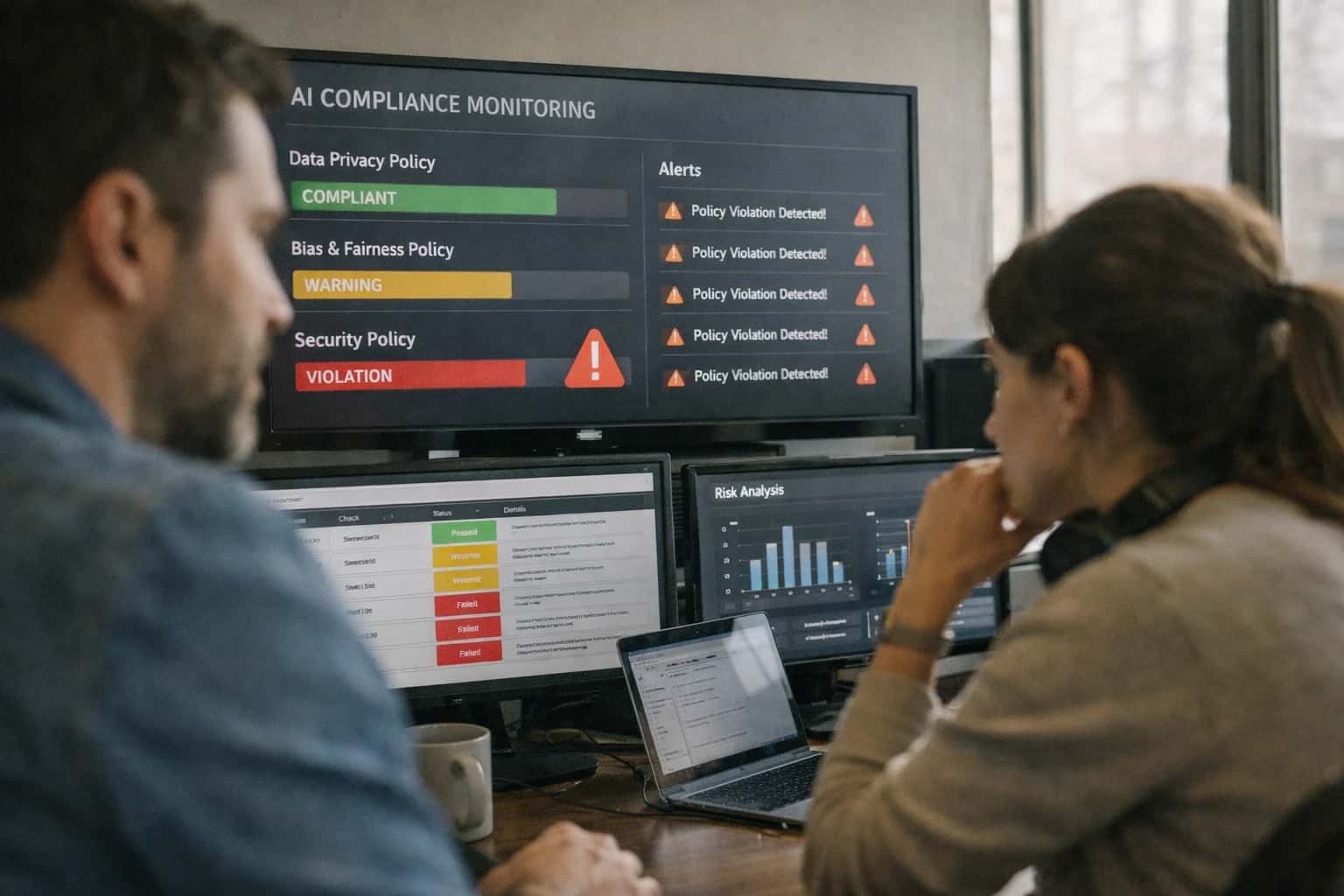
BUSINESS IMPACT
What is Real-Time Data Loss Prevention Used For?
Real-Time Data Loss Prevention (DLP) is the critical AI layer that stops sensitive data—customer PII, intellectual property, financial records—from leaving your organization. It's the difference between a minor alert and a catastrophic, multi-million dollar breach.
An AI-powered DLP solution provides the fix. By analyzing context—user role, data sensitivity, destination, and behavior patterns—in real time, it can accurately block only high-risk actions. This transforms security from a cost center into a competitive advantage, enabling secure collaboration and digital transformation. Measurable outcomes include a 70%+ reduction in false positives, containment of incidents in seconds instead of days, and direct protection of revenue tied to proprietary data and customer trust. For a deeper dive on related defensive strategies, explore our insights on Predictive Breach Detection and Behavioral Anomaly Detection.
REAL-TIME DATA LOSS PREVENTION
Common Use Cases: Where AI-Driven DLP Delivers Immediate ROI
Move beyond static rules to intelligent, context-aware protection that stops data exfiltration before it happens, delivering measurable ROI through reduced breach costs and automated compliance.
01
Stop Insider Threats in Real-Time
Traditional DLP relies on known patterns, missing novel exfiltration methods. AI establishes a behavioral baseline for every user and device, flagging anomalies like:
- A developer suddenly downloading gigabytes of source code before a resignation.
- An accountant accessing and emailing sensitive financial reports to a personal account.
- Unusual file encryption or transfer to unauthorized cloud storage. ROI Impact: Reduces the average cost of an insider threat incident, which exceeds $15 million, by enabling proactive intervention before data leaves the network.
02
Automate Compliance for Regulated Data
Manually classifying and protecting data like PII, PHI, and PCI is costly and error-prone. AI-driven DLP automatically discovers, classifies, and tags sensitive data across endpoints, cloud apps, and databases. It then enforces policies in real-time, such as:
- Blocking unencrypted emails containing credit card numbers.
- Redacting sensitive patient information in shared documents.
- Logging all access to financial records for audit trails. ROI Impact: Cuts compliance audit preparation time by up to 70% and eliminates fines for preventable data mishandling.
03
Secure Cloud and SaaS Application Sprawl
Employees use dozens of unsanctioned apps (Shadow IT), creating uncontrolled data leakage points. AI monitors data flows in real-time across sanctioned and unsanctioned cloud services (e.g., Salesforce, SharePoint, personal Dropbox). It uses contextual analysis to:
- Prevent the upload of customer lists to a personal file-sharing site.
- Detect and block the exfiltration of intellectual property via webmail.
- Enforce geo-fencing rules to keep data within approved regions. ROI Impact: Provides visibility and control over the entire SaaS ecosystem, directly protecting intellectual property and customer trust.
04
Protect Intellectual Property from Exfiltration
Source code, design files, and strategic plans are high-value targets. Rule-based systems fail against subtle, slow data leaks. AI analyzes content, context, and intent to protect IP:
- Identifies and blocks attempts to email CAD files to a competitor's domain.
- Detects when source code repositories are being cloned en masse to external drives.
- Monitors for keywords and document similarity in outbound communications. ROI Impact: Safeguards core competitive assets. A single prevented IP theft can justify the entire platform investment, preserving market advantage.
05
Prevent Data Loss from Compromised Credentials
When an account is phished, attackers move laterally to find and steal data. AI-driven DLP acts as a last line of defense by monitoring for anomalous data access and movement patterns post-breach, even from legitimate accounts. It can:
- Flag and block bulk database queries from a user who typically only reads reports.
- Detect rapid, sequential downloads of sensitive files from a network share.
- Trigger step-up authentication or session termination for high-risk data transfers. ROI Impact: Limits blast radius and financial impact of a breach. Reduces mean time to contain (MTTC) by automating response to suspicious data activity.
06
Enable Secure Digital Transformation & Collaboration
Business growth requires sharing data with partners and using collaborative tools, which increases risk. AI enables secure collaboration by understanding business context. It allows legitimate work while blocking threats:
- Permits an engineer to share a design file with a manufacturing partner but blocks sending it to a personal email.
- Allows a marketing team to use a cloud-based analytics platform but redacts embedded customer PII.
- Learns normal collaboration patterns within a project team to spot deviations. ROI Impact: Removes security as a barrier to business velocity. Teams can adopt modern tools without introducing unacceptable risk, accelerating innovation cycles.
ARCHITECTURE OVERVIEW
How AI-Powered DLP Stops Data Loss in Real Time
Traditional Data Loss Prevention (DLP) is a reactive gatekeeper, flagging policy violations after the fact. AI transforms DLP into an intelligent, predictive shield that understands context and intent.
The traditional DLP model is broken. It relies on rigid, pre-defined rules and static signatures that cannot adapt to novel exfiltration methods or understand nuanced user intent. This creates a flood of false positives that overwhelm security teams while missing sophisticated, context-aware threats like an employee accidentally emailing a sensitive financial model to a personal account. The result is either operational paralysis or catastrophic data breaches, with compliance fines and reputational damage as the costly outcomes.
An AI-powered DLP architecture solves this by deploying a context-aware reasoning layer. It analyzes data movement—across endpoints, networks, and cloud apps—in real time, using models trained on normal user and data behavior. The system understands if a CAD file being uploaded is part of a sanctioned project or a potential IP theft attempt. This enables automated, risk-based enforcement, blocking high-risk actions while allowing legitimate work to flow, reducing false positives by over 70% and shrinking the window for data exfiltration to milliseconds. Learn how this integrates into a broader Autonomous Security Orchestration framework.
Enabling Efficiency, Speed & Accuracy
Intelligent Analysis, Decision & Execution
We build AI systems for teams that need search across company data, workflow automation across tools, or AI features inside products and internal software.
Talk to Us
Search across company data
Give teams answers from docs, tickets, runbooks, and product data with sources and permissions.
Useful when people spend too long searching or get different answers from different systems.
Enterprise searchRAGPermissions
Read more
Automate internal workflows
Use AI to route work, draft outputs, trigger actions, and keep approvals and logs in place.
Useful when repetitive work moves across multiple tools and teams.
AI agentsWorkflow automationGovernance
Read more
Add AI to products and internal tools
Build assistants, guided actions, or decision support into the software your team or customers already use.
Useful when AI needs to be part of the product, not a separate tool.
AI integrationDecision supportModel routing
Read moreREAL-TIME DATA LOSS PREVENTION
Implementation Roadmap: From Pilot to Enterprise Scale
Justifying AI for data security requires a clear, phased path to ROI. This roadmap outlines how to start small, prove value, and scale a Real-Time DLP solution that protects your most critical assets.
01
Phase 1: Targeted Pilot & Quick-Win Validation
Start with a focused, high-risk use case to demonstrate immediate value and build stakeholder confidence. This phase is about proving the AI's accuracy and operational impact.
- Target a Critical Data Class: Begin by protecting a single, high-value data type like source code, customer PII, or financial records in a specific department (e.g., R&D, Finance).
- Establish Baseline Metrics: Document current manual review processes, average incident investigation time, and estimated volume of undetected data movement.
- Quantify the Pilot ROI: Measure the reduction in manual alert triage (often 70-80%) and the speed of threat containment (from hours to seconds). A successful pilot typically shows a 3-6 month payback period on the initial investment.
02
Phase 2: Departmental Scale & Process Integration
Expand the validated AI model to an entire business unit, integrating DLP into existing security and data governance workflows. This phase focuses on efficiency gains and policy refinement.
- Integrate with Data Governance: Connect the AI DLP engine to data classification tools and identity management systems for richer context.
- Automate Response Playbooks: Implement automated actions for common scenarios, such as quarantining files containing sensitive data on unauthorized USB drives or alerting managers to unusual bulk downloads.
- Demonstrate Broad Efficiency: Show how the system handles thousands of events daily with minimal false positives, freeing your SOC team to focus on strategic threats. This stage often reveals 30-40% operational cost savings in security monitoring.
03
Phase 3: Enterprise Deployment & Proactive Intelligence
Deploy AI-driven DLP organization-wide, covering all data repositories, endpoints, and cloud applications. The focus shifts from prevention to predictive intelligence and strategic advantage.
- Unified Data Protection: Extend coverage to SaaS applications (Slack, Teams, Salesforce), cloud storage, and hybrid endpoints, creating a single pane of glass for data risk.
- Leverage Behavioral Context: Use AI to understand 'normal' data flow patterns for each role, enabling detection of subtle insider threats or compromised accounts that bypass static rules.
- Drive Competitive & Compliance ROI: Quantify reduction in compliance audit preparation time and potential regulatory fines. For a global enterprise, preventing a single major data exfiltration incident can represent an ROI exceeding 1000% on the total solution cost.
04
Phase 4: Autonomous Operations & Strategic Foresight
Mature the system into a core component of your security architecture, where it autonomously adapts to new threats and provides intelligence for strategic decision-making.
- Implement Self-Learning Policies: Allow the AI to recommend and tune DLP policies based on evolving data usage patterns and emerging threat models, reducing administrative overhead.
- Feed Intelligence Broader Ecosystem: Share risk insights with your SIEM, SOAR, and threat intelligence platforms, enhancing overall security posture and enabling faster, coordinated responses to advanced attacks.
- Achieve Sustained Business Value: Position real-time DLP as a business enabler, protecting intellectual property during M&A activities and securing data sharing in partnerships. This transforms the solution from a cost center into a key pillar of enterprise risk management.

About the author
Prasad Kumkar
CEO & MD, Inference Systems
Prasad Kumkar is the CEO & MD of Inference Systems and writes about AI systems architecture, LLM infrastructure, model serving, evaluation, and production deployment. Over 5+ years, he has worked across computer vision models, L5 autonomous vehicle systems, and LLM research, with a focus on taking complex AI ideas into real-world engineering systems.
His work and writing cover AI systems, large language models, AI agents, multimodal systems, autonomous systems, inference optimization, RAG, evaluation, and production AI engineering.
LinkedIn
Limited slotsGet a Free AI Consultation
Partnered with leading AI, data, and software stack.





How We Work
Custom AI workflows for your Business
One-fit-all AI don't work for modern businesses. At Inferensys, we aim to understand your business & custom requirements; which we use to define most efficient agentic workflows, the data, and the tools for your business.
01
Review the use case
We understand the task, the users, and where AI can actually help.
Read more02
Pick the right approach
We define what needs search, automation, or product integration.
Read more03
Build the first useful version
We implement the part that proves the value first.
Read more04
Improve from there
We add the checks and visibility needed to keep it useful.
Read moreThe first call is a practical review of your use case and the right next step.
Talk to Us