The core pain point in modern cloud security is scale and complexity. Manual configuration reviews and compliance checks cannot keep pace with dynamic environments, leading to dangerous misconfigurations, compliance drift, and a sprawling attack surface. This operational burden creates constant firefighting, leaving security teams overwhelmed and unable to focus on strategic threats, while the business faces significant financial and reputational risk from preventable breaches.

Use Case
Cloud Security Automation
Automate the enforcement of security policies and compliance guardrails across multi-cloud environments, preventing misconfigurations at scale and reducing breach risk by up to 90%.
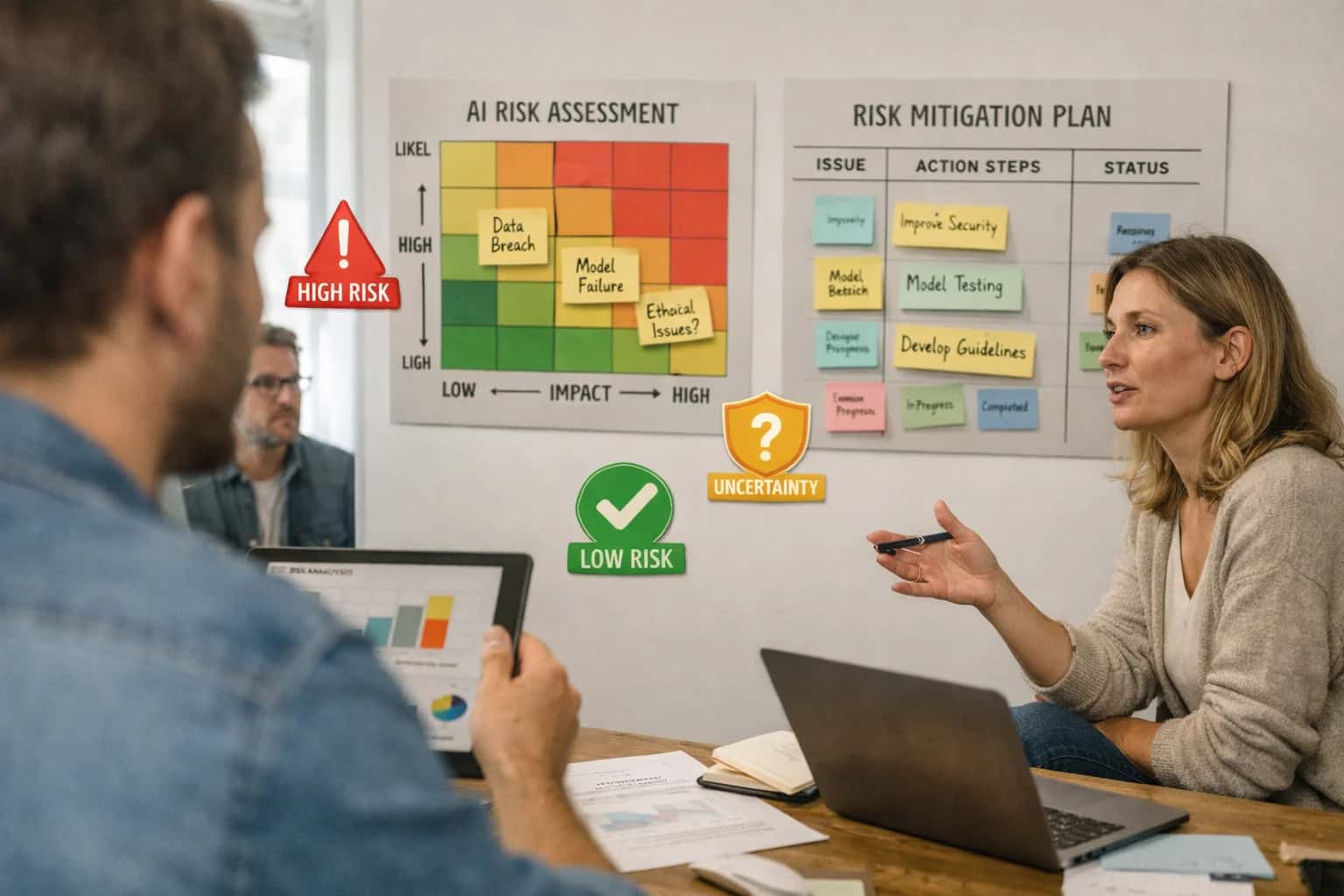
FROM REACTIVE TO PROACTIVE
What is Cloud Security Automation Used For?
Cloud security automation moves enterprises from manual, reactive security to proactive, intelligent enforcement. It's the critical layer that translates policy into action across sprawling multi-cloud environments.
Cloud security automation is the fix. It enforces security-as-code principles, using AI to continuously scan for deviations from policy—like publicly exposed storage buckets or overly permissive identities—and automatically remediates them. This transforms security from a checklist to a continuous, measurable outcome: reducing misconfigurations by over 90%, ensuring continuous compliance, and freeing teams to focus on higher-value threat hunting and strategic initiatives like implementing a Zero-Trust Access Enforcement framework.
CLOUD SECURITY AUTOMATION
Common Use Cases: From Reactive to Proactive Security
Move beyond manual, reactive security checks. These AI-driven automation use cases deliver measurable ROI by preventing costly breaches and ensuring continuous compliance.
01
Automated Compliance Guardrails
Manually checking cloud configurations against frameworks like CIS, NIST, or PCI-DSS is slow and error-prone. AI automates this by continuously scanning your multi-cloud environment (AWS, Azure, GCP) for policy violations and misconfigurations. It enforces guardrails in real-time, preventing non-compliant resources from being provisioned. For example, it can automatically remediate an S3 bucket set to public access or flag a VM missing disk encryption, ensuring audit readiness 24/7 and eliminating fines for compliance failures.
02
Drift Detection & Self-Healing Infrastructure
Even with perfect initial setup, configurations drift over time due to manual changes or software updates, creating security gaps. AI monitors your Infrastructure-as-Code (IaC) templates and compares them to the live environment. When unauthorized drift is detected—like a firewall rule being opened—the system can either auto-revert the change or trigger an alert for SOC review. This creates a self-healing cloud estate, reducing the mean time to remediation (MTTR) from hours to minutes and maintaining a consistent security baseline.
03
Identity & Access Management (IAM) Oversight
Over-provisioned permissions are a top attack vector. AI analyzes user and service identities to map actual usage against granted permissions. It identifies stale accounts, excessive privileges, and risky cross-account access. The system then recommends or automatically applies the principle of least privilege, revoking unused permissions. For a financial services client, this reduced their cloud IAM attack surface by 40% within a quarter, directly lowering the risk of insider threat and lateral movement by attackers.
04
Real-Time Threat Detection in Cloud Logs
Cloud-native attacks move faster than human analysts can review logs. AI models ingest terabytes of data from CloudTrail, VPC Flow Logs, and container runtime logs to establish a behavioral baseline. They detect anomalies such as:
- Geographically impossible logins
- Cryptomining activity in compute instances
- Suspicious API calls from new regions By correlating weak signals across services, AI identifies advanced threats like credential theft or data exfiltration attempts in real-time, shifting from weekly log reviews to continuous monitoring.
05
Cost-Optimized Security Posture
Security and cost management are intertwined. AI provides unified visibility into your cloud spend and security posture, identifying wasteful resources that also pose a risk. It can recommend deleting unattached storage volumes, downsizing over-provisioned instances, or consolidating underutilized resources. One manufacturing CIO reported a 22% reduction in their cloud bill while simultaneously improving their security score by decommissioning forgotten, unpatched test environments that were exposed to the internet.
06
Automated Incident Response Playbooks
When a high-fidelity threat is detected, speed is critical. AI orchestrates your security stack (SIEM, EDR, cloud-native tools) to execute containment playbooks without human intervention. For a ransomware detection, it can automatically:
- Isolate the affected VM or container.
- Snapshot the volume for forensics.
- Block malicious IPs at the network layer.
- Create a ticket in ITSM with all context. This reduces dwell time from days to seconds, minimizing potential blast radius and business disruption. Explore related capabilities in our guide to Automated Incident Response.
CLOUD SECURITY AUTOMATION
How It Works: The AI-Powered Control Loop
Manual cloud security is a losing battle. This is how AI creates a continuous, intelligent control loop to enforce compliance and prevent breaches at cloud scale.
The Pain Point: In multi-cloud environments, security teams are overwhelmed. Manual policy checks and reactive incident response create a massive compliance gap and operational risk. A single misconfigured storage bucket or overly permissive identity role can lead to a catastrophic data breach. The sheer scale and dynamic nature of cloud infrastructure makes human-only oversight impossible, leaving critical vulnerabilities undetected for weeks or months.
The AI Fix: Our system implements a continuous AI-powered control loop. It continuously scans your cloud estate, compares configurations against security benchmarks and internal policy, and autonomously remediates deviations—such as closing open ports or revoking excessive permissions—in real-time. This transforms security from a periodic audit to a constant, automated enforcement layer, reducing misconfiguration-related incidents by over 90% and ensuring continuous compliance. Learn how this integrates with broader Predictive Cybersecurity Operations and Automated Incident Response.
Enabling Efficiency, Speed & Accuracy
Intelligent Analysis, Decision & Execution
We build AI systems for teams that need search across company data, workflow automation across tools, or AI features inside products and internal software.
Talk to Us
Search across company data
Give teams answers from docs, tickets, runbooks, and product data with sources and permissions.
Useful when people spend too long searching or get different answers from different systems.
Enterprise searchRAGPermissions
Read more
Automate internal workflows
Use AI to route work, draft outputs, trigger actions, and keep approvals and logs in place.
Useful when repetitive work moves across multiple tools and teams.
AI agentsWorkflow automationGovernance
Read more
Add AI to products and internal tools
Build assistants, guided actions, or decision support into the software your team or customers already use.
Useful when AI needs to be part of the product, not a separate tool.
AI integrationDecision supportModel routing
Read moreCLOUD SECURITY AUTOMATION
Real-World Examples & ROI
Move beyond manual configuration checks and reactive alerts. These examples demonstrate how AI-driven automation delivers measurable cost savings, operational efficiency, and a hardened security posture across multi-cloud environments.
01
Automated Compliance Guardrails
Manually enforcing compliance standards like CIS, NIST, or PCI-DSS across AWS, Azure, and GCP is error-prone and costly. AI agents can continuously scan infrastructure-as-code (IaC) templates and live environments, automatically remediating misconfigurations in real-time.
- Real Example: A financial services firm reduced compliance audit preparation from 3 weeks to 3 days.
- Key Benefit: Eliminates costly fines and audit findings by maintaining a continuous state of compliance.
90%
Reduction in manual review time
99.9%
Policy adherence rate
02
Preventative Cost Control
Cloud waste from over-provisioned resources and orphaned assets is a major budget leak. AI-driven automation identifies idle resources, rightsizes instances, and automatically shuts down non-production environments on schedules.
- Real Example: A SaaS company automated its dev/test environment lifecycle, turning off resources nightly and on weekends.
- Key Benefit: Direct, measurable savings on cloud bills, often achieving a 20-35% reduction in unnecessary spend.
$2.1M
Annual cloud savings identified
100%
Automated enforcement
03
Dynamic Threat Containment
When a malicious IP is detected or anomalous behavior is flagged, waiting for a human analyst creates a window of exposure. AI systems can autonomously execute containment playbooks—like updating security group rules, isolating instances, or revoking credentials—in seconds.
- Real Example: An e-commerce platform automatically contained a credential-stuffing attack by blocking IP ranges and forcing MFA re-authentication, preventing account takeovers.
- Key Benefit: Slashes Mean Time to Respond (MTTR) from hours to seconds, minimizing blast radius and business disruption.
< 60 sec
Incident containment time
70%
Reduction in SOC alert volume
04
Identity & Access Governance at Scale
Managing permissions for thousands of human and machine identities across clouds is complex and risky. AI analyzes usage patterns to recommend and enforce least-privilege access, automatically revoking unused permissions and flagging excessive entitlements.
- Real Example: A technology enterprise reduced its identity attack surface by 40% by automatically removing stale permissions and enforcing just-in-time access for developers.
- Key Benefit: Dramatically reduces the risk of lateral movement following a credential compromise, a core tenet of zero-trust security.
40%
Reduction in excessive permissions
1000+
Identities managed per FTE
05
Intelligent Vulnerability Prioritization
Traditional scanners produce thousands of vulnerabilities, overwhelming teams. AI correlates findings with contextual business risk—asset criticality, exploit availability, and network exposure—to auto-prioritize the critical 5% that matter.
- Real Example: A manufacturing company shifted from reviewing 10,000+ monthly vulnerabilities to acting on a prioritized list of under 500 high-risk items.
- Key Benefit: Focuses engineering effort where it has the greatest security impact, improving remediation rates and closing the window of exposure for critical flaws.
85%
Focus on critical risks
50% faster
Remediation cycle
06
Unified Security Posture Management
Security posture is often fragmented across cloud-native tools and point solutions. An AI orchestration layer provides a single pane of glass, continuously assessing configuration drift, compliance gaps, and threat indicators across all cloud accounts and services.
- Real Example: A healthcare provider achieved a unified security score across its 200+ AWS and Azure accounts, enabling executive-level reporting and targeted investment.
- Key Benefit: Transforms security from a technical metric to a business KPI, enabling data-driven investment and resource allocation for maximum risk reduction.
1
Unified security score
360°
Visibility across clouds

About the author
Prasad Kumkar
CEO & MD, Inference Systems
Prasad Kumkar is the CEO & MD of Inference Systems and writes about AI systems architecture, LLM infrastructure, model serving, evaluation, and production deployment. Over 5+ years, he has worked across computer vision models, L5 autonomous vehicle systems, and LLM research, with a focus on taking complex AI ideas into real-world engineering systems.
His work and writing cover AI systems, large language models, AI agents, multimodal systems, autonomous systems, inference optimization, RAG, evaluation, and production AI engineering.
LinkedIn
Limited slotsGet a Free AI Consultation
Partnered with leading AI, data, and software stack.





How We Work
Custom AI workflows for your Business
One-fit-all AI don't work for modern businesses. At Inferensys, we aim to understand your business & custom requirements; which we use to define most efficient agentic workflows, the data, and the tools for your business.
01
Review the use case
We understand the task, the users, and where AI can actually help.
Read more02
Pick the right approach
We define what needs search, automation, or product integration.
Read more03
Build the first useful version
We implement the part that proves the value first.
Read more04
Improve from there
We add the checks and visibility needed to keep it useful.
Read moreThe first call is a practical review of your use case and the right next step.
Talk to Us