The pain point is design drift and technical debt. As teams scale, manual reviews fail. Inconsistent components, accessibility violations, and off-brand elements slip through, causing rework, delayed launches, and a fragmented user experience. This isn't just a creative issue—it's a productivity tax that slows time-to-market and dilutes brand equity. Every inconsistency requires costly developer rework and risks customer trust.

Use Case
Automated Design System Governance
AI-driven enforcement of brand and UI consistency, reducing rework by 70% and accelerating developer handoff by 5x. Achieve scalable governance and predictable ROI.
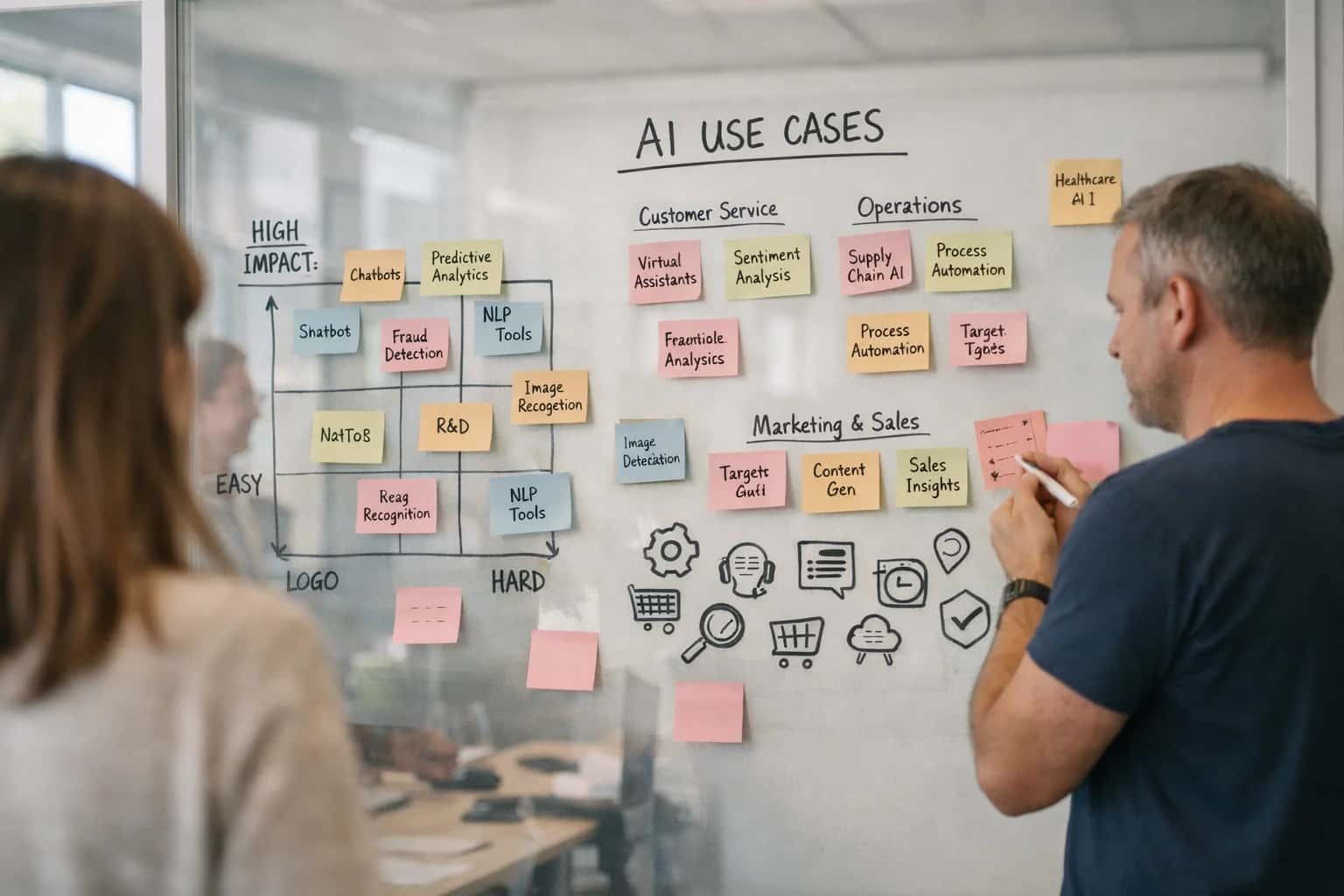
USE CASES
What is Automated Design System Governance Used For?
Automated Design System Governance uses AI to enforce brand and UI consistency at scale, directly addressing the costly friction between design, development, and marketing teams.
The AI fix is continuous, automated compliance. AI acts as a 24/7 design auditor, scanning Figma files, code repositories, and marketing assets against your brand rules and WCAG standards. It flags violations in real-time—like incorrect spacing or color—and provides actionable fixes. This slashes rework by up to 70%, accelerates developer handoff, and ensures every customer touchpoint is on-brand. Learn how this integrates with broader AI-Powered Creative Workflow Orchestration and Automated Design Compliance Checking.
AUTOMATED DESIGN SYSTEM GOVERNANCE
Common Use Cases
Enforce brand and UI consistency at scale with AI that audits designs for compliance, reducing rework and accelerating developer handoff.
01
Automated Brand Compliance Audits
Replace manual, error-prone reviews with AI that scans every design file against your brand guidelines. The system flags deviations in color palettes, typography, and logo usage before assets go to production. This eliminates costly rebranding efforts and ensures a cohesive customer experience across all touchpoints. For example, a global retailer reduced brand violation rework by 65% in the first quarter post-implementation.
65%
Reduction in Brand Violations
90%
Faster Audit Cycles
02
Developer Handoff Acceleration
AI automatically generates specification documents and production-ready code snippets (React, CSS) from approved designs. It ensures pixel-perfect translation by checking for inconsistencies in spacing, component states, and responsive behavior. This bridges the gap between design and engineering, cutting handoff time from days to hours and reducing the back-and-forth that delays product launches.
80%
Faster Handoff
40%
Fewer Engineering Tickets
03
Accessibility & Regulatory Enforcement
Proactively mitigate legal risk and expand market reach. AI audits designs for WCAG compliance, checking color contrast ratios, focus states, and screen reader compatibility. It also enforces industry-specific regulations (e.g., financial disclosures, pharmaceutical marketing rules). This transforms compliance from a costly, post-production fix into a seamless, integrated part of the design workflow.
100%
Pre-Launch WCAG Checks
50%
Lower Compliance Remediation Cost
04
Design System Health Monitoring
Gain real-time visibility into your design system's adoption and health. AI tracks component usage, detects duplicate or deprecated elements, and identifies teams not using the approved library. This provides data-driven insights to guide system evolution, reduce UI debt, and ensure all product teams are building with consistent, efficient components.
95%
Library Adoption Rate
30%
Reduction in UI Debt
05
Cross-Platform Consistency Assurance
Ensure a unified brand experience across web, mobile, and embedded interfaces. AI compares designs for the same feature across different platforms, flagging inconsistencies in interaction patterns, iconography, and visual hierarchy. This is critical for companies with omnichannel products, preventing user confusion and maintaining a professional, polished brand image everywhere.
70%
Fewer Platform-Specific Bugs
Unified
Cross-Platform UX
06
Vendor & Agency Output Governance
Maintain control over external creative work. AI tools can be provisioned to agency partners to audit their deliverables against your master design system before submission. This sets clear expectations, reduces revision cycles, and ensures that all external work seamlessly integrates with your internal product ecosystem, protecting brand equity.
60%
Faster Agency Reviews
Guaranteed
Brand Alignment
AUTOMATED DESIGN SYSTEM GOVERNANCE
How It Works: The AI Governance Layer
Manual design reviews and inconsistent handoffs create costly bottlenecks. This is how AI enforces brand and UI consistency at scale.
Manual governance of a design system is a major bottleneck. Teams waste countless hours in review cycles, checking for brand guideline breaches, accessibility violations, and UI inconsistencies. This friction slows time-to-market and leads to costly rework when non-compliant designs reach development. The pain point isn't creativity—it's the repetitive, error-prone audit process that drains resources and stifles innovation.
Our AI governance layer acts as an automated quality gate. It integrates directly into tools like Figma, auditing designs in real-time for compliance with your defined system. It flags deviations in color, typography, spacing, and accessibility (WCAG), providing instant, actionable feedback. This reduces manual review time by over 70%, accelerates developer handoff, and ensures pixel-perfect consistency across every product and campaign. Explore how this fits into broader AI-Powered Creative Workflow Orchestration and complements Automated Design Compliance Checking.
Enabling Efficiency, Speed & Accuracy
Intelligent Analysis, Decision & Execution
We build AI systems for teams that need search across company data, workflow automation across tools, or AI features inside products and internal software.
Talk to Us
Search across company data
Give teams answers from docs, tickets, runbooks, and product data with sources and permissions.
Useful when people spend too long searching or get different answers from different systems.
Enterprise searchRAGPermissions
Read more
Automate internal workflows
Use AI to route work, draft outputs, trigger actions, and keep approvals and logs in place.
Useful when repetitive work moves across multiple tools and teams.
AI agentsWorkflow automationGovernance
Read more
Add AI to products and internal tools
Build assistants, guided actions, or decision support into the software your team or customers already use.
Useful when AI needs to be part of the product, not a separate tool.
AI integrationDecision supportModel routing
Read moreAUTOMATED DESIGN SYSTEM GOVERNANCE
Real-World Examples & ROI
Enforcing brand and UI consistency at scale is a major operational bottleneck. These examples demonstrate how AI-driven governance delivers measurable ROI by eliminating costly rework and accelerating time-to-market.
01
Eliminate Brand Drift in High-Velocity Teams
A global fintech with 50+ product squads used AI to audit every Figma file and code commit against their design system. The system flagged non-compliant color palettes, inconsistent spacing tokens, and unauthorized typography before designs reached developers.
- Result: Reduced design rework by 65% in Q1.
- ROI Driver: Saved ~15 designer-hours per week previously spent on manual reviews.
65%
Reduction in Design Rework
600+
Hours Saved Annually
02
Accelerate Developer Handoff by 40%
A SaaS company integrated an AI governance layer between their design and engineering teams. The AI automatically generated developer-ready specs, verified asset exports, and created Jira tickets for inconsistencies.
- Result: Cut average handoff time from 3 days to under 2.
- Real Example: One feature launch was accelerated by two weeks because engineering received perfectly annotated, compliant designs on day one.
40%
Faster Handoff
2 Weeks
Time-to-Market Accelerated
03
Ensure Global Accessibility Compliance
A retail enterprise used AI to scan all customer-facing UI components for WCAG 2.1 AA compliance. The system identified insufficient color contrast ratios and missing ARIA labels in legacy components.
- ROI Driver: Mitigated legal risk and potential fines estimated at $250k+.
- Business Benefit: Improved UX for all users, supporting ESG and inclusivity goals.
100%
WCAG Audit Coverage
$250k+
Risk Mitigated
04
Scale Design Systems Across Acquisitions
After a major merger, a healthcare provider used AI governance to onboard three newly acquired product teams onto a unified design system. The AI provided real-time feedback and training within their existing tools.
- Result: Achieved brand consistency across 12 products in 4 months, not 12.
- Cost Avoidance: Eliminated the need for a 6-month, $500k consultant-led unification project.
8 Months
Timeline Saved
$500k
Consulting Costs Avoided
05
Automate Print & Production QA
A consumer packaged goods (CPG) company automated the pre-flight check for thousands of packaging SKUs. The AI verified correct CMYK values, bleed areas, and regulatory text placement against a master template.
- Result: Reduced packaging errors by 92%, avoiding costly recalls and print waste.
- ROI: Saved an estimated $1.2M annually in avoided reprints and logistics delays.
92%
Fewer Packaging Errors
$1.2M
Annual Savings
06
Quantify the Cost of Inconsistency
For a CIO building a business case, we modeled the hard costs of manual governance: designer review hours, developer refactoring time, and delayed launches. AI automation showed a clear 12-month payback.
- Typical Findings: Enterprises waste 15-20% of their design/development capacity on rework.
- Justification: This tool shifts that capacity from policing to innovation, directly impacting product velocity.
15-20%
Capacity Wasted on Rework
<12 Months
Average Payback Period

About the author
Prasad Kumkar
CEO & MD, Inference Systems
Prasad Kumkar is the CEO & MD of Inference Systems and writes about AI systems architecture, LLM infrastructure, model serving, evaluation, and production deployment. Over 5+ years, he has worked across computer vision models, L5 autonomous vehicle systems, and LLM research, with a focus on taking complex AI ideas into real-world engineering systems.
His work and writing cover AI systems, large language models, AI agents, multimodal systems, autonomous systems, inference optimization, RAG, evaluation, and production AI engineering.
LinkedIn
Limited slotsGet a Free AI Consultation
Partnered with leading AI, data, and software stack.





How We Work
Custom AI workflows for your Business
One-fit-all AI don't work for modern businesses. At Inferensys, we aim to understand your business & custom requirements; which we use to define most efficient agentic workflows, the data, and the tools for your business.
01
Review the use case
We understand the task, the users, and where AI can actually help.
Read more02
Pick the right approach
We define what needs search, automation, or product integration.
Read more03
Build the first useful version
We implement the part that proves the value first.
Read more04
Improve from there
We add the checks and visibility needed to keep it useful.
Read moreThe first call is a practical review of your use case and the right next step.
Talk to Us