Finance teams are buried under a mountain of manual tasks: aggregating data from disparate ERPs and spreadsheets, reconciling discrepancies, and drafting repetitive reports. This process is error-prone, consumes 40-60% of a team's time during the close, and creates a strategic bottleneck. The pain point isn't just inefficiency; it's the opportunity cost of highly skilled analysts performing clerical work instead of strategic analysis that drives business decisions.

Use Case
Automated Financial Reporting Assistant
An AI teammate that aggregates data from disparate systems, automates reconciliation, and generates draft financial reports, reducing monthly close cycles by 40% and freeing finance teams for strategic analysis.
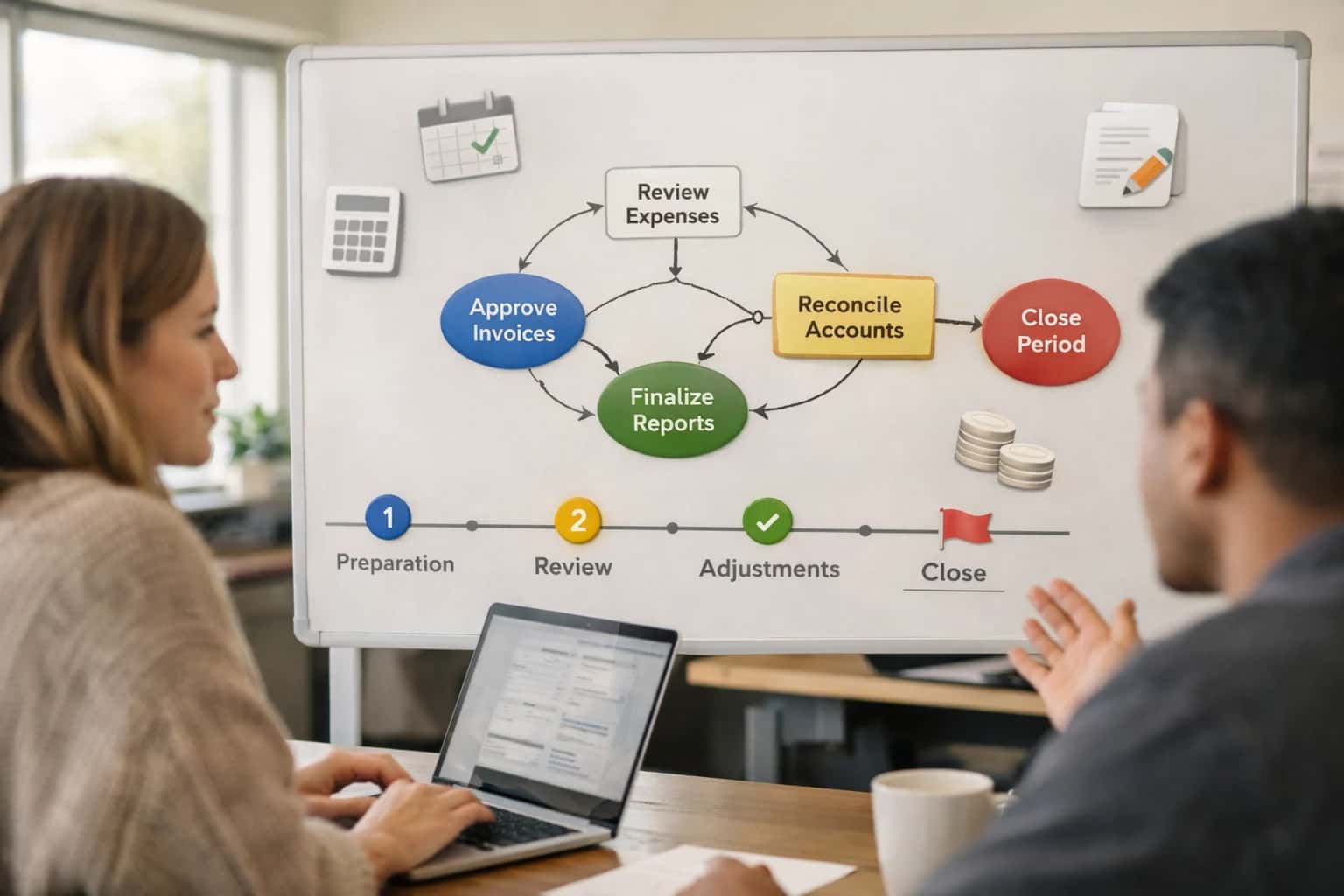
USE CASE: FINANCE
What is an Automated Financial Reporting Assistant Used For?
An Automated Financial Reporting Assistant is an AI teammate designed to eliminate the manual grind of the financial close, transforming raw data into actionable intelligence.
The AI assistant acts as a force multiplier. It automates data ingestion, performs intelligent reconciliation, and generates draft financial statements and management commentary. This reduces the monthly close cycle by 30-50%, cuts manual errors, and frees finance professionals to focus on variance analysis, forecasting, and advising the business. The measurable outcome is a faster, more accurate close and a finance function that shifts from reporting history to shaping the future. Explore how this fits into broader AI-human collaboration frameworks and the operational backbone of MLOps and LLMOps.
AI-HUMAN COLLABORATION
Common Use Cases: Where AI Delivers Immediate ROI
Transform your finance team from data wranglers to strategic advisors. These AI assistants automate the most time-consuming reporting tasks, delivering measurable ROI in weeks, not years.
01
Automated Month-End Close
The Pain Point: Manual data aggregation from ERP, CRM, and spreadsheets turns the monthly close into a 10-15 day scramble of reconciliation and error-checking.
The AI Fix: An AI agent acts as a virtual accountant, autonomously pulling data from disparate sources, matching transactions, and flagging discrepancies for human review. It generates a first-draft P&L and balance sheet, complete with variance analysis.
- Real Example: A mid-market manufacturer reduced its close cycle from 12 days to 4 days, freeing its FP&A team to analyze results instead of compiling them.
- ROI Driver: Accelerates financial visibility, enabling faster strategic decisions.
02
Regulatory & Management Reporting
The Pain Point: Creating board reports, SEC filings (10-Q/10-K), and internal dashboards is a manual, copy-paste process prone to version control errors.
The AI Fix: AI assistants are trained on report templates and compliance rules. They populate narratives with approved language, generate charts from live data, and ensure consistency across all documents.
- Real Example: A financial services firm automated 70% of its quarterly regulatory report drafting, cutting preparation time by 50% and reducing compliance risk.
- ROI Driver: Eliminates manual grunt work, ensures accuracy, and protects against filing delays.
03
Real-Time Variance & Anomaly Detection
The Pain Point: Finance teams discover budget overruns or revenue shortfalls weeks after the fact, missing the window for corrective action.
The AI Fix: AI models monitor GL entries and KPIs in real-time, using historical patterns to flag anomalies—like an unusual spike in departmental spend or a drop in regional sales—as they happen.
- Real Example: A retail chain's AI flagged a logistics cost anomaly, uncovering a billing error that saved $250k quarterly.
- ROI Driver: Shifts finance from historical reporting to proactive business guardianship, directly protecting margins.
04
Dynamic Forecasting & Scenario Modeling
The Pain Point: Static, spreadsheet-based forecasts are outdated upon creation. Modeling 'what-if' scenarios for supply chain disruption or market entry is a multi-day manual effort.
The AI Fix: AI integrates live sales, operational, and macroeconomic data to continuously update forecasts. It allows finance leaders to query scenarios conversationally (e.g., "Impact of a 10% material cost increase") and receive modeled outputs in minutes.
- Real Example: A tech company uses AI to run weekly re-forecasts, improving forecast accuracy by 30% and enabling agile budget reallocation.
- ROI Driver: Enables data-driven agility, turning finance into a strategic advantage during volatility.
05
Audit Trail & Explainability Engine
The Pain Point: During audits, tracing a number in a final report back through layers of adjustments and source systems is a manual, stressful detective hunt.
The AI Fix: Every figure in an AI-generated report is automatically linked to its source data and the logic applied. Auditors (internal or external) can click into a 'drill-down' view showing the complete, immutable lineage.
- Real Example: A publicly traded company reduced its external audit fieldwork time by 40% by providing AI-generated, transparent data trails.
- ROI Driver: Dramatically reduces audit cost and time, while strengthening financial controls and governance.
06
Personalized Stakeholder Reporting
The Pain Point: Creating tailored reports for the Board (strategic), department heads (operational), and investors (compliance) from the same dataset is a repetitive, time-sink.
The AI Fix: AI generates role-aware reports from a single source of truth. The Board receives a high-level narrative with strategic risks; a plant manager gets a granular efficiency dashboard; investors get a compliance-ready summary.
- Real Example: A CIO justified the AI investment by showing how it eliminated 20+ hours of manual report customization each month for the leadership team.
- ROI Driver: Maximizes the utility of financial data, ensuring every leader gets the insights they need without manual effort.
AI-HUMAN COLLABORATION
Automated Financial Reporting Assistant
Transform your financial close from a manual, error-prone marathon into a streamlined, strategic process. Our AI assistant acts as a dedicated teammate, aggregating data and drafting reports to empower your finance team.
The financial close is a high-stakes bottleneck. Teams waste days manually aggregating data from disparate ERPs, spreadsheets, and databases, leading to human error, delayed insights, and overtime costs. This manual reconciliation steals time from strategic analysis, leaving leadership without timely, accurate data for critical decisions. The pain is real: prolonged close cycles, audit risks, and frustrated talent.
Our AI assistant automates the grunt work. It connects to your systems, automatically pulls and reconciles data, and generates draft profit & loss statements, balance sheets, and management commentaries. This reduces manual effort by up to 70%, cutting the close cycle from days to hours. Finance professionals shift from data wranglers to strategic analysts, focusing on variance explanation and business performance. Explore our framework for AI-Human Collaboration and Super-Agency Frameworks to see how we design these workflows.
MANUAL PROCESS VS. AI ASSISTANT
ROI Analysis: Typical 12-Month Impact
Quantifying the financial and operational impact of deploying an Automated Financial Reporting Assistant versus maintaining a traditional manual process.
| Key Metric | Traditional Manual Process | AI-Powered Assistant | Net Improvement |
|---|---|---|---|
Monthly Close Cycle Time | 10-14 business days | 3-5 business days | 7-9 days faster |
FTE Hours per Report | 40 hours | 8 hours | 80% reduction |
Error Rate in Manual Entries | 3-5% | < 0.5% |
|
Cost of Manual Reconciliation | $50,000 | $10,000 | $40,000 saved |
Audit Preparation Time | 120 hours | 30 hours | 90 hours saved |
Report Generation Speed | 2-3 days | < 4 hours |
|
Scalability (Volume Increase) | ✅ Enabled | ||
Real-Time Variance Analysis | ✅ Enabled |
Enabling Efficiency, Speed & Accuracy
Intelligent Analysis, Decision & Execution
We build AI systems for teams that need search across company data, workflow automation across tools, or AI features inside products and internal software.
Talk to Us
Search across company data
Give teams answers from docs, tickets, runbooks, and product data with sources and permissions.
Useful when people spend too long searching or get different answers from different systems.
Enterprise searchRAGPermissions
Read more
Automate internal workflows
Use AI to route work, draft outputs, trigger actions, and keep approvals and logs in place.
Useful when repetitive work moves across multiple tools and teams.
AI agentsWorkflow automationGovernance
Read more
Add AI to products and internal tools
Build assistants, guided actions, or decision support into the software your team or customers already use.
Useful when AI needs to be part of the product, not a separate tool.
AI integrationDecision supportModel routing
Read moreAUTOMATED FINANCIAL REPORTING
Addressing Key Adoption Challenges
Transitioning from manual financial reporting to an AI-driven assistant involves significant change management. Here, we address the most common concerns from CFOs and controllers regarding compliance, ROI, and implementation.
Our Automated Financial Reporting Assistant is built on a neuro-symbolic reasoning foundation, which combines the pattern recognition of AI with explicit, rule-based logic. This means every calculation, aggregation, and adjustment can be traced back to a specific data source and a defined accounting rule (GAAP, IFRS). The system maintains a complete, immutable audit trail of all actions, including data ingested, transformations applied, and the human reviewer who approved the final output. This transparent decisioning is critical for regulated industries and satisfies both internal audit and external regulator requirements. For deeper insights on building auditable systems, explore our pillar on Neuro-symbolic Reasoning and Transparent Decisioning.

About the author
Prasad Kumkar
CEO & MD, Inference Systems
Prasad Kumkar is the CEO & MD of Inference Systems and writes about AI systems architecture, LLM infrastructure, model serving, evaluation, and production deployment. Over 5+ years, he has worked across computer vision models, L5 autonomous vehicle systems, and LLM research, with a focus on taking complex AI ideas into real-world engineering systems.
His work and writing cover AI systems, large language models, AI agents, multimodal systems, autonomous systems, inference optimization, RAG, evaluation, and production AI engineering.
LinkedIn
Limited slotsGet a Free AI Consultation
Partnered with leading AI, data, and software stack.





How We Work
Custom AI workflows for your Business
One-fit-all AI don't work for modern businesses. At Inferensys, we aim to understand your business & custom requirements; which we use to define most efficient agentic workflows, the data, and the tools for your business.
01
Review the use case
We understand the task, the users, and where AI can actually help.
Read more02
Pick the right approach
We define what needs search, automation, or product integration.
Read more03
Build the first useful version
We implement the part that proves the value first.
Read more04
Improve from there
We add the checks and visibility needed to keep it useful.
Read moreThe first call is a practical review of your use case and the right next step.
Talk to Us