K2view excels at generating high-fidelity, multi-relational synthetic data within complex enterprise architectures. Its core strength is treating data as a 'product,' preserving intricate relationships across entities like customers, accounts, and transactions—a critical requirement for testing core banking or insurance applications. For example, its platform can synthesize a complete, referentially intact 'business entity' from dozens of source tables, maintaining over 99% statistical utility in key columns as measured by metrics like Kolmogorov-Smirnov tests, which is essential for model risk management in regulated sectors.

Comparison
K2view vs Gretel
A technical comparison of K2view's enterprise data product platform for multi-relational synthesis and Gretel's developer-first API for privacy-preserving synthetic data, focusing on enterprise integration vs. developer agility for regulated data.
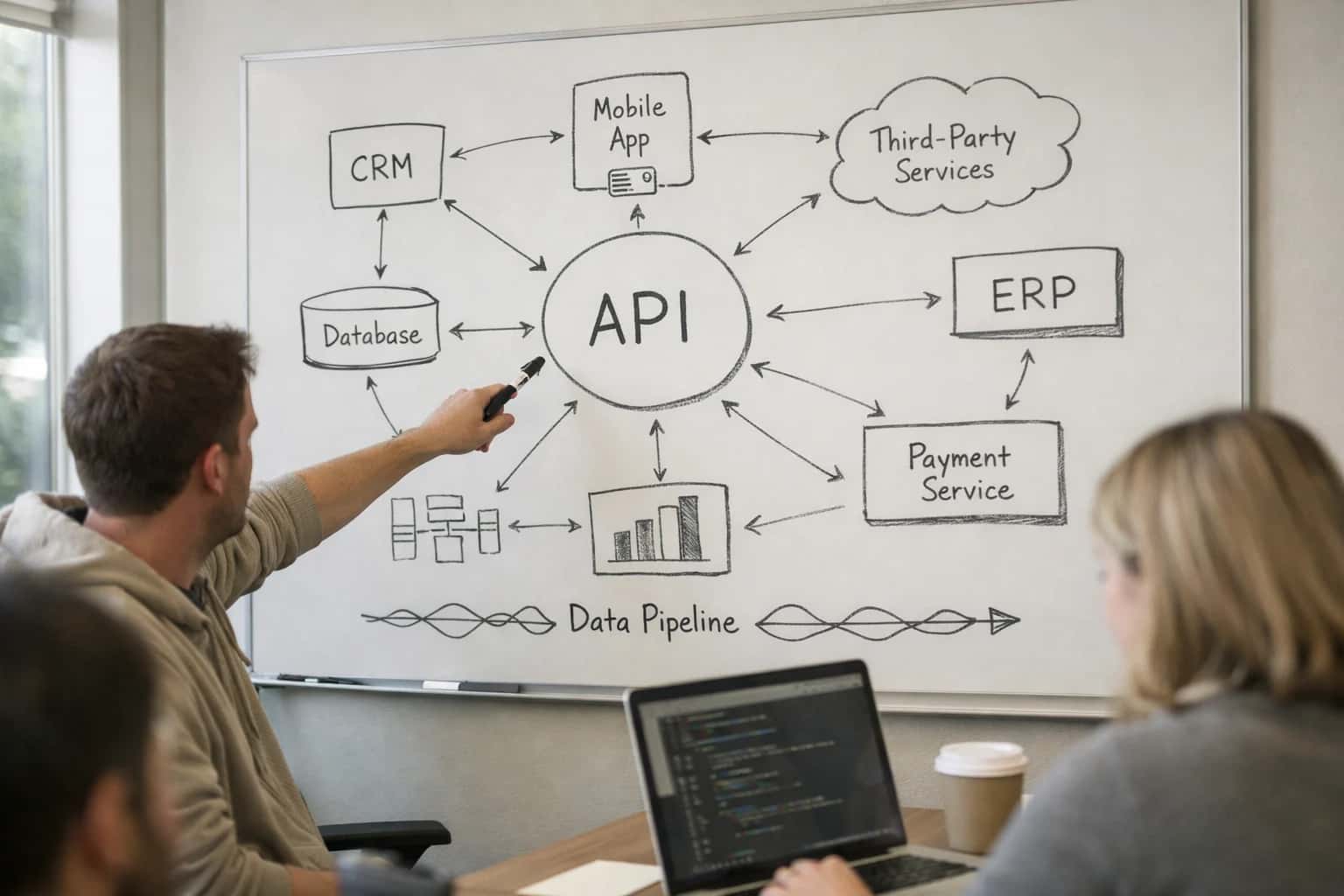
THE ANALYSIS
Introduction
A data-driven comparison of K2view's enterprise data product platform and Gretel's developer-first API for generating privacy-safe synthetic data.
Gretel takes a different approach by prioritizing developer agility and API-first access to a suite of privacy-preserving technologies. This strategy enables data science teams to rapidly generate and iterate on synthetic datasets using models like differentially private GANs or language models, often with just a few lines of code. This results in a trade-off: while offering superior speed and flexibility for prototyping and analytics, managing complex, entity-level relationships across a sprawling data mesh can require more custom engineering compared to K2view's out-of-the-box capabilities.
The key trade-off: If your priority is seamless integration with complex, legacy enterprise data landscapes and guaranteed referential integrity for application testing, choose K2view. If you prioritize developer velocity, cloud-native scalability, and the flexibility to apply different synthesis models (like Differential Privacy or Transformers) via API for analytics and AI training, choose Gretel. For a deeper dive into the technical architectures enabling these platforms, explore our guide on Enterprise Vector Database Architectures and the role of LLMOps and Observability Tools in managing synthetic data pipelines.
HEAD-TO-HEAD COMPARISON
K2view vs Gretel Feature Comparison
Direct comparison of key metrics and features for enterprise synthetic data generation platforms.
| Metric | K2view | Gretel |
|---|---|---|
Core Architecture | Data Product Platform (Multi-relational) | Developer-First API (Tabular & Time Series) |
Primary Use Case | Enterprise Application Testing (ERP, CRM) | AI/ML Training & Development |
Data Model Support | Multi-table with Referential Integrity | Single-table & Time Series |
Fidelity Scoring | Business Entity-based Metrics | Statistical (TSTR, KS Test) & Privacy (MIA) |
Differential Privacy | ||
Deployment Model | On-Premises / Private Cloud | Cloud API & Open-Source Hybrid |
Integration Focus | Pre-built Connectors for Legacy Systems | SDKs (Python, CLI) & CI/CD Pipelines |
Regulatory Focus | Financial Services (Basel III), Healthcare | General-Purpose with HIPAA/GDPR Tools |
K2VIEW VS GRETEL
TL;DR Summary
Key strengths and trade-offs at a glance for enterprise data product integration versus developer-first synthetic data APIs.
01
Choose K2view for Complex Enterprise Data Fabric
Specific advantage: Native integration with existing ERP, CRM, and MDM systems via a data product platform. This matters for organizations needing to synthesize and govern multi-relational datasets (e.g., customer-account-transaction) while preserving referential integrity across the entire business entity. Ideal for large-scale, regulated banking and insurance use cases where data lineage and governance are paramount.
02
Choose Gretel for Developer Agility and API-First Workflows
Specific advantage: Developer-first SDKs and REST APIs enabling integration into CI/CD pipelines in hours, not months. This matters for data science and ML engineering teams who need to rapidly generate privacy-preserving synthetic data for model training and testing, especially when working with tabular and time-series data in cloud-native environments.
03
K2view's Strength: Built-in Data Governance & Compliance
Specific advantage: Out-of-the-box compliance frameworks for regulations like GDPR, CCPA, and BCBS 239. The platform enforces data policies and provides audit-ready lineage from source to synthetic copy. This matters for heavily regulated industries (finance, healthcare) where proving data privacy and avoiding sanctions is a non-negotiable requirement.
04
Gretel's Strength: Advanced Privacy & Fidelity Scoring
Specific advantage: Proprietary ML models with built-in differential privacy (DP) and NIST-approved privacy filters. Provides granular fidelity scores (e.g., using TSTR for utility and MIA for privacy risk). This matters for R&D and analytics teams who require mathematically defensible privacy guarantees and transparent metrics to validate synthetic data quality before deployment.
CHOOSE YOUR PRIORITY
When to Choose: User Scenarios
K2view for Enterprise Integration
Verdict: The strategic choice for complex, governed data products. K2view excels when synthetic data must integrate into existing, complex enterprise architectures. Its core strength is generating multi-relational synthetic data that preserves referential integrity across dozens of linked tables (e.g., customer, account, transaction), which is non-negotiable for testing core banking or insurance applications. The platform is designed as a data product platform, offering robust data masking, tokenization, and synthesis in one governed workflow. This is critical for organizations under strict model risk management (MRM) or GDPR/HIPAA compliance, where audit trails and data lineage are required. Integration is via APIs or direct connectivity to sources like SAP, Oracle, and mainframes.
Gretel for Enterprise Integration
Verdict: A developer-friendly API, best for agile projects and modern data stacks. Gretel is optimized for speed and developer experience within cloud-native environments. Its API-first design and SDKs (Python, etc.) allow teams to quickly spin up synthetic data pipelines alongside tools like Snowflake, Databricks, and AWS SageMaker. While it supports relational data, its primary model is tabular synthesis. For enterprises, its value is in rapid prototyping, creating training data for specific ML models, or generating synthetic datasets for analytics sandboxes. It lacks K2view's deep, pre-built connectors for legacy systems, making it better suited for greenfield projects or departments with modern data platforms. For a deeper dive into API-first platforms, see our comparison of Gretel vs Mostly AI.
Enabling Efficiency, Speed & Accuracy
Intelligent Analysis, Decision & Execution
We build AI systems for teams that need search across company data, workflow automation across tools, or AI features inside products and internal software.
Talk to Us
Search across company data
Give teams answers from docs, tickets, runbooks, and product data with sources and permissions.
Useful when people spend too long searching or get different answers from different systems.
Enterprise searchRAGPermissions
Read more
Automate internal workflows
Use AI to route work, draft outputs, trigger actions, and keep approvals and logs in place.
Useful when repetitive work moves across multiple tools and teams.
AI agentsWorkflow automationGovernance
Read more
Add AI to products and internal tools
Build assistants, guided actions, or decision support into the software your team or customers already use.
Useful when AI needs to be part of the product, not a separate tool.
AI integrationDecision supportModel routing
Read moreTHE ANALYSIS
Final Verdict
Choosing between K2view and Gretel hinges on a fundamental trade-off: enterprise data product integration versus developer-first agility for synthetic data.
K2view excels at generating high-fidelity, multi-relational synthetic data products that mirror complex enterprise schemas. Its platform is designed as a data product engine, treating each business entity (e.g., a customer with all linked accounts, transactions, and profiles) as a unified, synthesizable unit. This results in superior referential integrity, which is critical for testing entire banking or insurance applications. For example, its Entity-Based Synthesis ensures synthetic data preserves complex joins and foreign key relationships across dozens of tables, a key requirement for regulatory model validation and UAT environments where data realism is non-negotiable.
Gretel takes a different approach by prioritizing developer agility and privacy-by-design through an API-first, cloud-native platform. Its strength lies in rapid prototyping and scaling synthetic data workflows with built-in differential privacy (DP) and synthetic data quality scores. This strategy results in a trade-off: while it offers exceptional flexibility for data scientists to generate single-table datasets or time-series data quickly, managing complex, multi-table relational integrity at scale requires more custom pipeline engineering compared to K2view's out-of-the-box capabilities.
The key trade-off: If your priority is seamless integration with existing MDM, data warehouses, and complex ERP/CRM systems to create a privacy-safe twin of your production data for compliance and testing, choose K2view. Its platform is built for the enterprise data fabric. If you prioritize speed of experimentation, developer-friendly APIs, and granular privacy controls for generating datasets to train isolated ML models or for analytics, choose Gretel. Its cloud service and open-source tools are ideal for agile teams needing to iterate quickly on synthetic data for AI training within regulated boundaries. For related comparisons on synthetic data platforms, see our analyses of Gretel vs Mostly AI and Synthetic Data Platform vs Custom In-House Solution.

About the author
Prasad Kumkar
CEO & MD, Inference Systems
Prasad Kumkar is the CEO & MD of Inference Systems and writes about AI systems architecture, LLM infrastructure, model serving, evaluation, and production deployment. Over 5+ years, he has worked across computer vision models, L5 autonomous vehicle systems, and LLM research, with a focus on taking complex AI ideas into real-world engineering systems.
His work and writing cover AI systems, large language models, AI agents, multimodal systems, autonomous systems, inference optimization, RAG, evaluation, and production AI engineering.
LinkedIn
Limited slotsGet a Free AI Consultation
Partnered with leading AI, data, and software stack.





How We Work
Custom AI workflows for your Business
One-fit-all AI don't work for modern businesses. At Inferensys, we aim to understand your business & custom requirements; which we use to define most efficient agentic workflows, the data, and the tools for your business.
01
Review the use case
We understand the task, the users, and where AI can actually help.
Read more02
Pick the right approach
We define what needs search, automation, or product integration.
Read more03
Build the first useful version
We implement the part that proves the value first.
Read more04
Improve from there
We add the checks and visibility needed to keep it useful.
Read moreThe first call is a practical review of your use case and the right next step.
Talk to Us