Global AI Compliance Frameworks like ISO/IEC 42001 and SOC 2 provide a broad, vendor-agnostic foundation for AI governance. They excel at establishing baseline security and risk management processes that are recognized by international partners and auditors. For example, achieving ISO 42001 certification can reduce audit friction by up to 40% for multinational deployments by demonstrating a systematic approach to AI risk. These frameworks are ideal for organizations operating across borders, offering a 'common language' of compliance that simplifies due diligence with global clients and cloud providers like AWS Bedrock or Azure OpenAI Service.

Comparison
Global AI Compliance Frameworks vs. Sovereign Regulatory Compliance
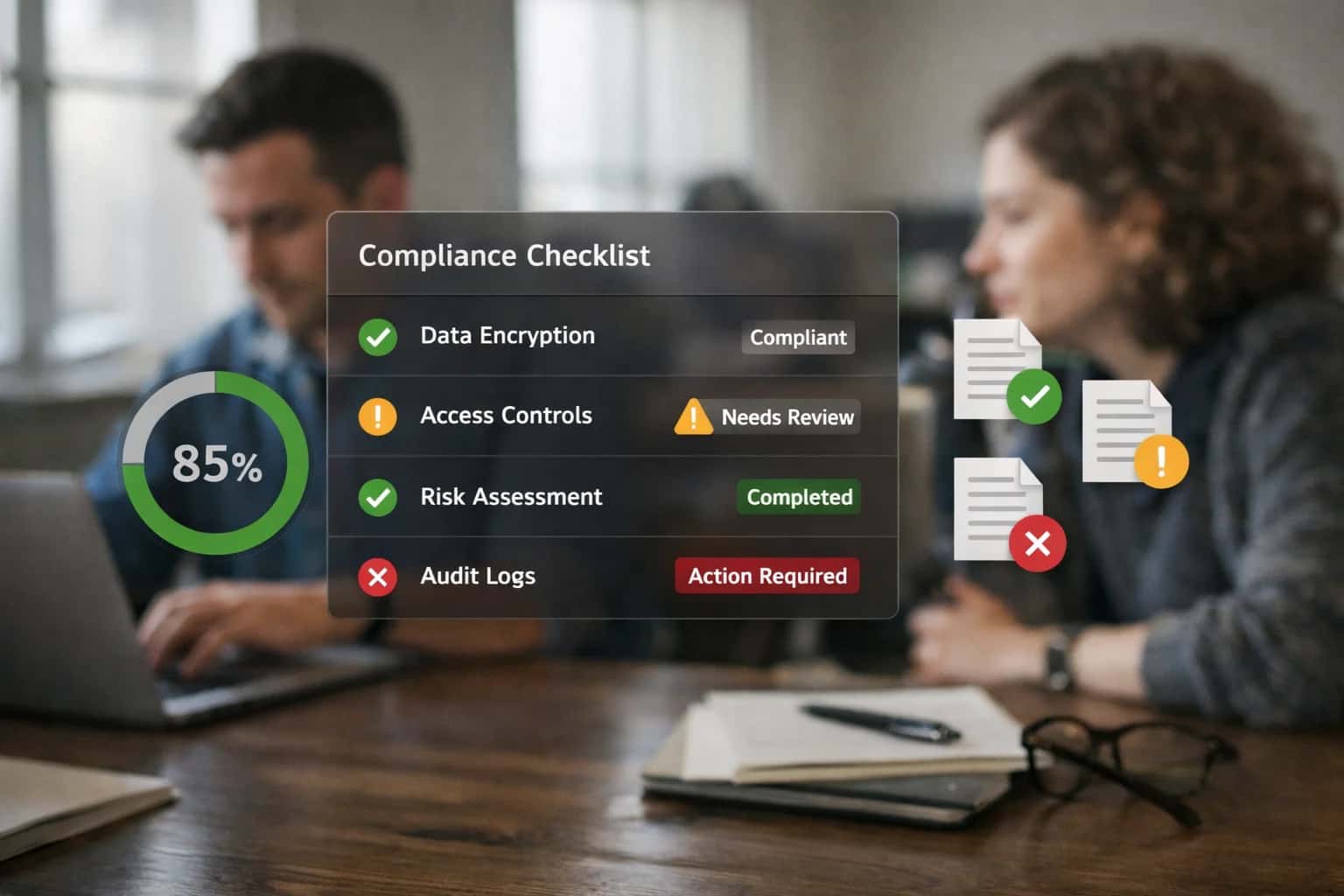
A technical comparison for CTOs evaluating ISO/IEC 42001 and SOC 2 against sovereign programs like the EU AI Act. We analyze coverage, cost, and strategic fit for regulated AI deployments.
THE ANALYSIS
Introduction: The Compliance Crossroads for AI
A strategic comparison of global compliance frameworks and sovereign regulatory programs for CTOs architecting AI under tightening legal constraints.
Sovereign Regulatory Compliance takes a prescriptive, jurisdiction-specific approach by directly mapping to national laws like the EU AI Act, China's AI regulations, or sector-specific rules like HIPAA. This strategy results in a trade-off: deeper legal alignment at the cost of operational flexibility. A sovereign program mandates concrete technical controls—such as data localization, air-gapped infrastructure from providers like HPE or Fujitsu, and specific record-keeping for high-risk AI systems—that are non-negotiable for market access. While this can increase initial setup costs by 15-25%, it provides definitive legal coverage and is often a prerequisite for public sector contracts or handling sensitive citizen data.
The key trade-off: If your priority is operational scalability and international recognition, choose a Global Framework. It provides a versatile compliance passport for multi-region deployments on hyperscale clouds. If you prioritize defensive legal adherence and data sovereignty for a specific high-stakes market, choose Sovereign Regulatory Compliance. This path is non-negotiable for enterprises in regulated industries like healthcare, finance, or government, where non-compliance carries severe sanctions. For a deeper dive into infrastructure choices that support these compliance models, explore our comparisons on AWS AI Services vs. Fujitsu Sovereign Cloud and Public Cloud AI Governance Tools vs. Sovereign AI Governance Suites.
HEAD-TO-HEAD COMPARISON
Global AI Compliance Frameworks vs. Sovereign Regulatory Compliance
Direct comparison of compliance approaches for AI systems under global standards versus national sovereignty laws.
| Metric / Feature | Global AI Compliance Frameworks | Sovereign Regulatory Compliance |
|---|---|---|
Primary Regulatory Alignment | ISO/IEC 42001, SOC 2, NIST AI RMF | EU AI Act, National AI Strategies (e.g., Made in Japan) |
Data Residency Enforcement | ||
Air-Gapped Deployment Support | ||
Audit Trail for National Regulators | General-purpose | Tailored to specific jurisdiction |
Applicability to High-Risk AI Use Cases | Broad industry applicability | Mandatory for government & critical infrastructure |
Infrastructure Dependency | Global hyperscale clouds (AWS, GCP, Azure) | Sovereign private clouds (Fujitsu, HPE, Dell) |
Model Marketplace Governance | Vendor-managed (AWS Marketplace, Azure AI) | Domestically vetted & hosted repositories |
Global Frameworks vs. Sovereign Compliance
TL;DR: Key Differentiators
Choosing between broad international certifications and targeted national programs is a foundational decision for AI governance. Here are the core strengths of each approach.
01
Broad Market Access & Vendor Flexibility
Specific advantage: Certifications like ISO/IEC 42001 and SOC 2 are recognized globally by over 160 countries. This allows enterprises to deploy AI across multiple regions using hyperscale providers (AWS, Azure, GCP) without re-auditing for each market. This matters for multinational corporations seeking a single, scalable compliance baseline to accelerate time-to-market.
02
Standardized Risk Management
Specific advantage: Frameworks like the NIST AI RMF provide vendor-agnostic, process-oriented guidelines for managing AI risk across the lifecycle. This creates a common language for auditors and internal teams, reducing ambiguity. This matters for organizations building complex, multi-model AI stacks who need a consistent methodology for risk assessment that is not tied to a specific geography.
03
Legal Certainty & Regulatory Alignment
Specific advantage: Sovereign programs are explicitly designed to meet specific national laws, such as the EU AI Act's high-risk requirements or China's generative AI regulations. Compliance provides a legal 'safe harbor' against domestic sanctions. This matters for operating in tightly regulated sectors (e.g., healthcare, finance) or jurisdictions with strict data localization mandates.
04
Enhanced Data Sovereignty & Control
Specific advantage: Sovereign compliance often mandates infrastructure like air-gapped private clouds (e.g., HPE, Fujitsu) where data and models never cross borders. This eliminates dependency on foreign cloud providers for critical workloads. This matters for government agencies, defense contractors, and critical infrastructure operators where data residency and geopolitical risk are primary concerns.
CHOOSE YOUR PRIORITY
When to Choose: Decision Guide by Persona
Sovereign Regulatory Compliance for Regulated Industries
Verdict: Mandatory. For sectors like healthcare (HIPAA), finance (SOX), and government, sovereign compliance is non-negotiable. These frameworks are built for specific national laws like the EU AI Act, ensuring data residency, domestic processing, and audit trails that satisfy local regulators. Tools like IBM watsonx.governance or sovereign suites from regional providers offer the granular control and air-gapped deployment needed for high-risk AI applications.
Global AI Compliance Frameworks for Regulated Industries
Verdict: Insufficient as a standalone. Global certifications like ISO 27001 and SOC 2 provide a foundational security baseline but lack the jurisdictional specificity required for high-stakes compliance. They can be part of a layered approach but cannot guarantee alignment with sovereign mandates on data sovereignty. Relying solely on them risks non-compliance with laws that demand data remain within national borders.
Enabling Efficiency, Speed & Accuracy
Intelligent Analysis, Decision & Execution
We build AI systems for teams that need search across company data, workflow automation across tools, or AI features inside products and internal software.
Talk to Us
Search across company data
Give teams answers from docs, tickets, runbooks, and product data with sources and permissions.
Useful when people spend too long searching or get different answers from different systems.
Enterprise searchRAGPermissions
Read more
Automate internal workflows
Use AI to route work, draft outputs, trigger actions, and keep approvals and logs in place.
Useful when repetitive work moves across multiple tools and teams.
AI agentsWorkflow automationGovernance
Read more
Add AI to products and internal tools
Build assistants, guided actions, or decision support into the software your team or customers already use.
Useful when AI needs to be part of the product, not a separate tool.
AI integrationDecision supportModel routing
Read moreTHE ANALYSIS
Final Verdict and Strategic Recommendation
Choosing between a global framework and a sovereign program is a foundational decision that dictates your AI's operational perimeter and compliance burden.
Global AI Compliance Frameworks like ISO/IEC 42001 and SOC 2 excel at providing a vendor-agnostic, internationally recognized baseline for security and AI management. For example, achieving ISO 42001 certification can reduce audit cycles by up to 40% for multinationals operating across 10+ jurisdictions, as it demonstrates a systematic approach to risk that satisfies many cross-border due diligence requirements. This approach is highly efficient for organizations with a global footprint using hyperscale clouds like AWS Bedrock or Azure OpenAI Service, as it aligns with the providers' own compliance postures.
Sovereign Regulatory Compliance takes a different, prescriptive approach by mapping directly to national laws like the EU AI Act or sector-specific rules like HIPAA. This results in a trade-off of increased initial implementation complexity for guaranteed legal alignment. A sovereign program for the EU AI Act, for instance, mandates specific technical documentation, conformity assessments, and post-market monitoring for high-risk AI systems—requirements that generic ISO standards do not explicitly cover. This strategy is non-negotiable for public sector entities or industries like healthcare, where data residency and national oversight are paramount, as explored in our analysis of Sovereign Healthcare AI Hosting.
The key trade-off is between operational efficiency and jurisdictional certainty. If your priority is scalable, cross-border deployment and you use global cloud AI services, a global framework is your strategic accelerator. It provides a common language for risk that streamlines partnerships and vendor management. If you prioritize unambiguous compliance with specific national laws and operate in regulated sectors like finance, government, or critical infrastructure, a sovereign regulatory program is mandatory. Your architecture must be designed for data sovereignty from the ground up, often leading to a Sovereign-by-Design Infrastructure choice over a public cloud-first model.
Strategic Recommendation: Consider Global Frameworks if you need a flexible, efficiency-focused foundation for AI governance across diverse markets. Choose Sovereign Compliance when your AI systems are classified as high-risk under laws like the EU AI Act, or when data must never leave a specific legal jurisdiction, making the control of a Private Sovereign AI Studio essential.

About the author
Prasad Kumkar
CEO & MD, Inference Systems
Prasad Kumkar is the CEO & MD of Inference Systems and writes about AI systems architecture, LLM infrastructure, model serving, evaluation, and production deployment. Over 5+ years, he has worked across computer vision models, L5 autonomous vehicle systems, and LLM research, with a focus on taking complex AI ideas into real-world engineering systems.
His work and writing cover AI systems, large language models, AI agents, multimodal systems, autonomous systems, inference optimization, RAG, evaluation, and production AI engineering.
LinkedIn
Limited slotsGet a Free AI Consultation
Partnered with leading AI, data, and software stack.





How We Work
Custom AI workflows for your Business
One-fit-all AI don't work for modern businesses. At Inferensys, we aim to understand your business & custom requirements; which we use to define most efficient agentic workflows, the data, and the tools for your business.
01
Review the use case
We understand the task, the users, and where AI can actually help.
Read more02
Pick the right approach
We define what needs search, automation, or product integration.
Read more03
Build the first useful version
We implement the part that proves the value first.
Read more04
Improve from there
We add the checks and visibility needed to keep it useful.
Read moreThe first call is a practical review of your use case and the right next step.
Talk to Us