
Inferensys

Service

Customer Lifetime Value Prediction AI Services

Engineering of predictive models that forecast the long-term revenue potential of individual customers, enabling prioritized marketing spend, personalized retention strategies, and improved CAC efficiency.
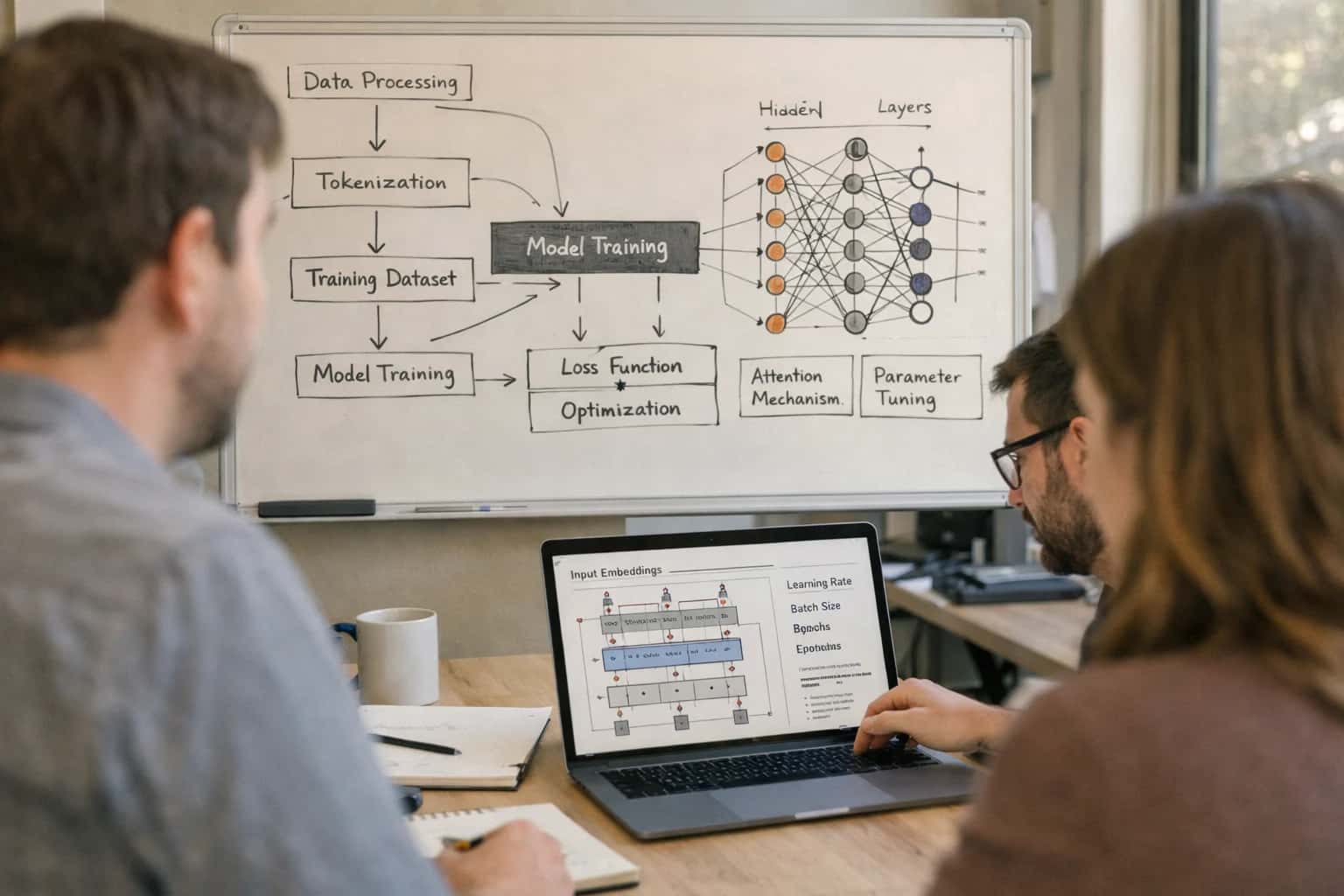
ML engineer developing custom LLM, model architecture diagrams on screens, technical deep work environment.
INEFFICIENT ALLOCATION

The Problem: Marketing Spend is Wasted on Low-Value Customers

You're spending equally on customers who will churn in a month and those who will drive revenue for years.

Traditional marketing allocates budget based on broad segments or last-click attribution. This leads to two critical failures:

  • Over-investment in low-intent, one-time buyers.
  • Under-investment in high-potential customers early in their lifecycle.

You lack the predictive intelligence to distinguish between them at the point of acquisition.

The result? 30-40% of marketing budgets are wasted on customers with negligible lifetime value, while high-value prospects receive generic, ineffective campaigns.

Our Customer Lifetime Value Prediction AI solves this by engineering models that forecast the long-term revenue potential of each individual. We deliver:

  • Predictive scoring that ranks customers by future value at first touch.
  • Dynamic budget allocation to shift spend toward high-LTV cohorts.
  • Personalized retention triggers for at-risk valuable customers.

This transforms marketing from a cost center into a profit-optimizing engine.

PREDICTABLE ROI

Measurable Business Outcomes

Our Customer Lifetime Value Prediction AI services deliver quantifiable improvements in marketing efficiency and customer retention. We focus on engineering outcomes, not just models.

01

Prioritized Marketing Spend

Identify your highest-value customer cohorts to allocate marketing budgets with precision, reducing customer acquisition cost (CAC) by focusing on high-lifetime-value prospects.

Up to 40%
CAC Reduction
2-4 Weeks
To Insights
02

Personalized Retention Strategies

Deploy dynamic, AI-driven engagement workflows tailored to individual churn risk scores and predicted value, increasing customer retention rates with automated, hyper-personalized interventions.

15-25%
Retention Lift
Real-Time
Risk Scoring
03

Improved CAC Efficiency

Engineer predictive models that forecast long-term revenue at the point of acquisition, enabling real-time bid adjustments and channel optimization to maximize return on ad spend (ROAS).

20-35%
ROAS Improvement
< 100ms
Inference Latency
04

Actionable Customer Segmentation

Move beyond basic RFM with probabilistic behavioral clusters. Our models create dynamic segments based on predicted future value and intent, enabling precise micro-targeting for campaigns.

10x
Segment Granularity
Daily Updates
Dynamic Clusters
05

Reduced Model Hallucination

Leverage domain-specific fine-tuning and rigorous causal inference techniques to ensure CLV predictions are accurate, explainable, and grounded in your proprietary transaction data.

< 5%
Mean Absolute Error
Full Audit Trail
Data Lineage
06

Seamless Integration & Scalability

Deploy production-ready CLV prediction APIs that integrate directly with your CRM (Salesforce, HubSpot), marketing automation (Braze, Klaviyo), and data warehouse (Snowflake, BigQuery).

99.9%
Uptime SLA
Millions/Hour
Prediction Scale
From Data to Deployed Model

Typical Project Timeline & Deliverables

A clear, phased roadmap for delivering a production-ready Customer Lifetime Value (CLV) prediction system, outlining key milestones, technical outputs, and business outcomes at each stage.

Phase & TimelineKey DeliverablesTechnical OutputsBusiness Outcomes

Phase 1: Discovery & Data Audit (1-2 Weeks)

Project Charter & Data Readiness Report

Data schema mapping, quality assessment, and feature engineering plan

Alignment on success metrics and identification of data gaps

Phase 2: Model Development & Validation (3-5 Weeks)

Validated CLV Prediction Model & Performance Report

Trained model (e.g., XGBoost, LightGBM), SHAP analysis, and A/B test design

Actionable customer segments and quantified model accuracy (e.g., >90% precision on top decile)

Phase 3: Integration & Deployment (2-3 Weeks)

Production-Ready API & Integration Documentation

Containerized model microservice, monitoring dashboards, and CI/CD pipeline

Live model serving predictions to your CRM or marketing platform

Phase 4: Optimization & Handoff (1-2 Weeks)

Model Performance Dashboard & Knowledge Transfer

Retraining pipeline, alerting system for data drift, and operational runbook

Your team empowered to maintain and iterate on the AI system

Total Project Duration

7-12 Weeks

End-to-end CLV prediction pipeline

Reduced CAC by 15-25% through prioritized marketing spend

Ongoing Support & Maintenance

Optional SLA with 99.9% Uptime

Proactive monitoring, quarterly model retraining, and performance reviews

Continuous ROI optimization and adaptation to changing customer behavior

PROVEN FRAMEWORK

Our Engineering Methodology

We deliver production-ready CLV models through a rigorous, outcome-focused engineering process designed for enterprise scale, security, and rapid ROI.

01

Proprietary Data Pipeline Engineering

We architect robust ETL pipelines that unify transactional, behavioral, and demographic data from your siloed sources (CRM, CDP, POS) into a clean, time-series feature store. This ensures model inputs are accurate, consistent, and compliant with data residency requirements.

99.9%
Pipeline Uptime SLA
< 4 weeks
To First Model
02

Causal Inference & Ensemble Modeling

We move beyond simple regression by implementing ensemble models (XGBoost, LightGBM) combined with causal inference techniques (propensity scoring, uplift modeling). This isolates the true impact of marketing spend on LTV, preventing wasted budget on customers who would have purchased anyway.

25-40%
Avg. CAC Efficiency Gain
< 100ms
Inference Latency
03

Real-Time Inference Architecture

We deploy your CLV model as a scalable microservice with a REST/gRPC API, enabling real-time scoring for every customer interaction. Integration with platforms like Salesforce, Braze, or your custom stack allows for immediate personalization and budget allocation decisions.

99.95%
API Availability
Auto-scaling
Kubernetes Deployment
04

Continuous Model Retraining & Monitoring

Our MLOps pipeline automates model retraining on fresh data and monitors for performance drift (e.g., using Evidently AI). You receive alerts and updated models, ensuring predictions remain accurate as customer behavior and market conditions evolve.

Automated
Weekly Retraining
< 0.5%
Allowed Prediction Drift
05

Enterprise Security & Compliance by Design

All data processing adheres to SOC 2 Type II standards. We implement privacy-preserving techniques like differential privacy in training and ensure full audit trails for model decisions, supporting compliance with GDPR, CCPA, and internal governance policies.

SOC 2 Type II
Certified Processes
End-to-End
Data Encryption
06

Actionable Insights Dashboard & Integration

We deliver a custom dashboard (or integrate with your BI tool like Tableau) that segments customers by predicted LTV and churn risk. This provides clear, actionable cohorts for your marketing and product teams to target high-value customers and design retention plays.

Pre-built
Cohort Definitions
Real-time
Segment Updates
Customer Lifetime Value Prediction AI

Frequently Asked Questions

Get specific answers about our process, timeline, and outcomes for building predictive CLV models.

We follow a proven, four-phase methodology: 1) Data Audit & Feature Engineering – We assess your first-party data (transaction history, engagement logs, CRM) and engineer predictive features like recency, frequency, and engagement velocity. 2) Model Selection & Training – We evaluate and train multiple algorithms (e.g., BG/NBD, Pareto/NBD, or advanced gradient-boosted models) on your historical data to identify the best fit. 3) Validation & Calibration – Models are rigorously validated against holdout periods, with performance metrics like Mean Absolute Percentage Error (MAPE) benchmarked against baseline forecasts. 4) Deployment & Integration – We deploy the model via a secure API and integrate it with your marketing stack (e.g., CDP, ESP, ad platforms) for real-time scoring. This process is detailed in our guide on Retail and E-Commerce Hyper-Personalization.

Prasad Kumkar

About the author

Prasad Kumkar

CEO & MD, Inference Systems

Prasad Kumkar is the CEO & MD of Inference Systems and writes about AI systems architecture, LLM infrastructure, model serving, evaluation, and production deployment. Over 5+ years, he has worked across computer vision models, L5 autonomous vehicle systems, and LLM research, with a focus on taking complex AI ideas into real-world engineering systems.

His work and writing cover AI systems, large language models, AI agents, multimodal systems, autonomous systems, inference optimization, RAG, evaluation, and production AI engineering.



