
Inferensys

Service

RFML for Electronic Warfare Systems

We develop specialized AI models and processing pipelines for electronic support (ES), attack (EA), and protection (EP) applications, including threat library management and reactive jamming.
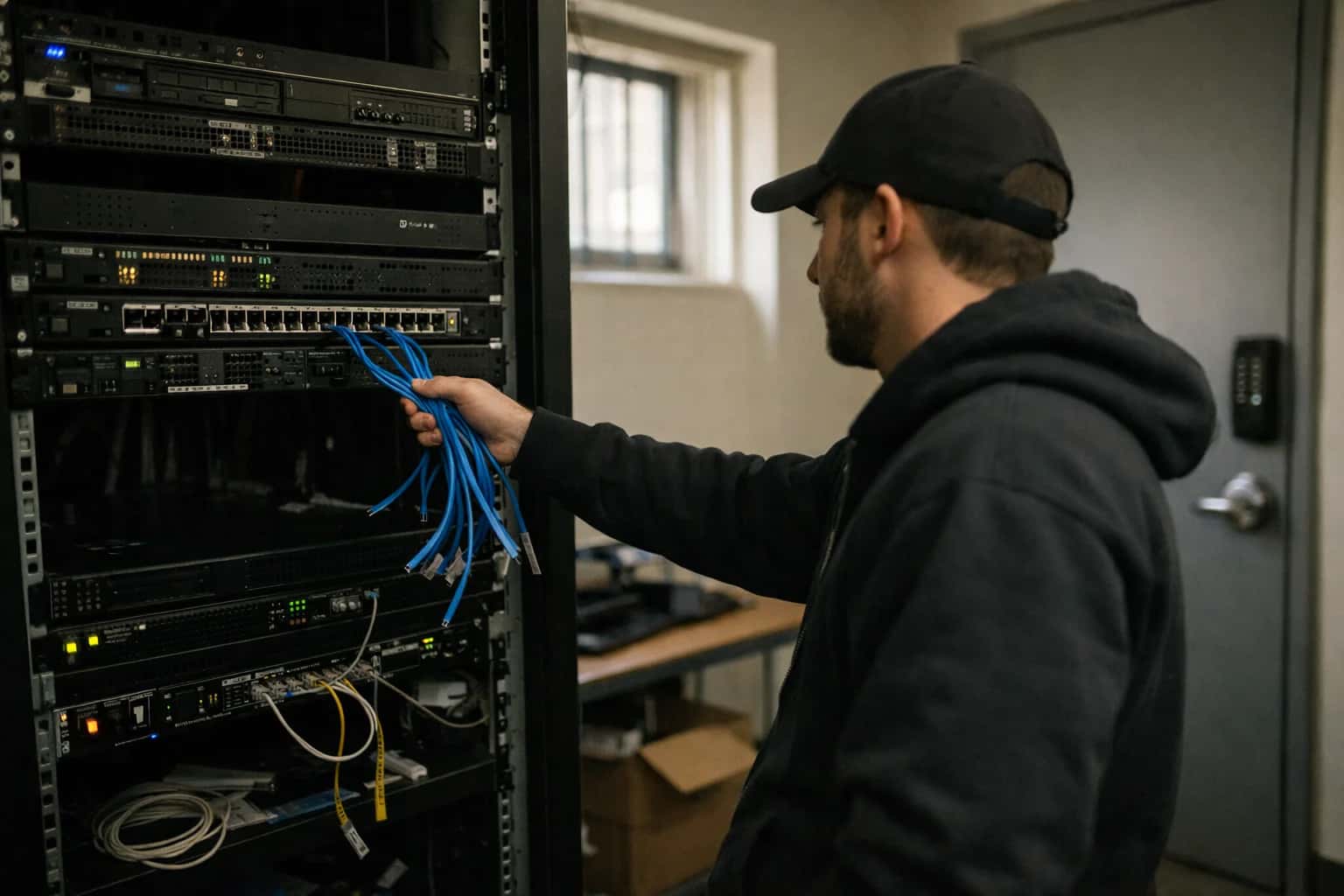
Isolated secure server room with network cables physically disconnected, minimal lighting, security-focused environment.

Deploy AI-driven electronic warfare systems that detect, classify, and counter threats in milliseconds.

Modern electronic warfare demands sub-second reaction times. Our specialized RFML development delivers AI models and processing pipelines for Electronic Support (ES), Attack (EA), and Protection (EP), enabling your systems to act faster than the threat.

  • Automated Threat Library Management: Continuously ingest and classify new RF emitters using deep learning models like CNNs and Transformers, maintaining a real-time, searchable threat database.
  • Reactive Jamming & Countermeasures: Deploy AI agents that analyze signal patterns and autonomously initiate countermeasures within defined rules of engagement.
  • Low-Latency Edge Inference: Optimize models for deployment on tactical edge hardware (NVIDIA Jetson, SDRs) to ensure operation without cloud dependency.


Move from manual, library-based identification to autonomous, AI-driven threat response that scales with adversarial innovation.

Our pipelines integrate with your existing SIGINT/ELINT systems, enhancing them with machine learning for modulation recognition and emitter fingerprinting. This transforms raw I/Q data into actionable intelligence, reducing operator cognitive load and closing the OODA loop.

Explore our broader capabilities in RF Signal Intelligence AI Consulting and secure, sovereign development through Air-Gapped Generative AI for Defense Contractors.

DELIVERING TACTICAL ADVANTAGE

Operational Outcomes of AI-Enabled EW

Our RFML development for Electronic Warfare Systems translates directly into measurable operational superiority. We engineer AI models and processing pipelines that deliver decisive advantages in electronic support, attack, and protection.

02

Reactive & Adaptive Jamming

Implement AI-driven Electronic Attack (EA) systems that analyze adversary waveforms and dynamically synthesize optimal jamming signals. Our models enable reactive jamming that adapts to counter frequency-hopping and other evasion techniques, maximizing disruption efficacy.

Adaptive
Counter to FHSS
Real-time
Waveform Synthesis
04

Low-SNR Signal Detection & Analysis

Deploy deep learning models, including specialized CNNs and Transformers, that extract actionable intelligence from signals buried in noise. This extends the effective range of ES systems and enables detection of low-probability-of-intercept (LPI) waveforms that defeat conventional techniques.

> 15dB
SNR Gain
LPI/LPD
Waveform Detection
05

Edge-Deployed RFML Inference

Engineer and optimize TensorFlow Lite or ONNX models for deployment on tactical edge hardware like NVIDIA Jetson or Software-Defined Radios (SDRs). This provides low-latency, offline-capable signal analysis for UAVs, ground vehicles, and dismounted operators without cloud dependency.

< 20ms
Inference Latency
Air-Gapped
Operational Capability
06

Predictive EW Battlefield Modeling

Develop AI-driven RF digital twins that simulate complex electromagnetic environments. Use these models to predict adversary EW actions, test friendly countermeasures, and train AI systems in simulation, reducing operational risk and accelerating tactical planning cycles.

High-Fidelity
EM Environment Sim
Predictive
Adversary Action Modeling
Choose the right partnership for your EW mission

Structured Engagement Models

We offer flexible, outcome-driven engagement models to deliver AI-powered electronic warfare capabilities, from rapid prototyping to full-scale deployment and support.

Capability & SupportProof-of-ConceptPilot DeploymentFull-Scale Program

Threat Library AI Management

Reactive Jamming Algorithm Development

Multi-Sensor (RF/EO/IR) Fusion AI

On-Device (Edge) Model Deployment

Air-Gapped / Sovereign AI Infrastructure

Development & Integration Timeline

4-6 weeks

8-12 weeks

16+ weeks

Dedicated Engineering Team

Part-time

Dedicated Lead

Full Cross-Functional Team

Support & Maintenance SLA

Best Effort

Business Hours

24/7 Mission-Critical

Starting Investment

From $75K

From $200K

Custom

PROVEN APPROACH

Our Development Methodology for EW Systems

We deliver robust, production-ready AI for electronic warfare through a disciplined, security-first engineering process designed for mission-critical deployment.

06

End-to-End MLOps for EW

We provide a complete MLOps pipeline using MLflow and Kubeflow, tailored for classified data handling. This enables version control, reproducible training, and performance monitoring for all RFML models in your inventory. Learn more about our approach to RFML MLOps and Lifecycle Management.

99.9%
Pipeline Uptime SLA
Full Audit Trail
Data & Model Lineage
Technical and Commercial Considerations

RFML for Electronic Warfare: Key Questions

Common questions from CTOs and engineering leads evaluating RFML development partners for electronic warfare (ES/EA/EP) applications.

We follow a structured, four-phase engagement: Discovery & Data Assessment (1-2 weeks), Prototype Development & Validation (3-4 weeks), Full Model Training & Integration (4-6 weeks), and Deployment & Support. A typical end-to-end project for a new threat classification model deploys in 8-12 weeks. For urgent requirements, we offer accelerated sprints with delivery in as little as 4 weeks for priority threat libraries.

Prasad Kumkar

About the author

Prasad Kumkar

CEO & MD, Inference Systems

Prasad Kumkar is the CEO & MD of Inference Systems and writes about AI systems architecture, LLM infrastructure, model serving, evaluation, and production deployment. Over 5+ years, he has worked across computer vision models, L5 autonomous vehicle systems, and LLM research, with a focus on taking complex AI ideas into real-world engineering systems.

His work and writing cover AI systems, large language models, AI agents, multimodal systems, autonomous systems, inference optimization, RAG, evaluation, and production AI engineering.


