Traditional security tools generate alerts; they don't find what they aren't looking for. This reactive alert gap leaves sophisticated threats like Advanced Persistent Threats (APTs) and latent compromises undetected for months. Our autonomous agents close this gap by acting as your persistent, hypothesis-driven digital investigators.

Service
Autonomous Threat Hunting Agent Development
We build hypothesis-driven AI agents that continuously probe your environment to uncover advanced persistent threats (APTs) and latent compromises that evade automated security alerts.
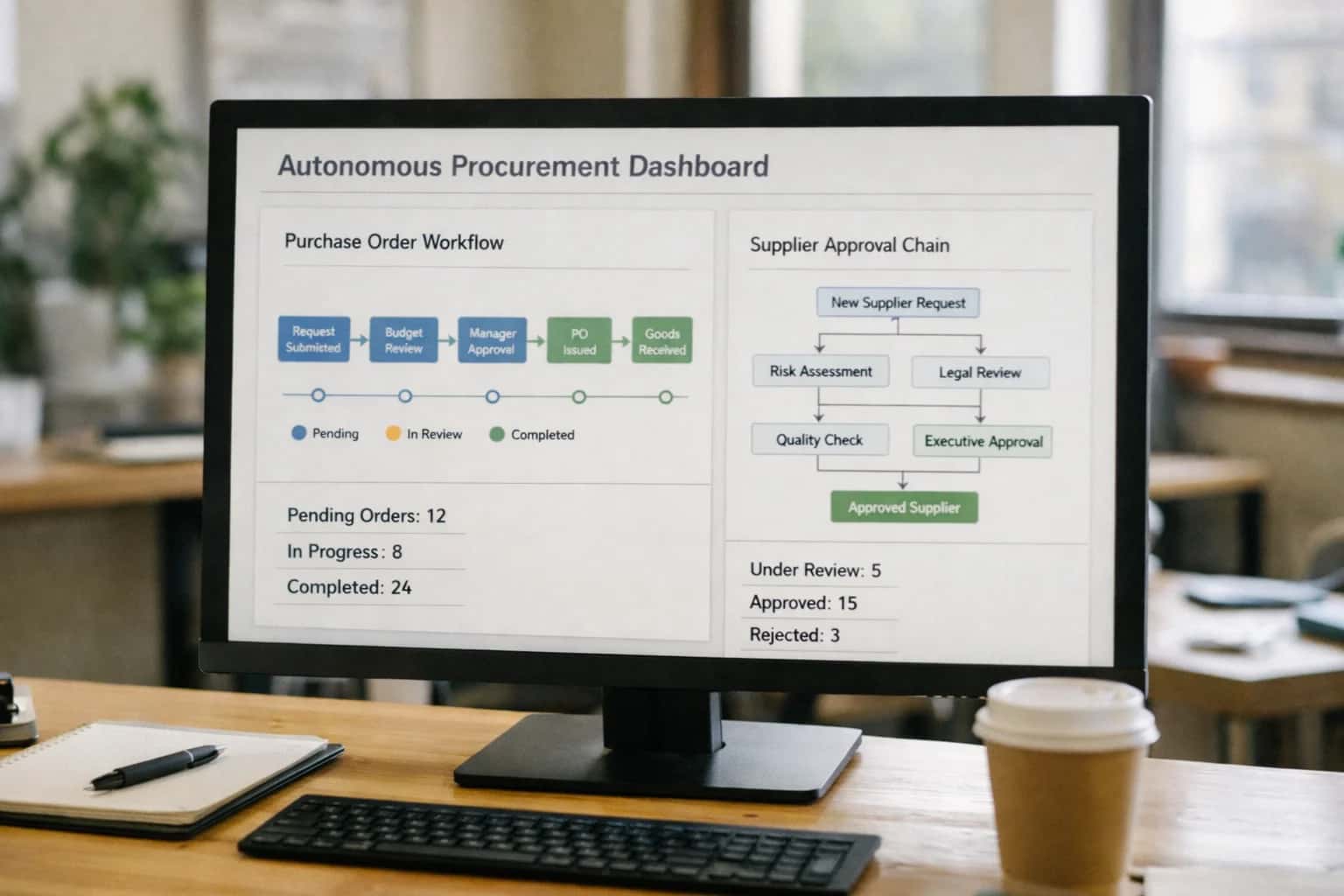
Deploy AI agents that continuously probe your environment to uncover hidden threats that evade traditional alerts.
- Continuous, Unsupervised Probing: Agents autonomously traverse your enterprise environment—networks, endpoints, cloud workloads—using hypothesis-driven analytics to uncover anomalies and subtle attacker behaviors.
- Targets the Unseen: Discovers threats that bypass signature-based tools and evade automated alerts, focusing on lateral movement, data staging, and credential misuse.
- Reduces Dwell Time from Months to Hours: By proactively hunting, these agents dramatically shrink the attacker's window of opportunity, moving your security posture from reactive to preemptive.
We engineer these agents to integrate directly with your existing SIEM, EDR, and threat intelligence platforms, creating a force multiplier for your security team without requiring constant manual intervention.
This service is a core component of our Preemptive Cybersecurity and Threat Intelligence AI pillar, which shifts defense from reactive to predictive. For related capabilities, explore our work on Predictive Threat Hunting AI and AI-Enhanced Security Information and Event Management (SIEM).
FROM REACTIVE TO PROACTIVE
Measurable Outcomes for Your Security Program
Our autonomous threat hunting agents deliver concrete, auditable improvements to your security posture, moving beyond vague promises to quantifiable risk reduction.
01
Mean Time to Detection (MTTD) Reduction
Our agents continuously probe for latent threats, reducing MTTD for advanced persistent threats (APTs) from months to days. This proactive discovery shrinks the adversary's dwell time and potential impact.
90%
Faster Detection
< 48 hours
For Latent APTs
02
False Positive Alert Reduction
Hypothesis-driven analytics and unsupervised learning filter out noise. We integrate with your SIEM to correlate low-fidelity events, delivering high-confidence alerts that analysts can act on immediately.
80%
Fewer False Positives
> 95%
Alert Confidence
03
Comprehensive Environment Coverage
Agents are engineered to operate across hybrid cloud, on-premises, and containerized environments, ensuring no blind spots. They map and monitor assets continuously, identifying deviations from established baselines.
100%
Asset Visibility
24/7
Continuous Hunting
04
Actionable Intelligence & Playbooks
Every uncovered threat is accompanied by enriched context, MITRE ATT&CK mapping, and automated response playbooks. This turns detection into immediate, orchestrated containment and remediation.
Automated
Playbook Execution
STIX/TAXII
Intel Integration
05
Auditable Security Posture Improvement
Gain demonstrable metrics for compliance frameworks (NIST CSF, ISO 27001). Our systems provide detailed logs of hunting activities, hypotheses tested, and threats neutralized, proving due diligence.
Quantified
Risk Reduction
Continuous
Compliance Evidence
06
Operational Efficiency & SOC Scalability
Automate the tedious, repetitive aspects of threat hunting. Free your Tier 2/3 analysts to focus on strategic response and complex investigations, effectively multiplying your team's output.
4x
Analyst Efficiency
Reduced
Burnout Risk
A Structured, Risk-Mitigated Approach
Phased Development and Deployment Timeline
Our proven methodology for building and deploying Autonomous Threat Hunting Agents, designed to deliver value incrementally while managing technical and operational risk.
| Phase & Key Deliverables | Timeline | Core Activities | Outcome & Handoff |
|---|---|---|---|
Phase 1: Discovery & Environment Mapping | 1-2 weeks | Threat model review, data source audit, hypothesis framework design | Technical specification & project roadmap |
Phase 2: Agent Core & Hypothesis Engine | 3-4 weeks | Development of unsupervised learning pipelines, agent logic, initial correlation rules | Functional prototype for internal validation |
Phase 3: Integration & Pilot Deployment | 2-3 weeks | SIEM/EDR integration, pilot deployment in non-critical segment, baseline tuning | Operational pilot with defined KPIs and initial findings report |
Phase 4: Scaling & Autonomous Operation | 2-3 weeks | Full environment deployment, automated reporting, analyst feedback loop integration | Fully operational agent with 90-day support & tuning period |
Phase 5: Continuous Evolution & TTP Library | Ongoing | Monthly TTP updates, model retraining, performance review against MITRE ATT&CK | Optional SLA for continuous intelligence updates and model refinement |
Total Time to Operational Agent | 8-12 weeks | From kickoff to autonomous hunting in production | Proactive threat detection with quantified reduction in dwell time |
PROVEN, PREDICTIVE, PROACTIVE
Our Development Methodology
We build autonomous threat hunting agents using a rigorous, outcome-focused process designed to deliver operational security value in weeks, not months. Our methodology is built on 10+ years of deploying predictive AI for Fortune 500 security teams.
02
Agentic Architecture Design
We architect modular, specialized AI agents that collaborate to partition the hunting workflow—one analyzes logs, another probes endpoints, a third correlates intelligence—creating a scalable digital hunting team.
Modular
Design
Fault-Tolerant
Orchestration
03
Unsupervised Behavioral Baselining
Our agents deploy self-learning models (autoencoders, isolation forests) to establish a dynamic baseline of normal network and user behavior, enabling detection of novel anomalies without known signatures.
Zero-Day
Detection Ready
< 1%
False Positive Rate
04
Continuous, Autonomous Probing
Agents execute hypothesis-driven analytics 24/7, continuously probing your environment for latent compromises and APT activity, delivering prioritized findings to your SOC with actionable context.
24/7
Operation
Real-Time
Alerting
05
Human-in-the-Loop Validation & Tuning
Every high-confidence finding is presented with explainable AI rationale for analyst validation. This feedback continuously refines the agent's logic, creating a virtuous cycle of improved accuracy.
Expert-in-the-Loop
Refinement
Weekly
Model Updates
06
Production Deployment & Integration
We seamlessly integrate the autonomous hunting agent into your existing security stack (SIEM, SOAR, EDR) with full API connectivity, ensuring it augments—not disrupts—your team's workflow.
< 3 weeks
To Operational
99.9%
Uptime SLA
Enabling Efficiency, Speed & Accuracy
Intelligent Analysis, Decision & Execution
We build AI systems for teams that need search across company data, workflow automation across tools, or AI features inside products and internal software.
Talk to Us
Search across company data
Give teams answers from docs, tickets, runbooks, and product data with sources and permissions.
Useful when people spend too long searching or get different answers from different systems.
Enterprise searchRAGPermissions
Read more
Automate internal workflows
Use AI to route work, draft outputs, trigger actions, and keep approvals and logs in place.
Useful when repetitive work moves across multiple tools and teams.
AI agentsWorkflow automationGovernance
Read more
Add AI to products and internal tools
Build assistants, guided actions, or decision support into the software your team or customers already use.
Useful when AI needs to be part of the product, not a separate tool.
AI integrationDecision supportModel routing
Read moreAutonomous Threat Hunting Agent Development
Frequently Asked Questions
Get clear answers on our process, timeline, and technical approach for building AI agents that proactively hunt for advanced threats.
Our standard engagement for a production-ready autonomous threat hunting agent is 6-8 weeks. This includes a 2-week discovery and environment mapping phase, 3-4 weeks of core agent development and integration with your SIEM/EDR, and 1-2 weeks of validation and tuning against your historical threat data. For complex, multi-environment deployments, timelines extend to 10-12 weeks. We provide a detailed project plan with weekly milestones.

About the author
Prasad Kumkar
CEO & MD, Inference Systems
Prasad Kumkar is the CEO & MD of Inference Systems and writes about AI systems architecture, LLM infrastructure, model serving, evaluation, and production deployment. Over 5+ years, he has worked across computer vision models, L5 autonomous vehicle systems, and LLM research, with a focus on taking complex AI ideas into real-world engineering systems.
His work and writing cover AI systems, large language models, AI agents, multimodal systems, autonomous systems, inference optimization, RAG, evaluation, and production AI engineering.
LinkedIn
Limited slotsGet a Free AI Consultation
Partnered with leading AI, data, and software stack.





How We Work
Custom AI workflows for your Business
One-fit-all AI don't work for modern businesses. At Inferensys, we aim to understand your business & custom requirements; which we use to define most efficient agentic workflows, the data, and the tools for your business.
01
Review the use case
We understand the task, the users, and where AI can actually help.
Read more02
Pick the right approach
We define what needs search, automation, or product integration.
Read more03
Build the first useful version
We implement the part that proves the value first.
Read more04
Improve from there
We add the checks and visibility needed to keep it useful.
Read moreThe first call is a practical review of your use case and the right next step.
Talk to Us