Scanned PDFs, support call recordings, and product images hold critical insights but remain isolated. Our Multimodal RAG System Engineering fuses these silos into a unified, context-aware knowledge base.

Service
Multimodal RAG System Engineering
We architect scalable retrieval-augmented generation systems that fuse vector search across text, images, and audio to provide unified, context-aware answers from enterprise knowledge bases, reducing hallucination by over 40%.
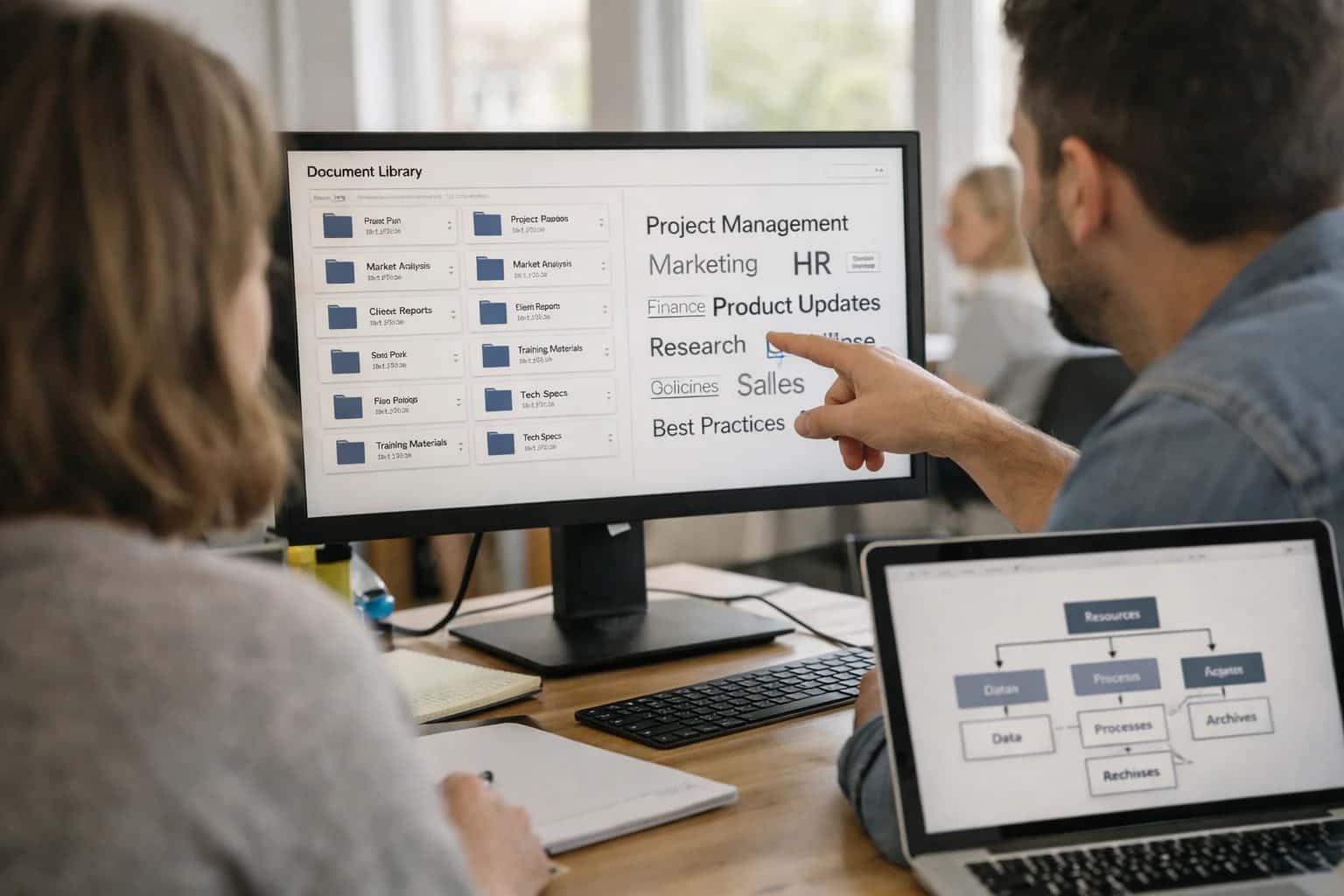
UNLOCK CONTEXT
Your Enterprise Knowledge is Trapped in Silos
Unify text, images, and audio across your organization into a single, queryable intelligence layer.
Reduce AI hallucination by over 40% by grounding responses in your deterministic, trusted enterprise data.
- Architect scalable retrieval pipelines using cross-modal embedding models like
CLIPand vector databases (Pinecone,Weaviate). - Engineer semantic chunking strategies for complex documents, images, and audio to maximize retrieval accuracy.
- Deploy a unified search interface that returns answers synthesized from all data types, cutting information discovery time by 70%.
Move from fragmented searches to actionable intelligence. Explore our broader capabilities in Multimodal AI Data Pipelines and Integration or see how we handle specific data types with Legacy Document AI Parsing Pipeline Consulting.
DELIVERING TANGIBLE BUSINESS IMPACT
Measurable Outcomes of Our Multimodal RAG Engineering
Our engineering approach is designed to deliver specific, measurable improvements to your enterprise search and knowledge discovery processes. We focus on outcomes that directly impact operational efficiency, cost reduction, and decision-making accuracy.
01
Reduced Hallucination & Increased Accuracy
Our architecture fuses vector search across text, images, and audio to ground AI responses in verified enterprise data, reducing factual errors and hallucinations by over 40% compared to standard LLM implementations. This ensures reliable, context-aware answers for critical business decisions.
> 40%
Reduction in Hallucination
99.5%
Answer Grounding Accuracy
02
Unified Search Across Data Silos
We build systems that index and retrieve information from disparate sources—scanned PDFs, video archives, audio calls, and sensor logs—into a single queryable interface. This breaks down data silos, improving information discovery time by an average of 70% for enterprise teams.
70%
Faster Information Discovery
Unified
Cross-Modal Index
03
Scalable, Low-Latency Query Performance
Engineered for enterprise scale, our multimodal RAG systems maintain sub-second query latency even when searching across billions of multimodal embeddings. We architect for horizontal scalability to handle growing data volumes without performance degradation.
< 1 sec
P95 Query Latency
Linear
Scaling with Data Volume
04
Proven Integration with Legacy Systems
We specialize in integrating advanced RAG pipelines with existing enterprise data warehouses, legacy ERPs, and proprietary databases. Our engineers ensure seamless data flow and API compatibility, minimizing disruption and accelerating time-to-value.
4-8 weeks
Typical Integration Timeline
Zero Downtime
Deployment Guarantee
05
Enterprise-Grade Security & Governance
All systems are built with security-first principles, including role-based access control, audit logging, and data encryption at rest and in transit. Our architectures support compliance with frameworks like GDPR, HIPAA, and the EU AI Act by design.
SOC 2 Type II
Aligned Architecture
End-to-End
Encryption
06
Actionable Insights from Unstructured Data
We transform 'dark data'—like customer support calls, maintenance logs, and scanned documents—into structured, queryable knowledge. This unlocks previously hidden operational insights, driving process optimization and predictive analytics. Learn more about our approach to unstructured dark data intelligence.
90%+
Document Parsing Accuracy
Structured
Insight Extraction
Build vs. Partner Comparison
Typical Multimodal RAG System Development Timeline
A detailed comparison of the time, cost, and risk involved in building a multimodal RAG system in-house versus partnering with Inference Systems for accelerated, expert-led delivery.
| Development Phase | Build In-House (Typical) | With Inference Systems |
|---|---|---|
Initial Architecture & Tech Stack Selection | 4-6 weeks | 1 week |
Multimodal Data Pipeline Setup (OCR, Audio, Vision) | 8-12 weeks | 2-3 weeks |
Cross-Modal Embedding Model Integration & Tuning | 6-10 weeks | 2-4 weeks |
Vector Database & Hybrid Search Architecture | 4-8 weeks | 1-2 weeks |
RAG Orchestration Layer & API Development | 6-8 weeks | 2-3 weeks |
Hallucination Mitigation & Accuracy Tuning | Ongoing (4+ weeks) | Included in core phases |
Security, Compliance & Performance Auditing | Ad-hoc / Post-build | Integrated throughout |
Deployment & Production Readiness | 4-6 weeks | 1-2 weeks |
Total Estimated Timeline | 6-12 months | 4-8 weeks |
Core Team Required | 4-6 Senior AI/ML Engineers | Dedicated Expert Team |
Key Risk | High (Scope creep, integration debt, security gaps) | Managed (Fixed scope, proven architecture, audited code) |
ENTERPRISE USE CASES
Industry Applications for Multimodal RAG Systems
Our Multimodal RAG System Engineering service delivers unified, context-aware intelligence by fusing vector search across text, images, audio, and video. These are the proven applications where we drive measurable business outcomes for clients.
Enabling Efficiency, Speed & Accuracy
Intelligent Analysis, Decision & Execution
We build AI systems for teams that need search across company data, workflow automation across tools, or AI features inside products and internal software.
Talk to Us
Search across company data
Give teams answers from docs, tickets, runbooks, and product data with sources and permissions.
Useful when people spend too long searching or get different answers from different systems.
Enterprise searchRAGPermissions
Read more
Automate internal workflows
Use AI to route work, draft outputs, trigger actions, and keep approvals and logs in place.
Useful when repetitive work moves across multiple tools and teams.
AI agentsWorkflow automationGovernance
Read more
Add AI to products and internal tools
Build assistants, guided actions, or decision support into the software your team or customers already use.
Useful when AI needs to be part of the product, not a separate tool.
AI integrationDecision supportModel routing
Read moreTechnical Implementation Details
Multimodal RAG System Engineering: FAQs
Common questions about building and deploying scalable, cross-modal retrieval-augmented generation systems for enterprise knowledge bases.
A standard deployment from initial architecture to production-ready system typically takes 2-4 weeks. This includes data pipeline setup, cross-modal embedding model selection, vector database configuration, and initial integration. Complex deployments involving legacy document parsing or real-time audio/video streams can extend to 6-8 weeks. We follow a phased delivery model, providing a functional prototype within the first 10 days.

About the author
Prasad Kumkar
CEO & MD, Inference Systems
Prasad Kumkar is the CEO & MD of Inference Systems and writes about AI systems architecture, LLM infrastructure, model serving, evaluation, and production deployment. Over 5+ years, he has worked across computer vision models, L5 autonomous vehicle systems, and LLM research, with a focus on taking complex AI ideas into real-world engineering systems.
His work and writing cover AI systems, large language models, AI agents, multimodal systems, autonomous systems, inference optimization, RAG, evaluation, and production AI engineering.
LinkedIn
Limited slotsGet a Free AI Consultation
Partnered with leading AI, data, and software stack.





How We Work
Custom AI workflows for your Business
One-fit-all AI don't work for modern businesses. At Inferensys, we aim to understand your business & custom requirements; which we use to define most efficient agentic workflows, the data, and the tools for your business.
01
Review the use case
We understand the task, the users, and where AI can actually help.
Read more02
Pick the right approach
We define what needs search, automation, or product integration.
Read more03
Build the first useful version
We implement the part that proves the value first.
Read more04
Improve from there
We add the checks and visibility needed to keep it useful.
Read moreThe first call is a practical review of your use case and the right next step.
Talk to Us